



Table of Contents
- What Constitutes Hidden Roof Structural Damage
- Water Stains, Musty Odors, and Mold Growth
- Sagging Roof Deck and Soft or Spongy Decking
- How to Inspect Your Attic for Roof Leaks
- Signs of Storm Damage on Roof
- Cost of Roof Structural Repair and Insurance Documentation
- When to Call a Professional vs. DIY Inspection Safety
- Conclusion
Last Updated: August 17, 2026
What Constitutes Hidden Roof Structural Damage
Hidden roof structural damage refers to deterioration affecting the underlying framework and support systems of your roof that isn’t immediately visible from ground level. Unlike cosmetic issues like missing shingles, structural damage compromises the integrity of roof rafters, the roof deck, underlayment, and flashing, components critical to keeping water out and supporting the roof’s weight.
Structural problems develop gradually. Water infiltration from a small leak can saturate insulation and wood framing over months. By the time homeowners notice water stains on ceilings or musty odors, the underlying structural damage is often advanced. At Rescue Roofing, we emphasize that early detection prevents catastrophic failure and saves thousands in repair costs. The difference between catching a problem at year one versus year three is the difference between a targeted repair and a full roof replacement.
Water Stains, Musty Odors, and Mold Growth
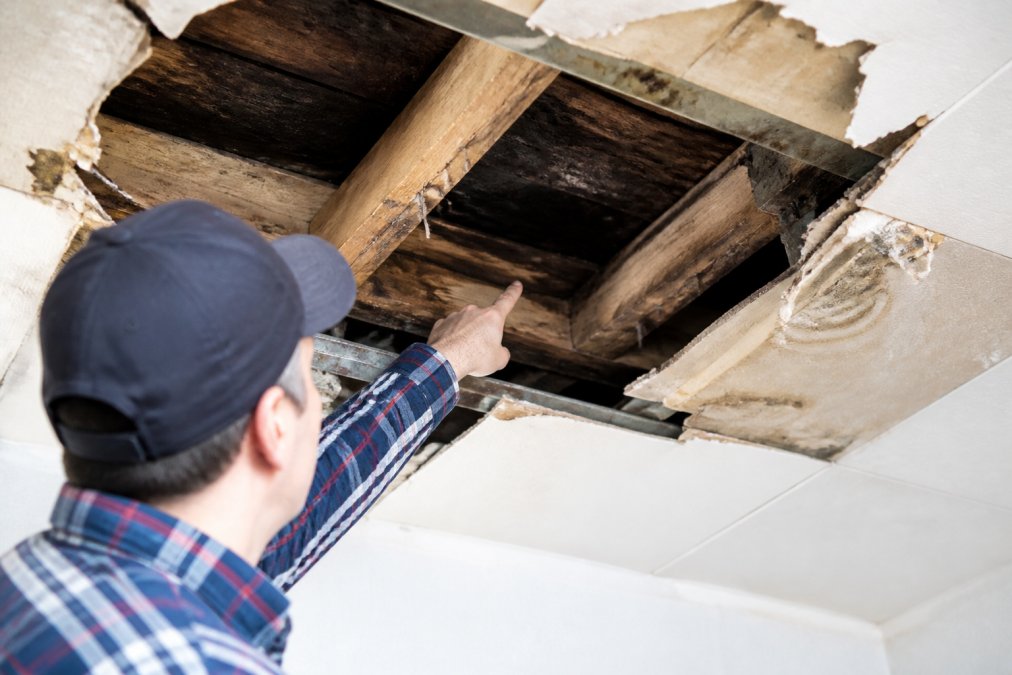
Water stains on ceilings and walls are often the first visible clue that hidden roof structural damage exists. These stains indicate that water has penetrated the roof covering and reached the interior of your home.
Musty odors accompanying water stains signal mold growth. Mold spores thrive in damp insulation and wood, spread rapidly, and pose health risks, particularly for residents with respiratory sensitivities. The challenge is that water stains don’t always point directly to the leak source, water can travel horizontally along roof rafters or drip down interior walls, appearing far from where it entered. This is why professional inspection is essential to trace the water path back to its source.
Mold growth indicates that moisture has been present for weeks or months. Structural wood exposed to sustained moisture loses integrity, becoming soft and spongy. The longer mold persists, the greater the structural compromise.
Sagging Roof Deck and Soft or Spongy Decking
A sagging roofline is a red flag for serious structural problems, but not all roof imperfections indicate imminent failure.
Structural vs. Cosmetic Sagging
Cosmetic sag is a slight, gradual dip in the roofline that has been present for years without worsening. If the sag is stable and the interior attic shows no water stains or mold, cosmetic sag alone does not require emergency intervention.
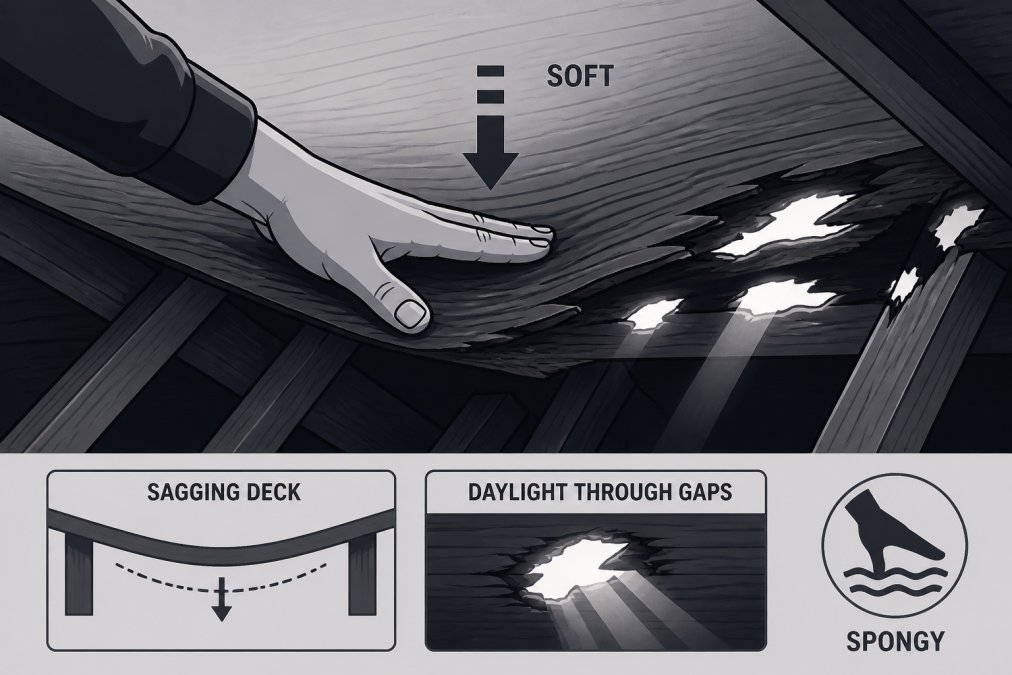
Structural sagging indicates active failure. The roof deck begins to sag when water-damaged wood loses its load-bearing capacity, roof rafters crack or split, or fasteners corrode and fail. Structural sagging often appears suddenly or worsens noticeably over months, frequently accompanied by water stains in the attic, soft decking, visible daylight through gaps in the roof deck, or a visible dip in the roofline from outside.
Wood Failure Mechanisms
Wood strength depends on cellular structure. When exposed to moisture, water breaks down the lignin and cellulose that give wood its rigidity.
Early-stage rot (weeks to months): Wood appears discolored but still feels relatively firm.
Mid-stage rot (months to a year): Wood becomes noticeably soft and spongy. Pressing with a fingernail leaves an impression. Structural failure is beginning.
Advanced rot (one year or more): Wood crumbles or crushes easily under hand pressure. Structural failure is imminent or already occurring.
Detecting Soft or Spongy Decking
Soft or spongy decking is detected by careful inspection in the attic. Press gently on the underside of the roof sheathing with your hand or a small tool. Healthy wood is hard and unyielding. Compromised wood yields to pressure or leaves an impression. If you find soft decking, assess its extent. A small, localized soft spot may indicate a leak from a single flashing. Soft decking over a large area (10+ square feet) suggests a systemic moisture problem.
Progression and Urgency
Sagging typically develops in stages: water infiltration saturates wood over weeks or months, the wood loses structural strength as moisture breaks down cellular structure, and finally the roof’s weight causes visible deflection. Once sagging is visible from inside the attic, the damage is substantial and requires professional assessment within weeks. Once visible from outside, the structural failure is critical and requires immediate intervention.
Cost Implications of Timing
A targeted repair addressing localized rotted decking can vary in cost. Waiting until the problem spreads means replacing large portions of the roof structure, which can be significantly more expensive. In severe cases, structural failure can compromise the home’s resale value or trigger insurance claim denials.
How to Inspect Your Attic for Roof Leaks
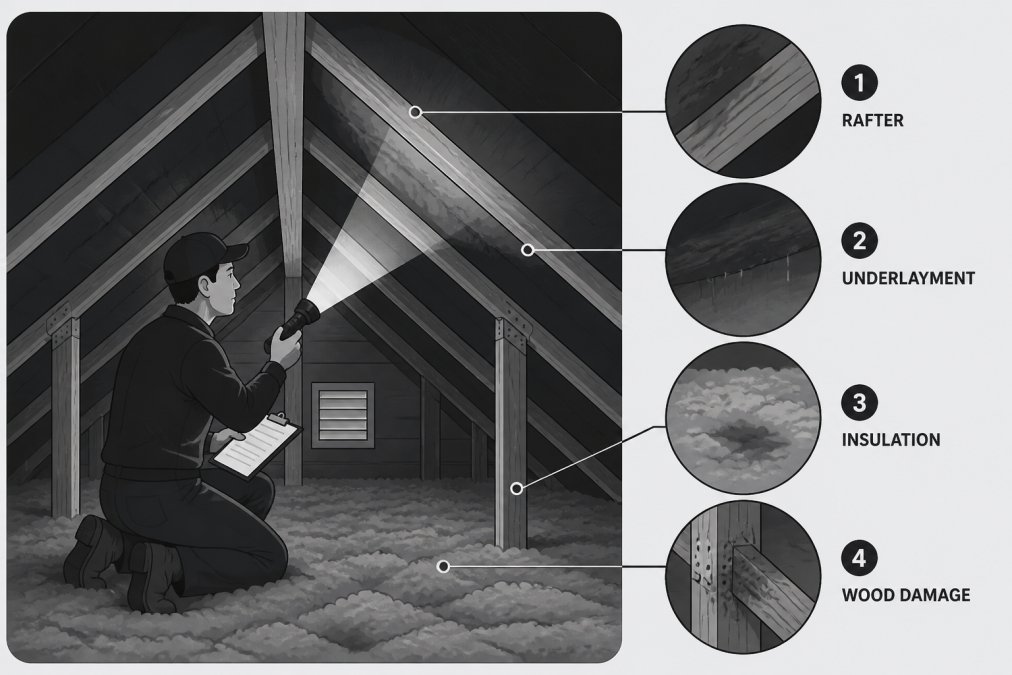
Attic inspection is the most direct way to identify hidden roof structural damage before it becomes catastrophic. Start with safety: wear a dust mask, use a flashlight, and wear gloves. Never step on insulation or unsupported areas; step only on roof rafters or attic joists.
Look for these specific signs:
-
Water stains on rafters and decking, appearing as dark discoloration, often with a halo pattern indicating repeated moisture exposure.
-
Mold or mildew growth, black, green, or white fuzzy growth on wood surfaces or insulation.
-
Damp or wet insulation, indicating active moisture problems.
-
Soft or spongy wood, which yields to pressure rather than remaining hard and unyielding.
-
Daylight visible through roof decking, indicating serious structural concerns requiring immediate attention.
-
Rust stains or corrosion on metal fasteners, indicating moisture exposure and potential fastener compromise.
Attic inspections are physically demanding and pose fall risks. Many homeowners find professional inspection safer and more thorough. Professionals have equipment to measure moisture levels, thermal imaging to detect hidden water intrusion, and experience identifying damage that untrained eyes miss.
Signs of Storm Damage on Roof
Storm damage creates visible and hidden structural problems. Hail impact, wind, and falling branches can crack or split roof rafters, dent flashing, and separate underlayment from decking. High winds can lift shingles, allowing water underneath. Even if shingles are replaced quickly, water may have already saturated the underlayment and roof deck.
Curled shingles, cracked shingles, and missing shingles are visible storm damage signs. Less obvious are damaged roof flashings around chimneys, vents, and skylights, a leading cause of water infiltration. After severe storms, professional documentation is critical for insurance claims. Photographs showing damage, along with a professional inspection report detailing structural impact, strengthen claims. Rescue Roofing assists with insurance claim documentation, communicating directly with adjusters to ensure hidden damage is properly assessed and covered.
Cost of Roof Structural Repair and Insurance Documentation
The cost of roof structural repair varies dramatically based on the extent of damage and area affected. Small, localized repairs cost significantly less than replacing major roof structural components. Insurance coverage depends on the cause of damage and your policy terms.
Documentation for insurance claims should include:
- Photographs of visible damage (water stains, missing shingles, damaged flashing)
- Professional inspection report detailing structural findings
- Detailed repair estimate breaking down labor and materials
- Timeline of when damage was discovered
- Evidence of prior maintenance (if applicable)
Professional roofers like Rescue Roofing handle communication with insurance adjusters, ensuring fair assessment and preventing underpayment due to missed hidden damage.
When to Call a Professional vs. DIY Inspection Safety
DIY attic inspection carries real risks. Falling through ceiling drywall is common; attic joists are often spaced 16 inches apart, and stepping between them can send a foot through drywall below. Electrical hazards, harmful insulation fibers, and extreme heat stress pose additional dangers.
Safe DIY Inspection Protocol
If you choose to inspect your attic yourself:
-
Prepare before entering. Wear long sleeves, gloves, and an N95 dust mask. Use a flashlight with fresh batteries. Tell someone you’re entering the attic.
-
Step only on structural members. Identify roof rafters or attic joists before moving. Step only on these solid beams. Never step on insulation, drywall, or unseen surfaces.
-
Move slowly and deliberately. Attics are cramped and disorienting. If you feel dizzy or overheated, exit immediately.
-
Limit your scope. Look for obvious signs: visible water stains on rafters, obvious mold growth, sagging areas, or daylight through the roof deck. If you see any of these, stop and call a professional.
-
Document what you find. Take photos and note locations. This helps a professional understand your observations.
When Professional Inspection Is Necessary
Professional inspection is warranted when you’ve discovered water stains, musty odors, or any sign of moisture; you’re considering purchasing a home; your home is over 15 years old and hasn’t been professionally inspected in the past 5 years; you’ve experienced storm damage; you suspect hidden damage but feel unsafe investigating; you’re planning a roof replacement; or you’ve found soft wood, mold, or sagging during a DIY inspection.
Professional inspectors use moisture meters to quantify water content in materials, thermal imaging to detect temperature differences indicating moisture pockets, and structural expertise to identify damage invisible to the eye. The cost of professional inspection can vary, but early detection prevents emergency repairs, insurance claim denials, and catastrophic failure.
Conclusion
Signs of hidden roof structural damage range from visible water stains and musty odors to structural problems like sagging decks and soft decking that require professional detection. Early detection saves money and prevents safety risks. Professional inspection using moisture detection, thermal imaging, and structural assessment identifies hidden damage before it becomes catastrophic. When damage is discovered, professional documentation supports insurance claims and ensures proper repair. Rescue Roofing provides thorough inspections, accurate damage assessment, and assistance with insurance claims to protect your home’s structural integrity. Contact Rescue Roofing for a professional inspection and let our experienced team identify any hidden roof structural damage affecting your property.
Frequently Asked Questions
What is considered structural damage to a roof?
Structural damage refers to deterioration that compromises the roof's ability to support weight and shed water. This includes sagging roof decks, rotted or soft decking, damaged rafters, compromised underlayment, and water infiltration into the structural frame. Unlike cosmetic damage (missing shingles, granule loss), structural damage threatens the integrity of your entire roofing system and home. If left untreated, it can lead to dangerous collapses and extensive water damage inside your home.
How can I tell if my roof rafters are sagging?
Look for visible dips or waves in your roofline when viewed from the ground or street. Inside your attic, check if rafters appear bent, cracked, or compressed. Use a straightedge or level along the rafter to identify sagging. Sagging often indicates rot, moisture damage, or structural overload. If you notice any sagging, avoid walking on the roof and contact a professional immediately, this is a serious safety hazard that requires expert assessment before attempting repairs.
How often should a professional inspect my roof for structural integrity?
Schedule professional roof inspections annually, or at minimum every two years. After severe weather events like hail or high winds, inspect immediately for damage. Older roofs (15+ years) should be inspected yearly to catch early signs of structural compromise. Regular inspections catch hidden roof structural damage before it becomes expensive. Many insurance policies recommend annual inspections to maintain coverage and document the condition of your roof for claims.
Does homeowners insurance cover hidden roof structural damage?
Coverage depends on the cause and your specific policy. Sudden, accidental damage (hail, wind, falling tree) is typically covered. However, damage from lack of maintenance, age-related wear, or gradual leaks is usually not covered. Document all damage with photos and written descriptions for insurance claims. Contact your insurance adjuster promptly after discovering damage. Professional inspection reports and detailed documentation significantly strengthen your claim and help establish that damage is covered rather than excluded.
This article was written using GrandRanker