



Table of Contents
- Understanding the Commercial Roof Replacement Process
- Initial Roof Inspection and Assessment
- Preparing Your Business for Roof Replacement
- How Long Does a Commercial Roof Replacement Take
- The Roof Replacement Installation Phase
- Choosing a Commercial Roofing Contractor
- Commercial Roofing Tax Treatment and Financial Planning
- Permitting, Compliance, and Insurance Claims
Last Updated: August 16, 2026
Understanding the Commercial Roof Replacement Process
A commercial roof replacement is one of the largest capital investments a business will make. Unlike residential roofing, it involves complex structural considerations, regulatory compliance, and operational continuity planning that can make or break your project timeline and budget. The difference between a smooth replacement and a nightmare project often comes down to preparation, most businesses underestimate how much planning happens before work begins.
This guide walks you through every phase of the commercial roof replacement process. Whether you’re managing a warehouse, retail center, or medical office, you’ll learn what inspectors look for, how to plan for business continuity, what permits you need, and how to navigate insurance claims. Getting this right matters because a failed roof puts your operations at risk, damages inventory, and exposes you to liability.
Initial Roof Inspection and Assessment
The inspection phase determines everything that follows. You cannot move forward with confidence until you know what condition your roof is actually in. A thorough commercial roof inspection includes structural integrity, membrane condition, flashing details, and hidden damage.
What to Look for During Inspection
Contractors should assess the roofing membrane for punctures, blistering, and separation at seams. They’ll check flashing details around penetrations, HVAC units, vents, and skylights, where water infiltration most commonly occurs. Drainage systems need evaluation to confirm water flows properly off the roof and doesn’t pool in low spots.
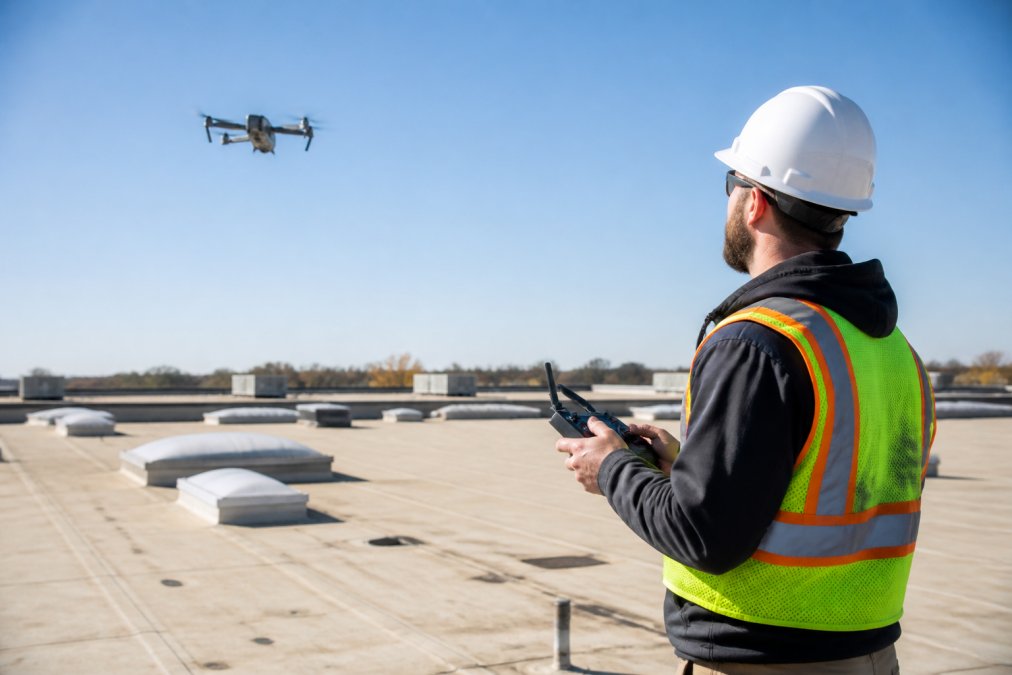
The deck itself matters. Visual inspection catches obvious problems, but you need someone experienced enough to spot soft spots indicating rot or structural compromise. Thermal imaging can reveal moisture infiltration that isn’t visible to the naked eye. Aerial quotes using drone technology give you a detailed view without requiring crews to spend hours on the roof in potentially unsafe conditions.
Pay attention to the roof’s age and remaining useful life. Different materials have different lifecycles: a single-ply membrane might last 15-20 years, while built-up roofing typically lasts 20-25 years. If your roof is approaching the end of its expected life, replacement becomes inevitable.
Structural Integrity and Hidden Damage
Hidden damage is the cost killer in commercial roof replacement projects. Once crews start the tear-off, they may discover rotted decking, compromised framing, or water damage to insulation that adds significant expense. This is why professional assessment matters, experienced contractors know where to look and what questions to ask.
Some property managers request a contingency estimate, a separate budget for unexpected structural repairs. This protects you from sticker shock if the tear-off reveals problems. The conversation should happen before work begins, not after crews have already started.
Preparing Your Business for Roof Replacement
Preparation separates professional projects from chaotic ones. A commercial roof replacement affects your entire operation and could last weeks depending on building type and roof size.
Business Continuity Planning
The single biggest mistake businesses make is underestimating how a roof replacement disrupts normal operations. Start by mapping out your project timeline with your contractor. How many days will the tear-off take? When will crews need roof access? Will there be noise affecting client-facing areas? Can your HVAC system operate during the work?
Create a communication plan. Your tenants, customers, and staff need to know what’s happening and when. A simple email outlining the project timeline, expected noise levels, and access restrictions prevents complaints and keeps everyone aligned. Some businesses schedule roof replacement during slower periods, a retail center might plan for winter when foot traffic drops, or a warehouse might coordinate with slower shipping seasons.
Site Preparation and Safety Protocols
Before crews arrive, dumpsters need placement for debris management and access routes must be clear for roofing trucks. If you have rooftop equipment, HVAC units, or antennas, contractors need to know about these obstacles.
Safety protocols protect your workers and the roofing crew. The contractor should have insurance coverage and safety certifications with a plan for fall protection, equipment staging, and occupant safety. Weather matters too, rain shuts down work and high winds can delay installation. A professional contractor builds contingency days into their timeline.
How Long Does a Commercial Roof Replacement Take
The timeline varies dramatically based on building size, roof complexity, and weather. A small building might take 2-3 weeks while a large warehouse could take 6-8 weeks.
Factors That Affect Project Timeline
Roof size is obvious, but complexity matters enormously. A simple flat roof with minimal penetrations moves faster than one with multiple HVAC units, skylights, and intricate flashing details. Weather is unpredictable, rain stops work and high winds prevent safe installation. Budget extra time in regions with unpredictable spring or fall weather.
The tear-off process takes time as crews carefully remove existing materials, inspect the deck, and haul away debris. Decking repairs add days. Material availability affects timeline too, if your chosen material is on backorder, the project gets delayed before work starts. Permitting can add weeks depending on your location and building size.
The Roof Replacement Installation Phase
Once preparation is complete and permits are approved, installation follows a specific sequence.
Tear-Off and Decking Assessment
Crews systematically remove the existing roofing material, flashing, and damaged insulation. This is where hidden damage often emerges. A competent contractor will probe the deck in multiple locations and document areas requiring repair. Some decking replacement is normal; extensive structural damage is rare but requires immediate attention.
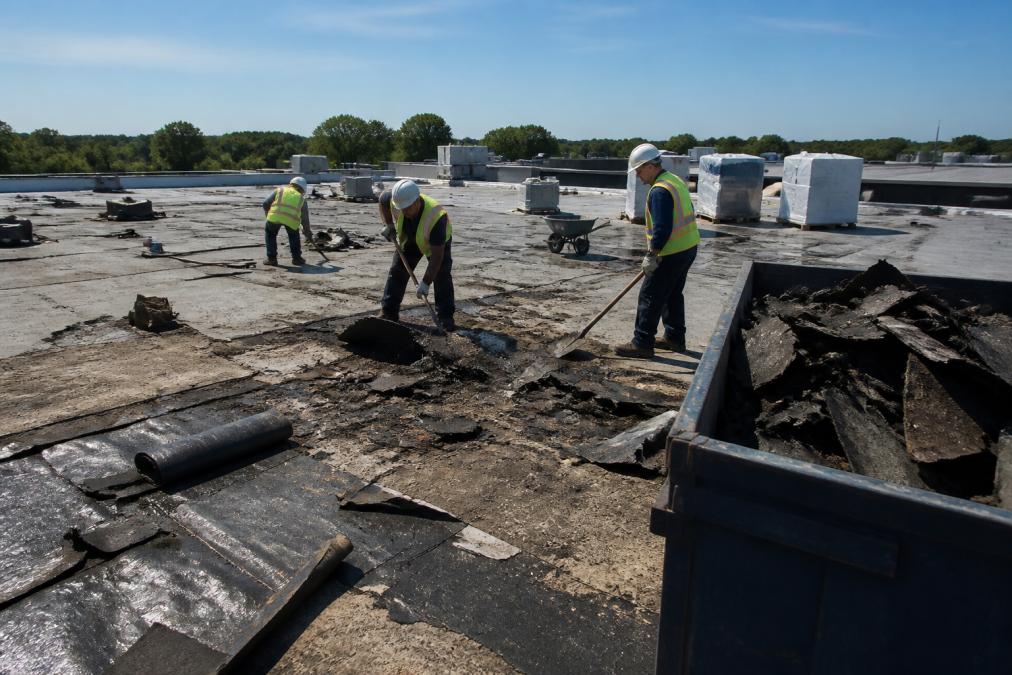
Once the deck is exposed and assessed, crews clean it thoroughly. Debris, nails, and old fasteners must be removed. The deck gets inspected for levelness and structural soundness before any repairs happen.
Underlayment, Membrane, and Flashing Installation
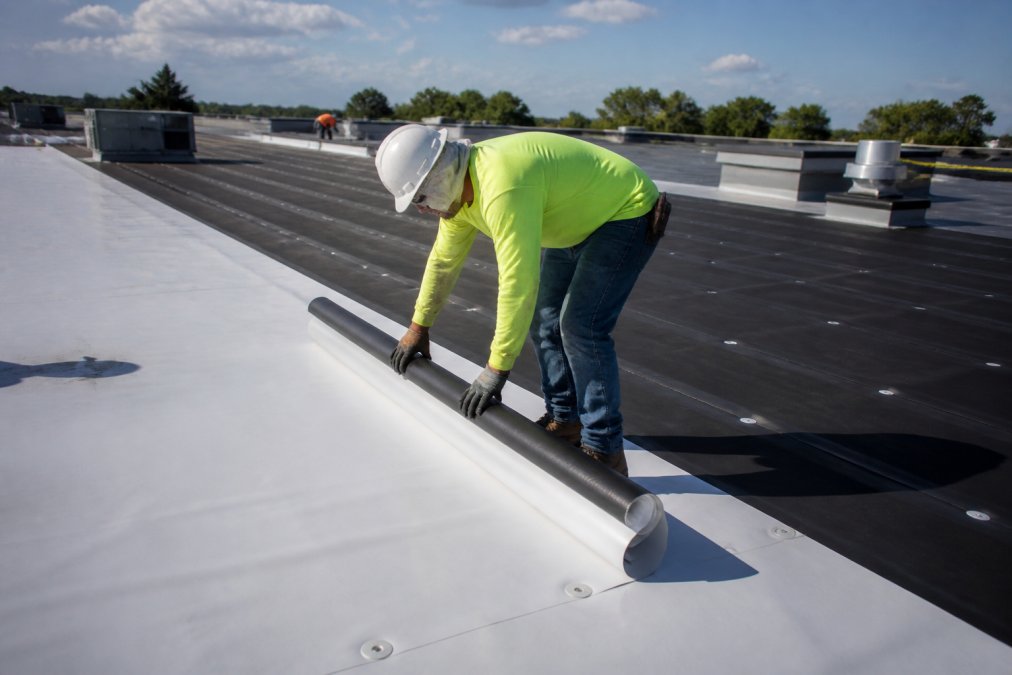
After deck preparation, underlayment goes down as a moisture barrier. The roofing membrane installation is the core of the project, whether single-ply membrane, built-up roofing, or metal roofing, this phase requires precision. Seams must be sealed properly and fastening patterns must follow manufacturer specifications.
Flashing details are critical. Every penetration, HVAC unit, vent, skylight, and wall needs proper flashing to prevent water infiltration. Flashing is where most commercial roof leaks originate. Experienced contractors spend time getting these details right.
Ventilation Systems and Drainage
Proper roof drainage prevents water pooling, which accelerates membrane deterioration. Even a slight slope helps water move off the roof rather than sitting. Ventilation systems allow moisture trapped in the roof assembly to escape, reducing condensation damage risk. The installation phase concludes with a final walkthrough inspecting every seam, flashing detail, and penetration.
Choosing a Commercial Roofing Contractor
The contractor you choose determines project quality more than any other factor.
Contractor Credentials and Experience
Look for contractors with specific commercial roofing experience. Residential and commercial roofing are different disciplines. Ask how many commercial projects they’ve completed and request references from similar building types. Verify licensing and insurance, a licensed contractor meets state requirements and carries workers’ compensation insurance.
Certifications matter. Many roofing material manufacturers require certified installers. Ask about crew stability, contractors who maintain consistent crews deliver better results than those constantly hiring temporary workers.
Insurance and Warranty Coverage
A reputable contractor offers both material warranty from the manufacturer and workmanship warranty. Material warranties typically cover membrane defects while workmanship warranties cover installation quality. A 10-year material warranty is standard; some contractors offer 15 or 20-year warranties. Workmanship warranties typically run 5-10 years.
Ask about warranty transferability if you sell the property. Some warranties transfer to new owners, adding property value. Insurance claim assistance is valuable, a contractor experienced with insurance claims can guide you through the process and ensure fair settlement.
Commercial Roofing Tax Treatment and Financial Planning
Understanding the tax implications affects your financial planning.
Capital Expenditure vs. Repair Expense
The IRS distinguishes between repairs and capital improvements. A repair maintains the roof’s existing condition and is deductible in the year incurred. A full roof replacement is a capital expenditure, you cannot deduct the entire cost in one year but instead depreciate it over the roof’s useful life, typically 15-20 years. Consult with your accountant about how your specific project should be classified.
Energy Efficiency Tax Incentives
Some roofing materials qualify for energy efficiency tax credits. Cool roofing materials with high solar reflectance reduce cooling costs by reflecting sunlight. Check current tax incentive programs, eligibility requirements vary and change annually. Calculate long-term savings from energy efficiency; the energy savings combined with tax incentives can offset a portion of replacement cost.
Permitting, Compliance, and Insurance Claims
Navigating permits and insurance claims adds complexity but is essential for protecting yourself legally and financially.
Building Code Compliance and Permits
Most jurisdictions require permits for commercial roof replacement. Building codes specify roofing requirements for your area, addressing wind resistance, fire rating, structural load capacity, and drainage. Your new roof must meet current code requirements. Inspections happen at key phases, after tear-off, after underlayment installation, and after membrane installation.
Managing Your Insurance Claim
If roof replacement is due to storm damage or other covered losses, your insurance company should help pay. Start by documenting damage with photos and video, then file a claim promptly. Get written estimates from contractors. A contractor experienced with insurance claims can communicate directly with adjusters and ensure your estimate reflects actual scope of work needed.
Understand your deductible. If your policy has a $5,000 deductible and replacement costs $50,000, insurance covers $45,000. Some contractors offer financing to cover deductibles.
Commercial roof replacement is a significant undertaking, but a structured approach makes it manageable. Start with a thorough inspection, plan for business continuity, choose an experienced contractor, and understand the financial and regulatory implications. Rescue Roofing works with property managers throughout the area to guide them through every phase of the process. Our team assists with insurance claims, provides detailed inspections, and coordinates the entire project to minimize disruption to your operations. The goal is a roof that protects your building for decades while keeping your business running smoothly during the work.
Frequently Asked Questions
How long does a commercial roof replacement take?
Most commercial roof replacements take 1-3 weeks depending on roof size, weather conditions, and complexity. A 10,000 square foot roof typically takes 5-7 days of active work. Delays occur during permit approval, decking repairs, or poor weather. Your contractor should provide a realistic timeline during the initial assessment phase.
Is roof replacement capitalized or expensed for tax purposes?
Full commercial roof replacement is typically capitalized as a capital improvement and depreciated over 27.5 years under MACRS rules. Repairs and maintenance are expensed immediately. The distinction matters for your tax liability. Consult your accountant to confirm treatment for your specific situation, as it depends on whether you're replacing or repairing the existing system.
What should a commercial roof inspection checklist include?
A thorough commercial roof inspection checklist should cover: membrane condition and seams, flashing integrity around penetrations, roof deck structural integrity, drainage systems and gutters, insulation R-value and thermal performance, ventilation system function, visible water stains or moisture infiltration, and overall roof slope. Document findings with photos and measurements to support insurance claims or warranty decisions.
What makes one roofing contractor better than another?
Compare contractors on: years of commercial roofing experience, valid licenses and insurance coverage, warranty terms on materials and workmanship, references from similar-sized projects, detailed written estimates, communication during the project, and willingness to handle insurance claims. Ask about their process for managing business disruption and whether they offer financing options that fit your budget.
How do I know if my roof needs replacement or just repair?
If your roof is under 15 years old and damage is localized to one area, repair is usually sufficient. If it's over 20 years old, has widespread deterioration, multiple leak locations, or the cost of repairs exceeds 50% of replacement cost, replacement makes financial sense. A professional inspection will reveal whether structural damage makes replacement necessary for long-term safety.
What are the OSHA safety requirements for commercial roof replacement?
OSHA requires fall protection for workers on roofs over 6 feet high, guardrails or safety nets, proper training for all personnel, and weather monitoring to halt work during unsafe conditions. Contractors must also provide debris management and maintain clear access routes. Your contractor should demonstrate compliance with these standards and carry appropriate insurance to cover worker safety.
How does the insurance claims process work for storm damage?
After storm damage, file a claim with your property insurance company and request an adjuster inspection. Your contractor can document damage and provide estimates. Many contractors assist with the claims process by communicating directly with adjusters and providing detailed damage assessments. This coordination speeds approval and ensures the insurance settlement covers necessary repairs or replacement.
What warranty coverage should I expect on a new commercial roof?
Standard warranties include manufacturer coverage on materials (typically 10-20 years) and contractor workmanship warranties (usually 5-10 years). Some contractors offer extended warranties up to 25 years. Review warranty terms carefully, they often exclude damage from improper maintenance, extreme weather, or alterations. A quality contractor will explain exactly what's covered and for how long.
This article was written using GrandRanker