


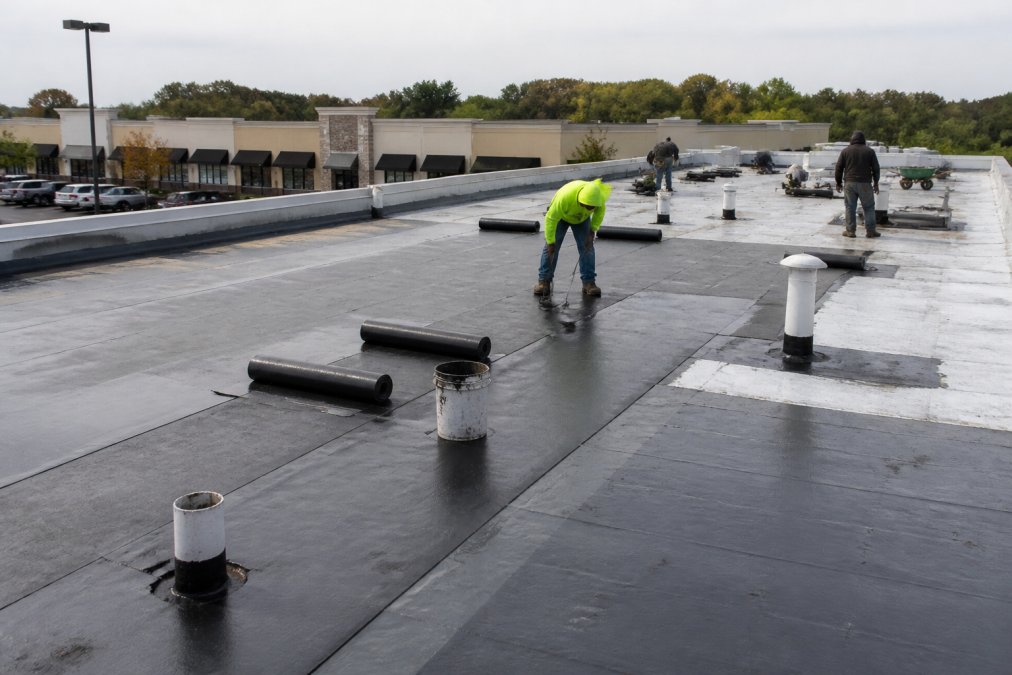

Table of Contents
- Common Flat Roof Problems in Retail Centers
- Signs Your Retail Roof Needs Repair
- Understanding Commercial Roof Leak Repair Cost
- TPO vs EPDM Roofing for Retail Centers
- Flat Roof Maintenance Checklist for Property Managers
- OSHA Safety Requirements for Commercial Roof Work
- The Repair Process: What to Expect
- Protecting Your Business During Roof Repairs
Last Updated: August 10, 2026
Common Flat Roof Problems in Retail Centers
Water pooling on flat roofs is the most common issue retail centers face. When drainage systems fail or membranes develop low spots, standing water accelerates membrane deterioration, creates entry points for leaks, and compromises structural integrity.
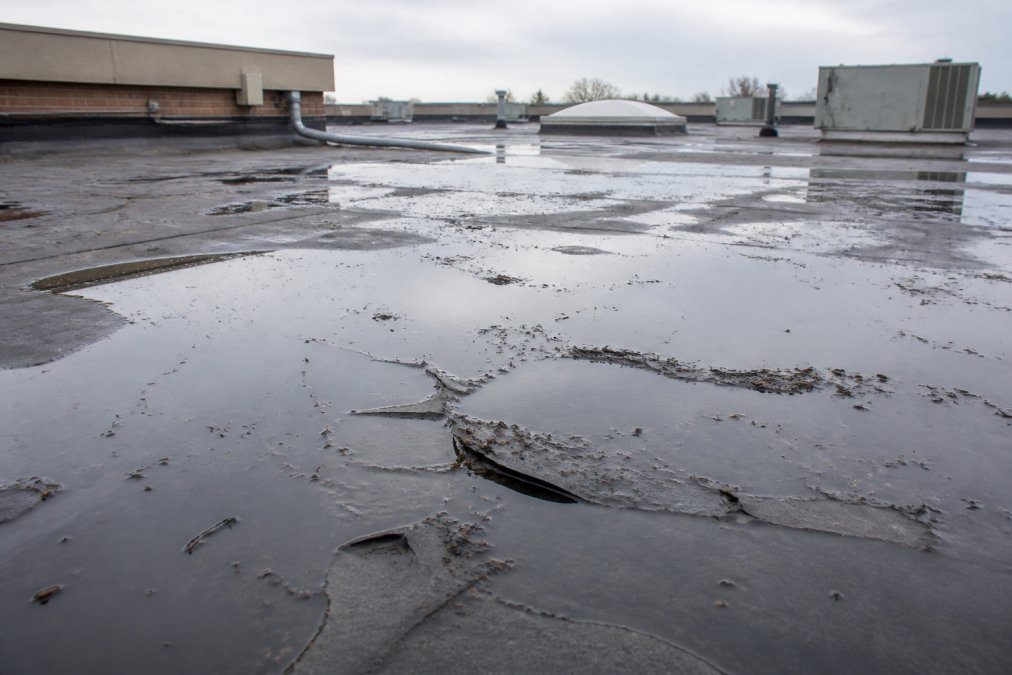
Seam failure represents another critical challenge. TPO and EPDM membranes are joined at seams vulnerable to thermal shock. In Tulsa’s climate, where summer heat exceeds 95°F and winter temperatures drop below freezing, seams experience constant stress. When seams fail, water infiltration follows quickly, affecting merchandise, HVAC systems, and tenant spaces below.
Puncture damage and membrane deterioration often go undetected until water damage appears inside the building. A single nail, storm debris, or foot traffic can compromise the membrane. Retail centers typically have multiple HVAC units, antennas, and roof penetrations, each a potential weak point. UV exposure degrades membranes over time, reducing puncture resistance and flexibility.
Ignoring ponding water for even one season can cause membrane degradation that spreads across the entire roof system. What starts as a localized problem becomes a building-wide issue requiring costly restoration or complete tear-off replacement.
Signs Your Retail Roof Needs Repair
Interior water stains on ceilings or walls are the most obvious indicator that your flat roof needs professional attention. By the time visible damage appears inside, the membrane has already been compromised for weeks or months.
Visible membrane damage, cracking, blistering, or wrinkled areas indicate that your roof’s protective layer is failing. Blistering occurs when moisture becomes trapped between membrane layers. These aren’t cosmetic issues, they’re structural warnings that the roof is losing its ability to shed water effectively.
Increased energy bills often signal roof problems. When the membrane deteriorates, thermal efficiency declines and HVAC systems work harder to maintain temperature. If cooling or heating costs have risen unexpectedly, a professional roof inspection using infrared thermography can reveal moisture intrusion or insulation problems invisible to the naked eye.
Visible mold growth, algae, or moss on the roof surface indicates persistent moisture problems. These organisms accelerate membrane degradation and create slip hazards for maintenance personnel.
Roof age matters significantly. Most TPO and EPDM membranes have a 15-20 year lifecycle. If your roof is approaching or exceeding this age, preventative maintenance becomes critical.
Schedule a structural assessment every 3-5 years for roofs over 10 years old. Early detection of seam failure, membrane degradation, or drainage issues can save tens of thousands in restoration costs compared to waiting for visible damage.
Understanding Commercial Roof Leak Repair Cost
Flat roof repair for retail centers varies dramatically based on the extent of damage, roofing system type, and whether repairs can be localized or require broader intervention. A small seam repair costs significantly less than addressing widespread membrane failure or installing a new drainage system.
Simple patching involves cleaning the affected area, applying compatible sealant or patch material, and testing for leaks. This works for isolated damage but fails when the underlying membrane has lost structural integrity. More comprehensive repairs might involve stripping back the membrane, replacing insulation, and re-sealing larger sections.
Roof coating and restoration services offer a middle path between localized repair and complete replacement. Silicone roof coatings can extend membrane life by 5-10 years while improving UV resistance and waterproofing. This approach works best when the underlying structure is sound but the membrane shows signs of aging.
Complete tear-off and replacement becomes necessary when damage is extensive, the membrane is near end-of-life, or previous repairs have failed repeatedly. This is the most expensive option but provides the longest-lasting solution, delivering 20+ years of reliable performance.
Financing options matter for retail center budgets. Flexible financing allows you to address roof problems immediately rather than deferring maintenance until failure occurs. Rescue Roofing assists with insurance claim documentation and communication with adjusters, which can offset a significant portion of repair costs when storm damage is involved.
The true cost of roof repair is determined by how quickly you address problems. Early intervention through maintenance and minor repairs prevents the catastrophic failures that require complete replacement and extended business disruption.
TPO vs EPDM Roofing for Retail Centers
TPO (thermoplastic polyolefin) and EPDM (ethylene propylene diene monomer) are the two dominant membrane systems for commercial flat roofs.
TPO membranes offer superior UV resistance and reflectivity. The white surface reflects solar radiation, reducing cooling costs, a meaningful advantage for buildings with significant HVAC loads. TPO seams are heat-welded, creating strong, reliable joints when installed properly. The material is more puncture-resistant than EPDM, reducing vulnerability to foot traffic and debris damage.
EPDM rubber roofing has been used for over 50 years, providing extensive performance history. The material is inherently flexible, resisting thermal shock better than TPO. EPDM handles freeze-thaw cycles effectively. Repairs are straightforward, technicians can patch EPDM with compatible materials without specialized heat-welding equipment.
The trade-off is that EPDM requires more maintenance. The black surface absorbs heat, increasing cooling costs. Seams are glued rather than heat-welded, making them more vulnerable to failure if adhesive degrades. EPDM is also more susceptible to puncture damage.
For flat roof repair for retail centers in Oklahoma, the choice depends on your priorities. If you’re replacing a failed EPDM system and want lower maintenance with better energy efficiency, TPO is the stronger choice. If you’re patching an existing EPDM roof and want proven reliability with straightforward repair options, staying with EPDM makes sense. Rescue Roofing can evaluate your specific situation and recommend the system that balances cost, performance, and longevity for your building.
Flat Roof Maintenance Checklist for Property Managers
Regular maintenance prevents expensive failures that disrupt retail operations and damage tenant relationships.
Spring Inspection: After winter weather, check for debris accumulation, ice dam damage, and seam separation. Clear gutters and downspouts. Inspect flashing around HVAC units, antennas, and roof penetrations for gaps or deterioration. Look for evidence of water intrusion.
Summer Maintenance: Walk the roof surface (safely, with proper fall protection) and look for blistering, wrinkled areas, or pooling water. Mark any areas where water accumulates during or after rain, these indicate drainage problems. Check that roof drains are clear and functioning. Inspect sealant around penetrations.
Fall Preparation: Before winter arrives, ensure drainage systems are fully functional. Remove leaves and debris from gutters and downspouts. Inspect seams for signs of separation or adhesive failure. Check weather-exposed sealants for cracking.
Winter Monitoring: Document any ice dam formation or snow accumulation patterns. After significant snowfall or ice events, inspect for damage. Watch for water stains appearing on interior ceilings during or immediately after thaw cycles.
Annual Professional Assessment: Schedule a structural assessment annually for roofs over 10 years old, every other year for newer roofs. A professional inspection using moisture surveys and infrared thermography identifies problems invisible to visual inspection.
Keep detailed records of all maintenance activities, repairs, and inspections. Documentation supports insurance claims and helps identify recurring problems.
OSHA Safety Requirements for Commercial Roof Work
Working at height on commercial roofs involves serious hazards. OSHA regulations establish mandatory safety requirements that protect workers and shield building owners from liability.
Fall protection is the primary requirement. OSHA mandates fall protection systems for all work at heights exceeding 6 feet. For flat roofs, this typically means guardrail systems, safety net systems, or personal fall arrest systems.
Roof access and egress must be safe and properly maintained. Ladders, stairs, or ramps must be secure and stable. Roof hatches must have proper guardrails or barriers.
Electrical hazards require attention if the roof has power lines nearby. OSHA requires minimum clearance distances from power lines, typically 10 feet for lines under 50,000 volts.
Weather conditions affect safety requirements. OSHA requires contractors to halt work when weather creates unsafe conditions. Rescue Roofing’s team understands these requirements and schedules work during weather windows that allow safe, efficient completion.
Contractor qualifications matter. Reputable roofing contractors maintain current certifications, provide worker safety training, and carry appropriate insurance. When you hire a contractor for flat roof repair for retail centers, verify that they understand and follow OSHA requirements.
Hiring unlicensed or uninsured contractors to avoid costs creates liability exposure far exceeding any savings. If a worker is injured on your roof, you could face OSHA fines and civil liability regardless of who hired them. Always verify contractor credentials and insurance before work begins.
The Repair Process: What to Expect
Understanding the repair timeline helps you plan for business continuity and manage tenant expectations.
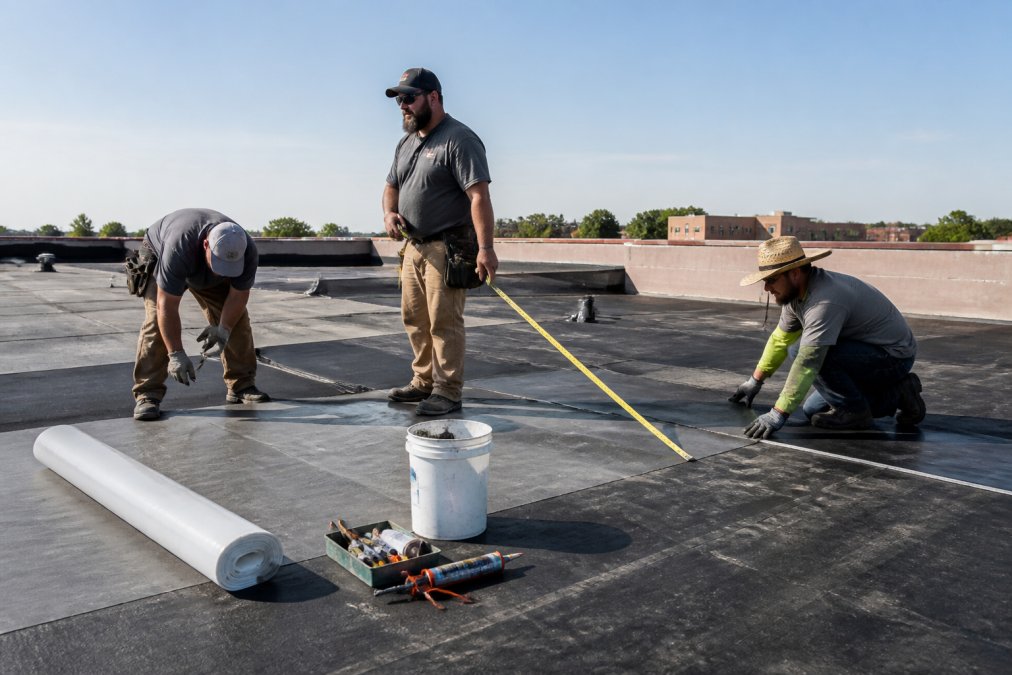
Initial Assessment and Documentation: The first step is a thorough inspection and damage documentation. Rescue Roofing uses accurate aerial quotes and detailed inspections to identify all damage. Professional documentation also supports insurance claims.
Insurance Claim Preparation: If storm damage is involved, the contractor assists with insurance claim filing and documentation. Rescue Roofing handles this process, which accelerates claim approval and reduces the burden on your management team.
Repair Plan and Timeline: Once damage is fully assessed, the contractor develops a repair plan outlining the scope of work, materials, timeline, and cost. For retail centers, this plan addresses how work will be scheduled to minimize disruption to tenants and customers.
Material Procurement and Staging: The contractor obtains necessary materials and stages them on-site in advance, preventing delays once work begins.
Repair Execution: Work proceeds according to the agreed timeline. For seam repairs or patching, the contractor cleans the affected area, removes damaged material, applies compatible repair materials, and tests for watertight integrity.
Quality Testing and Documentation: After repairs are complete, the contractor performs leak testing to verify that water infiltration is resolved. Documentation of successful testing protects both you and the contractor.
Final Inspection and Warranty: The completed work is inspected to ensure it meets specifications. The contractor provides warranty documentation covering the repair work. Rescue Roofing provides clear warranty terms and stands behind the work performed.
Protecting Your Business During Roof Repairs
Roof repairs create temporary disruptions that must be managed carefully to protect tenant relationships and business operations.
Tenant Communication: Notify tenants in advance about repair work, including the expected timeline, noise levels, and any access restrictions. Clear communication prevents complaints and demonstrates professional management.
Access Planning: Coordinate with the contractor to maintain safe access routes for tenants and customers during repairs. For retail centers with multiple tenants, this coordination is critical to maintaining goodwill.
Contingency Planning: Identify what happens if repairs take longer than expected or if weather delays work. Have backup plans for critical systems. For retail centers with temperature-sensitive tenants, this planning is essential.
Insurance and Liability: Ensure that the contractor carries appropriate insurance and that your building’s insurance covers the repair work. Rescue Roofing maintains comprehensive coverage and provides documentation upon request.
Documentation for Future Reference: Keep records of all repair work, including photographs, invoices, warranty documents, and contractor contact information. This documentation supports future maintenance planning.
Flat roof repair for retail centers requires balancing immediate cost concerns with long-term building protection. Water damage spreads quickly and affects multiple tenants, making rapid response critical. Rescue Roofing provides accurate aerial quotes, thorough inspections, and assistance with insurance claims, eliminating guesswork and accelerating the repair process. Our team understands the operational demands of retail centers and schedules work to minimize disruption while delivering reliable, lasting repairs. Call Rescue Roofing today to assess your roof’s condition and develop a repair plan that protects your investment and your tenants.
Frequently Asked Questions
How often should retail center flat roofs be inspected?
Retail center flat roofs should be inspected at least twice annually, ideally in spring and fall. After severe weather events, additional inspections are critical. Regular inspections catch membrane integrity issues, seam failures, and drainage problems early, preventing costly water damage and structural concerns. Professional inspections using infrared thermography and moisture surveys provide comprehensive assessments of roof condition.
What are the most common causes of leaks in retail flat roofs?
Ponding water is the leading cause of leaks on flat roofs, followed by seam failure, thermal shock damage, and roof flashing deterioration. TPO and EPDM membranes can develop punctures from foot traffic and UV exposure over time. Poor drainage systems, inadequate slope, and substrate movement also contribute significantly. Thermal stress from temperature fluctuations weakens membrane seams, especially in retail centers with high HVAC usage.
Can you repair a flat roof while the retail store is open?
Yes, many flat roof repairs can be performed while retail operations continue, though the scope and location matter. Leak detection and localized repairs may cause minimal disruption. However, extensive tear-off work, full restoration, or major drainage system installation typically require temporary operational adjustments or brief closures. Experienced contractors like Rescue Roofing coordinate timing to minimize business impact and protect inventory from water exposure.
What warranty should I expect on flat roof repairs?
Warranty terms vary by repair type and roofing material. Seam repairs typically carry 5-10 year warranties, while full roof restoration warranties extend 10-20 years depending on the system (TPO, EPDM, or silicone coating). Material warranties cover manufacturing defects, while workmanship warranties protect against installation failures. Always request warranty documentation in writing and clarify coverage limits, exclusions, and claim procedures with your contractor before work begins.
This article was written using GrandRanker