


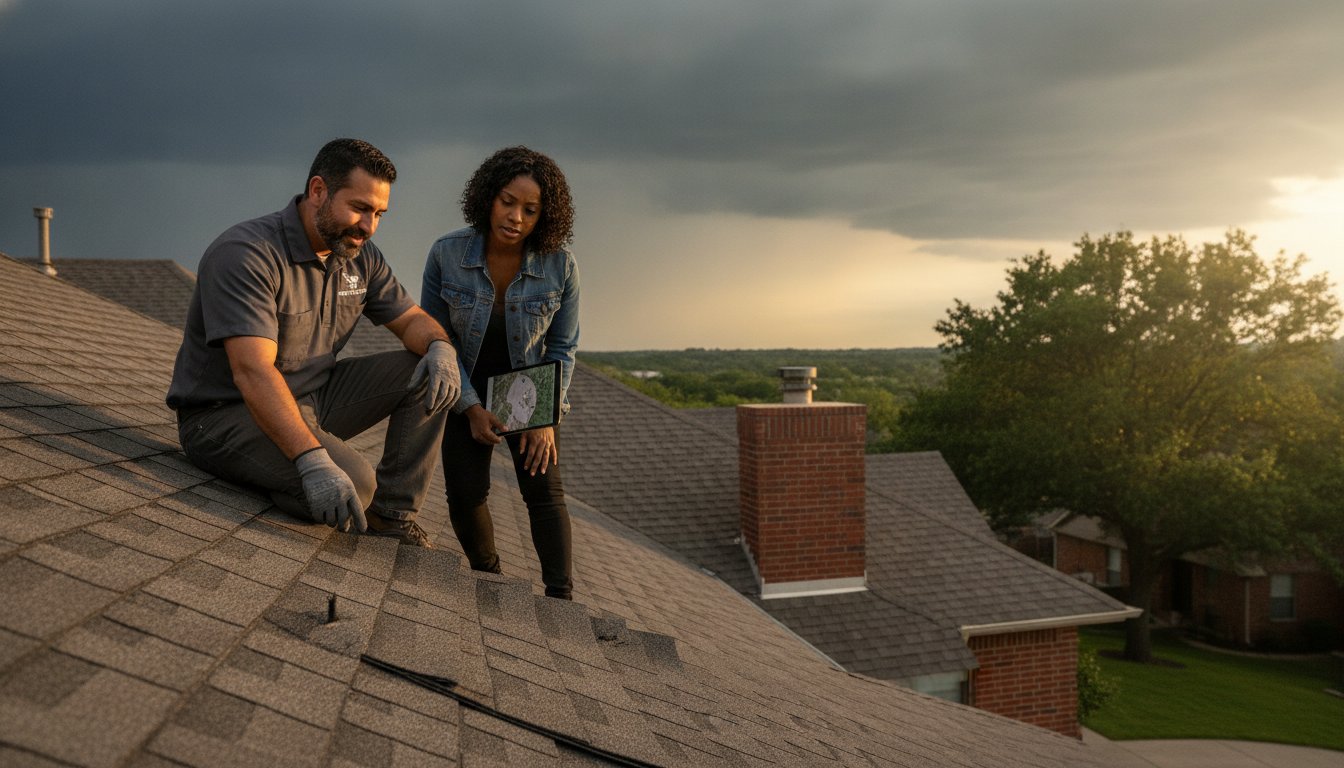

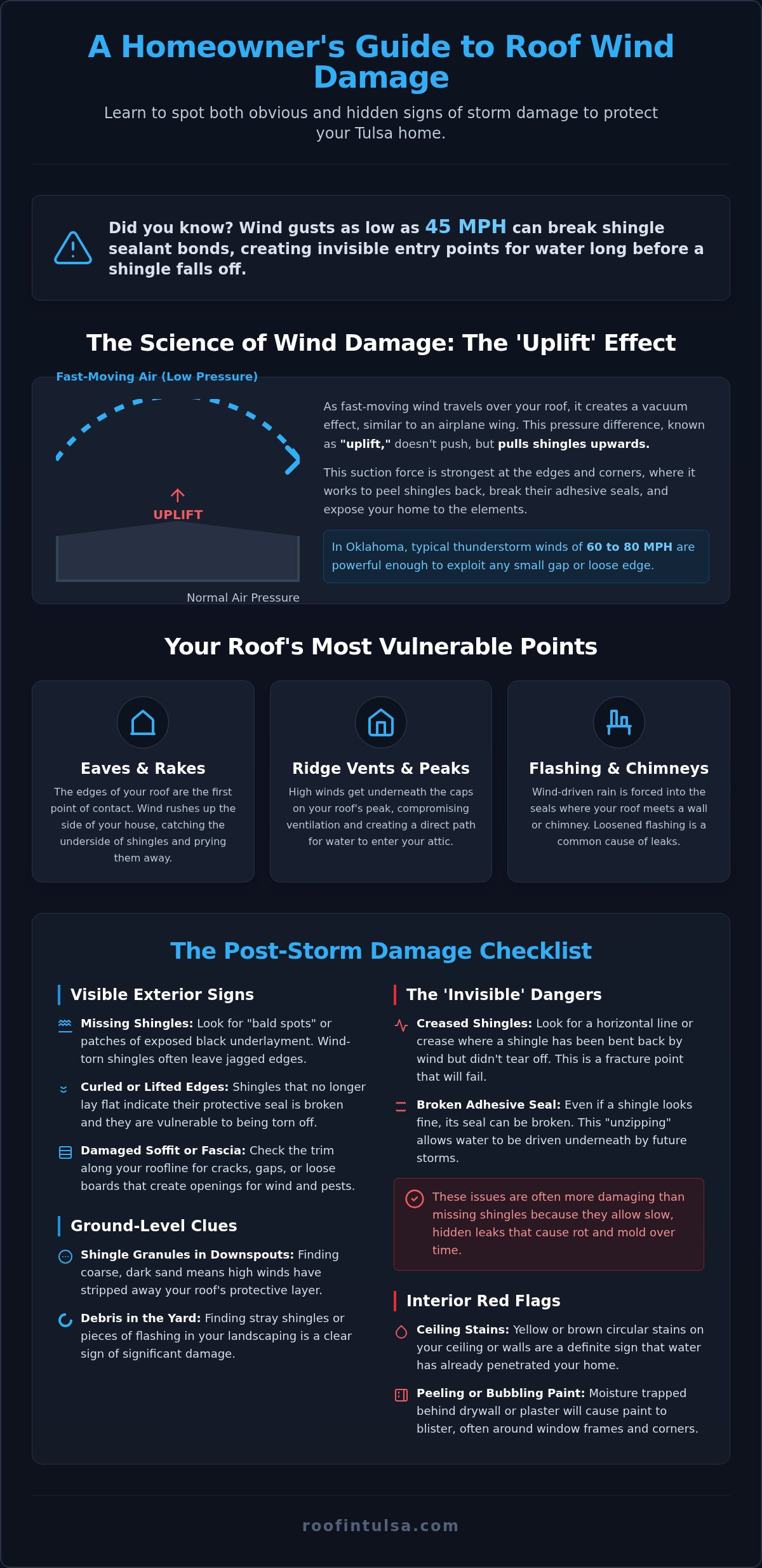
Did you know that wind gusts as low as 45 mph can break the sealant bonds on your shingles, even if nothing looks missing from the ground? It’s a common frustration for Tulsa homeowners who wake up after a storm and see a clean lawn but worry about what’s happening on their rafters. Understanding the specific signs of wind damage on a roof is the first step toward protecting your biggest investment. You deserve to feel certain that your home is secure, rather than waiting for the next downpour to reveal a hidden leak.
We understand the anxiety that comes with Oklahoma’s unpredictable weather and the confusion of filing insurance claims. This guide will teach you how to spot both obvious and invisible damage so you can navigate the repair process with total confidence. We’ll walk through a clear checklist for self-inspection, explain how the 2026 building codes in Tulsa impact your restoration, and show you how to avoid high-pressure contractors. By the end, you’ll have the peace of mind that comes with knowing your roof is truly weather-tight and your home is dry.
Key Takeaways
- Understand how the “uplift” effect creates a vacuum that targets the edges and ridges of your roofline during Oklahoma storms.
- Learn to identify the most common signs of wind damage on a roof from the ground, including missing shingles and exposed underlayment.
- Discover why “invisible” issues like creased shingles and broken adhesive seals are often more damaging than obvious missing pieces.
- Identify interior red flags, such as ceiling stains and peeling paint, that indicate moisture is already trapped in your home.
- Follow a simple, step-by-step roadmap to document damage and navigate the insurance claim process with a trusted local professional.
Understanding Wind Damage: The ‘Uplift’ Effect on Tulsa Roofs
Wind doesn’t simply blow against your home. It acts more like an airplane wing. As fast-moving air travels over your shingles, it creates a vacuum effect known as uplift. This suction pulls at the materials that make up your building envelope, trying to detach them from the structure. Wind uplift is the pressure differential that peels shingles back, often starting at the very edges of your roofline where the wind’s force is most concentrated.
In Oklahoma, we frequently deal with straight-line winds that reach 60 to 80 mph. These gusts can occur during any standard thunderstorm, even without a tornado present. Because the wind is moving so quickly, it searches for any small gap or loose edge to exploit. Once the seal is broken, the uplift force increases, making it one of the most subtle signs of wind damage on a roof. Identifying these issues early is vital for maintaining the integrity of your home against the elements.
Why Tulsa Storms Are Unique
Tulsa sits in a transition zone where High Plains wind patterns meet humid air from the Gulf. This creates a constant cycle of high-velocity winds that put immense stress on local homes. Our seasonal temperature swings also play a role. The intense summer heat followed by freezing winters can weaken shingle adhesives over time. When a storm brings a “near miss” from a tornado, the resulting suction can be powerful enough to lift shingles even if the funnel never touches the ground.
The Vulnerable Points of Your Roof
Most damage doesn’t start in the middle of a roof slope. It begins at the perimeters where the wind can gain leverage. Understanding these weak spots helps you know where to look first:
- Eaves and Rakes: These are the edges of your roof. Wind hits the side of your house and rushes upward, catching the underside of the shingles and prying them away from the deck.
- Ridge Vents: High winds can get underneath the caps on your roof’s peak. This can compromise your attic’s ventilation system and allow water to enter at the highest point of your home.
- Flashing and Chimneys: Wind-driven rain is forced into the tiny cracks where your roof meets a vertical surface. If the wind has loosened the flashing, water will find its way in.
Because Tulsa’s 2026 building codes now require sealed roof decks and metal drip edges, newer roofs are better equipped to handle these forces. However, older systems remain highly susceptible to the signs of wind damage on a roof, especially after a particularly active storm season.
Visible Exterior Signs of Wind Damage on Your Roof
After the winds die down, the most obvious signs of wind damage on a roof are often visible right from your driveway. Missing shingles are the most common red flag. You’ll notice bald spots or patches of exposed black underlayment where the tabs have been torn away. Unlike shingles that fall off due to old age or rot, wind-torn shingles often leave behind jagged edges or clean tears where the fastener was pulled through the material during a high-velocity gust.
Curled or lifted edges are another warning sign. If your shingles no longer lay flat against the roof deck, their protective seal is likely broken. This allows the next gust of wind to get underneath and cause further damage. Don’t overlook the trim of your home, either. Damaged soffit and fascia boards can create openings for wind and pests. Similarly, heavy gusts can bend gutter brackets or detach sections of the guttering entirely, which prevents proper drainage during the next Oklahoma downpour.
Ground-Level Inspection Checklist
You don’t need to climb a ladder to find trouble. Walk around your property and look for these specific indicators of storm stress:
- Shingle Granules: Check your downspouts for what looks like coarse, dark sand. High winds strip these protective granules away, leaving your roof vulnerable to UV damage and leaks.
- Debris in the Yard: Finding stray shingles or pieces of metal flashing in your bushes is a clear sign that the storm was strong enough to compromise your roof’s integrity.
- Impact Bruising: Look for dark, circular spots on shingles. These are often caused by wind-blown debris hitting the roof with significant force.
Damage to Roof Accessories
Your shingles aren’t the only components at risk during a Tulsa storm. Roof vents and turbine fans are often the first things to show signs of high-velocity impact. If they appear dented, misaligned, or are no longer spinning freely, they can’t properly ventilate your attic. This leads to moisture buildup and eventual structural damage. Even your chimney caps can be loosened or blown askew by strong straight-line winds, creating a direct path for water to enter your home.
Pay close attention to your drainage system as well. Seeing damaged gutter guards or bent downspouts can signal that your home took a direct hit from a severe weather cell. If you’ve spotted any of these issues, it’s a good idea to schedule a professional roof inspection to ensure no hidden leaks are forming. Catching these problems early is the best way to maintain your home’s value and avoid the cost of a full replacement later.
Interior Red Flags: When Wind Damage Moves Inside
Sometimes the most telling signs of wind damage on a roof aren’t found by looking at the shingles, but by looking at your ceiling. While missing shingles are immediate, interior symptoms often take several weeks and multiple Oklahoma rain cycles to manifest. If you notice yellow or brown water stains on your ceilings, pay close attention to the corners of the room or the areas surrounding light fixtures. These are the path of least resistance for water that has bypassed your roof’s primary defenses.
You might also see paint peeling or wallpaper bubbling away from the drywall. This indicates that moisture is already trapped behind the surface, leading to structural rot if left unaddressed. Does the upper level of your home have a sudden, persistent musty odor? That scent is a strong indicator of mold or mildew growth in hidden spaces. Interior damage is often the final stage of a long-ignored wind leak. Identifying these signs of wind damage on a roof from the inside can save you thousands in drywall and structural repairs.
The Attic Assessment
Your attic is the first line of defense after the shingles. Grab a flashlight and look for daylight peeking through the roof boards; this is a certain sign that shingles or underlayment have been stripped away. While you’re up there, feel the insulation. If it’s damp or matted down, it has lost its energy-saving properties. You should also check for rust on the nails protruding through the roof deck. Rusty nails are a clear signal of chronic moisture exposure that has been happening since the last major wind event.
Sudden Energy Bill Spikes
Have you noticed your cooling costs climbing unexpectedly during the Tulsa summer? Wind damage doesn’t just let water in; it lets conditioned air out. High winds can shift or damage your vents, which disrupts your home’s roof ventilation. When this system is compromised, your attic becomes a heat trap, forcing your air conditioner to work much harder.
A compromised roof seal allows air to exchange freely between your attic and the outdoors. In our regional climate, this inefficiency adds up quickly. Investing in a professional inspection is significantly cheaper than paying for a year of wasted energy and the mold remediation that follows a neglected leak. Keeping your home dry and energy-efficient starts with catching these subtle interior warnings before they become emergency repairs.
The ‘Invisible’ Danger: Creased Shingles and Seal Failure
Many homeowners assume that if they don’t see shingles scattered across their lawn, their roof survived the storm unscathed. This is a dangerous misconception. The most hazardous signs of wind damage on a roof are often completely invisible from the ground. High-velocity gusts create a “flapping” effect where the wind lifts a shingle tab, bends it backward, and then lets it drop back into place. This repeated motion creates a permanent horizontal crack, or crease, across the top of the shingle. It breaks the internal fiberglass matting, leaving your home vulnerable even though everything looks normal from your driveway.
Seal failure is the “unzipping” of the factory-applied adhesive strip that bonds your shingles together. Once this bond is broken, the shingle is no longer anchored to the roof deck. It becomes a loose flap waiting for the next 45 mph gust to tear it away completely. Because these shingles usually lay flat again after the wind dies down, you can’t spot the failure without physically lifting the tabs during a professional inspection. This hidden weakness is why many Tulsa homes suffer “surprise” leaks during relatively minor rain showers.
Why Insurance Companies Care About Creases
Insurance adjusters view a creased shingle as a functionally broken component. It can no longer shed water properly or resist the next storm. Because a crease is a clear indicator of wind-forced trauma, it often qualifies as a covered loss that can lead to a full roof replacement under Oklahoma policies. A professional roofer knows how to document these marks properly, using specialized lighting and photography to prove the extent of the damage to your adjuster. Ignoring these signs now only leads to headaches later, as insurance companies may eventually attribute the damage to long-term neglect rather than a specific storm event.
The Difference Between Wind and Wear
It’s vital to distinguish between storm damage and natural aging to ensure your claim is successful. Thermal cracking, which happens as shingles expand and contract in the intense Tulsa heat, usually appears as random, vertical fissures across the entire roof surface. Wind creasing is almost always horizontal and follows the specific line where the shingle tab was forced to bend. Consistent roof maintenance creates a documented history of your roof’s condition, making it much easier to prove that new creases are the result of a recent weather event. Even scuffing from wind-blown tree branches is considered storm damage, as it strips away the protective granules your roof needs to survive the summer sun. If you suspect your shingles have been compromised, you should request a professional wind damage assessment to catch these hidden failures before they turn into costly interior leaks.
Navigating Storm Recovery in Tulsa: Inspections and Insurance
Dealing with the aftermath of a severe Oklahoma storm is stressful. We take a “Neighbor-First” approach to recovery because we live and work in the same communities you do. Choosing a local Tulsa contractor prevents the long-term warranty headaches that often follow when national companies leave town after the storm season ends. You need a partner who will be here next year, and the year after that, to stand behind the work performed on your home.
Recovery should follow a specific, logical order to protect your investment. First, document any visible signs of wind damage on a roof from the safety of the ground. Next, call a professional for a detailed, ladder-assisted assessment. You should only notify your insurance agent after you have a professional report in hand. This sequence ensures you have clear evidence to support your claim from the very first conversation with your provider.
Rescue Roofing Tulsa specializes in removing the administrative burden from your shoulders. We don’t just provide a quote; we meet your insurance adjuster on-site to walk through the damage together. This ensures the adjuster sees every creased shingle and broken seal we identified during our initial visit. You should never sign a binding contract before a full roof inspection is completed and you have a clear understanding of the necessary repairs.
Avoiding Storm Chasers in Oklahoma
After a major weather event, “storm chasers” often flood the Tulsa area. You can spot these red flags easily. Be wary of out-of-state license plates, high-pressure door-knocking tactics, or anyone offering to “pay your deductible.” This practice is often a violation of Oklahoma insurance regulations and can put you at legal risk. A trustworthy company will always have a permanent local physical address and deep roots in our community. Before you commit, check for local certifications and read reviews from homeowners in your specific neighborhood to ensure you’re working with a proven expert.
Your Path to a Secure Home
Not every storm results in a total loss. Sometimes, a targeted roof repair is enough to restore your home’s integrity and keep your rafters dry. We provide a clear, no-pressure assessment of your roof’s current health so you can make an informed decision for your family. Our priority is your safety and the long-term durability of your home. If you suspect you’ve found signs of wind damage on a roof, don’t wait for a leak to confirm your fears. Schedule your free storm damage inspection with Rescue Roofing Tulsa today!
Protect Your Tulsa Home for the Long Term
Protecting your home from Oklahoma’s unpredictable weather starts with awareness. Identifying the signs of wind damage on a roof early is the best way to prevent a minor issue from becoming a structural nightmare. Whether you’ve noticed missing shingles from your driveway or subtle ceiling stains in your living room, taking action now ensures your home stays dry. Remember that “invisible” dangers like creased shingles and broken adhesive seals are just as critical as obvious holes. These hidden failures often lead to costly energy loss and mold growth if they aren’t addressed by a professional.
As a locally owned and operated company in Tulsa, we understand the stress of storm recovery. We provide expert insurance claim assistance to simplify the paperwork and offer 24/7 emergency storm response when you need it most. You don’t have to navigate the repair process alone. Get Your Free Tulsa Storm Damage Inspection Now and regain the peace of mind you deserve. Your home is your most valuable asset; let’s work together to keep it safe and secure for years to come.
Frequently Asked Questions
Can wind damage a roof without missing shingles?
Yes, wind can cause significant damage without tearing shingles away. High-velocity gusts often create a vacuum effect that lifts shingle tabs just enough to break their adhesive seals. Once this bond is broken, the shingles are “unzipped” and no longer provide a watertight barrier. This type of damage is often invisible from the ground but leaves your home vulnerable to leaks during the next Oklahoma rainstorm.
What wind speed causes roof damage?
Wind gusts as low as 45 mph can lift shingle tabs and break their sealant bonds. When speeds reach 60 mph, shingles frequently crease, crack, or blow off entirely. At 75 mph or higher, the risk of structural damage to the building envelope increases significantly. Tulsa’s straight-line winds often hit these thresholds during standard thunderstorms, making regular inspections vital for local homeowners.
Will my insurance cover a roof that was damaged by wind?
Most standard homeowners’ insurance policies in Oklahoma cover wind damage as a covered peril. This typically includes the cost of repairs or a full replacement if the damage is extensive. Because insurers require clear evidence of a storm event, documenting the signs of wind damage on a roof with a professional report is the best way to ensure your claim is processed fairly and quickly.
How long do I have to file a wind damage claim in Oklahoma?
In 2026, Oklahoma law allows up to 24 months from the date of loss to file a claim for hidden damage. However, for visible damage, most policies require reporting within 30 to 180 days. Prompt filing is beneficial because new regulations now require insurance companies to acknowledge your claim within 14 days and complete the entire claims process within 90 days of your initial report.
Should I repair or replace my roof after a windstorm?
The choice depends on the severity of the damage and local regulations. Oklahoma follows the “25% Rule,” meaning if 25% or more of a roof section is damaged within a year, the entire section must often be replaced to meet current building codes. A professional assessment will determine if a targeted repair is safe or if a full replacement is necessary to protect your home’s long-term value.
How can I tell if my shingles are creased from the ground?
Identifying creased shingles from the ground is extremely difficult because they usually lay flat again after the wind stops. A crease appears as a dark, horizontal line where the shingle was folded back and the fiberglass matting snapped. You typically need a ladder-assisted inspection to see these fractures and the accompanying granule loss. If your roof looks “bumpy” or uneven, it’s a sign that creases have formed.
What happens if I ignore minor wind damage?
Ignoring small issues like broken seals or minor leaks leads to expensive structural rot and mold growth in your attic. Over time, moisture compromises your insulation and increases your energy bills. Additionally, if you wait too long to address the problem, your insurance company might deny a future claim. They often classify long-standing leaks as “neglect” rather than storm damage, leaving you to pay for repairs out of pocket.
Does a new roof still need to be inspected after a Tulsa storm?
Yes, even a recently installed roof should be checked after severe weather. While newer shingles are rated for high winds, extreme gusts can still shift ridge vents or loosen the flashing around chimneys. A post-storm inspection confirms that your home still meets 2026 building code standards and ensures that the sealed roof deck remains intact. This proactive step protects your warranty and keeps your family dry.