


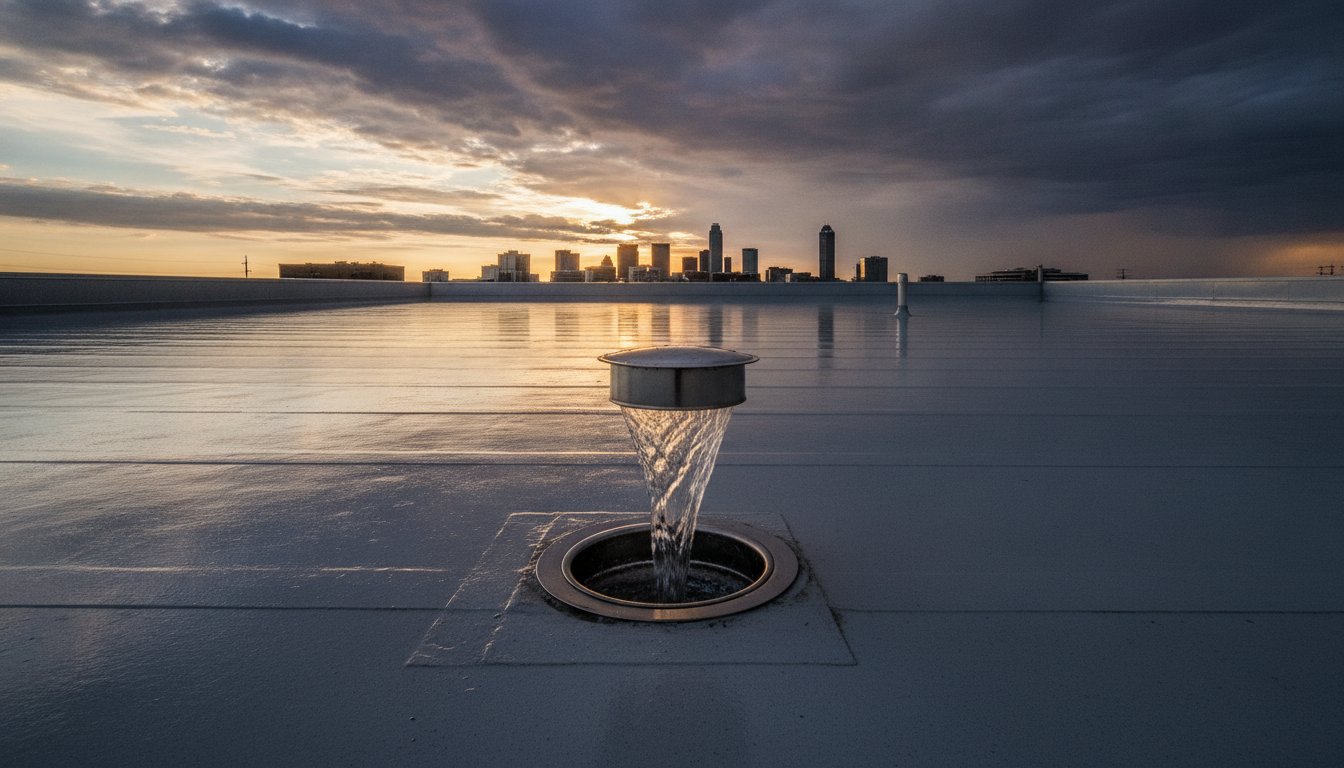

Have you ever stood on your commercial roof after a heavy Tulsa downpour and wondered if that massive pool of water is slowly compromising your building’s structural integrity? It is a common source of anxiety for many property owners in our community. We all know the stress of checking the ceiling for new water spots every time a severe thunderstorm rolls through Green Country. You shouldn’t have to worry about your roof failing under the weight of a sudden deluge or the pressure of our region’s unique clay soil challenges.
We understand that the technical jargon used by many contractors can be confusing and overwhelming. You deserve to feel confident that your investment is protected by the most effective commercial roof drainage solutions available in 2026. This guide will help you identify the best systems to eliminate ponding water and prevent the costly structural damage that often follows our unpredictable Oklahoma weather cycles.
We will walk you through the latest building code requirements, explain the differences between various drainage options, and help you determine which system fits your specific budget. This overview provides a clear path toward a dry, leak-free roof and the peace of mind that comes with working with a reliable local expert who knows Tulsa’s climate.
Key Takeaways
- Learn why evacuating water within 48 hours is vital for preventing structural stress and recurring leaks on Tulsa’s flat commercial roofs.
- Compare the benefits of various commercial roof drainage solutions, from cost-effective perimeter scuppers to high-capacity interior drains.
- Understand the 2026 building code requirements for secondary overflow systems to ensure your property remains compliant and protected.
- Discover how to implement a simple maintenance schedule and post-storm checklist to shield your investment from Oklahoma’s intense hail and wind cycles.
- Find out how a local expert can simplify the insurance claim process and design a custom drainage system tailored to our region’s specific environmental challenges.
Why Commercial Roof Drainage Systems are Critical for Tulsa Businesses
Tulsa business owners know that a calm spring afternoon can turn into a severe weather event in minutes. These sudden deluges dump a massive volume of water onto flat and low-slope roofs across Green Country. Without effective commercial roof drainage solutions, that water has nowhere to go. It sits, it settles, and it begins to cause hidden damage that can eventually lead to a very expensive surprise.
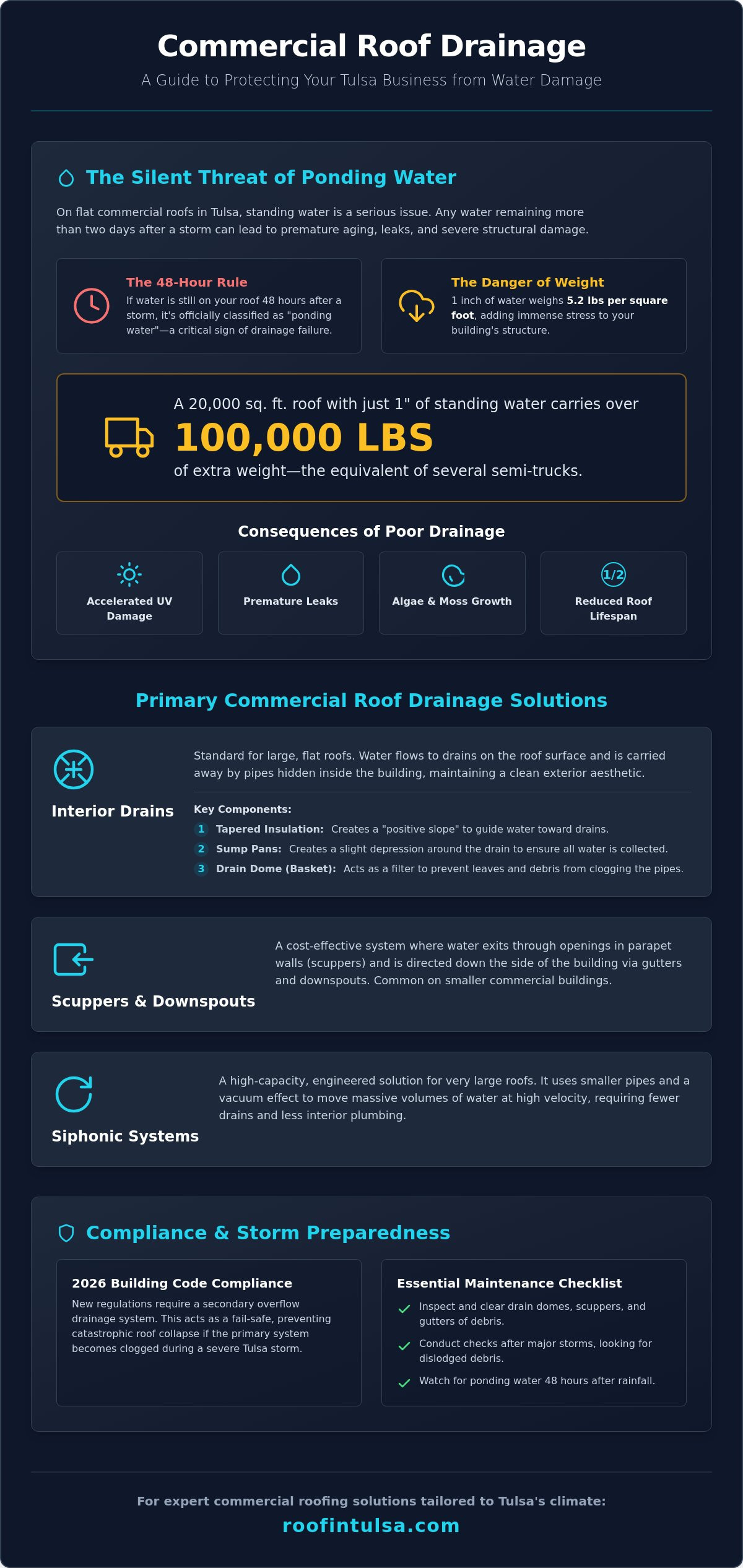
Roofing professionals follow the 48-hour rule. If standing water remains on your roof more than two days after a storm, it’s officially classified as ponding. This isn’t just a cosmetic issue. For buildings using TPO or modified bitumen membranes, standing water is a silent enemy. It acts like a magnifying glass for Oklahoma’s intense summer sun, concentrating UV rays that break down the material’s chemical bonds. Over time, this leads to brittle seams and premature leaks that compromise your entire facility.
The Threat of Ponding Water in Oklahoma
Ponding water often persists on flat commercial surfaces because of small dips in the roof deck or clogged outlets. In Tulsa, our frequent windstorms blow leaves, twigs, and dust onto roofs, which quickly turn into a thick sludge. This debris traps water and creates a breeding ground for biological growth like algae and moss. As these organisms grow, they hold even more moisture against the membrane, accelerating the degradation of your roofing system. For local warehouses and retail centers, this cycle of moisture and heat can cut the expected lifespan of a roof in half if left unaddressed.
Structural Integrity and Weight Capacity
The most immediate danger of poor drainage is the sheer weight of the water itself. It’s a heavy burden that many property owners overlook. One inch of water weighs approximately 5.2 pounds per square foot. On a typical 20,000-square-foot Tulsa warehouse, just one inch of standing water adds over 100,000 pounds of extra stress to the building’s frame. That is equivalent to parking several fully loaded semi-trucks on your roof. This risk is even greater in colder regions where snow accumulation adds significant mass, often necessitating professional services like Snow Removal Denver to mitigate structural strain.
When commercial roof drainage solutions fail during a heavy Oklahoma downpour, this weight can cause the roof deck to deflect or bow. This bowing creates a “sump” effect, where more water rushes to the lowest point, adding even more weight in a dangerous feedback loop. Understanding rain gutter basics and primary drainage outlets is the first step in protecting your structure. Proper architectural design relies on “positive drainage,” which ensures every square inch of the roof slopes toward a collection point. Ensuring your system can handle the volume of a 100-year storm is not just a building code requirement; it’s a necessity for the safety of everyone inside your building.
Primary Commercial Roof Drainage Solutions: From Scuppers to Siphonic Systems
Choosing the right drainage system is a major decision for any Tulsa property owner. It isn’t just about moving water; it’s about protecting your structural investment. Several commercial roof drainage solutions exist, each tailored to specific building designs and local weather demands. Understanding how these systems differ helps you make an informed choice for your facility’s long-term health.
Interior Drains and Component Breakdown
These systems are the standard for large, flat-roofed buildings like shopping centers or offices. They function much like a shower drain. Water flows toward a central point and enters a network of pipes hidden inside the building. This keeps the exterior of your building looking clean and professional.
To ensure water actually reaches the drain, we use tapered insulation or “crickets.” These are small, sloped areas built into the roof surface. Sump pans are also used to create a slight depression around the drain itself. This ensures that even small amounts of water find their way into the system.
The drain basket, or dome, is your first line of defense. It prevents debris from entering the plumbing. Because Tulsa storms often bring high winds and heavy debris, keeping these clear is vital. Following IBHS maintenance guidelines ensures these components work when you need them most. Secondary overflow drains are a non-negotiable safety feature. These sit slightly higher than the primary drain. If the main line clogs, the secondary drain takes over. This prevents water from reaching a dangerous depth that could lead to a catastrophic roof collapse.
Scuppers and Perimeter Solutions
Scuppers are a cost-effective choice for buildings with parapet walls. These are essentially openings cut into the perimeter wall. They allow water to exit the roof and flow into a downspout or simply off the building’s edge. They are highly reliable because they don’t rely on internal piping that could leak inside your building.
Open scuppers have an open top, making them very easy to inspect and clear. Closed scuppers are fully enclosed within the wall. While closed designs look more streamlined, they can be harder to maintain if a clog occurs. We often integrate scuppers with conductor heads and downspouts. This setup controls the water flow, preventing it from splashing against the building’s siding or eroding the soil near the foundation; if you need to address sunken slabs resulting from this erosion, you can discover RiseLock Concrete Lifting for professional restoration.
Traditional gutter systems remain a reliable choice for commercial properties with a slight pitch but no parapet walls. They are simple to install and maintain. For massive industrial facilities, siphonic drainage offers a high-velocity alternative. These systems use a vacuum effect to pull water through pipes at incredible speeds. This allows for smaller pipes and fewer drainage points. Every building has different needs. If you’re worried about standing water, a thorough commercial roof inspection will help determine which of these commercial roof drainage solutions is right for your property.
Evaluating the Best Drainage Solution for Your Commercial Building
How do you decide which system is right for your specific property? It isn’t a one-size-fits-all answer. Your building’s footprint, the existing roof slope, and our local Tulsa rainfall data all play a role in the final design. Selecting the right commercial roof drainage solutions requires a balance between initial installation costs and the time you’ll spend on maintenance over the next twenty years. We want to ensure your choice provides the highest level of protection for your specific investment.
System Comparison: Pros, Cons, and Use Cases
Internal drains are often the preferred choice for large-scale warehouses because they can handle massive volumes of water from the center of a wide roof. In contrast, scuppers are excellent for smaller retail buildings where water can be easily directed to the perimeter. For massive industrial facilities with complex layouts, siphonic systems provide high-intensity drainage using smaller pipe diameters. You can explore the various types of commercial drainage systems to see how each handles high-velocity water flow and different building geometries.
| System Type | Estimated Lifespan | Maintenance Frequency |
|---|---|---|
| Interior Drains | 20 – 30 Years | Semi-Annual |
| Scupper Drains | 25 – 35 Years | Quarterly |
| Commercial Gutters | 15 – 20 Years | Quarterly |
| Siphonic Systems | 30+ Years | Annual (Specialized) |
The Role of Roof Slope and Pitch
A “flat” roof is a bit of a misnomer. Every functional commercial roof needs a slight pitch to guide water toward the outlets. If your current roof has low spots where water collects, we can correct these issues during a commercial roofing project. We often use tapered insulation to create an artificial slope on dead-level roofs. This effectively directs water away from vulnerable areas and toward your primary drains, preventing the weight of ponding water from stressing your building’s frame.
Your choice of membrane also matters. TPO, PVC, and EPDM all react differently to standing water and require specific flashing techniques at the drain interface to remain watertight. Tulsa building codes are very specific about safety in our storm-prone region. Under the 2018 International Building Code adopted by the City of Tulsa, secondary overflow systems are mandatory if your roof perimeter can entrap water. These emergency systems act as a fail-safe. If your primary commercial roof drainage solutions ever become blocked by storm debris, the overflow system prevents water from reaching a dangerous weight that could lead to structural failure.
Maintaining Your Drainage System: Tulsa-Specific Storm Prep & Inspections
Even the most advanced commercial roof drainage solutions require consistent care to perform reliably during a Tulsa storm cycle. Our local weather is notoriously hard on building exteriors. Between the high winds of spring and the ice cycles of winter, your drainage components face constant stress. Establishing a proactive maintenance routine is the most effective way to prevent a minor clog from turning into a major structural headache.
Debris is the primary cause of drainage failure on commercial properties. Wind gusts frequently deposit leaves, branches, and trash onto flat roof surfaces. This material eventually migrates toward your drains, forming a “mat” that prevents water from exiting. During a heavy downpour, a single plastic bag or a handful of oak leaves can effectively seal a drain. This leads to the dangerous water weight issues we discussed earlier.
The Seasonal Maintenance Calendar for Oklahoma
We recommend a semi-annual inspection schedule tailored to our regional climate. Spring preparation should happen in late February or early March. This ensures all winter debris is cleared before the heavy thunderstorm season begins. It is also the perfect time to check that sealants haven’t cracked during the winter freeze-thaw cycles.
Fall maintenance is equally critical. Once the leaves have fallen, your gutters and scuppers must be cleared to prevent blockages. This also prepares your roof for winter, as clear drains help prevent ice damming. Consistent roof maintenance is the most cost-effective insurance you can have against the need for a premature, full-scale replacement.
Identifying Common Drainage Red Flags
You don’t always need to be on the roof to spot trouble. Look for “water lines” or dark staining on your parapet walls. These tide marks often indicate that water is backing up and draining too slowly. If you see these signs, your system is likely struggling to keep up with the volume of water.
- Loose Clamping Rings: Check the base of interior drains to ensure the membrane is still securely fastened.
- Cracked Drain Domes: Plastic or cast-iron domes can crack over time, allowing large debris into the plumbing.
- Sump Area Degradation: Look for thinning membrane or worn granules in the low points where water naturally collects.
- Internal Stains: Water spots on ceiling tiles near drain locations often signal a leak in the internal piping or a failure of the drain-to-pipe connection.
If you notice any of these red flags, it’s time to act. Catching a small issue early can save you thousands in interior damage. You should contact a professional for a thorough roof repair in Tulsa before the next major storm rolls through. We can help you identify hidden vulnerabilities and ensure your building is ready for whatever the Oklahoma sky delivers. Reach out to our team today for a dependable drainage evaluation.
Expert Commercial Roofing in Tulsa: The Rescue Roofing Tulsa Advantage
Protecting your business starts with a partner who understands the specific environmental demands of our region. At Rescue Roofing Tulsa, we don’t believe in generic fixes. We design custom commercial roof drainage solutions that account for your building’s unique footprint and the intense rain cycles we experience in Oklahoma. Whether you’re managing a large industrial warehouse or a small retail center, our team ensures your property remains compliant with local standards while keeping your structure safe and dry. We take pride in being a trusted advisor for local property owners who want to move past the anxiety of recurring leaks.
Insurance Claim Assistance for Commercial Properties
Filing a claim after a severe storm can be an overwhelming administrative burden for any property owner. Rescue Roofing Tulsa specializes in insurance claim assistance, helping you navigate the complex process of documenting storm-related damage to your drainage system. Our team knows how to identify issues that adjusters often miss, such as compromised scuppers or hidden blockages in interior lines caused by high winds. Professional documentation speeds up the claims process by providing adjusters with indisputable evidence of storm-related drainage failure. We handle the stressful bureaucratic elements so you can focus on running your business with peace of mind.
Our Commitment to the Tulsa Community
As a locally owned company, we’re deeply invested in the well-being of our community. We understand that our reputation is built on every project we complete for our neighbors. The Rescue Roofing Tulsa team maintains the highest industry certifications and follows a service model rooted in honesty and dependability. We aren’t just contractors; we’re your neighbors who know exactly how Tulsa’s clay soil and volatile weather affect your roof’s performance. Our expertise ensures that your project meets the rigorous safety requirements and building codes currently adopted by the City of Tulsa.
The first step toward a worry-free roof is a professional audit. Our comprehensive commercial roof and drainage audit provides you with a clear, jargon-free assessment of your building’s health. We’ll identify potential vulnerabilities before they become emergencies and help you plan a maintenance schedule that fits your budget. We’re here to provide the steady, supportive guidance you need to protect your commercial investment. Ready to protect your building? Contact Rescue Roofing Tulsa for a Commercial Quote today and let us help you secure your property’s future.
Secure Your Property Against the Next Oklahoma Storm
You now understand how critical effective drainage is for your building’s long-term health. From avoiding the dangerous weight of ponding water to choosing between perimeter scuppers and interior systems, your decisions today prevent costly structural issues tomorrow. Regular maintenance is your best defense against the debris and high winds that define our local climate. Implementing the right commercial roof drainage solutions is about more than just clearing water; it’s about protecting your employees and your investment for years to come.
As a locally owned and operated company in Tulsa, Rescue Roofing is here to help you navigate these technical choices with confidence. We are specialists in storm damage insurance claims and provide 24/7 emergency repair services whenever the unexpected happens. We pride ourselves on being a dependable neighbor who understands the unique challenges of Oklahoma weather cycles. You don’t have to face the next storm season with uncertainty.
Don’t wait for a heavy downpour to test your roof’s limits. Get a Professional Commercial Roof Drainage Audit from Rescue Roofing Tulsa today. We look forward to helping you keep your business dry, safe, and secure.
Frequently Asked Questions
How often should I have my commercial roof drains inspected in Tulsa?
You should schedule a professional inspection at least twice a year. In Tulsa, the best times are early spring and late fall. This timing allows us to clear winter debris before the spring thunderstorms and remove autumn leaves before the first freeze. Regular checks ensure your commercial roof drainage solutions are ready for Oklahoma’s unpredictable weather cycles.
Can I install scuppers on a roof that currently uses interior drains?
Yes, it’s possible to add scuppers to a building that uses interior drains, provided you have parapet walls. This is often done to provide a secondary drainage path or to resolve chronic ponding issues. Our team evaluates your building’s structural layout to ensure the new scuppers are positioned correctly for maximum water evacuation without compromising the perimeter wall’s integrity.
What is the most common cause of commercial roof drainage failure?
Debris accumulation is the most frequent reason for drainage failure in our area. High winds in Green Country often blow leaves, twigs, and trash into drain baskets and scuppers. When these outlets are blocked, water quickly backs up on the roof. Keeping these areas clear is the simplest way to prevent structural stress and interior water damage.
Is ponding water always a sign that I need a new roof?
Standing water doesn’t always mean you need a full replacement. It often indicates a localized drainage issue, such as a clogged pipe or a minor dip in the roof surface. These problems can frequently be resolved with targeted repairs or by adding tapered insulation. However, if ponding has caused the membrane to degrade over a large area, a replacement might be the most reliable long-term solution.
How do I know if my building needs a siphonic drainage system?
Siphonic systems are typically best for very large industrial or commercial facilities with expansive, flat roofs. You might consider this option if your building requires high-velocity water removal or if you want to minimize the number of internal downspouts. We help you evaluate your building’s footprint and local rainfall data to see if the efficiency of a siphonic system outweighs the installation complexity.
Does commercial insurance cover drainage repairs after a storm?
Most commercial policies cover drainage repairs if the damage was caused by a sudden, covered peril like a severe hailstorm or high winds. It’s important to document the damage immediately after the storm occurs. We specialize in insurance claim assistance and can provide the professional documentation your adjuster needs to verify that the drainage failure was storm-related and not due to simple wear and tear.
What are overflow drains and are they legally required in Oklahoma?
Overflow drains are secondary outlets that sit slightly higher than your primary drains. They are legally required in Tulsa under the 2018 International Building Code for any roof where water could be trapped by a parapet wall. These act as a critical fail-safe. If your primary commercial roof drainage solutions ever fail, the overflow system prevents water from reaching a weight that could cause a collapse.
How much weight can standing water add to my commercial roof?
Standing water is surprisingly heavy and adds significant stress to your building. Just one inch of water weighs approximately 5.2 pounds per square foot. On a medium-sized 10,000-square-foot roof, that single inch adds 52,000 pounds of weight. If the water reaches four inches deep, you’re looking at over 200,000 pounds of extra pressure on your roof deck and support beams.