


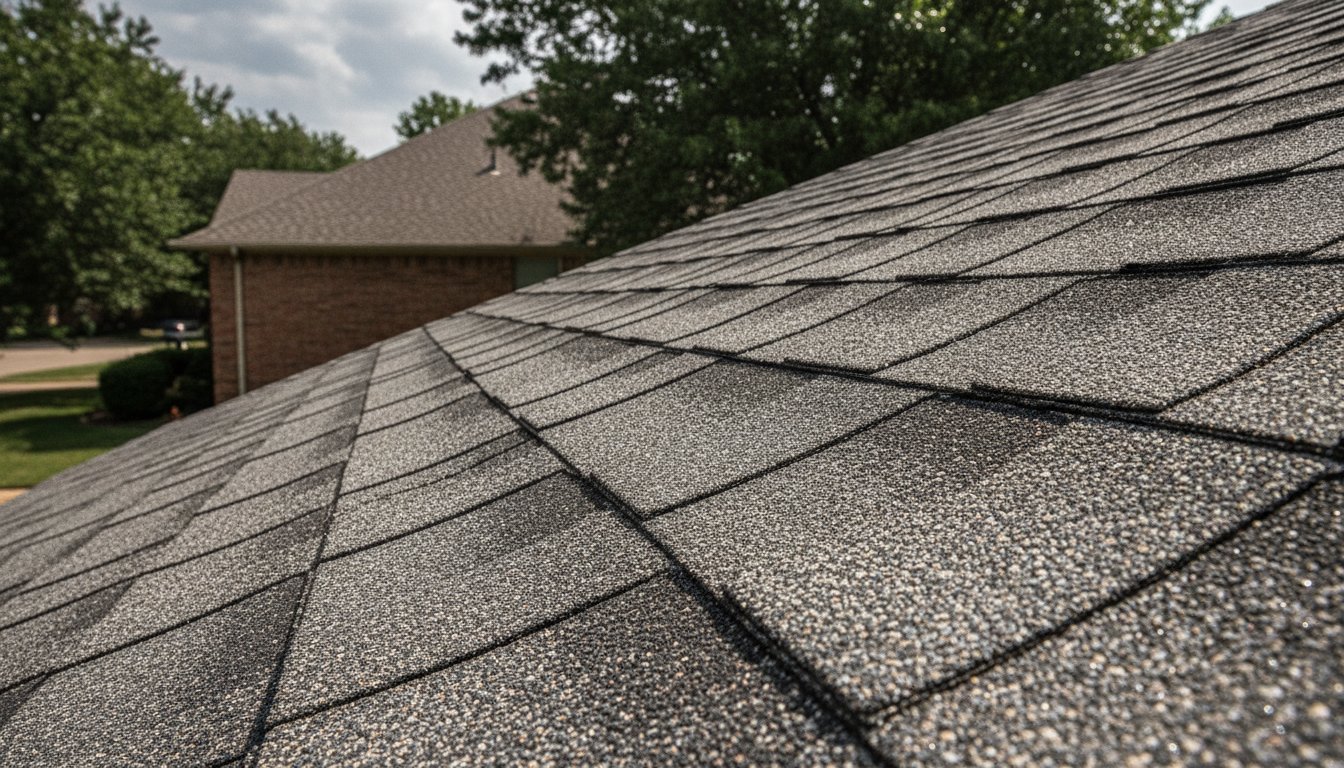

Imagine waking up after a typical Tulsa thunderstorm, glancing at your driveway, and seeing a scattering of dark, sandy granules or a stray piece of shingle lying in the grass. It is a moment that brings an immediate knot to your stomach. You know your roof is the only thing standing between your family and the next Oklahoma hail storm, and it’s natural to feel anxious about what you can’t see from the ground.
We understand that most homeowners feel a mix of confusion and skepticism when it comes to roofing. You want to protect your investment, but you don’t want to be pressured into a replacement you don’t actually need. Learning how to tell if roof shingles are worn out is the best way to move from uncertainty to total confidence in your home’s safety.
This guide provides a clear checklist to help you evaluate your shingle health and identify critical warning signs before they lead to hidden water damage. You’ll learn how to distinguish between minor, repairable wear and total structural failure. We will also help you navigate the complexities of insurance and local building codes so you can find a trustworthy local expert who treats you like a neighbor rather than just another claim.
Key Takeaways
- Understand how Tulsa’s extreme temperature shifts and high winds can significantly shorten the standard lifespan of your asphalt shingles.
- Discover the top visual red flags, such as curling edges and granule loss, to learn exactly how to tell if roof shingles are worn out before leaks begin.
- Learn to identify the difference between natural aging and storm-related “bruising” or wind creases that may qualify for an insurance claim.
- Master a safe inspection routine using binoculars from the ground and checking your attic rafters for signs of daylight or water staining.
- Gain a clear roadmap for deciding between a professional repair or a full replacement while navigating the insurance process with local expertise.
Understanding Shingle Lifespan in the Tulsa Climate
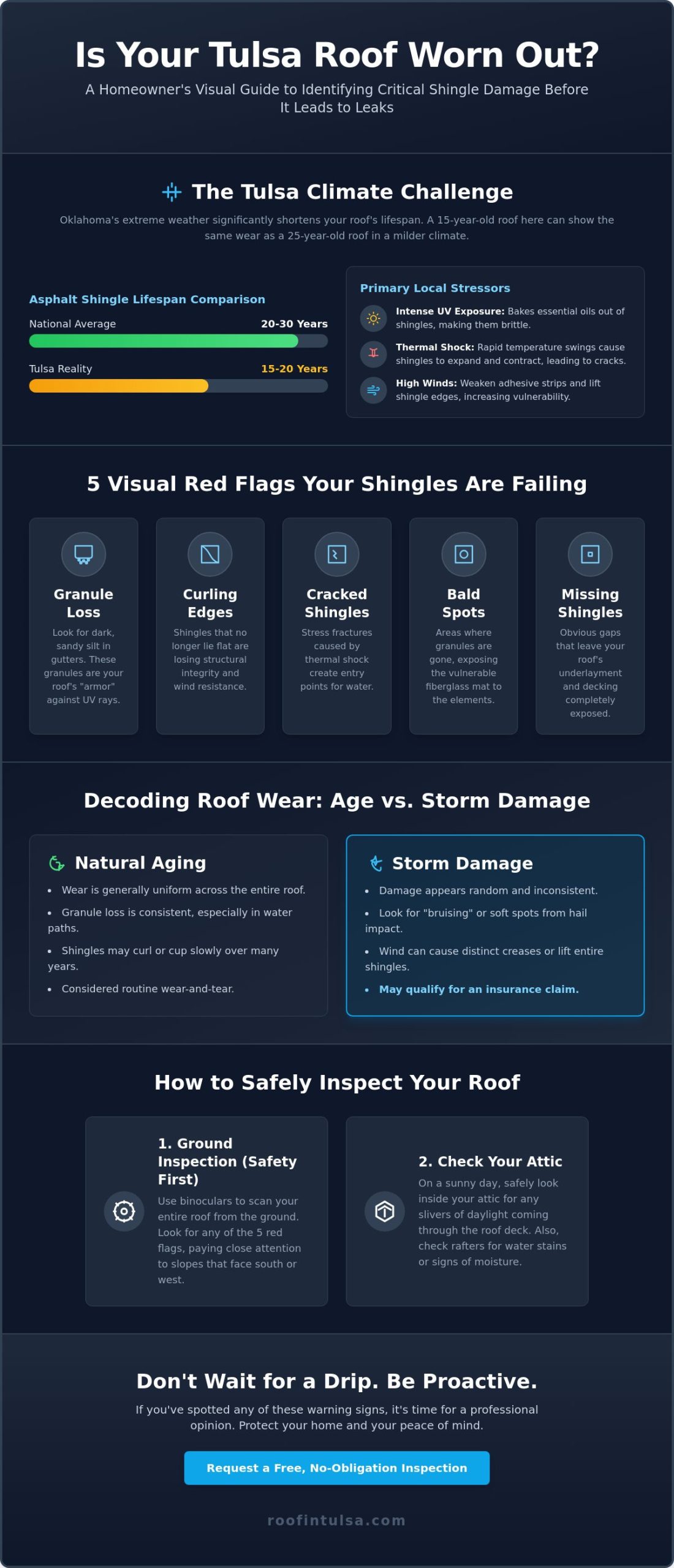
National manufacturers often suggest that a standard asphalt shingle roof should last between 20 and 30 years. In the Tulsa area, we know the reality is often quite different. Our local environment puts incredible stress on roofing materials that most national guides simply don’t account for. It is common to see a 15-year-old roof in Oklahoma showing the same level of deterioration as a 25-year-old roof in a milder climate. Understanding why this happens is the first step in learning how to tell if roof shingles are worn out before they fail completely.
Tulsa summers are particularly brutal on your home’s exterior. When temperatures climb toward the triple digits, intense UV exposure literally bakes the essential oils out of your shingles. This challenge is similar to what coastal contractors like Higher Levels Roofing observe in sunny Southern California, where UV rays also demand high-quality material choices. These oils provide the flexibility needed to shed water and resist wind. Once the shingles become “dried out” and brittle, they lose their ability to protect your home. This aging process is accelerated by our extreme temperature fluctuations. A shingle might expand significantly in the 100-degree afternoon sun and then rapidly contract during a 70-degree evening thunderstorm. This constant movement fatigues the material over time.
The Impact of Oklahoma Storm Seasons
Our recurring storm seasons act as a catalyst for shingle failure. High winds frequently catch the edges of shingles, which weakens the adhesive strips that keep your roof watertight. Once this bond is compromised, the shingles are much more likely to lift or blow away during the next gust. Hail also plays a destructive role by creating micro-fractures in the shingle surface. These tiny cracks allow moisture to penetrate the asphalt mat, leading to internal rot that you can’t always see from the driveway.
Manufacturing Grades and Expected Durability
The grade of shingle you have installed is your primary defense against the elements. We typically see two main types on Tulsa homes:
- 3-Tab Shingles: These are flat, single-layer shingles that are more susceptible to wind uplift and have a shorter functional lifespan in our climate.
- Architectural Shingles: Also known as dimensional shingles, these are thicker and use multiple layers to provide better wind resistance and durability.
Thermal shock is the process where rapid, extreme temperature shifts cause roofing materials to expand and contract so violently that they develop structural fractures and lose their protective seal. Choosing higher-quality materials can help buffer against this shock, but even the best shingles eventually succumb to the relentless Oklahoma weather. For a broader look at how professional standards for installation and material selection are applied by specialists elsewhere, you can learn more about LDO Roofing. Knowing how to tell if roof shingles are worn out involves looking past the age of the roof and focusing on how these specific local factors have impacted its condition.
5 Visual Red Flags That Your Shingles are Failing
Many homeowners wait for a ceiling stain or a damp attic to take action. This is a common mistake that leads to expensive repairs. By the time water enters your living space, the damage is already extensive. Knowing how to tell if roof shingles are worn out requires looking for functional failure before it becomes a home-threatening emergency. You can spot these early warning signs from the safety of the ground. Use a homeowner roof inspection checklist to guide your eyes and keep track of what you find.
Visual red flags are your roof’s way of telling you its time is almost up. While some issues look cosmetic, they usually indicate that the material can no longer shed water effectively. Look for these five critical signs:
- Granule Loss: Check your gutters and downspouts for dark, sandy silt. This is the “armor” of your shingle falling away.
- Curling or Cupping: Shingles that no longer lie flat are losing their structural integrity and wind resistance.
- Cracked Shingles: Stress fractures often appear as thin lines across the shingle face, caused by the thermal expansion we discussed earlier.
- Bald Spots: These are areas where the protective granules have completely vanished, exposing the shiny fiberglass mat.
- Missing Shingles: Gaps in your roof’s “armor” leave the underlayment and decking completely vulnerable to the next rain.
Granule Loss and Why It Matters
Granules are the first line of defense for your roof. They aren’t just for aesthetics; they protect the underlying asphalt from the sun’s harsh UV rays. It is normal for a brand new roof to shed a few loose granules during the first few months. However, if you find significant piles at the base of your downspouts on an older roof, it’s a sign of advanced wear. Once these granules fall away, the asphalt mat is exposed to the elements. This leads to rapid shingle rot and eventual leaks. These areas often turn into dark “bald spots” that signal the shingle is no longer waterproof. If you’re seeing this debris in your lawn, a professional roof inspection can provide the clarity you need.
Curling, Clawing, and Cupping
Shingles are designed to lie flat and create a sealed barrier. When they start to distort, they are failing. Cupping occurs when the center of the shingle dips inward. Curling, or “clawing,” happens when the edges turn upward. This distortion is often caused by trapped moisture and heat in your attic. Poor ventilation essentially “cooks” the shingles from the bottom up. Once a shingle curls, it becomes brittle and loses its seal. High Oklahoma winds can easily catch these raised edges and tear the shingles right off your roof. This physical distortion is a primary way how to tell if roof shingles are worn out and nearing the end of their functional life.
Age vs. Storm Damage: Decoding Tulsa Roof Wear
Tulsa weather doesn’t play fair. A single afternoon of severe storms can age a roof by five years in just twenty minutes. For many homeowners, the biggest challenge is determining if their roof has simply reached its natural retirement or if it has suffered “sudden and accidental” damage. This distinction is critical because insurance companies typically cover storm-related failure but will deny claims based on standard wear and tear. Knowing how to tell if roof shingles are worn out due to age versus storm impact is the best way to protect your home and your wallet.
Insurance adjusters look for specific patterns. Natural aging happens slowly and evenly across the entire roof surface. Storm damage is usually localized or follows the direction of the wind and hail. If you suspect your roof has been compromised, documenting the state of your shingles immediately after a weather event is essential. Clear photos of debris or hailstones can serve as vital evidence during the claims process. It helps prove that the issues weren’t there yesterday, making it much easier to secure the coverage you deserve.
How to Spot Hail Damage on Asphalt Shingles
Hail doesn’t always leave an obvious hole. In most cases, it creates what we call “bruising.” These are dark, circular indentations where the impact has driven the granules deep into the asphalt mat. You should look for random patterns of these marks across your roof. Don’t forget to check your “soft metals” too. If your gutters, downspouts, or roof vents have dents, there is a high probability your shingles are damaged as well. Hail damage often requires a professional eye to distinguish from standard blistering, which is a common heat-related wear pattern.
Wind Damage and Shingle Creasing
Wind damage is often more subtle than a missing shingle. High Oklahoma gusts can lift a shingle just enough to break the factory sealant bond. When the shingle “flips” up and then settles back down, it often develops a horizontal “crease line” near the top where the material folded. This crease indicates that the internal fiberglass mat is broken. Once that bond is gone, the shingle will never seal properly again, leaving your home vulnerable to the next rain. If you spot these lines, seeking roof repair Tulsa services quickly can prevent a small crease from turning into a major leak. Understanding these signs is a major part of how to tell if roof shingles are worn out and in need of professional attention.
How to Safely Inspect Your Roof for Shingle Damage
Your safety is our top priority. While you might be tempted to pull the ladder out of the garage, you can actually perform a very effective assessment without ever leaving the ground. Using a pair of binoculars is one of the smartest ways to get a close-up look at your roof’s condition. This “binocular inspection” allows you to spot subtle details that are invisible to the naked eye from the sidewalk. Learning how to tell if roof shingles are worn out from the safety of your lawn saves you time and keeps you out of harm’s way.
Walk around the entire perimeter of your home during the middle of the day when the sun is high. This lighting makes it easier to see shadows and textures on the roof surface. If you see something that looks suspicious, don’t feel pressured to investigate it yourself. Our team is here to help you understand how to tell if roof shingles are worn out without you taking unnecessary risks on a steep slope. We recommend checking your gutters and downspouts as well; if they are sagging or pulling away from the fascia boards, it is often a sign of underlying moisture problems.
The Ground-Level Inspection Checklist
Start your walk by scanning the horizontal lines of your shingles. On a healthy roof, these lines should be straight and uniform. If they appear “crooked” or wavy, it could indicate that the shingles are shifting or the decking underneath is warping. You should also keep an eye on your landscaping. Finding shingle fragments or large amounts of grit in your flower beds is a clear sign of material failure. Finally, look at the flashing around your chimney and vents. If the metal looks rusted or pulled away, water is likely finding a path into your home.
Attic Warning Signs
Sometimes the best clues aren’t on the outside at all. Grab a flashlight and head into your attic, especially after a heavy rain. Look for dark streaks or water spots on the wood rafters and the underside of the roof deck. If you see pinpoints of daylight peeking through the boards, you have a hole that needs immediate attention. Consistent roof maintenance is the best way to prevent these small issues from turning into structural rot. If you notice any sagging in the interior structure, the damage has likely progressed beyond a simple fix. In these cases, you should schedule a professional roof inspection to determine the best path forward for your home’s safety.
From Inspection to Restoration: Your Next Steps with Rescue Roofing Tulsa
Once you have applied the visual checks we’ve discussed and understand how to tell if roof shingles are worn out, you’re faced with a critical choice. Do you patch the visible problems or invest in a full system replacement? We help you make this decision based on long-term safety rather than just a quick fix. At Rescue Roofing Tulsa, our goal is to move you from a state of anxiety to a state of total confidence. We see ourselves as your partner in this process, providing the local expertise needed to navigate the unique challenges of the Tulsa climate.
Choosing a local contractor is about more than just proximity. It’s about accountability and understanding regional building codes that out-of-state “storm chasers” often ignore. For instance, Oklahoma requires all roofing contractors to be registered with the Construction Industries Board (CIB). We take these standards seriously because we live in the same neighborhoods we serve. We handle the stressful bureaucratic elements for you, ensuring your home is brought back to its best condition with minimal administrative burden on your family.
Repair or Replace? Making the Right Call
In Oklahoma, the decision to repair or replace is often guided by the “25% rule.” This state building code requires that if 25% or more of a roof section is repaired or replaced within a 12-month period, the entire section must be brought up to current code standards. This often makes a full replacement the most logical and cost-effective path for older roofs. A new roof does more than just stop leaks; it significantly improves your home’s energy efficiency during our 100-degree summers. If you’re looking for a deeper dive into the logistics, our Tulsa roof replacement guide covers everything you need to know for long-term planning.
Expert Insurance Claim Assistance
The paperwork and bureaucracy of an insurance claim can feel overwhelming. We specialize in removing that burden through our Insurance Claim Assistance. One of the biggest mistakes a homeowner can make is meeting an insurance adjuster alone. We prefer to be present during the adjuster’s inspection to ensure all storm-related damage is documented accurately. We speak the technical language of the industry and work directly with adjusters to verify that no “bruising” or wind creases are overlooked. This collaboration helps ensure you receive the full coverage your policy provides. Knowing how to tell if roof shingles are worn out is just the start; having a professional advocate ensures those findings lead to a successful restoration.
Secure Your Tulsa Home for the Seasons Ahead
Your roof is more than just shingles and nails; it is the primary shield protecting your family and your memories from the unpredictable Oklahoma elements. We have explored the unique ways our local climate accelerates aging and identified the specific visual red flags that signal a roof is nearing the end of its life. While knowing how to tell if roof shingles are worn out is a vital skill for every homeowner, you don’t have to navigate these decisions alone. Professional clarity is the best way to move from uncertainty to peace of mind.
As A+ Rated local Tulsa experts, we specialize in identifying storm damage and guiding you through complex insurance claims with ease. Whether you need 24/7 emergency repair services after a midnight storm or a comprehensive evaluation of your aging roof, we are here to provide honest, dependable advice. Don’t let a small concern turn into a costly water damage emergency. We treat every home as if it were our own, focusing on quality and community values.
Schedule Your Free Professional Roof Inspection with Rescue Roofing Tulsa today. We are proud to be your neighborly roofing experts, and we look forward to helping you keep your home safe and dry for years to come.
Frequently Asked Questions
Is it normal for a new roof to lose granules?
Yes, it is completely normal for a brand new roof to shed “surplus” granules during the first few rainstorms. These are simply extra granules from the manufacturing process that didn’t fully embed in the asphalt. However, if you see this on an older roof, it is a primary indicator of how to tell if roof shingles are worn out and losing their UV protection.
Can I replace just a few worn-out shingles?
You can certainly replace a few shingles if the damage is localized, such as a single piece caught by a high wind gust. However, if the surrounding shingles are brittle or if the damage covers more than 25% of a roof section, Oklahoma building codes often require a full replacement. We always check the structural integrity of the surrounding area before recommending a simple patch.
How do I know if my shingles have hail damage or are just old?
Hail damage typically appears as random, dark, circular indentations that feel soft to the touch, similar to a bruise on an apple. Natural aging is usually more uniform across the entire roof and includes widespread thinning or brittleness. If you see dents on your metal gutters or roof vents, those are strong signs that the damage to your shingles was caused by a storm rather than age.
What happens if I ignore worn-out shingles?
Ignoring shingles that have reached the end of their life leads to costly secondary damage like rotted wood decking, attic mold, and interior ceiling stains. Beyond the physical damage, insurance companies may deny future claims if they determine a leak was caused by “neglect of maintenance” rather than a specific storm event. Addressing wear early is the most effective way to protect your home’s value.
How much does a roof inspection cost in Tulsa?
Many reputable local contractors offer professional evaluations to help you understand the current health of your roofing system. These inspections are essential for identifying hidden issues like wind creases or hail bruising that you can’t see from the ground. We recommend contacting a registered Oklahoma contractor to discuss an inspection after any major weather event or if your roof is over 15 years old.
Does homeowners insurance cover worn-out shingles?
Standard homeowners insurance policies are designed to cover sudden and accidental damage, such as impact from hail or high winds. They generally do not cover shingles that have simply reached the end of their functional lifespan due to old age. This is why we emphasize how to tell if roof shingles are worn out versus storm-damaged; the distinction determines whether your project is an out of pocket expense or an insurance claim.
What is the best type of shingle for Tulsa weather?
Architectural shingles are far superior to traditional 3-tab shingles for our local climate because they offer higher wind resistance. Many Tulsa homeowners are now choosing Class 4 impact-resistant shingles. These are specifically engineered to withstand Oklahoma hail and can often lead to significant discounts on your annual homeowners insurance premiums. They provide the best balance of durability and long-term value for our region.
How long does a typical roof replacement take?
A typical residential roof replacement in the Tulsa area usually takes between one and two days to complete. This timeline depends on the size of your home and the complexity of the roof’s pitch. Our crews focus on a methodical process to ensure your property is kept clean and safe throughout the project. We always monitor local weather forecasts to ensure your home remains protected from start to finish.