



If a sudden Oklahoma hailstorm leaves your home damaged, the last thing you want to worry about is a legal loophole in your paperwork. Most Tulsa homeowners feel a mix of stress and confusion when they are handed a technical agreement. You want to know that your family is safe and your investment is secure. Understanding exactly what to ask for in a roofing contract is the best way to turn that uncertainty into confidence. A solid agreement acts as your personal shield, ensuring that every detail of your replacement is handled with professional care.
We understand how high the stakes are when it is your own roof over your head. You deserve a process that is transparent and simple. This guide will show you how to look for essential clauses that prevent hidden costs and protect your property. We will cover the latest state requirements, including the 2027 Residential Roofing Endorsement and mandatory CIB registration. You will also learn which workmanship warranties provide real peace of mind. Our goal is to give you a clear checklist so your insurance claim is handled correctly and your home stays dry for years to come.
Key Takeaways
- Learn how to secure your investment by ensuring your contract serves as a legally binding roadmap for insurance-backed repairs.
- Discover exactly what to ask for in a roofing contract to confirm your contractor is registered with the Oklahoma Construction Industries Board and follows local standards.
- Understand the vital differences between manufacturer warranties and workmanship guarantees to protect your home from future leaks and errors.
- Identify dangerous red flags, such as missing project dates or illegal deductible offers, before you sign any agreement.
- Gain a clear checklist of essential clauses that ensure a complete roof tear-off and transparent cleanup procedures for a stress-free experience.
Why Your Roofing Contract is Your Best Protection in Tulsa
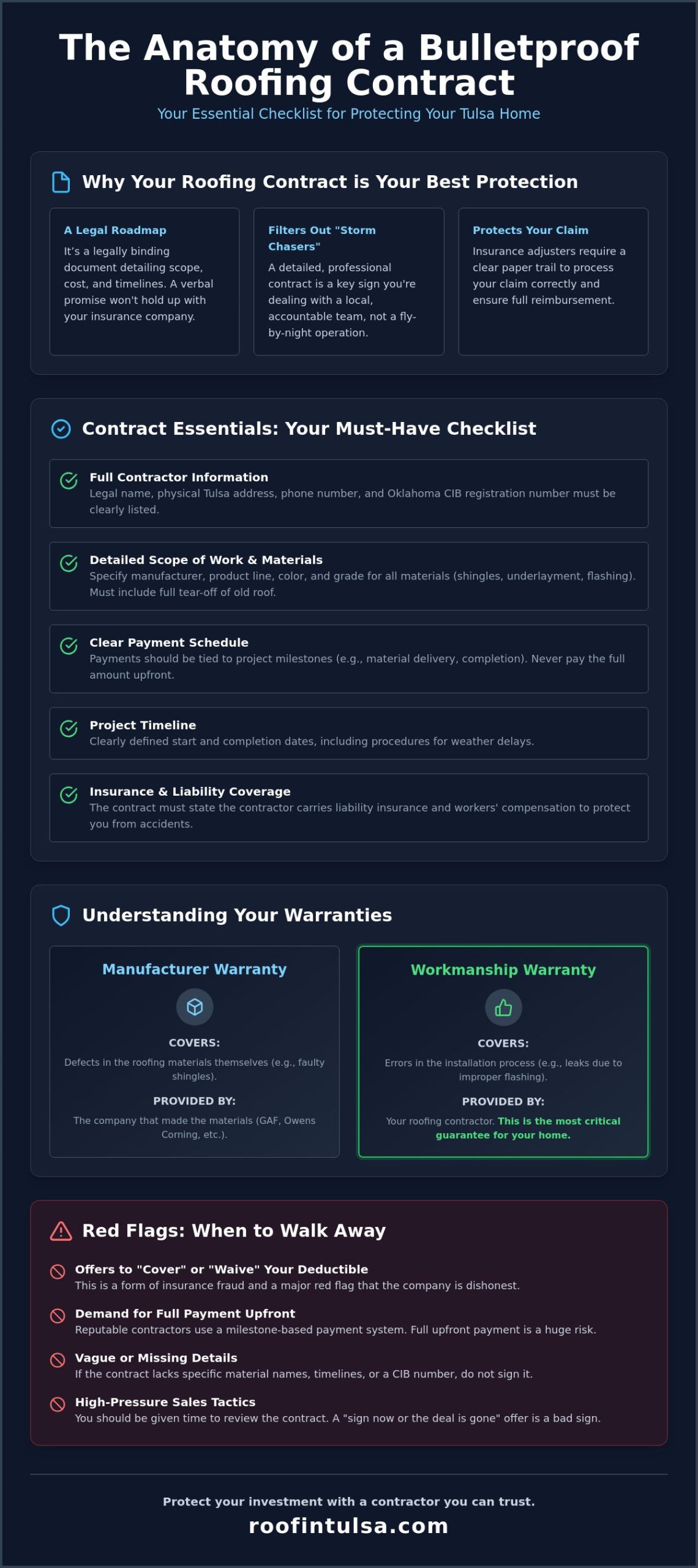
A roofing contract is your first line of defense. It’s a legally binding document that details exactly what will happen to your home. It outlines the scope of work, total costs, and specific timelines. In Tulsa, where weather can turn in an instant, you can’t rely on a handshake or a simple verbal promise. A verbal estimate won’t satisfy your insurance provider. They require a clear paper trail to process your claim correctly and ensure you’re reimbursed for the full value of the repair. When you’re deciding what to ask for in a roofing contract, remember that this document serves as a filter. It helps you avoid “storm chasers” who arrive after a big hail event and vanish once they’ve collected a check. A solid contract anchors your project to a local, accountable team.
The “Scope of Work” is the heart of this agreement. It describes every shingle, nail, and flashing piece that will be installed on your home. Without this level of detail, you’re vulnerable to hidden costs that might appear halfway through the project. This section also provides the clarity your insurance adjuster needs. It verifies that the materials being used match the specifications outlined in your claim, which prevents stressful payment delays later on.
The Legal Role of a Roofing Agreement
A written agreement is essential for most roofing services to be legally valid in Oklahoma. It protects your property rights and limits your liability during the construction phase. For instance, if a worker is injured on your roof, a properly drafted contract ensures the company’s insurance covers the incident rather than your homeowner’s policy. Always look for a physical Tulsa address on the contract letterhead. This proves the company is a neighbor in our community and not a temporary out-of-state setup. A professional roofing contractor will always include their Oklahoma Construction Industries Board (CIB) registration number directly on the document for your peace of mind.
Oklahoma Weather and Your Contract
Our local climate is uniquely demanding. Your contract should explicitly mention wind speed ratings and hail impact resistance for your chosen materials. Since Tulsa frequently faces severe thunderstorms, your agreement needs specific wind-load documentation. This confirms that the installation methods meet or exceed local building codes for wind resistance. The contract should also clarify the difference between “Acts of God” and contractor negligence. If a storm hits while your roof is partially removed, you need to know exactly how the crew will protect your home’s interior. Knowing what to ask for in a roofing contract regarding weather protections ensures your family stays dry when the clouds roll in.
Essential Clauses: What Every Tulsa Roofing Contract Must Include
When you sit down to review a proposal, knowing what to ask for in a roofing contract ensures you aren’t left with a generic, one-page document that offers no real protection. A comprehensive agreement should start with the basics: the contractor’s full legal name, a physical Tulsa business address, and their state registration number. This transparency is the foundation of a trustworthy partnership. You should also look for a clear payment schedule. Reliable local experts typically use milestone-based structures. For example, you might pay a portion upon material delivery and the remainder only after the final inspection is completed and approved. Never agree to pay the full amount before the work begins.
Consumer protection is another critical element to verify. Most professional agreements include a “Right to Rescind” clause. This is often tied to the FTC’s Cooling-Off Rule, which gives homeowners a 72-hour window to cancel a contract signed at their residence. This period allows you to double-check the details without the pressure of an immediate start date. If a contractor hesitates to include these standard protections, it’s a sign they may not have your best interests at heart.
Scope of Work and Material Specifics
Specificity is your best friend when it comes to materials. Simply listing “shingles” isn’t enough. Your contract must specify the exact manufacturer, the specific product line, the color, and the grade of the materials. This includes the underlayment and essential roof ventilation components that keep your attic cool during our humid Oklahoma summers. You should also insist on a full tear-off of all old roofing layers rather than an overlay. This allows the crew to inspect the decking for damage. Finally, ensure the contract includes a plan for debris removal, specifically mentioning the use of a magnetic sweep to collect stray nails from your driveway and lawn.
Project Timeline and Milestones
A reliable contract provides a realistic timeline. While weather in Tulsa is unpredictable, the agreement should state an approximate start date and an estimated completion date. It should also outline the procedure for “change orders.” If the crew discovers hidden wood rot after removing old shingles, you need a pre-negotiated rate for replacing plywood or decking. This prevents surprise costs at the end of the job. Clear termination clauses are also necessary. These protect you if the contractor fails to show up or perform the work as promised. If you have questions about these details, the team at Rescue Roofing Tulsa is always ready to help you understand your options.
Warranty and Insurance: Getting the Specifics in Writing
A new roof is a significant investment in your home’s safety. You shouldn’t have to worry about whether that investment is protected. While many homeowners focus on the price, the real value lies in the fine print of your warranties. Understanding what to ask for in a roofing contract regarding these protections is the best way to prevent unexpected repair bills down the road. Every professional agreement should clearly distinguish between the materials used and the labor performed. This clarity ensures that if a leak occurs, you know exactly who is responsible for the fix. Our team believes in providing this peace of mind through transparent, written guarantees that reflect our commitment to the Tulsa community.
Manufacturer vs. Workmanship Warranties
There are two distinct types of coverage you need to see in your contract. Manufacturer warranties cover defects in the products themselves, such as shingles that fail prematurely. However, these rarely cover the cost of labor to replace those defective materials. This is why a Contractor Workmanship Warranty is so vital. It covers errors made during the installation process, which is where the vast majority of roofing issues begin. We emphasize this guarantee because it is a core part of proactive roof maintenance. Always ask if the workmanship warranty is transferable. If you decide to sell your home, a transferable warranty adds measurable value for the next owner.
Navigating the Insurance Claim Process
If you are replacing your roof due to Oklahoma’s frequent hailstorms, your contract must align with your insurance adjuster’s summary. A professional agreement should include clauses for “supplementing” the claim. This allows the contractor to contact your insurance company if they find hidden damage, like rotted decking, after the old shingles are removed. This process protects you from paying out-of-pocket for necessary repairs that the adjuster couldn’t see initially. Be wary of anyone who offers to “cover your deductible.” This is a red flag for common roofing cons and is illegal in many jurisdictions. Your contract should state that you are responsible for your deductible and that the contractor will work within the approved insurance payout.
The Importance of Lien Waivers
One of the most overlooked parts of what to ask for in a roofing contract is the lien waiver. In the roofing industry, contractors often purchase materials from third-party suppliers or use specialized crews. If a contractor fails to pay those suppliers, the supplier can legally place a lien on your home. To prevent this, your contract should state that the contractor will provide a signed lien waiver upon final payment. This document is your proof that every nail, shingle, and hour of labor has been paid in full. It is a simple step that removes a massive amount of legal risk from your shoulders.
Red Flags: When to Walk Away from a Roofing Agreement
After a severe storm, your focus is on protecting your home and family. Unfortunately, high-stress situations often attract contractors who don’t have your best interests at heart. Recognizing warning signs early can save you from years of legal and structural headaches. A professional agreement should be transparent and complete before you ever pick up a pen. If a contractor asks you to sign a “blank contract” with the promise that they will fill in the details later after talking to your insurance company, walk away. This is a common trap that leaves you with no control over the final price or the materials used on your home.
Vague language is another major concern. Terms like “standard materials” or “replace as needed” are far too subjective. You need to know exactly what you are paying for to ensure your home meets local safety standards. When considering what to ask for in a roofing contract, look for specific quantities and brand names. If the document lacks proof of general liability and workers’ compensation insurance, the contract is essentially worthless. Without these protections, you could be held liable for any accidents that occur on your property during the installation. Pressure tactics like “sign today for this price” or offers to “cover your deductible” are also major red flags. These offers are often illegal and can implicate you in insurance fraud.
The Danger of “Storm Chasers” in Oklahoma
Oklahoma is a prime target for out-of-state contractors, often called “storm chasers,” who follow severe weather patterns across the country. These crews often provide low estimates but disappear once the job is done. This makes it impossible to collect on a workmanship warranty if your roof develops a leak a year later. A local Tulsa phone number and a physical office location are non-negotiable requirements. You should always verify a contractor’s standing with the Oklahoma Construction Industries Board (CIB). A neighborly business will be proud to show they are in good standing with the state and invested in the Tulsa community.
Financial Red Flags in the Fine Print
Be extremely cautious of any contractor who demands a large upfront deposit. While some funds may be needed for materials, a request for more than 25 to 33 percent of the total cost is a significant red flag. Your agreement must also include a definitive “Total Price” or a very clear formula for how extras, like wood rot replacement, are calculated. As we mentioned previously, the absence of a lien waiver clause is a major financial risk. You should never make a final payment until you have a signed document stating that all suppliers and subcontractors have been paid in full. If you’re feeling pressured or confused by a proposal, reach out to the experts at Rescue Roofing Tulsa for an honest second opinion.
Finalizing Your Agreement with Rescue Roofing Tulsa
Now that you understand the essential clauses and the warning signs to avoid, you’re prepared to make an informed decision for your home. Choosing a contractor who welcomes your questions is the best way to ensure a successful project. At Rescue Roofing Tulsa, we believe that transparency is the bedrock of any successful roof replacement. We don’t just provide a price; we provide a comprehensive roadmap that protects your investment and your peace of mind. A contract isn’t just a piece of paper. It is a promise of quality and safety for your family.
Knowing what to ask for in a roofing contract is only half the battle. You also need a team that executes those details with precision. Our local roots in Tulsa mean we aren’t going anywhere when the storm season ends. We treat every home as if it belonged to our own family, ensuring that the workmanship matches the high-quality materials specified in your agreement. By prioritizing clear communication, we remove the stress often associated with major home repairs. We are here to act as your trusted advisor, guiding you through every administrative and technical step.
Our Transparent Contract Process
We take the guesswork out of your project. Every agreement we draft includes a detailed breakdown of line items, so you never have to worry about hidden fees or vague allowances. Our Tulsa-based team is available to explain every technical term and timeline. Whether we are managing a complex installation or the repair of roofing systems after a disaster, we provide the meticulous documentation your insurance provider requires. Our Insurance Claim Assistance service is designed to make the process seamless. We work to ensure your claim is processed correctly so you can focus on getting your life back to normal.
Ready to Protect Your Tulsa Home?
Secure Your Tulsa Home with Confidence
Protecting your property starts with clarity and documentation. You now understand that a detailed agreement is your best defense against Oklahoma’s unpredictable weather and unreliable contractors. By focusing on essential clauses like material specifics, payment milestones, and lien waivers, you’ve taken a huge step toward a stress-free replacement experience. Remembering exactly what to ask for in a roofing contract ensures your investment is legally sound and physically durable for years to come.
We are proud to be a locally owned and operated business right here in Tulsa. Our team specializes in Insurance Claim Assistance to simplify the administrative burden for you after a severe storm. As an A+ rated provider, we prioritize professional roofing services that stand the test of time. You don’t have to navigate this complex process alone. We are here to serve as your neighborly experts and trusted advisors. Let us help you turn a stressful project into a simple, confident home improvement.
Request a Free, Transparent Roofing Estimate Today. We look forward to helping you protect what matters most with quality you can trust.
Frequently Asked Questions
Can I cancel a roofing contract after I’ve signed it?
You can typically cancel a roofing contract within three business days if the agreement was signed at your residence. This protection is provided by the Federal Trade Commission’s Cooling-Off Rule, which gives homeowners a 72-hour window to reconsider. Always check your specific agreement for a cancellation clause that outlines the required notification process and any potential restocking fees for materials already ordered.
Should I sign a contract before my insurance company approves the claim?
It is best to wait until your insurance adjuster has inspected the damage and issued a formal summary. Signing a contract prematurely can lock you into a scope of work that may not align with what your insurance carrier is willing to cover. A professional contractor will review the adjuster’s report with you first to ensure the contract accurately reflects the approved repairs and payout.
What is a lien waiver and why do I need one in my contract?
A lien waiver is a legal document where the contractor confirms that all material suppliers and subcontractors have been paid in full for their work. When you are deciding what to ask for in a roofing contract, this document is essential for your financial safety. It prevents a third party from placing a legal claim against your home if the primary contractor fails to pay their bills.
How do I know if a roofing contractor is actually licensed in Oklahoma?
You can verify a contractor’s status by searching the Oklahoma Construction Industries Board (CIB) online database. Every legitimate roofer in the state must be registered and carry a valid registration number. Always ask to see this number and confirm it is active before signing any paperwork. This step ensures the company meets the state’s minimum requirements for insurance and professional conduct.
What happens if the roofing project takes longer than the contract states?
If a project exceeds the estimated timeline, the resolution depends on the delay clauses included in your agreement. While Tulsa’s weather often causes unavoidable shifts in scheduling, the contract should define how these delays are communicated and managed. Clear start and completion dates help hold the crew accountable and ensure your home isn’t left vulnerable to the elements for an extended period.
Should the contract include the cost of permits and inspections?
Yes, a professional contract should explicitly state that the contractor will handle all permits and inspections. For residential re-roofing in Tulsa, the permit fee is currently $90.00 plus a $1.00 state surcharge. Including these costs in the written agreement prevents unexpected administrative charges and ensures the work is performed according to local building codes and safety standards.
What is the difference between an estimate and a contract?
Is it normal for a roofing contract to have a “price acceleration” clause?
Price acceleration clauses are increasingly common due to the fluctuating costs of raw materials like asphalt and metal. This clause allows a contractor to adjust the final price if material costs rise significantly between the time you sign and the day work begins. A fair clause will require the contractor to provide written proof of the price increase from their supplier before any additional charges are applied.