



What if your “lifetime” roofing warranty actually expires the moment a Tulsa hailstorm hits or your attic ventilation fails? It’s a common fear for many Oklahomans who worry that hidden clauses might leave them footing a massive bill after a severe weather event. You likely want the peace of mind that comes with a new roof, but understanding your roofing warranty can feel impossible when you are faced with pages of technical jargon. We understand that your home is your most significant investment, and you deserve to know exactly where you stand.
We agree that you shouldn’t need a law degree to feel secure about your property. This guide is designed to simplify the fine print so you can protect your investment and avoid expensive surprises. You’ll learn the critical differences between manufacturer and workmanship coverage, including how the 2026 Oklahoma contractor licensing laws directly impact your protection. We also preview the simple maintenance steps required to keep your coverage active, giving you total confidence in your choice of contractor and the long-term safety of your home.
Key Takeaways
- Identify the crucial differences between material defects and installation errors so you know exactly which party is responsible for specific repairs.
- Gain confidence in understanding your roofing warranty by learning which common maintenance tasks are required to keep your protection active.
- Avoid the common pitfalls of uncertified storm repairs that could leave you without legal recourse or coverage when you need it most.
- Learn how to effectively manage your records and documentation to simplify future insurance claims and warranty requests.
- Discover why partnering with a certified local expert ensures your home stays protected under Oklahoma’s unique environmental challenges and 2026 regulations.
Understanding the Basics: What Is a Roofing Warranty?
Many homeowners view a new roof as a one-time transaction. In reality, it’s the start of a long-term legal relationship designed to protect your most valuable asset. When you begin understanding your roofing warranty, you’ll see it’s much more than a simple receipt. A roofing warranty is a multi-layered protection plan that serves as a legal guarantee against material defects and installation errors. To get a better sense of the legal framework, you might ask, What is a Warranty? In its simplest form, it’s a promise of quality and performance. For Tulsa residents, this is a critical safety net against our volatile weather. Most homeowners do not realize they actually have two separate layers of protection working for them at all times.
The Difference Between Lifetime and Limited Warranties
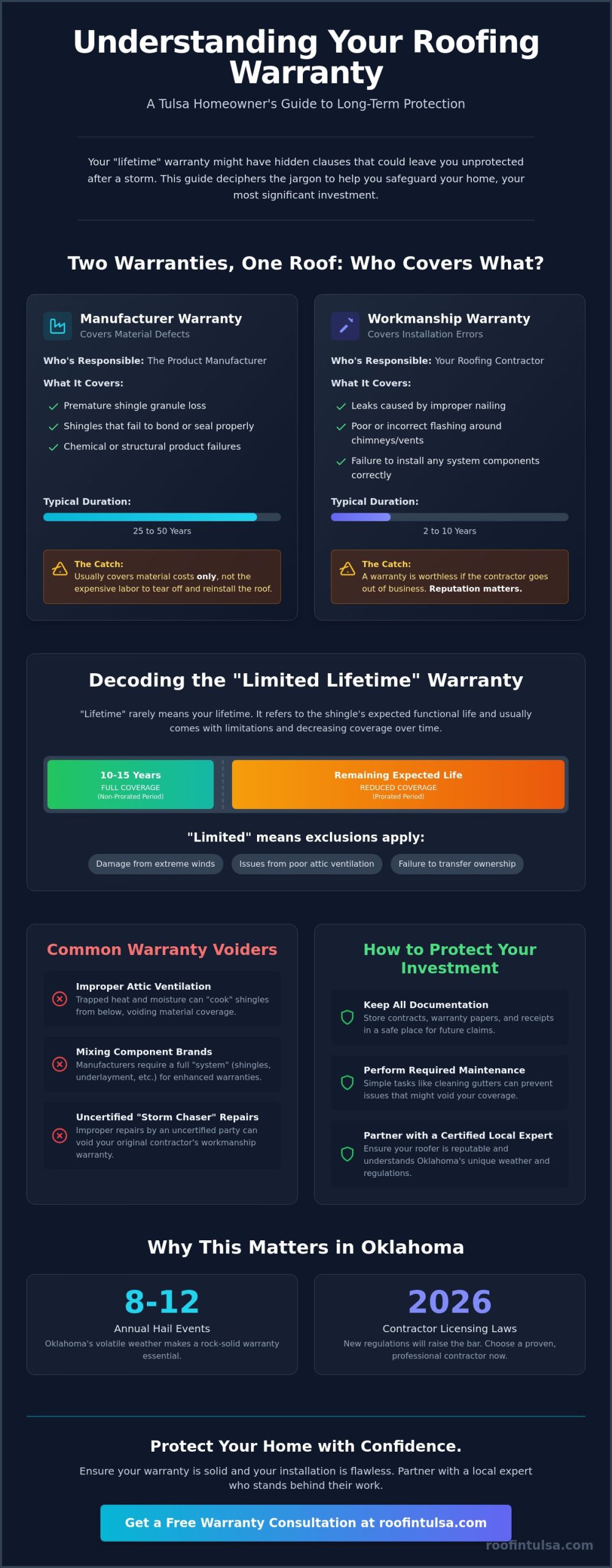
The term “Lifetime” is one of the most misunderstood words in the roofing industry. It usually refers to the expected functional life of the shingles rather than the actual lifetime of the person who bought them. Most manufacturers now offer “limited lifetime” warranties for asphalt shingles. These typically include a non-prorated period of 10 to 15 years, after which the coverage amount is reduced based on the age of the roof. “Limited” is the keyword here because these agreements have specific exclusions. For example, they might not cover damage caused by winds exceeding a certain speed or issues arising from poor attic ventilation. Additionally, the duration of coverage often changes if you are not the original owner. If you buy a home with a “Lifetime” roof, you must often transfer the warranty within a specific timeframe to keep it valid.
Why Your Roof Is Considered a “System,” Not Just Shingles
Manufacturers view your roof as an integrated system rather than a collection of independent parts. This is why many enhanced warranties require you to use components like underlayment, flashing, and vents from the same brand. Mixing brands to cut costs can backfire. If you use one brand of shingles and another brand’s starter strips, you might void the entire manufacturer agreement. A complete roofing system ensures every component works together to withstand Oklahoma’s 8 to 12 annual hail events. Proper ventilation and quality underlayment are essential for the shingles to perform as promised. When you are understanding your roofing warranty requirements, remember that consistency is key to maintaining your coverage. When all components come from one source, the manufacturer is much more likely to stand behind the entire installation for decades.
Manufacturer vs. Workmanship: Knowing Who Covers What
Every homeowner wants a roof that lasts, but few realize that a single leak involves two separate legal entities. One of the biggest challenges in understanding your roofing warranty is identifying whether a failure is the fault of the factory or the person on the ladder. If you call a manufacturer for a leak caused by a loose nail, they will deny the claim. Conversely, a contractor shouldn’t be held responsible if the shingles themselves are disintegrating due to a chemical defect. Knowing this distinction is the first step toward a stress-free home maintenance plan.
The Manufacturer Material Warranty
The manufacturer material warranty covers the physical integrity of the product itself. If your shingles lose their granules prematurely or the adhesive strips fail to bond correctly, the manufacturer is the party that provides a remedy. These warranties are usually very long, often lasting between 25 and 50 years depending on the shingle grade. You should be aware that these agreements often have a catch. They typically cover the cost of the replacement material but do not include the labor costs to tear off the old shingles and install the new ones. This is why material warranties alone aren’t enough to protect your wallet.
The Contractor Workmanship Warranty
This is where the contractor’s promise comes in. A workmanship warranty covers errors made during the physical installation process. This includes issues like improper nailing, poor flashing around chimneys, or incorrect vent installation. While the industry standard typically ranges from 2 to 10 years, premium contractors often offer extended periods to give families more peace of mind. Partnering with a reliable expert like Rescue Roofing Tulsa ensures that your installation is handled with the precision required to keep these warranties fully intact.
A workmanship warranty is only as strong as the reputation of your roofing company. If a “storm chaser” offers a 20-year labor guarantee and then leaves town, that piece of paper is worthless. Since your roof is a major investment, you should follow the Federal Trade Commission’s consumer advice on warranties to ensure you are fully protected. This federal guidance helps homeowners understand their rights when a service provider fails to live up to their promises.
In 2026, understanding your roofing warranty also means verifying that your contractor is properly licensed under Oklahoma’s new regulations. A licensed professional won’t just do the job; they will provide the documentation you need for your records. If you are worried about the state of your current coverage, scheduling a professional roof inspection is the best way to get an honest assessment of your home’s protection.
Common Pitfalls: What Can Void Your Roofing Warranty?
A roofing warranty isn’t a blank check; it’s a conditional contract. Many homeowners are surprised to find that understanding your roofing warranty requires active participation in home maintenance. Manufacturers are incredibly strict about how their products are handled and installed. If you fail to meet their specific criteria, you could lose your protection before you ever need to use it. Simple maintenance oversights are often the culprit. In Oklahoma, where the weather can change in an instant, these small details become the difference between a covered repair and a massive out-of-pocket expense.
One of the most common reasons for a denied claim is something you might never see from the street. Improper attic ventilation is a leading cause of voided shingle warranties. When air cannot circulate, heat and moisture build up directly beneath your roof deck. This creates an environment that the shingles were never designed to withstand, leading to a total failure of the material’s structural integrity.
Improper Ventilation and Heat Damage
Excessive attic heat can effectively “cook” your shingles from the inside out. This process leads to premature blistering, curling, and heavy granule loss. Manufacturers require very specific ventilation ratios to maintain material coverage. If your attic isn’t breathing correctly, the manufacturer will likely claim the shingles failed due to environmental abuse rather than a factory defect. Regular roof maintenance is essential for checking that your intake and exhaust vents are clear of debris. In Tulsa’s humid summers, this airflow is the only thing keeping your warranty valid.
The Danger of “Storm Chaser” Repairs
Oklahoma’s 8 to 12 annual hail events often attract out-of-state “storm chasers” looking for quick work. Hiring these non-local, uncertified crews can immediately void your workmanship warranty. Under the new 2026 Oklahoma laws, any residential roofing contractor must have a specific endorsement from the Construction Industries Board to operate legally. If you allow an unlicensed worker to perform post-storm touch-ups, you lose your legal recourse. Even well-intentioned “DIY” fixes can lead to claim denials if they interfere with the original installation system. For those who have recently purchased a property, the Federal Trade Commission provides helpful context on Warranties for new homes, which explains how long different parts of your structure should remain under protection. Always stick with a local, licensed professional to ensure your paperwork stays as solid as your roof.
How to Protect and Manage Your Warranty for the Long Term
Most homeowners believe their work is done once the final shingle is laid. This is a common mistake that can lead to heartbreak later. Understanding your roofing warranty means recognizing it as an active agreement that requires your ongoing attention. It is not a “set it and forget it” document. If you ignore your roof for years, you might find your protection has vanished when you finally need to make a claim. We believe in being a partner in your home’s health, and that starts with active management of your coverage.
Keeping detailed records is essential for any future insurance or warranty claims. Most manufacturers and premium contractors require proof of regular maintenance to honor a claim. In Tulsa, an annual check-up is highly recommended due to our severe storm seasons. Our region faces 8 to 12 significant hail events every year. These storms can cause subtle damage that doesn’t leak immediately but can void your coverage if left unaddressed. Regular inspections are often a prerequisite for keeping a warranty valid, as they prove you haven’t neglected the structure.
The Registration Process: Don’t Skip This Step
Don’t skip the initial paperwork. Many manufacturer warranties must be registered within 30 to 60 days of installation. If you miss this window, you might only be covered by a basic, limited plan instead of the enhanced protection you expected. You will typically need your invoice, the specific shingle type, and the exact installation date. We suggest keeping a digital folder for all roofing documents. Scan your contract, your warranty certificate, and photos of the completed work. Having these files ready makes it easy to provide proof of purchase if a manufacturer ever questions your coverage.
Transferring Your Warranty During a Home Sale
Staying on top of these details ensures your investment remains fully covered for years to come. If you aren’t sure where your current paperwork stands or if your roof is still in compliance with warranty standards, we can help. You can schedule a professional roof inspection to verify your roof’s condition and ensure you are meeting all your maintenance obligations.
Why Rescue Roofing Tulsa Is Your Partner in Warranty Protection
A roofing warranty is a long-term partnership between a homeowner and a professional team. We don’t just install roofs; we provide lasting protection for Tulsa families. Choosing a stable, local company is the only way to ensure your workmanship warranty remains meaningful for decades. If a contractor disappears after a storm season, their guarantee disappears with them. We are grounded in this community and understand the specific environmental challenges your property faces. Our team is fully compliant with the 2026 Oklahoma Residential Roofing Endorsement requirements, giving you the legal security you deserve.
We believe in removing the administrative burdens that make home maintenance stressful. Understanding your roofing warranty shouldn’t feel like a second job. We act as your trusted advisor, navigating the complex technical standards set by manufacturers so you don’t have to. Our deep roots in the region mean we know exactly what local building codes and weather patterns require for a valid claim. We are here to ensure that your investment is safe, durable, and fully documented from the day of installation.
Expert Insurance Claim Assistance
The intersection of insurance claims and warranty coverage is often where homeowners feel the most confusion. We assist with the heavy lifting by documenting damage to satisfy both insurance adjusters and manufacturer warranty requirements. Our expertise in roof repair tulsa following severe weather allows us to act as your advocate. We provide clear proof of damage and professional repair estimates that align with your coverage limits. By handling the communication with these entities, we ensure you utilize the full benefits of your policy and your warranty without the usual headaches.
Schedule Your Professional Roof Inspection
Maintaining warranty compliance requires a proactive approach rather than waiting for a leak to appear. Our comprehensive inspections cover every critical part of your roofing system. We examine the flashing around chimneys, check shingles for granule loss, and verify that your attic ventilation meets strict manufacturer ratios. We also inspect your gutters to ensure water is moving away from your roof deck properly. This methodical process helps catch small issues before they can void your coverage or lead to expensive interior damage.
You deserve to feel confident in the safety and durability of your home. Understanding your roofing warranty is the first step, but having a professional partner is the second. Take a proactive stance toward protecting your home and your financial investment. Contact Rescue Roofing Tulsa for a comprehensive inspection to ensure your roof is ready for whatever the Oklahoma sky brings next.
Secure Your Home’s Future with Confidence
Your roof is more than just a shield; it’s a significant financial investment that requires active protection. By understanding your roofing warranty, you’ve taken the first step toward avoiding hidden costs and ensuring your home remains a safe haven. Remember that the best coverage is built on a foundation of professional installation and consistent maintenance. Whether you’re navigating the new 2026 Oklahoma regulations or preparing for the next storm season, having a clear record of inspections and repairs is your greatest asset.
We’re here to help you navigate these complex requirements with ease. As a locally owned and operated business in Tulsa, we understand the unique challenges our weather presents. Our team serves as certified insurance claim specialists who provide comprehensive workmanship guarantees to back every project. Don’t wait for a leak to find out if your coverage is valid. Get Your Professional Roof Inspection from Rescue Roofing Tulsa today. We look forward to being your trusted partner in keeping your family safe and your investment fully protected.
Frequently Asked Questions
Does a roofing warranty cover leaks caused by wind or hail?
Most roofing warranties do not cover leaks caused by wind or hail damage. These events are typically classified as “acts of God” and fall under your homeowners insurance policy rather than a manufacturer or workmanship guarantee. However, some premium shingles include specific wind warranties that cover shingles blowing off at certain speeds. It’s important to review your documentation carefully to see if your specific product has these enhanced protections.
How do I know if my roofing warranty is still valid?
You can verify your warranty’s validity by checking your registration confirmation and maintenance records. Understanding your roofing warranty requires keeping proof that you’ve followed all manufacturer requirements, such as maintaining proper attic ventilation and performing annual inspections. If you’ve allowed an unlicensed contractor to make repairs or if you’ve neglected visible damage, your warranty may already be void. A professional inspection can help confirm your current status.
What is the difference between a roof warranty and homeowners insurance?
A roofing warranty covers issues related to product quality or installation errors, while homeowners insurance covers sudden and accidental damage from external events. If your shingles fail prematurely due to a factory defect, the warranty applies. If a tree falls on your roof or hail creates a leak, you’ll likely need to file an insurance claim. Both layers of protection are essential for comprehensive home security in Tulsa.
Can I install new shingles over old ones without voiding the warranty?
Installing new shingles over old ones, often called a “roof-over,” will almost always void a manufacturer’s warranty. This practice traps excessive heat between the layers, which causes the new shingles to deteriorate rapidly. Most manufacturers require a complete tear-off down to the roof deck to ensure the surface is level and properly ventilated. Skipping this step saves money upfront but leaves you with no protection if the materials fail.
Is a roofing warranty transferable if I sell my house in Tulsa?
Most modern roofing warranties are transferable to a second owner, but you must follow a very specific process. There’s typically a 30-day window after the home sale to notify the manufacturer and pay a small transfer fee. Failure to complete this paperwork on time usually results in the warranty being terminated. This transfer can be a significant selling point since a new roof can help Tulsa homes sell up to 23% faster.
How long does a typical workmanship warranty last in Oklahoma?
A typical workmanship warranty in Oklahoma ranges from 5 to 10 years, though some contractors offer as little as 2 years. Premium, manufacturer-certified contractors may offer extended workmanship warranties that last up to 25 years. Because Oklahoma experiences 8 to 12 significant hail events annually, choosing a contractor with a longer, stable guarantee provides much-needed peace of mind against the region’s extreme weather patterns.
What should I do if my roofing contractor goes out of business?
If your contractor goes out of business, your workmanship warranty usually becomes unenforceable. This is why understanding your roofing warranty layers is so important. If you used a manufacturer-certified installer, the manufacturer might offer a backup labor warranty that remains valid even if the original company closes. To avoid this risk, always choose a locally owned company with a long-standing reputation and a proven track record in the community.
Do I need to register my roof warranty myself?
Yes, you or your contractor must register the warranty with the manufacturer, usually within 30 to 60 days of the installation. While some full-service contractors handle this for you, it’s your responsibility to ensure you receive the official registration certificate. Without this document, the manufacturer may only provide a basic, non-enhanced warranty that offers significantly less protection over the long term. Always keep a digital copy for your records.