


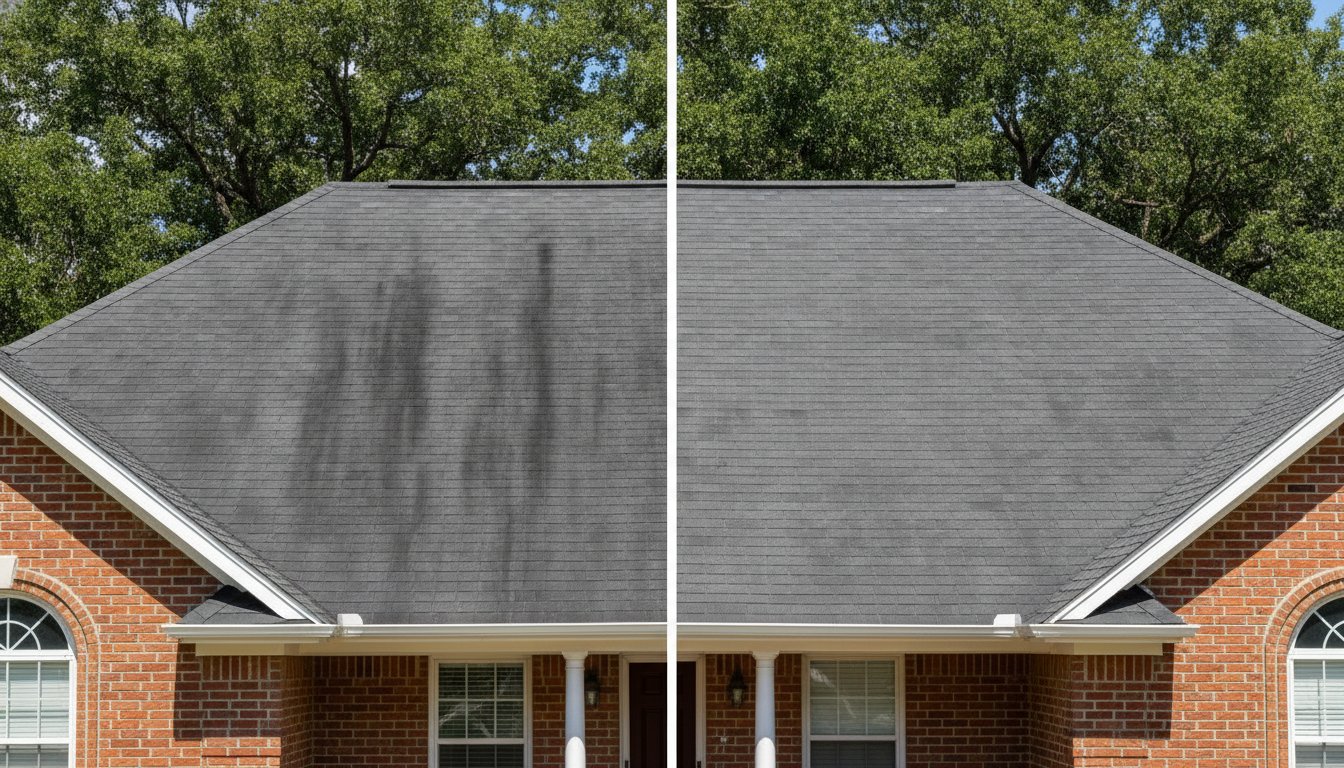

Those dark, ugly smears across your shingles aren’t just a sign of an aging home or accumulated dirt from the last Oklahoma storm. In fact, if you’re wondering what causes black streaks on roof in Tulsa, the answer is a living, breathing organism called Gloeocapsa magma. This hardy cyanobacteria thrives in our humid “Green Country” climate. It isn’t just sitting on the surface; it’s actually feeding on the limestone filler used in modern asphalt shingles.
It’s completely normal to feel a sense of dread when you notice these stains, especially when you’re trying to maintain your home’s value. You might worry it’s dangerous mold or that your roof is failing. We understand how stressful property maintenance can be in a region known for its volatile weather. This guide will help you identify the exact biological cause of the staining and show you how to safely remove it using professional methods that won’t void your warranty. We’ll also dive into the “25% rule” for Oklahoma repairs and help you determine if your insurance policy might provide the help you need to restore your home’s beauty and structural integrity.
Key Takeaways
- Understand exactly what causes black streaks on roof in Tulsa and why this hardy organism creates a dark pigment to survive Oklahoma’s intense UV rays.
- Learn how the limestone filler in modern asphalt shingles acts as a food source for algae, leading to significant granule loss over time.
- Discover why high-pressure washing is a “quick fix” trap that can void your manufacturer warranty and shorten your roof’s lifespan.
- Find out how to use the 15-year rule of thumb to decide whether your home requires a specialized cleaning or a professional roof replacement.
- Learn how a comprehensive roof inspection can reveal if severe weather damage is hiding underneath unsightly stains, simplifying the insurance claim process.
The Science Behind Black Streaks on Tulsa Roofs
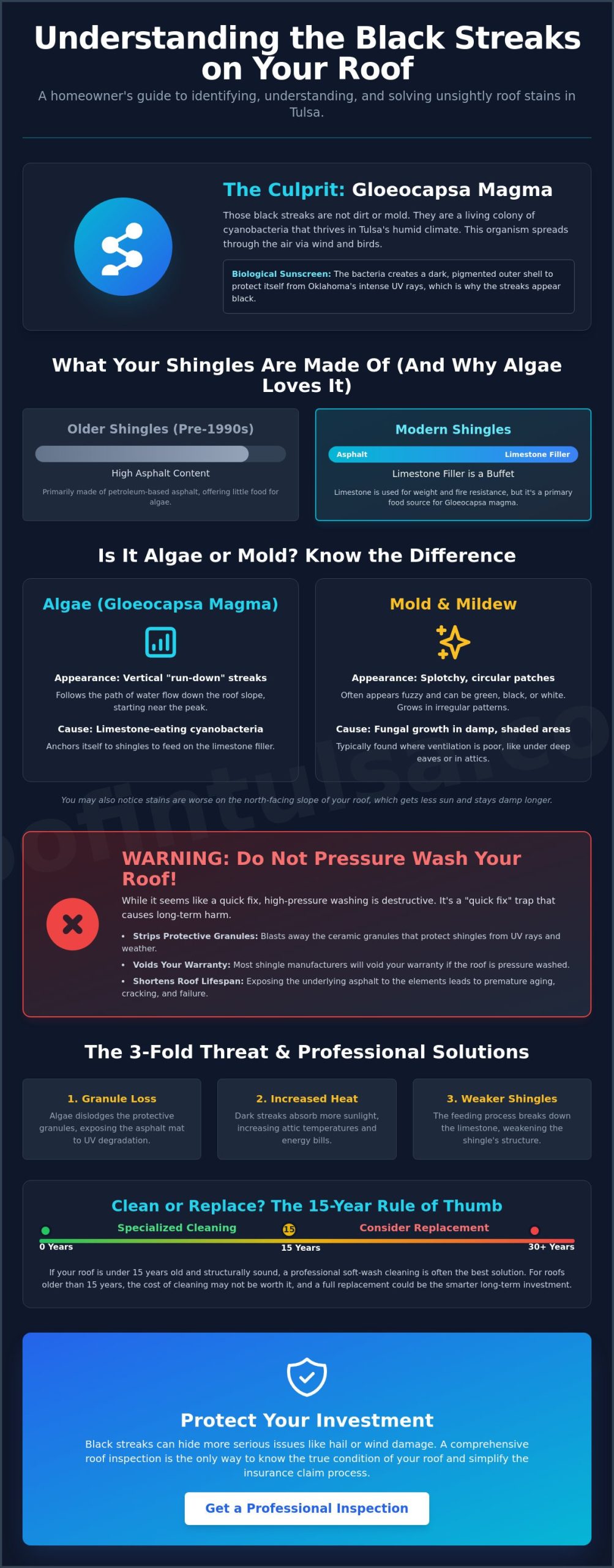
Many homeowners in our community assume that those dark, unsightly marks on their shingles are just soot or dirt from the road. However, the reality is more complex. When people ask what causes black streaks on roof in Tulsa, the culprit is almost always a hardy, ancient organism known as Gloeocapsa magma. This isn’t a plant or a fungus. It’s a type of cyanobacteria that has adapted perfectly to our unique Oklahoma environment.
While the organism is technically blue-green, it appears black to the naked eye. This happens because the bacteria creates a dark, pigment-rich outer coating. Think of it as a biological sunscreen. This protective layer allows the colony to survive the intense UV rays that hit Tulsa during our long summer months. Without this pigment, the bacteria would dry out and die under the sun. Instead, it thrives, spreading across your roof in long, dark ribbons.
Living in “Green Country” comes with many perks, but our high humidity levels are a major catalyst for this growth. These spores are incredibly lightweight and travel through the air with ease. They can be carried by a gust of wind or hitch a ride on the feet of local birds. If your neighbor has streaks, it’s often only a matter of time before they appear on your own home. Our local weather patterns create the exact conditions these colonies need to establish themselves and grow year-round. It’s a common challenge for property owners across the region.
Algae vs. Mold: Knowing the Difference
It’s very common for homeowners to mistake these streaks for mold or mildew. While both thrive in damp conditions, they look and behave differently. Mold typically grows in splotchy, circular patches and is often found in areas with poor ventilation, like an attic. In contrast, these black streaks follow a distinct vertical “run-down” pattern. They start near the peak and wash down the slope with every rain. Gloeocapsa magma is a limestone-consuming bacterium that anchors itself to your shingles, making it much more than just a cosmetic stain.
Why North-Facing Slopes Suffer Most
You might notice that one side of your house looks pristine while the other is covered in stains. This is usually the north-facing slope. Because these areas receive the least amount of direct sunlight, they stay damp for much longer after a storm. Tulsa’s seasonal dew cycles are another factor. In the early morning, moisture clings to the shingles, providing a daily water source for the bacteria. If you live in older, established neighborhoods in Midtown or South Tulsa, overhanging trees can make the problem worse by providing extra shade and trapping moisture against the roof surface. Understanding what causes black streaks on roof in Tulsa helps you realize why specific parts of your home are more vulnerable than others.
Why Asphalt Shingles Are Being “Eaten” from the Inside
It is unsettling to think about your home’s primary line of defense being slowly consumed. While we have identified what causes black streaks on roof in Tulsa, the actual physical impact on your shingles is even more concerning. These dark stains are not just sitting on top of your roof like a layer of dust. They are actively feeding on the materials that give your shingles their weight and durability. Over time, this biological activity transforms a cosmetic annoyance into a structural liability.
The Asphalt Roofing Manufacturers Association notes that this type of algae discoloration is a widespread issue that can affect the long-term performance of a roof. Beyond the scientific curiosity of how these organisms survive, homeowners need to understand the three-fold threat they pose: they strip away protective granules, increase your home’s temperature, and weaken the shingle’s foundation. If you’re noticing significant staining, a professional roof inspection can help determine if your shingles are still structurally sound.
The Role of Limestone Filler in Modern Roofing
In the past, asphalt shingles were made with a higher concentration of petroleum-based asphalt. However, since the 1990s, manufacturers have shifted toward using limestone as a primary filler to add weight and improve fire resistance. This shift is why older roofs often seem to have fewer streaks than modern ones. For Gloeocapsa magma, this limestone is a buffet. The bacteria break down the shingles’ foundation to reach the minerals, which weakens the bond between the asphalt and the protective granules. As the bacteria consume the filler, the shingle loses its ability to hold onto its protective coating.
Shortened Roof Lifespan and Curb Appeal
When algae takes hold, it can significantly shorten the life of your roof. Industry experts often find that heavy infestations can shave 5 to 10 years off the lifespan of a standard 30-year shingle. This happens because the dark streaks act like a heat sink. In our hot Tulsa summers, these black areas absorb more solar radiation, which raises the temperature of your attic and increases your monthly cooling costs.
The damage goes deeper than your utility bill. Granule loss leads to brittle shingles that fail during Oklahoma hail seasons. Once those protective granules are gone, the underlying asphalt is exposed to the sun, causing it to dry out and crack. From a real estate perspective, this “roof rot” perception can be devastating. Prospective buyers in the Tulsa market often see these streaks and assume the roof is failing, which can lead to lower offers or demands for full replacement during the inspection period. Understanding what causes black streaks on roof in Tulsa is only half the battle; the other half is preventing the structural decay that follows.
The Danger of DIY: Why Pressure Washing Isn’t the Answer
When those dark smears start taking over your home’s curb appeal, it’s natural to want a quick solution. You might be tempted to pull the pressure washer out of the garage and handle it yourself. However, treating these stains like common driveway dirt is a dangerous “quick fix” trap. While you now understand what causes black streaks on roof in Tulsa, you must also understand that your shingles are far more delicate than a concrete patio. Using high-pressure water on an asphalt surface often causes more immediate damage than the algae itself.
The stakes are higher than just a few lost granules. Major shingle manufacturers, including GAF and CertainTeed, are very specific about maintenance. Using a pressure washer on their products typically voids your warranty immediately. These companies know that shingles aren’t designed to withstand concentrated water blasts. Beyond the warranty, there is a financial incentive to keep your roof clean the right way. According to the U.S. Department of Energy, dark, stained surfaces absorb significantly more solar heat, which drives up your cooling bills. Attempting a DIY wash might seem like it’s saving money, but it often leads to expensive, premature repairs.
How High Pressure Destroys Granules
Most home pressure washers can reach 3000 PSI or higher. At that strength, the water acts like a sandblaster against your roof. It doesn’t just wash away the algae; it blasts away the protective ceramic granules that shield the asphalt from Oklahoma’s sun. A roof that has been pressure washed is like a bald tire. It lacks the “traction” and thickness needed to protect your home from the next hailstorm. This is why professional “soft washing,” which uses low-pressure delivery systems, is the only industry-approved cleaning method.
The Chemical Reality: Bleach vs. Eco-Friendly Solutions
Water alone doesn’t kill the Gloeocapsa magma spores. It simply spreads them around, often leading to the streaks returning within just a few months. Many DIY enthusiasts try to compensate by using high concentrations of household bleach. This creates a new set of problems. Harsh chemical runoff can kill your Midtown Tulsa landscaping, stain your siding, or corrode your gutters. Professional roof maintenance relies on specialized, biodegradable surfactants. These solutions are designed to kill the root of the colony and prevent regrowth without harming your property or the environment. We believe in doing the job right the first time to protect both your home and your investment.
Professional Solutions: Cleaning vs. Repair vs. Replacement
Once you identify what causes black streaks on roof in Tulsa, the next logical step is deciding how to address the problem. You don’t always need a brand-new roof just because you see dark stains. However, ignoring the issue can lead to structural damage that makes replacement unavoidable. In our local climate, we typically use the 15-year rule of thumb to help homeowners make this choice. If your roof is younger than 15 years and the shingles are still flexible, a professional cleaning might be all you need. If it’s older, we have to look much closer at the physical health of the shingles.
The most critical factor we assess is granule health. These small, stone-like particles are what protect your roof from the sun and hail. If you notice a large amount of “sand” in your gutters or at the base of your downspouts, your shingles are losing their protective layer. At this stage, the limestone filler has been significantly consumed by the algae. Cleaning a roof that has already lost its granules is often counterproductive; it’s like trying to polish a car with no paint left. In these cases, we evaluate whether spot repairs or a full replacement will better protect your home’s value.
When to Choose Professional Soft Washing
If your roof is relatively young and the shingles aren’t showing signs of physical failure, a professional soft wash is an excellent biological reset. This process uses specialized, low-pressure equipment to apply cleaning agents that kill the cyanobacteria at the root. It doesn’t just hide the stains; it stops the biological consumption of your shingles. This can extend the life of your roof by several years and immediately boost your home’s curb appeal. If the streaks are only appearing in specific valleys or around dormers, a targeted roof repair in Tulsa can resolve the issue without the cost of a full project.
Signs That Replacement is the Better Investment
There are clear signals that cleaning is no longer a safe option. If your shingles are curling at the edges, becoming brittle, or if you’ve discovered interior leaks after a storm, the structural integrity of the roof is compromised. Cleaning an old, fragile roof can actually trigger new leaks by disturbing the worn surface. When replacement becomes necessary, it’s a great opportunity to upgrade your home’s defense. A modern roof replacement in Tulsa often utilizes algae-resistant (AR) shingles. These shingles feature copper-lined granules that naturally prevent Gloeocapsa magma from growing, ensuring your new roof stays beautiful for decades. If you’re unsure about the state of your shingles, we recommend a professional roof inspection to get an honest assessment of your home’s needs.
Protect Your Tulsa Home with a Professional Roof Inspection
Understanding what causes black streaks on roof in Tulsa is the first step toward protecting your home, but seeing those stains is often just the beginning of the story. At Rescue Roofing Tulsa, we look beyond the surface during our comprehensive inspections. We don’t just see a cosmetic problem; we look for the underlying health of your entire roofing system. Because we live and work in the same neighborhoods you do, we know exactly how Oklahoma’s volatile weather interacts with biological growth to compromise your home’s safety.
Once your roof is clean or replaced, you’ll want to keep it that way for the long haul. Prevention is often more effective than a cure. We often recommend installing copper or zinc strips along the roof ridge. When it rains, small amounts of metal ions wash down the shingles. These ions are naturally toxic to algae but safe for your home. This simple proactive step can prevent the regrowth of those unsightly streaks for years. It’s an easy way to protect your investment and maintain that fresh, clean look without constant maintenance.
The Link Between Algae and Insurance Claims
A major concern for many homeowners is whether their insurance will help with restoration costs. While algae itself is usually considered a maintenance issue, it often hides more serious storm damage. Those dark streaks can easily mask hail bruises or subtle wind uplift that an untrained eye might miss. If an adjuster sees “dirty” shingles, they might overlook the structural defects hiding underneath. This is why a professional assessment is vital before you file a claim. We specialize in insurance claim assistance, helping you navigate the complex process of documenting damage that might be obscured by a layer of Gloeocapsa magma.
Community-Focused Reliability
Choosing a local partner matters in a state known for its unpredictable weather. We aren’t a national chain that disappears after the storm clouds clear. Our roots are right here in Tulsa. We maintain high-level certifications and a local physical address because we believe in accountability and neighborly service. We’re here to take the administrative burden off your shoulders and ensure your roof remains structurally sound. Our goal is to provide you with the peace of mind that comes from knowing your home is in expert hands. Schedule your free Tulsa roof inspection with Rescue Roofing today to get a clear, honest picture of your home’s health and protection.
Restore Your Home’s Beauty and Structural Integrity
You now know that Gloeocapsa magma is what causes black streaks on roof in Tulsa. It isn’t just an eyesore; it’s a biological infestation that impacts your shingles’ lifespan and your home’s energy efficiency. We’ve seen how modern limestone-filled shingles act as a food source and why high-pressure DIY cleaning methods often do more harm than good by voiding warranties and stripping granules. Protecting your investment starts with accurate information and professional care.
As A+ rated local Tulsa experts, we provide specialized insurance claim assistance to help you determine if storm damage is hiding beneath those dark stains. Whether you need a biological reset through soft washing or a full residential roof replacement, we’re here to guide you through every step of the process. Our team understands the specific environmental challenges of Green Country and is dedicated to keeping your property safe and sound.
Don’t let algae compromise your home’s integrity. Get a Free Roof Inspection & Algae Assessment from a team that offers 24/7 emergency repair services and deep roots in our Oklahoma community. We look forward to helping you keep your roof strong and beautiful for years to come.
Frequently Asked Questions
Is the black stuff on my roof dangerous to my health?
Can I use oxygen bleach to clean my roof shingles?
While oxygen bleach is safer for your landscaping than chlorine bleach, it is often ineffective at killing the hardy roots of an algae colony. It may lighten the stains temporarily, but the streaks usually return quickly because the spores remain active. Professional-grade surfactants are necessary to fully sanitize the surface and prevent the biological consumption of your shingles’ limestone filler.
Will insurance pay for roof cleaning if I have black streaks?
Standard homeowners insurance policies typically view roof cleaning as a maintenance responsibility rather than a covered peril. However, if those black streaks are masking actual hail bruises or wind damage, you may have a valid claim for repair or replacement. We recommend a professional inspection to determine if storm damage is hiding under the stains before you assume insurance won’t help.
How long does it take for black streaks to grow back after cleaning?
Without preventative measures, black streaks can begin to reappear within two to five years. The regrowth rate depends heavily on your home’s shade levels and local humidity. To keep your roof clean for a longer period, we suggest installing copper or zinc strips along the ridge. These metals release ions during rainstorms that naturally inhibit the growth of new algae colonies.
Are there specific shingles that prevent algae growth in Tulsa?
Yes, many modern manufacturers offer algae-resistant (AR) shingles that are perfect for the Oklahoma climate. For example, GAF’s Timberline shingles with StainGuard Plus protection are a popular local choice. These shingles feature specialized copper-lined granules and come with a 25-year warranty against algae growth. Investing in these during a replacement can permanently solve the problem of dark staining on your home.
Why do only some houses in my Tulsa neighborhood have black streaks?
Understanding what causes black streaks on roof in Tulsa helps explain why your neighbor’s house might look cleaner than yours. Homes with heavy tree shade or north-facing slopes stay damp longer, which creates a better breeding ground for algae. Additionally, older shingles made with higher amounts of limestone filler are more attractive to these organisms than newer, algae-resistant roofing materials.
What is the average cost of professional roof soft washing in Oklahoma?
The cost of professional soft washing depends on the square footage, pitch, and height of your roof. While homeowners often look for what causes black streaks on roof in Tulsa to save money with DIY, professional cleaning is a specialized service. It’s best to request a personalized quote from a local expert to ensure you get a safe, low-pressure treatment that protects your shingle warranty.
Can black streaks on my roof cause leaks inside my house?
Black streaks don’t cause immediate leaks, but they lead to the long-term degradation that eventually results in water intrusion. As the algae consumes the limestone filler, the shingles lose their protective granules and become brittle. This accelerated aging makes your roof much more vulnerable to cracking and hail damage. Over time, this weakened state is exactly what leads to structural failure and interior leaks.