


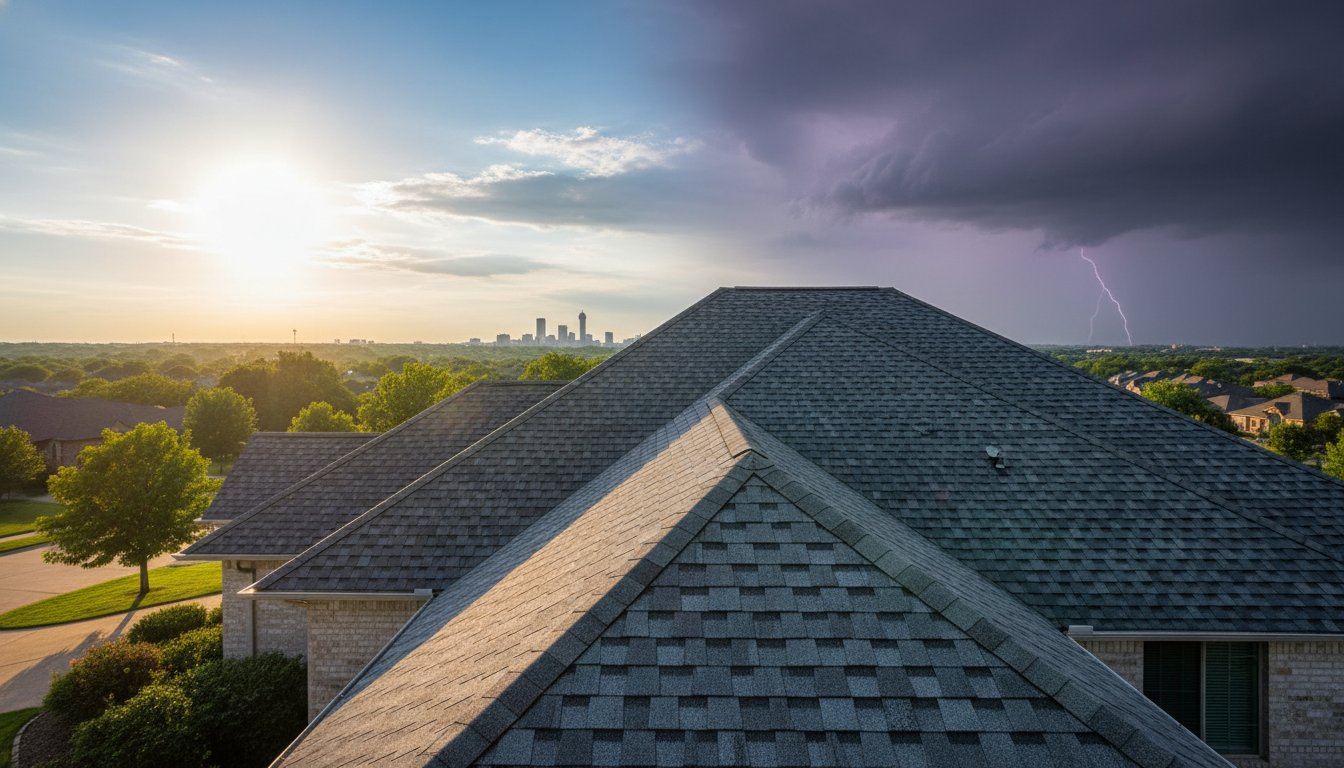

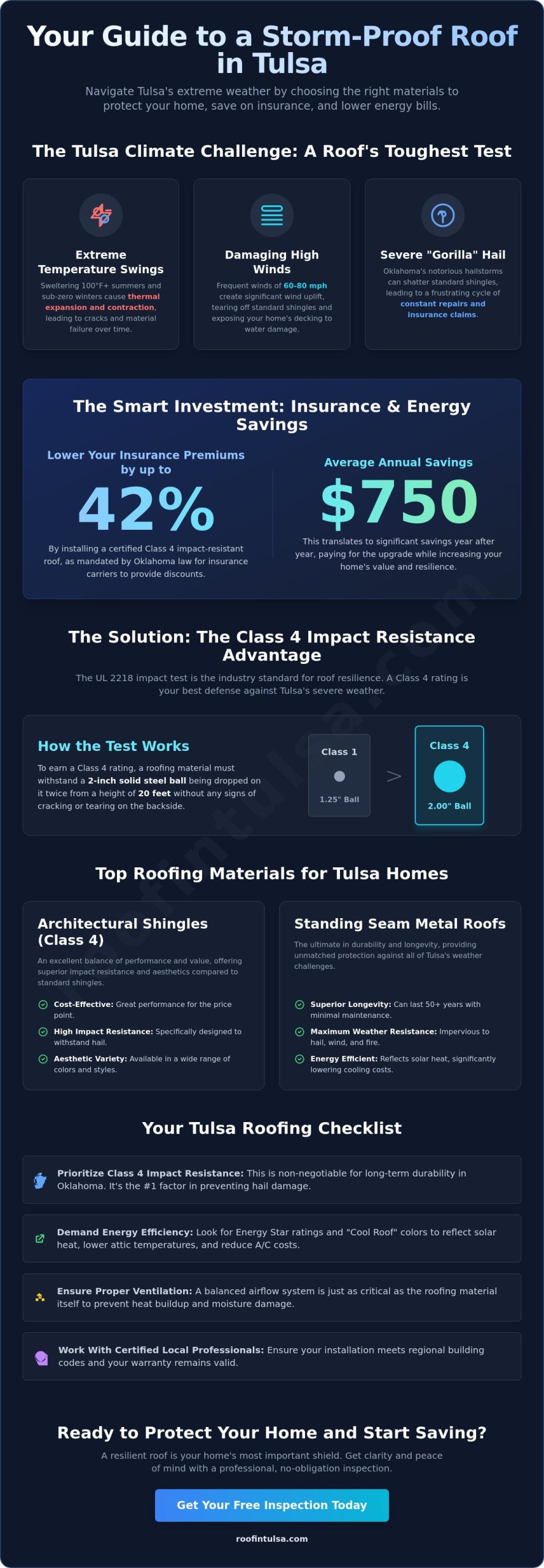
Did you know that choosing the right shingles could lower your annual insurance premiums by as much as 42%? For many of our neighbors here in Oklahoma, that translates to average annual savings of $750. You already know that living in Green Country means preparing for everything from triple-digit heat to sudden, violent hailstorms. It is stressful to watch the sky turn gray and wonder if your home is truly protected. Finding the best roofing materials for tulsa climate is about more than just aesthetics; it is about building a shield that stands up to 80 mph winds while keeping your energy bills manageable.
We agree that your home should be a place of safety, not a source of constant maintenance anxiety. This guide will show you how to discover which roofing materials withstand Tulsa’s extreme heat, hail, and wind while maximizing your insurance savings. We will walk through the top-rated Class 4 impact-resistant options, explain the 2026 Strengthen Oklahoma Homes grant requirements, and help you navigate the path to a more resilient, beautiful roof.
Key Takeaways
- Understand how Tulsa’s extreme temperature shifts cause thermal expansion and why choosing a material that resists cracking is essential for long-term durability.
- Learn how to select the best roofing materials for tulsa climate by prioritizing Class 4 impact resistance to withstand severe hail and wind.
- Compare the cost-effectiveness of architectural shingles with the superior longevity of standing seam metal roofs to find the right balance for your home.
- Discover how Energy Star ratings and specific “Cool Roof” colors can help lower your attic temperatures during intense Oklahoma summers.
- See why working with locally based, certified professionals ensures your new roof meets regional building codes and stays protected by a valid warranty.
Tulsa’s Extreme Weather: Why Your Roofing Choice Matters
Living in Tulsa means we get the full spectrum of Oklahoma weather. One day it is a sweltering 105 degrees, and by next week, we are bracing for a sub-zero cold snap. This constant fluctuation creates a cycle of thermal expansion and contraction that punishes your home. When your roofing material expands in the afternoon heat and rapidly shrinks during a cool evening rain, it puts immense stress on every seal and fastener. Choosing the best roofing materials for tulsa climate is not just about picking a color; it is about finding a system that can stretch and breathe without cracking under the pressure of our “Green Country” seasons.
Our proximity to Tornado Alley brings another challenge: wind uplift. Oklahoma wind resistance standards are strict for a reason. With straight-line winds often reaching 60 to 80 mph, a standard roof can easily lose shingles, leaving your decking exposed to water damage. Beyond the wind, the intense UV exposure in our region acts like a slow burn. It bakes the essential oils out of asphalt shingles. This process makes them brittle and prone to shedding granules. Once those granules are gone, your roof loses its primary defense against the sun, leading to a rapid decline in protection.
The Reality of Hail Damage in Oklahoma
Standard shingles often fail within the first five years here because they aren’t built for the “gorilla hail” we sometimes see. We frequently see homeowners stuck in a frustrating cycle of filing insurance claims every few seasons. This can lead to higher premiums or even policy cancellations. Investing in impact-resistant materials might seem like a bigger step up front, but it prevents the headache of frequent roof repair tulsa residents deal with after every major storm. A high-quality installation protects your home’s equity and your daily peace of mind.
Summer Heat and Attic Ventilation
The wrong roof acts like a thermal blanket. It traps heat in your attic and forces your A/C to work overtime, skyrocketing your monthly utility bills. During those triple-digit July afternoons, attic temperatures can easily exceed 150 degrees if the roof isn’t breathing correctly. Modern Oklahoma roofing relies on reflectivity and balanced airflow. Ventilation is just as critical as the material itself. Without it, even the best roofing materials for tulsa climate will degrade prematurely from the inside out. We focus on systems that reflect solar energy and allow your home to stay cool naturally, which keeps your family comfortable and your bills lower.
Understanding Impact Resistance: The Class 4 Advantage
When a spring storm rolls through Green Country, the sound of hail hitting your roof can be a major source of anxiety. This is where the UL 2218 impact resistance rating becomes your best defense. This industry standard measures how well a material stands up to falling debris. During testing, a 2-inch steel ball is dropped twice in the same spot from a height of 20 feet. To earn a Class 4 rating, the shingle must show no signs of cracking or tearing on the back side. In contrast, Class 1 materials are only tested with a 1.25-inch ball. For anyone looking for the best roofing materials for tulsa climate, prioritizing a Class 4 rating is the most reliable way to ensure your home survives the next “gorilla hail” event without a total loss.
While the upfront cost of impact-rated shingles is slightly higher, the long-term ROI is undeniable. These materials pay for themselves through reduced repair needs and increased home value. They are designed to be more flexible, which helps them absorb the energy of an impact rather than shattering. This resilience keeps your home’s primary shield intact, preventing the leaks that often follow a major storm. If you are wondering whether your current roof can handle another season, a professional roof inspection can provide the clarity you need to make an informed decision.
Insurance Premium Discounts in Tulsa
Oklahoma law actually mandates that insurance carriers provide premium discounts for homes with certified impact-resistant roofs. Homeowners who upgrade to Class 4 materials can see reductions of up to 42% on the wind and hail portion of their insurance premium. On average, this results in annual savings of approximately $750. To secure these savings, you must provide a certificate of installation to your carrier. We simplify this process by providing all necessary documentation and offering Insurance Claim Assistance to help you maximize your policy benefits during a replacement.
Durability Beyond the Warranty
The benefits of Class 4 shingles extend far beyond just hail protection. These products are engineered to resist granule loss during high-velocity windstorms, which is a common issue in our region. Granules are what protect your roof from UV degradation; once they are gone, the asphalt becomes brittle and fails. By choosing impact-rated products, you significantly reduce the likelihood of needing emergency repairs after a typical Oklahoma thunderstorm. At Rescue Roofing Tulsa, we recommend these products for every Tulsa home because we know they provide the steady, dependable protection our neighbors deserve.
Comparing the Top 3 Roofing Materials for Tulsa Homes
Selecting the right roof involves balancing your budget with the long-term protection your family needs. While there are many options on the market, only a few truly qualify as the best roofing materials for tulsa climate. We have narrowed the list down to three high-performance systems that consistently withstand Oklahoma storms. Each material offers a different set of benefits, from immediate affordability to lifetime durability.
Before we dive into the specifics, it is vital to address a common misconception. Some homeowners consider wood shakes or clay tiles for their unique look. In Tulsa, these are often risky investments. Wood shakes are highly susceptible to rot and fire, while clay tiles are incredibly heavy and can shatter during a typical spring hailstorm. Most standard Tulsa home frames aren’t built to support the massive weight of real slate or clay. Instead, we recommend focusing on engineered solutions designed for our specific environmental stresses.
Asphalt Shingles: Pros, Cons, and Tulsa Performance
Architectural asphalt shingles remain the most popular choice for residential roofing in Green Country. They offer a perfect blend of cost-effectiveness and reliable protection. However, not all shingles are created equal. We recommend performance-grade shingles from manufacturers like Malarkey or GAF, which are engineered with rubberized polymers for better flexibility. In our climate, a standard shingle might last 15 to 18 years, but a high-quality architectural shingle often reaches the 20 to 25-year mark if it is properly ventilated.
Metal Roofing: Is It Worth the Investment?
Standing seam metal roofing is the gold standard for longevity. While the initial cost is higher than asphalt, a metal roof can last 50 years or more. It provides exceptional wind resistance, which is crucial during our peak storm seasons. A common myth is that metal roofs are noisy during rain. With modern installation techniques and proper attic insulation, they are just as quiet as any other material. Metal is also incredibly energy efficient. It reflects solar heat during our 100-degree July heatwaves, which helps keep your cooling costs significantly lower.
Synthetic Solutions (DaVinci Roofscapes)
If you love the look of natural slate or hand-split shake, synthetic polymer tiles are an excellent alternative. Brands like DaVinci Roofscapes create tiles that mimic luxury materials but carry a Class 4 impact rating. These synthetics are much lighter than real stone, so they don’t require expensive structural reinforcements. They also feature advanced color retention technology. This prevents the “bleaching” effect caused by Tulsa’s high UV exposure, ensuring your home’s curb appeal stays sharp for decades.
Key Factors When Choosing Your Next Roof in Tulsa
Choosing a new roof involves more than just picking a durable shingle. When you evaluate the best roofing materials for tulsa climate, you must also consider the specific rules of your neighborhood. Tulsa’s diverse architecture means a roof that looks perfect in a South Tulsa subdivision might not meet the historic preservation guidelines of Midtown. Many Homeowners Associations (HOAs) have strict requirements regarding shingle color and material type. It’s always wise to review your bylaws before making a final decision. Beyond aesthetics, look for Energy Star ratings. Choosing “Cool Roof” colors can significantly lower attic temperatures by reflecting solar radiation, which is a major benefit during our humid Oklahoma summers.
Structural integrity is another critical factor. Oklahoma law requires a complete tear-off of old shingles before installing a new layer. This mandate ensures your roof deck is fully exposed and inspected. It’s the best time to ensure your home can support heavier premium materials like synthetic slate or high-profile architectural shingles. A professional contractor will check for wood rot or weakened rafters that could compromise your safety. Matching your material to your home’s architectural style ensures your investment improves curb appeal and resale value simultaneously. If you’re unsure which style fits your neighborhood best, you can schedule a roof inspection to get an expert opinion on your home’s structural health and aesthetic options.
The “Total System” Approach
Shingles are only the top layer of your defense. High-quality underlayment and flashing are just as vital to a leak-free home. In Tulsa, the residential code requires a 36-inch wide ice barrier in all roof valleys and at any change in roof slope. This prevents water from backing up under the shingles during winter ice storms or heavy spring rains. Long-term roof maintenance starts with ensuring these hidden components are installed correctly from day one. When every part of the system works together, your home stays dry regardless of the season.
Budgeting for Long-Term Value
It’s tempting to focus only on the initial price tag. However, the lifetime cost of ownership is a much more accurate measure of value. A cheaper roof that requires repairs every few years is far more expensive than a premium system that lasts decades. Homeowners should check with their service provider about potential financing options to make the best roofing materials for tulsa climate more attainable. Avoiding the “cheap contractor” trap is essential in storm-prone areas. Reliable professionals use materials that meet ASTM D7158 wind resistance standards to ensure your roof stays put when the sirens go off.
Expert Installation: Protecting Your Home with Rescue Roofing Tulsa
Selecting the best roofing materials for tulsa climate is only half the battle. The other half is ensuring those materials are installed by a team that understands the local landscape. We aren’t a national chain that moves from state to state following the latest storm. We live and work in the same neighborhoods you do. This local roots perspective means we know exactly how a July heatwave or a sudden April hailstorm impacts a roof. We don’t just see a project; we see a neighbor’s home that needs to stay safe for the next twenty years.
Manufacturer certifications are a cornerstone of our commitment to quality. These credentials aren’t just for show; they are essential for protecting your investment. If a roof isn’t installed according to strict manufacturer standards, your warranty could be voided when you need it most. Our certified installers undergo regular training to stay current on the latest techniques for wind resistance and thermal sealing. This level of competence ensures that the high-performance products you choose actually perform as promised when the Oklahoma wind picks up.
Our Insurance Claim Assistance is designed to remove the administrative burden from your shoulders. Navigating a claim after a storm is often more stressful than the damage itself. We act as your guide, helping you document the issues and providing the technical details your adjuster needs. Whether you are applying for the 2026 SOH grant mentioned earlier or filing a standard storm claim, our goal is to make the process as simple and friction-free as possible. We focus on the paperwork so you can focus on getting your life back to normal.
Our Roof Replacement Process
We believe that a successful build starts with clear communication. From the initial assessment to the final cleanup, you will know exactly what is happening on your property. Our team takes extra care to protect your landscaping and driveway during the tear-off and installation phases. We treat your lawn with the same respect we treat your roof. If you are noticing leaks or missing shingles, it might be time to check the signs you need a new roof to prevent further structural damage.
Schedule Your Free Tulsa Roof Inspection
We provide no-pressure assessments of your current roof’s health to help you make an informed decision. Every home is different, and we offer customized recommendations based on your specific architecture and budget. We will help you identify the best roofing materials for tulsa climate that fit your home’s needs. Don’t wait for the next major storm to find out if your shield is compromised. Contact Rescue Roofing Tulsa today to ensure your home is ready for whatever the Oklahoma sky brings next.
Protect Your Home Against the Next Oklahoma Storm
Choosing the best roofing materials for tulsa climate is about more than just picking a product; it’s about preparing for the intensity of Oklahoma’s seasons. We have discussed how selecting Class 4 impact-resistant materials protects your home’s equity and how a “total system” approach ensures your ventilation and underlayment work in harmony. By prioritizing durability and energy efficiency, you are making a smart investment that pays dividends in both family safety and long-term utility savings.
At Rescue Roofing Tulsa, we are proud to be locally owned and deeply invested in the well-being of our neighbors. As certified installers specializing in insurance claim assistance, we are here to simplify the administrative burden of storm damage restoration. We understand the specific regional building codes and neighborhood expectations that define our community, ensuring your new installation is seamless and professional from start to finish.
Take the first step toward a more resilient home today. Get Your Free Tulsa Roofing Estimate & Material Consultation and let us help you build a shield that lasts for decades. We look forward to providing the professional expertise and neighborly care your home deserves.
Frequently Asked Questions
What is the best roofing material for high winds in Tulsa?
Standing seam metal roofing provides the highest level of wind resistance for our area. These systems are engineered to withstand winds exceeding 140 mph when installed to professional standards. High-performance architectural shingles are also excellent choices if they meet ASTM D7158 Class H ratings. These are the best roofing materials for tulsa climate when protecting against the straight-line winds common in Green Country.
Do metal roofs get dented by Oklahoma hail?
Metal roofs can sustain cosmetic dents during severe hailstorms, but they rarely suffer structural breaches or leaks. While the appearance might show minor indentations after a storm, the material remains an incredibly durable barrier against water. Many Tulsa homeowners choose textured or matte finishes to help disguise these cosmetic marks. It stays one of the most reliable choices for long-term storm protection in our region.
How much can I save on insurance with a Class 4 roof in Tulsa?
Oklahoma homeowners can see reductions of up to 42% on the wind and hail portion of their insurance premiums. This results in an average annual saving of approximately $750 for many of our neighbors. You must provide a certificate of installation to your carrier to secure these lower rates. This financial incentive makes the upgrade to impact-resistant materials a very sensible long-term investment for your property.
Are dark-colored roofs a bad idea for Tulsa summers?
Dark colors absorb significantly more solar heat, which can skyrocket your attic temperatures and cooling costs. In our intense Oklahoma summers, choosing “Cool Roof” colors or lighter shades is a much better strategy for energy efficiency. These materials reflect UV rays rather than soaking them into your home. This choice keeps your living space more comfortable and reduces the daily strain on your air conditioning system.
How long does a standard asphalt shingle roof last in Oklahoma?
A standard asphalt shingle roof typically lasts between 15 and 20 years in our specific environment. The extreme UV exposure and rapid temperature shifts in Tulsa degrade asphalt faster than in many other parts of the country. Performance-grade shingles often last longer because they are engineered with rubberized polymers. Regular maintenance and professional inspections are the most effective ways to ensure your roof reaches its full expected lifespan.
Can I install a new roof over my existing shingles to save money?
No, Oklahoma law requires a complete tear-off of all existing layers before a new roof is installed. This regulation ensures that the underlying roof deck is inspected for rot or structural weaknesses. It also prevents the dangerous weight of multiple layers from compromising your home’s integrity. While a full replacement involves more labor, it is the only way to guarantee a safe and long-lasting installation for your family.
What is the most energy-efficient roofing material for Tulsa?
Standing seam metal roofing is the top choice for energy efficiency in the Tulsa area. Its high reflectivity prevents solar heat from entering your attic during our 100-degree July heatwaves. When you select the best roofing materials for tulsa climate, metal stands out for its ability to lower monthly utility bills. It keeps your home naturally cooler, which provides immediate relief during the peak of the Oklahoma summer.
Does a metal roof make my house hotter in the summer?
Metal roofs actually help keep your home cooler by reflecting solar energy away from the structure. Unlike asphalt shingles, which tend to hold and radiate heat, metal dissipates thermal energy very quickly. When combined with modern attic ventilation and proper insulation, a metal roof can significantly lower your indoor temperatures. You will likely find that your home stays more comfortable during the hottest months of the year.