


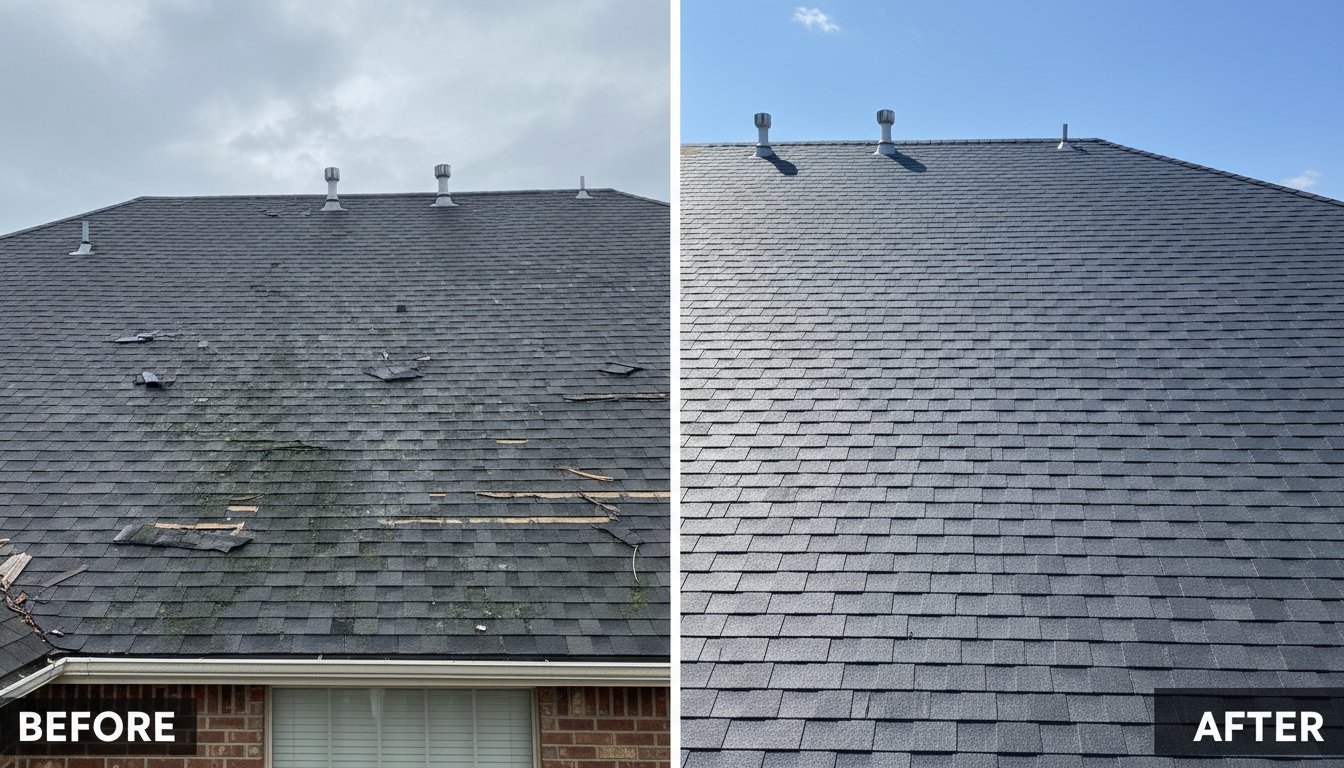

That small, dark spot on your ceiling. The few shingle granules you noticed in your gutters after a storm. For many Oklahoma homeowners, these subtle signs create big worries. Is it just normal aging, or is it a warning of a catastrophic leak waiting to happen? Ignoring the signals can put everything you value at risk, turning a small issue into a major disaster. Knowing when to call for professional roofing services can feel like a guessing game, but it doesn’t have to be. Your peace of mind is too important to leave to chance.
We’re here to rescue you from that uncertainty. This ultimate homeowner checklist is your guide to confidently identifying the exact condition of your roof. We’ll show you how to spot everything from hidden leaks to obvious storm damage, so you can act before it’s too late. By the end of this guide, you’ll understand the difference between a simple repair and a full replacement, and you’ll feel prepared to make the best decision to protect your home and your family. Let’s get you the answers you need to keep your home safe.
Interior Warning Signs: What to Spot Inside Your Home
Often, the most urgent signs of roof failure don’t require a ladder-they appear right inside your home. You can start your inspection from the safety of your living room or attic. Seeing these warning signs typically means water has already penetrated your roof’s primary defenses and is actively causing damage. Catching these problems early is critical to preventing expensive repairs to your drywall, insulation, and even your home’s structural framing. If you spot any of the following issues, it’s a clear signal to call for professional roofing services immediately.
Water Stains on Ceilings or Walls
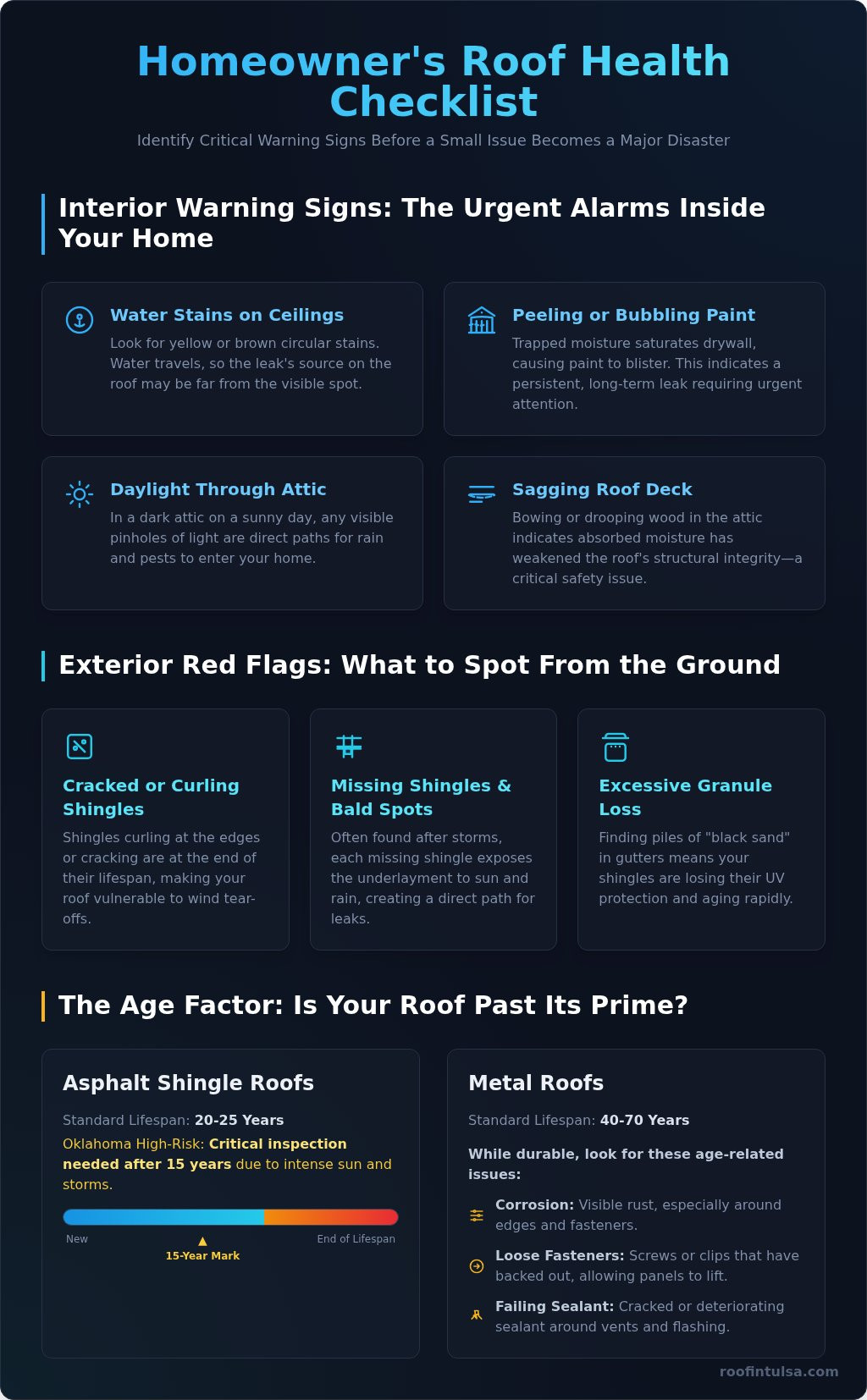
One of the most obvious signs of a leak is discoloration on your ceilings or walls. Look for stains that appear as yellow or brown circles, which often grow larger after heavy rain. These spots are commonly found near chimneys, skylights, and attic vents. Remember, water can travel along rafters and beams, so the stain you see on your ceiling might be located far from the actual source of the leak on your roof.
Peeling Paint and Bubbling Drywall
Moisture trapped behind your walls or ceiling will eventually cause paint to bubble, blister, and peel. This is a tell-tale sign of a persistent, long-term leak that has saturated the drywall. Simply applying a new coat of paint is a temporary fix that hides a much bigger problem. Without addressing the source of the leak, the underlying wood and drywall will continue to deteriorate, leading to mold growth and decay. A small ceiling stain can quickly spiral into thousands of dollars in hidden damage, as many homeowners who’ve needed Tulsa roof repair after a hail storm have discovered firsthand.
Light Shining Through the Attic
On a bright, sunny day, head into your attic and turn off the lights. Look up at the underside of the roof deck. While a roof is the top covering of a building designed to be a solid barrier, any visible slivers or pinholes of daylight mean that barrier is compromised. These openings are direct pathways for rain, snowmelt, and pests to enter your home, making a small issue much worse over time.
Sagging Roof Deck in the Attic
As you inspect your attic, pay close attention to the roof deck-the sheets of wood that form the base of your roof. If you see areas that are drooping, bowing, or sagging between the rafters, it indicates a severe moisture problem. This sagging means water has soaked the wood, causing it to weaken and lose its structural integrity. This is a critical safety issue that demands immediate attention from a certified roofing services provider to prevent further damage or collapse.
Exterior Red Flags: What Your Roof is Telling You From the Outside
You don’t need to climb a ladder to spot some of the most critical signs of roof failure. Many red flags are clearly visible from the safety of your own yard. For a closer look, grab a pair of binoculars and inspect your roof from different angles. Remember to compare the sides of your home-the intense Oklahoma sun often causes the south and west-facing slopes to wear out faster. These signs are your roof’s way of telling you its protective layers are compromised and your home is at risk.
Cracked, Curling, or Buckling Shingles
If your asphalt shingles are starting to curl at the edges, crack, or buckle in the middle, they have reached the end of their effective lifespan. Curling edges act like hooks, catching wind and making your roof highly vulnerable to tear-offs during a storm. While a single damaged shingle can be replaced, this is typically a widespread issue that points toward a full roof replacement. As outlined by industry experts like the National Roofing Contractors Association, these are definitive signs that the material’s integrity is gone.
Missing Shingles and Bald Spots
After a night of Oklahoma’s notorious high winds or a severe hailstorm, it’s common to find shingles in your yard. Each missing shingle creates a “bald spot” on your roof, leaving the underlayment and roof deck exposed to rain, ice, and sun. This is a direct path for water to enter your home. While replacing one or two shingles is a simple repair, numerous bald spots suggest the remaining shingles are also weak and may fail soon, indicating a need for comprehensive roofing services to secure your home.
Excessive Granule Loss in Gutters
Have you noticed a build-up of coarse, black sand in your gutters and downspouts? Those are the protective granules from your asphalt shingles. Their primary job is to shield the shingle from damaging UV rays, which can make it brittle and weak. A small amount of granule loss is normal, especially on a new roof. However, finding large accumulations means your shingles are aging rapidly and losing their most important layer of protection against the elements.
The Age Factor: How Old is Too Old for a Roof in Oklahoma?
While leaks and missing shingles are obvious alarms, one of the most reliable signs you need a new roof is simple arithmetic: its age. Every roofing system has a manufacturer-rated lifespan, but that number is based on ideal conditions. Here in Oklahoma, your roof doesn’t get ideal conditions-it gets a relentless cycle of brutal sun, high winds, and destructive hail storms that can drastically shorten its life.
Understanding the age of your roof is the first step in protecting your home from sudden failure during the next big storm. If your roof is nearing the end of its expected lifespan, it’s time to seek professional roofing services for a thorough inspection. Don’t wait for a disaster to strike. Our complete Tulsa roofing guide to protection, repair, and insurance can help you understand your options and navigate the process with confidence.
Asphalt Shingle Roofs (The Most Common)
Standard architectural shingles are designed to last 20-25 years. However, the intense UV exposure and thermal shock in Oklahoma mean you should be on high alert much sooner. After the 15-year mark, annual professional inspections are critical to catch age-related weakness before it leads to a catastrophic leak. Also, be aware that if your roof has multiple layers of old shingles, its lifespan is significantly reduced due to trapped heat and excess weight.
Metal Roofs
A metal roof is a long-term investment, typically lasting between 40 and 70 years. Their durability makes them an excellent choice for Oklahoma’s harsh weather. While highly resistant to hail and wind, they are not invincible. Signs of age-related failure in metal roofs include:
- Visible rust or corrosion, especially around edges and fasteners.
- Loose or failing fasteners that allow panels to lift.
- Cracked or deteriorating sealant around vents and flashing.
Even if a metal roof isn’t leaking, significant cosmetic denting from hail can impact your home’s value and may warrant a replacement through your insurance.
Wood Shake or Slate Roofs
Though less common in the Tulsa area, these premium materials have unique aging signs. A professional eye is essential to assess their condition. For wood shake roofs, look for shingles that are splitting, rotting, or covered in moss and algae. With slate roofs, the primary concerns are cracked, missing, or sliding tiles, which can immediately compromise the roof’s integrity. When these high-end systems begin to fail, prompt action is needed to protect your home and investment.
Beyond the Shingles: The Supporting Cast of Your Roofing System
A healthy roof is much more than a layer of shingles. It’s a complete system of interconnected parts, all working together to protect your home. When Oklahoma’s weather hits, it’s often these less-visible components that fail first, creating hidden entry points for water and leading to major damage inside your home. A key part of professional roofing services is inspecting this entire system, not just what you can see from the curb.
Ignoring these supporting players is a risk you can’t afford to take. Here are the critical areas our experts check to ensure your home is truly protected.
Damaged or Rusted Flashing
Flashing consists of the thin metal strips installed around chimneys, vents, skylights, and in roof valleys. Its one job is to create a watertight seal in the most vulnerable areas of your roof. When flashing fails, your home is left wide open to leaks. Be on the lookout for:
- Obvious cracks or gaps in the metal
- Signs of rust and corrosion
- Sealant that is cracked, dried, or pulling away from the flashing
Clogged or Damaged Gutters
Your gutters are the frontline defense for your foundation. They are designed to channel thousands of gallons of rainwater safely away from your home. When they become clogged with leaves and debris, that water has nowhere to go but back up against the roofline. This constant moisture quickly rots the wooden fascia boards and soffits, creating a pathway for water, mold, and pests to enter your attic and walls.
Dark Stains and Algae Growth
Those ugly black streaks you see on many Oklahoma roofs are a type of algae called Gloeocapsa magma. While often considered a cosmetic issue, these streaks indicate that moisture is lingering on your shingles, which can shorten their lifespan. Even more dangerous is moss growth. Heavy moss can physically lift the edges of your shingles, breaking their seal and allowing wind-driven rain to get underneath.
These hidden issues can turn a small repair into a full roof replacement. Don’t wait for a ceiling stain to tell you something is wrong. Our comprehensive roofing services identify these vulnerabilities before they cause a catastrophe. Get a free, professional inspection and protect what matters most.
Repair vs. Replacement: How to Make the Right Decision
Once you’ve spotted the signs of a problem, the big question is: do you need a simple fix or a whole new roof? The answer can mean the difference between a minor expense and a major investment. Not every leak or missing shingle is a catastrophe demanding a full replacement. Making the right choice comes down to understanding the age of your roof and the true extent of the damage.
An honest, professional assessment is the key to protecting your home and your wallet. A small, targeted repair now can often delay a costly replacement for years, keeping your family safe without unnecessary financial stress. Our expert roofing services are designed to provide the right solution, not just the most expensive one.
When a Roof Repair is Likely Enough
The good news is that many common roof issues can be resolved with a professional repair. This is often the best course of action if your situation matches the following:
- The roof is relatively young. If your asphalt shingle roof is under 15 years old and has been well-maintained, a repair is usually the most cost-effective option.
- Damage is isolated. After a storm, you might find a few shingles have blown off or a small section has sustained impact. If the rest of the roof is sound, a targeted repair is all you need.
- The issue is with a single component. Leaks are frequently caused by failing flashing around a chimney, vent, or skylight. Fixing this specific component can solve the problem completely. Learn more about how expert Tulsa roof repair can protect your home from Oklahoma’s volatile weather and help you navigate the insurance claims process.
When a Full Roof Replacement is Necessary
Sometimes, a repair is like putting a bandage on a problem that needs surgery. A full replacement is a crucial investment in your home’s safety and value when you see these signs:
- Your roof is at the end of its lifespan. Most asphalt shingle roofs in Oklahoma last 20-25 years. If yours is approaching this age, replacement is a proactive measure against inevitable failure.
- Damage is widespread. If you see curling shingles, widespread granule loss, or cracked shingles across multiple sections of your roof, its structural integrity is compromised.
- There has been significant storm damage. A severe hail storm or high winds can cause extensive damage that makes a repair impractical. A new roof is the only way to guarantee protection. Understanding your coverage options is essential — our Tulsa roofing homeowner’s guide to insurance and repair walks you through exactly what to expect from the claims process.
Don’t leave the safety of your home to chance. The wrong choice can lead to recurring leaks and even greater expenses down the road. Our team provides transparent, expert roofing services to help you make an informed decision.
Unsure which you need? Get a free, honest inspection from our Rescue Team. We’ll give you a clear assessment and a straightforward recommendation to protect what matters most.
Rescue Your Roof, Protect What Matters Most
Your roof is your home’s first line of defense against Oklahoma’s unpredictable weather. From interior water stains and attic issues to curling shingles and old age, the signs of failure are clear once you know what to look for. Understanding the difference between a simple repair and a full replacement is the most critical step in protecting your investment and keeping your family safe.
Don’t leave your home’s security to chance. At Rescue Roofing, our expert roofing services are designed to provide a definitive answer and a stress-free solution. As a licensed, certified, and insured team, we treat every home like our own. With a 24/7 emergency response crew on standby, you can trust us to be there when you need us most.
Don’t wait for a disaster. Schedule Your Free Roof Inspection Today!
Take control of your home’s protection and gain the peace of mind you deserve.
Frequently Asked Questions
How much does a professional roof inspection cost in Tulsa?
You should not have to pay to know if your home is protected. At Rescue Roofing, we provide a comprehensive, professional roof inspection in Tulsa and the surrounding areas completely free of charge. This no-obligation assessment is critical for identifying hidden storm damage or age-related issues before they turn into costly leaks. We give you a detailed, honest report so you can make an informed decision about the safety of your home without any upfront cost.
Can my roof be replaced in the winter?
Yes, your roof can absolutely be replaced during an Oklahoma winter. Our certified installation team is trained to work in colder conditions. We carefully monitor the weather to ensure temperatures are suitable for shingles to seal properly and take extra safety precautions. Postponing a critical replacement could expose your home to severe damage from ice and snow. We work efficiently within safe weather windows to ensure your home is protected, no matter the season.
My roof isn’t leaking, but it’s old. Should I replace it?
An old roof is a significant risk, even if it is not actively leaking. Most asphalt shingle roofs in Oklahoma have a lifespan of 15-20 years. After this point, the shingles become brittle and lose their protective granules, leaving your home vulnerable to wind and hail. Proactively replacing an aging roof is the best way to prevent a sudden, catastrophic failure, which can lead to extensive water damage, mold, and costly interior repairs. Protect your investment before disaster strikes.
What does hail damage look like on an asphalt shingle roof?
Hail damage on asphalt shingles often appears as dark, bruised-looking spots or circles where the protective granules have been knocked off, exposing the black matting underneath. You may also see dents on metal roof components like vents, flashing, and gutters. These impact marks compromise the shingle’s ability to protect your home from water, leading to leaks down the road. If you notice these signs, a professional inspection is crucial to assess the full extent of the damage.
Will my homeowner’s insurance cover a roof replacement due to age?
Typically, homeowner’s insurance policies do not cover a roof replacement due to old age or general wear and tear, as this is considered a maintenance responsibility. Insurance is designed to cover sudden, accidental damage from a specific event like a hail storm or high winds. Our professional roofing services include a thorough inspection to document any storm-related damage that may be covered, helping you navigate the claims process to get the compensation you deserve for a valid claim.
How long does a typical roof replacement take?
We understand that a roof replacement is a major project, so our expert team works with speed and precision. For an average-sized home in Oklahoma, a complete asphalt shingle roof replacement is usually completed in just 1 to 3 days. Our efficient process, from the initial tear-off to the final cleanup, is designed to minimize disruption to your family’s routine. Our primary goal is to secure your home quickly so you can get back to your life with peace of mind.