



What if the next Tulsa hailstorm was just another rainy afternoon instead of a stressful insurance claim and a high deductible? If you’ve lived in Oklahoma for any length of time, you likely feel caught in an endless cycle of storm damage. You’re probably wondering what roofing material is best for hail to finally stop the cycle of rising premiums and frequent repairs. It’s exhausting to deal with confusing marketing claims while wondering which products actually stand up to a two-inch hailstone. You deserve a roof that protects your family and your wallet without the constant worry every time the sirens sound.
In this 2026 guide, we’ll help you discover the most durable options based on local performance and updated building codes. You’ll learn how Class 4 impact resistant materials can trigger insurance discounts of up to 30 percent and how the Strengthen Oklahoma Homes grant might provide up to $10,000 for your project. We’ll compare the durability of metal, composite, and specialized shingles so you can make an informed choice. By the end, you’ll know how to secure a roof that lasts over 20 years and brings genuine peace of mind to your home.
Key Takeaways
- Learn what roofing material is best for hail by comparing the performance and longevity of Class 4 asphalt shingles, metal, and composite systems.
- Understand the UL 2218 Class 4 standard and why this specific impact-resistance rating is essential for surviving Oklahoma’s “Hail Alley” storms.
- Discover how a more resilient roof can lower your financial burden through annual insurance premium discounts of up to 30 percent.
- Identify the specific Oklahoma building codes and “one layer” rules that impact how your roof must be replaced to ensure full protection.
- Explore how professional insurance claim assistance can help you navigate hidden damage and the “25% rule” to secure the coverage your home needs.
Why Tulsa Homeowners Need Hail-Resilient Roofing
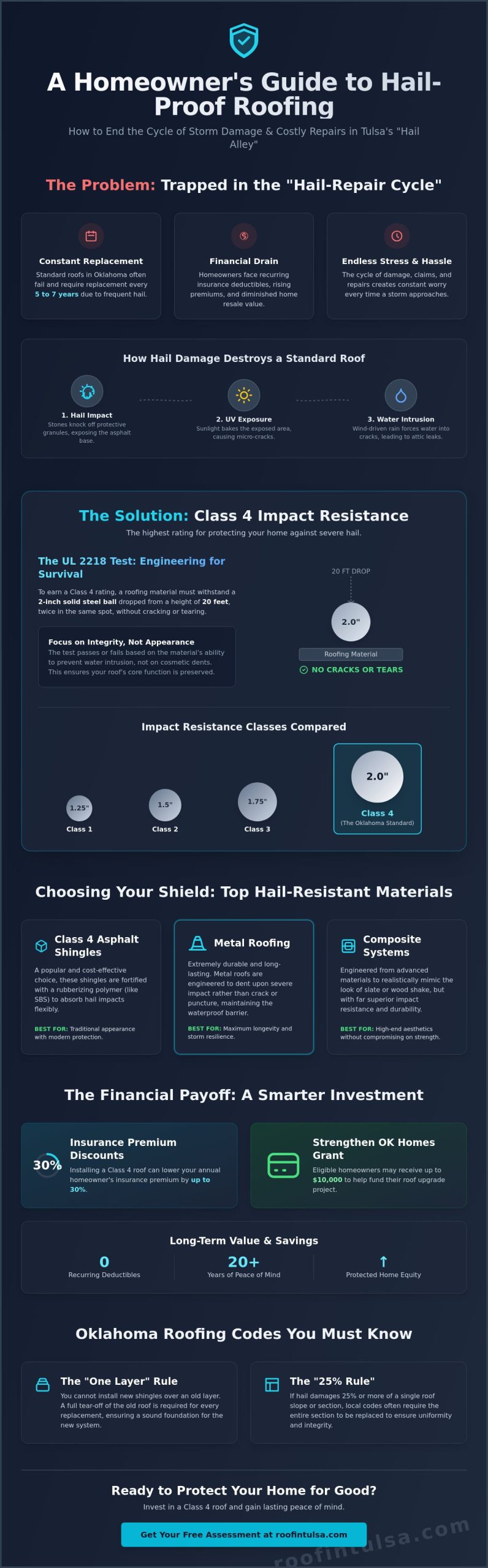
Tulsa homeowners know that spring and summer afternoons often bring more than just rain. Living in the heart of “Hail Alley” means our community faces a higher frequency of severe storms than almost anywhere else in the country. If you’ve lived here for a few years, you’ve likely seen the damage that 2-inch hail can do to a standard roof. Many neighbors ask what roofing material is best for hail because they’re tired of the “Hail-Repair Cycle.” It’s the frustrating pattern where standard shingles fail every five to seven years, leading to constant insurance claims and construction noise in your neighborhood.
Hail damage often starts small. A single strike can knock away protective granules, creating microscopic cracks in the shingle’s surface. Over time, Oklahoma’s intense UV rays bake the exposed asphalt, causing it to become brittle and eventually leak into your attic. It’s also important to understand how insurance companies view this damage. They often distinguish between cosmetic damage, which only affects the look of your home, and functional damage, which prevents the roof from shedding water. Choosing Class 4 impact rated shingles helps ensure your roof stays functional even after a major event. Under the “25% Rule” in Oklahoma, if a quarter of a roof section is damaged, the entire section may need replacement to meet local building codes.
Tulsa’s Specific Weather Challenges in 2026
Recent storm patterns in Green Country show that hail rarely travels alone. In 2026, we’ve seen an increase in wind-driven rain accompanying these events. This combination forces water into tiny gaps created by hail impacts. Tulsa’s extreme temperature swings also cause roofing materials to expand and contract rapidly. Understanding what roofing material is best for hail requires looking at how these materials react to Green Country’s unique atmosphere. Thermal shock makes older or lower-quality materials more prone to cracking when a hailstone finally hits.
The True Cost of a ‘Cheap’ Roof
Selecting a lower-grade material might save money initially, but the long-term financial burden is high. When you factor in multiple $1,000 or $2,500 deductibles over a decade, the “savings” disappear. Additionally, Tulsa’s “one layer” rule means you can’t simply install new shingles over old ones. Every replacement requires a full tear-off, which adds to the labor and disposal costs. Multiple claims can also make it difficult to find affordable coverage in Oklahoma. Frequent hail damage and the resulting insurance claims can significantly diminish the market value and resale potential of Tulsa residential properties. Investing in a durable solution now prevents these recurring costs and protects your home’s equity for the future.
The Gold Standard: Class 4 Impact Resistance Explained
When you start looking for what roofing material is best for hail, the term “Class 4” will appear in almost every conversation. This isn’t a vague marketing claim. It is a precise technical designation that separates standard materials from those engineered for survival. The industry uses four levels to rank impact resistance. Class 1 is the entry level, while Class 4 represents the highest level of protection available for residential properties. In Oklahoma, where storms regularly produce large hail, anything below a Class 4 rating is often considered insufficient for long-term durability.
The primary benchmark for this rating is the UL 2218 test. During this process, a 2-inch steel ball is dropped from a height of 20 feet onto the roofing material. To pass, the material must sustain two consecutive hits in the same location without failing. The difference between the ratings lies in the size of the impact. Class 1 uses a 1.25-inch ball, Class 2 uses a 1.5-inch ball, and Class 3 uses a 1.75-inch ball. Only Class 4 materials can survive the 2-inch drop, which simulates the extreme force of hailstones falling at terminal velocity.
How UL 2218 Testing Works
The passing criteria for UL 2218 focus entirely on structural integrity. Inspectors check the back of the shingle for any visible cracks or tears after the impact. If the strike causes the material to split or rupture, it fails the test. This is why the rating is so trustworthy; it prioritizes your home’s safety over simple aesthetics. Different materials handle these impacts in unique ways. High-quality asphalt shingles use specialized polymers to remain flexible and absorb energy. Metal roofing is designed to dent slightly rather than crack. Both approaches keep the water out, which is the ultimate goal of any Tulsa roof replacement project.
FM 4473: The ‘Real Hail’ Test
Some homeowners look for even more assurance by checking for the FM 4473 certification. While the UL test uses steel, the FM test uses actual ice balls propelled at high speeds. This test is often preferred by engineers because ice behaves differently than steel when it hits a surface. Ice can shatter or “pancake,” spreading the force of the impact across a wider area. Materials that carry both UL and FM ratings are considered the elite tier of storm protection. If you want to ensure your home is ready for the next storm season, scheduling a professional roof inspection can help you identify if your current shingles meet these high standards.
Top 3 Roofing Materials for Hail Protection in Oklahoma
Choosing what roofing material is best for hail requires looking past the initial price tag. In Tulsa, we evaluate materials based on how they handle our specific brand of extreme weather. While no roof is entirely “hail-proof,” three specific materials consistently outperform the rest in Green Country. Each offers a different balance of durability, aesthetic appeal, and long-term return on investment. The right choice for your home depends on your budget and how long you plan to stay in your current residence.
Class 4 Asphalt Shingles: Pros and Cons
Asphalt remains the most common choice for Tulsa homeowners because of its cost-effectiveness and reliability. Modern Class 4 shingles utilize modified bitumen technology. This process adds specialized polymers to the asphalt, creating a “rubberized” effect. When hail strikes, these shingles flex and absorb the energy instead of shattering. They provide the traditional look of architectural shingles but with significantly higher impact resistance. If you’ve noticed missing granules or bruised spots after a recent storm, you should review this checklist of signs you need a new roof to evaluate your current level of protection.
Metal Roofing Performance in Storms
Metal is rapidly gaining popularity in Oklahoma for its incredible lifespan and strength. Homeowners typically choose between standing seam panels or stone-coated steel shingles. Metal roofing systems in the Tulsa area are often rated to withstand winds of up to 140 mph, which is vital during tornado season. While large hail might cause small cosmetic dents, the functional integrity of the roof almost always remains intact. This means your home stays dry even if the surface shows some “character” after a storm. It’s a dependable, long-term solution that can last 40 to 70 years with minimal maintenance.
Synthetic Slate and Shake Options
Synthetic or composite roofing is often considered the premium “hail-proof” option. These materials are engineered from advanced polymers and recycled rubber to be virtually indestructible. They perfectly mimic the look of heavy slate or hand-split cedar shakes without the extreme weight or maintenance requirements. For older homes in midtown Tulsa, this lightweight nature is a major advantage. While the initial investment is higher, the 50-year lifespan promise and superior impact resistance often make it the last roof you’ll ever need to buy. It’s a “set it and forget it” solution for those who want maximum peace of mind.
The Financial Incentive: Insurance Discounts and ROI
Deciding what roofing material is best for hail is as much a financial strategy as it is a home improvement project. In Oklahoma, the annual cost of home insurance is among the highest in the nation. The average yearly premium in Tulsa currently sits at approximately $3,749. Because impact-resistant materials significantly reduce the likelihood of a total loss, most insurance companies offer substantial incentives to homeowners who upgrade. By choosing a Class 4 rated system, you can often secure annual premium discounts ranging from 15 percent to 30 percent. This creates a predictable return on your investment that starts the moment your project is completed.
It’s vital to be aware of the “Cosmetic Damage Waiver” trap found in many modern policies. Some insurers offer lower rates if you agree to waive claims for damage that doesn’t cause immediate leaks. In a hail-prone area like Green Country, this can be a costly mistake. A roof that is functionally sound but aesthetically ruined can still lower your home’s total value. We recommend reviewing your policy carefully to ensure you aren’t trading long-term equity for a small monthly saving.
Oklahoma Insurance Premium Reductions
Major carriers in the Tulsa area, including State Farm, Allstate, and Farmers, have established programs to reward resilience. To qualify for these savings, your roofing contractor must submit a specialized Certificate of Installation. This document confirms that the materials used meet the UL 2218 Class 4 standard. While upgrading to Class 4 shingles typically adds between $1,500 and $2,500 to a project, the resulting insurance savings allow the roof to pay for itself in just five to eight years. It’s one of the few home upgrades that generates direct cash flow through reduced monthly bills.
Resale Value and ‘Storm-Proof’ Marketing
When potential buyers ask what roofing material is best for hail, they are looking for a home that won’t require a high deductible payment after the first spring storm. A hail-resistant roof is a powerful asset when it comes time to sell your home. Tulsa buyers are increasingly savvy about local weather risks and prioritize properties that offer documented protection. Many premium roofing systems also come with transferable warranties. Because it significantly reduces the likelihood of future insurance claims and hidden structural damage, a Class 4 roof is a top priority for Oklahoma home inspectors during the due diligence process. If you want to see how much you could save on your premiums, we can provide a detailed assessment of your current system through a professional roof inspection.
Protecting Your Home with Rescue Roofing Tulsa
Choosing what roofing material is best for hail is only the first step toward a resilient home. The quality of the installation is just as critical as the rating of the shingle itself. At Rescue Roofing Tulsa, we understand that a roof is your primary defense against Oklahoma’s unpredictable spring cycles. Our team doesn’t just install shingles; we build comprehensive weather protection systems designed to meet the rigorous 2018 International Building Codes used in Tulsa today. We focus on every detail, from the reinforced underlayment to the specialized ventilation that prevents the heat-related brittleness common in Green Country.
Navigating the aftermath of a storm is often the most stressful part of homeownership. We simplify this process by providing expert insurance claims assistance. Our team knows how to document damage according to Oklahoma House Bill 3495, which allows homeowners up to 24 months to file for hidden hail damage. We work directly with your adjuster to ensure every bruised shingle and compromised flashing is accounted for. This advocacy ensures you receive the full coverage you deserve, helping you transition from a damaged roof to a Class 4 system that lowers your future financial risk.
The Rescue Roofing Difference
As a locally owned business, we live under the same skies you do. We’ve seen the 2026 storm patterns firsthand and know exactly how they test local properties. Our commitment to quality means we only use high-performance, tested materials that have proven their worth in “Hail Alley.” Every project concludes with a detailed post-installation inspection. We verify that every component, including gutters and ridge vents, meets our strict standards for durability and safety. This neighborly approach is why Tulsa families trust us to protect their most valuable investments.
Get Your Free Hail Impact Assessment
If you aren’t sure whether your current roof can survive another season, a professional evaluation is the best way to gain peace of mind. Our experts look for more than just surface scuffs. We identify structural compromises that often lead to leaks months after a storm has passed. We help you navigate the “25% Rule” and determine if a targeted roof repair is sufficient or if a full replacement is the more responsible choice. Don’t wait for a drip in your ceiling to find out what roofing material is best for hail. Schedule your 2026 consultation today and let us help you build a safer, more affordable future for your Tulsa home.
Secure Your Tulsa Home for the Next Storm Season
Choosing the right protection for your property doesn’t have to be a source of stress. You now understand how Class 4 impact resistant materials serve as the ultimate defense against Oklahoma’s severe weather cycles. By prioritizing durability and professional installation, you’re not just fixing a roof; you’re investing in a system that lowers your annual insurance premiums and boosts your home’s long-term resale value. The search for what roofing material is best for hail ultimately leads to a solution that balances technical performance with local expertise.
As a Tulsa-owned and operated company, we’re here to guide you through every step of the process. We specialize in high-performance installations and provide expert insurance claim assistance to ensure your property is fully protected. Our team understands the specific environmental challenges of Green Country because we live here too. Don’t wait for the next siren to worry about your home’s safety. Take a proactive step toward peace of mind today.
Schedule your free Tulsa hail damage inspection with Rescue Roofing today!
Frequently Asked Questions
Is a metal roof better than shingles for hail?
Metal roofing systems are generally superior to standard shingles for long-term hail resistance. While large stones might cause small cosmetic dents, metal rarely suffers the structural failures or leaks that affect asphalt. This durability makes it a top contender when homeowners ask what roofing material is best for hail for maximum longevity and wind resistance.
Does a Class 4 roof really lower my insurance in Oklahoma?
Yes, Oklahoma insurance companies typically offer annual premium discounts of 15 to 30 percent for Class 4 roof installations. Because these roofs are less likely to require a total replacement after a storm, insurers pass those savings on to you. You’ll need to provide a Certificate of Installation from your contractor to secure these lower rates.
Can hail damage a roof without leaving visible signs?
Yes, hail often causes hidden damage like “bruising” that isn’t visible from the ground. These impacts weaken the shingle’s internal matting and knock away protective granules, which leads to leaks over time. Oklahoma law actually allows homeowners up to 24 months to file a claim for this type of concealed hail damage.
What size hail is needed to damage a standard asphalt roof?
Hail that is 1 inch in diameter, about the size of a quarter, is usually enough to damage standard asphalt shingles. Once stones reach 2 inches or larger, standard roofs often face catastrophic failure. Impact-resistant materials are specifically tested to withstand these larger strikes without cracking or allowing water to penetrate the home.
Are impact-resistant shingles worth the extra cost?
Impact-resistant shingles are a wise investment for most Tulsa residents. While the initial upgrade adds to the project cost, the combination of insurance discounts and a longer lifespan often results in a full return on investment within eight years. Choosing what roofing material is best for hail helps you avoid the cycle of frequent, expensive deductibles.
What happens if my Class 4 roof gets damaged by hail?
You should still file an insurance claim if your Class 4 roof sustains functional damage. While these materials are designed to be highly resilient, they aren’t completely indestructible against extreme Oklahoma weather. We can provide a detailed assessment to document the damage and help you navigate the claims process to restore your home’s protection.
How do I know if my current roof is Class 4 rated?
You can often identify a Class 4 roof by checking the underside of a shingle for a printed UL 2218 rating. If you have spare shingles in your garage or attic, the wrapper will also list the impact resistance level. If you’re unsure, a professional inspector can quickly identify the specific product and rating during a routine check.
Will insurance pay for an upgrade to a hail-resistant roof?
Insurance companies typically only pay to replace your roof with “like kind and quality” materials. If you currently have standard shingles, they’ll cover the cost of a standard replacement. You would pay the difference for the upgrade, though you might also qualify for the “Strengthen Oklahoma Homes” grant which offers up to $10,000 for resilient roofing.