



Table of Contents
- Immediate Steps After Storm Damage Occurs
- How to Document Storm Damage for Insurance
- Contacting Your Insurance Provider and Filing Your Claim
- Understanding Your Policy Coverage and Limits
- Working with Insurance Adjusters and the Appraisal Process
- How Long Does a Storm Damage Claim Take
- Storm Damage Claim Denial Reasons and How to Respond
- Common Mistakes to Avoid When Handling Storm Damage Claims
How to Handle Storm Damage Insurance Claims
Last Updated: August 3, 2026
When a severe storm hits your property, the damage assessment is only the beginning. Learning how to handle storm damage insurance claims properly can mean the difference between a full recovery and significant out-of-pocket expenses. At Rescue Roofing, we understand that the steps you take in the first hours and days after a storm dramatically affect your claim outcome.
This guide walks you through every phase of handling a storm damage claim, from immediate safety measures through final settlement.
Immediate Steps After Storm Damage Occurs
The moments following a storm are critical. Your first priority is ensuring safety, then preventing further damage.
Ensure Safety First
Before anything else, assess whether it’s safe to remain in or near the property. If the structure is unstable, windows are broken, or there’s risk of electrocution from downed power lines, evacuate immediately and call emergency services. Check for gas leaks (a hissing sound or rotten-egg smell indicates a problem) and turn off the gas supply if you suspect a leak. Document any injuries and seek medical attention if needed.
Keep a flashlight, first aid kit, and phone charger in an easily accessible location before storm season. These items help you respond quickly and safely when power is out and stress is high.
Prevent Further Damage (Mitigation)
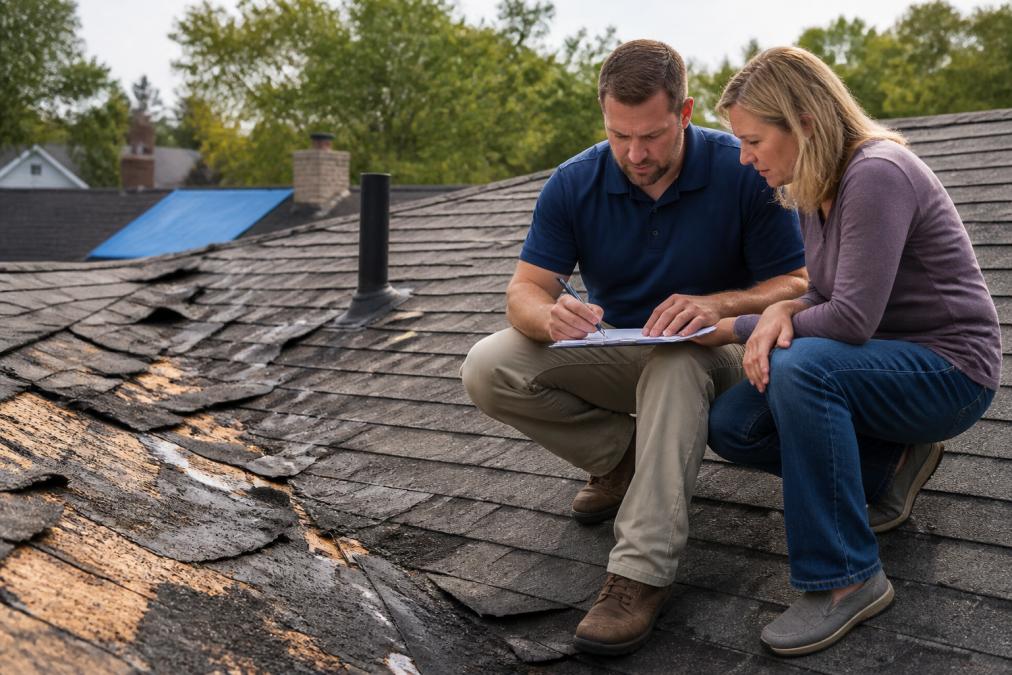
Your insurance policy includes a "duty to mitigate", a legal requirement to take reasonable steps to prevent additional damage. If a window is broken, board it up. If the roof is compromised, arrange a temporary tarp to prevent water intrusion. Document every mitigation step with photos and receipts, these are reimbursable expenses.
Common mitigation actions include boarding broken windows, tarping damaged roof areas, removing fallen trees, pumping out standing water, and running dehumidifiers to prevent mold growth. Keep all receipts and invoices for reimbursement.
How to Document Storm Damage for Insurance
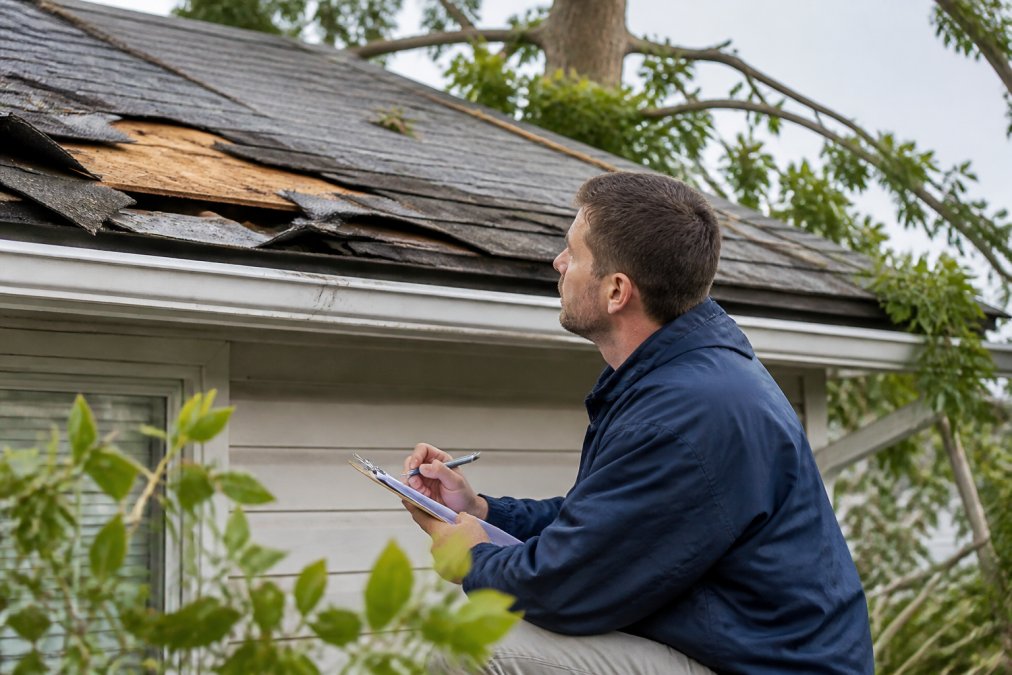
Thorough documentation is your strongest defense in a claim dispute. Insurance adjusters rely on evidence to assess damage extent and determine payout amounts.
Photographic Evidence and Itemized Inventory
Start photographing damage immediately, before you clean up or make repairs. Take wide shots showing overall damage, then close-ups of specific areas from multiple angles. For each damaged item, capture the item itself, the serial number or manufacturer label if visible, and the surrounding area for context.
Create a written inventory listing every damaged item, including item name, approximate age, condition before the storm, and estimated replacement cost. For example: "Master bedroom ceiling: drywall water damage approximately 8 feet by 6 feet, staining and soft spots visible, requires full replacement. Estimated cost: $2,400."
An itemized inventory with photos for each item is far more effective than a general list. Specific documentation reduces the chance of undervaluation.
Creating Your Proof of Loss
A proof of loss is a formal, signed statement detailing all damage and the amount you’re claiming. Your insurance company may provide a form, or you can create your own document.
Your proof of loss should include the date and time of the storm, description of the event, location of damage, detailed list of damaged items with estimated replacement costs, total claim amount, and your signature and date. Use realistic cost estimates based on contractor estimates or market research. File your proof of loss within the deadline specified in your policy (typically 30-90 days), as late submission can result in claim denial.
Contacting Your Insurance Provider and Filing Your Claim
Timing and accuracy in your initial contact with your insurer set the tone for the entire claims process.
Understanding Your Claim Filing Deadline
Your insurance policy specifies a deadline for filing a claim, often 30 to 90 days from the date of loss. Missing this deadline can result in automatic claim denial. Contact your insurer as soon as safely possible after the storm, ideally within 24-48 hours. Have your policy number, the date and time of the damage, and a brief description ready. Document the date and time of your call, the representative’s name, and what you discussed.
What to Say to Your Insurance Adjuster After Storm Damage
When speaking with your insurance adjuster, stick to facts. Describe what happened, what was damaged, and what actions you’ve taken to prevent further damage. Avoid speculation, emotional language, or exaggeration.
Provide the date, time, and type of storm; describe damage location and extent in specific terms; mention any injuries or safety hazards; explain mitigation steps you’ve taken; and provide your itemized inventory and photos. Do not accept a settlement offer on the spot. Ask for time to review the adjuster’s findings and consult with a contractor if you have concerns. Record the adjuster’s name, inspection date, and preliminary findings.
Understanding Your Policy Coverage and Limits
Your homeowners or commercial property policy defines what is covered, what is excluded, and how much the insurer will pay.
Coverage Verification: What Is and Isn’t Covered
Most standard homeowners policies cover wind and hail damage to the structure, roof, and contents. Common covered perils include wind damage, hail damage, lightning strikes, weight of snow or ice on the roof, and falling objects. Common exclusions include flood damage (requires separate flood insurance), earthquake damage, damage from poor maintenance, gradual wear and tear, and mold damage unless caused by a covered peril.
Review your policy’s declarations page carefully. If you’re unsure whether specific damage is covered, contact your insurer in writing and ask for clarification before filing a claim.
Flood damage is almost never covered under standard homeowners policies, even if the flooding resulted from a storm. If you live in a flood-prone area, flood insurance is essential. The National Flood Insurance Program offers coverage when private insurers won’t.
Actual Cash Value vs. Replacement Cost Value
Two different valuation methods determine how much your insurer pays: actual cash value (ACV) and replacement cost value (RCV).
Actual Cash Value (ACV) accounts for depreciation. If your roof was 15 years old with a 25-year lifespan, your insurer pays for a new roof minus depreciation. This results in lower payouts but lower premiums.
Replacement Cost Value (RCV) pays for a new item of similar quality, regardless of age. This results in higher payouts but higher premiums.
Check your policy to see which method applies. If your policy uses ACV and you believe RCV is more appropriate, discuss this with your adjuster.
Deductibles and Policy Limits Explained
Your deductible is the amount you pay out-of-pocket before your insurer pays anything. Some policies have separate deductibles for specific perils, wind and hail damage might have a 5-10% deductible, significantly higher than the standard deductible.
Your policy limit is the maximum amount your insurer will pay for a covered loss. If your home is insured for $300,000 and damage totals $350,000, your insurer pays $300,000 (minus your deductible). Review your policy limits annually to ensure adequate coverage.
Working with Insurance Adjusters and the Appraisal Process
Insurance adjusters assess damage and determine payout amounts. Understanding how adjusters work and when to consider alternative representation helps you protect your interests.
Company Adjuster vs. Public Adjuster
A company adjuster works directly for your insurance company and assesses damage fairly while protecting the insurer’s financial interests. A public adjuster is a licensed professional hired by you to represent your interests, typically working on contingency (taking 5-10% of the settlement).
Consider hiring a public adjuster if the damage is extensive and the claim amount is substantial, the company adjuster’s assessment seems significantly lower than contractor estimates, the claim involves complex coverage questions, or you lack the time or expertise to negotiate effectively.
The Property Inspection and Damage Assessment
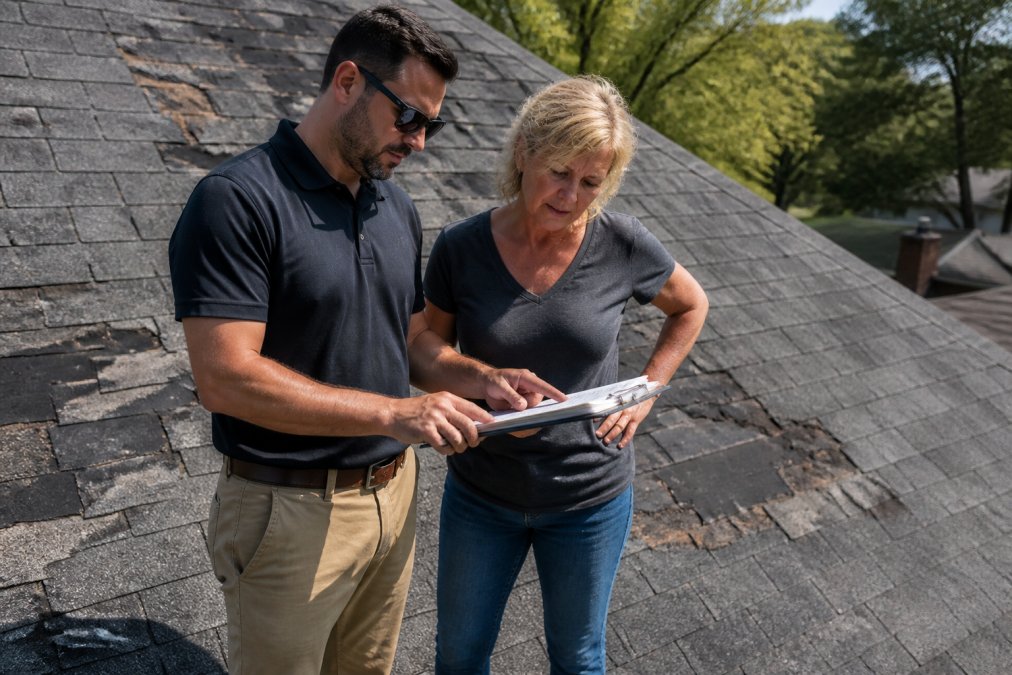
The property inspection is where the adjuster evaluates damage and determines the payout. Organize your documentation, clean up debris to expose damage clearly, and have your itemized inventory ready. Walk through the property with the adjuster, point out all damage, provide photos and your inventory, and ask questions if the assessment seems incomplete. Request a written report of findings and do not sign any settlement documents during the inspection.
If the adjuster’s assessment differs significantly from your estimates, ask for an explanation in writing.
How Long Does a Storm Damage Claim Take
Timeline expectations vary based on claim complexity, insurer responsiveness, and whether disputes arise.
Timeline Expectations and Statute of Limitations
Most straightforward claims are resolved within 30-60 days. More complex claims involving multiple properties, structural damage, or coverage questions may take 90-180 days or longer.
Your state’s statute of limitations determines how long you have to file a claim. Most states allow 2-3 years from the date of loss. After the adjuster submits their report, your insurer typically issues a settlement offer within 14-30 days. If disputes arise, appraisal or complaints to your state’s insurance commissioner can add 60-180 days to your timeline.
Storm Damage Claim Denial Reasons and How to Respond
Claim denials are frustrating but not always final.
Understanding Denial Letters and Your Right to Appeal
Insurance companies deny claims for specific reasons outlined in a denial letter. Common reasons include the damage is not covered under your policy, you missed the filing deadline, the damage resulted from poor maintenance, the damage occurred before the policy became active, or you failed to comply with policy requirements.
A denial letter must explain the reason for denial and cite specific policy language. You have the right to appeal within the timeframe specified (typically 30-60 days). Send a written appeal including a copy of the denial letter, additional documentation supporting your claim, a detailed explanation of why you disagree, and references to specific policy language. If your insurer upholds the denial, you can file a complaint with your state’s insurance commissioner or pursue legal action.
Supplementing Your Claim After Initial Settlement
Sometimes damage discovered after the initial inspection warrants a supplemental claim. If you discover additional damage, document it with photos and written descriptions, obtain contractor estimates, and submit a supplemental claim with supporting documentation. Supplemental claims are common and legitimate, especially for water damage that becomes apparent only after drying begins.
Common Mistakes to Avoid When Handling Storm Damage Claims
Delaying your claim filing. File within 48 hours of the storm whenever possible.
Cleaning up before documenting damage. Document first, then clean and repair.
Accepting the first settlement offer without review. Compare the adjuster’s estimate to independent contractor estimates. A 10-20% difference is common and worth negotiating.
Not reading your policy carefully. Review your policy before filing and ask your insurer to clarify any unclear language.
Ignoring the duty to mitigate. Failing to take reasonable steps to prevent further damage can result in claim denial or reduced payout.
Hiring the first contractor who calls. Get multiple estimates from licensed, insured contractors with references.
Failing to keep records. Save every document related to your claim.
Not considering professional representation. For substantial claims or complex coverage questions, a public adjuster or attorney can significantly improve your outcome.
Navigating a storm damage claim requires patience, documentation, and persistence. The process is manageable when you understand your policy, document damage thoroughly, and communicate clearly with your insurer. At Rescue Roofing, we help homeowners and property managers through this process by providing accurate damage assessments, assisting with insurance communication, and ensuring repairs are completed to code. Contact Rescue Roofing for a thorough inspection and expert guidance through your claim.
Frequently Asked Questions
What should I do immediately after storm damage to my roof?
First, ensure your safety and that of others. If it's safe, document the damage with photos and video from multiple angles. Then call your insurance company to report the claim and get a claim number. Take temporary measures to prevent further damage, such as tarping affected areas or removing debris. Do not make permanent repairs until your insurance adjuster has inspected the property and you understand your coverage limits and deductible.
How long do I have to file a storm damage insurance claim?
Most homeowners have between 30 days and one year from the date of loss to file a claim, depending on your policy and state law. However, you should report storm damage to your insurance provider as soon as possible to start the claims process. Delaying reporting can complicate your claim and may result in denial if additional damage occurs. Check your policy documents for the specific deadline, known as the statute of limitations for your claim.
What's the difference between actual cash value and replacement cost value?
Actual Cash Value (ACV) covers the cost of repairs minus depreciation based on the age and condition of materials. Replacement Cost Value (RCV) covers the full cost to repair or replace damaged items without depreciation deductions. RCV typically results in a higher settlement. Your policy should specify which coverage you have. If you have RCV coverage, you may receive an initial settlement based on ACV, with the remainder paid after you complete repairs and submit receipts.
Why might my storm damage claim be denied, and what can I do?
Common denial reasons include filing after the statute of limitations, lack of coverage for the specific damage type (such as flood damage if you lack flood insurance), or insufficient documentation. You may also face denial if the adjuster determines the damage was pre-existing or caused by poor maintenance. If denied, review the denial letter carefully, gather additional evidence, and consider requesting an appraisal or consulting a public adjuster who can advocate for your claim and help you understand coverage disputes.
This article was written using GrandRanker