


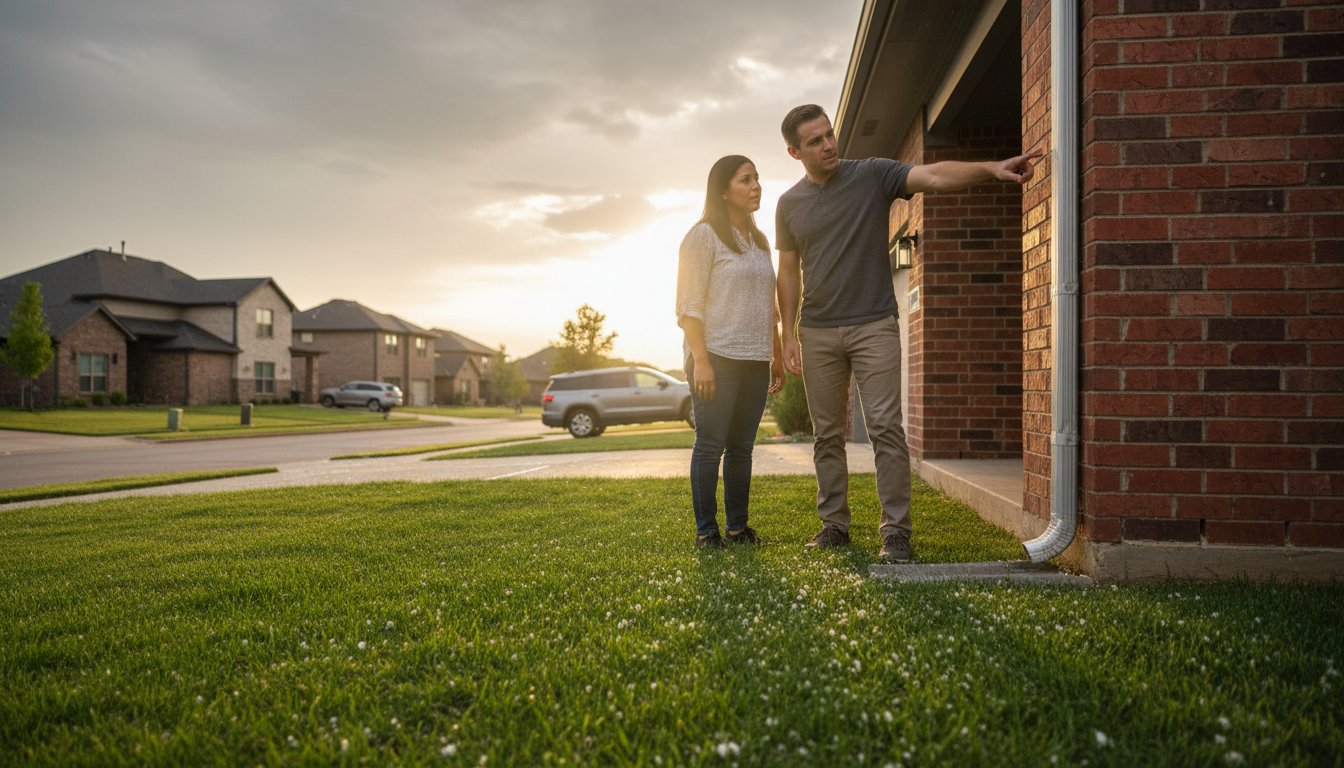

The rumble of last Tuesday’s thunderstorm has faded, but the worry hasn’t. You saw the quarter-sized hail bouncing off the driveway, and now every drip of water sounds like a potential leak. It’s a common anxiety for every Tulsa homeowner after a big storm. You don’t want to climb a dangerous ladder, but you also don’t want to be taken advantage of by an out-of-town storm chaser. The thought of dealing with an insurance claim on your own can feel completely overwhelming.
We’re here to help you cut through that confusion and restore your peace of mind. This guide provides a straightforward, step-by-step process for how to spot hail damage on your roof from the ground, safely and accurately. We’ll show you the tell-tale dents on your gutters, the cracks in your vents, and other key indicators that give you a clear “yes” or “no” on whether it’s time to call a trusted, local professional for a hassle-free inspection.
Key Takeaways
- Learn why the safest first step after a Tulsa storm is to inspect “soft metals” like gutters and vents for tell-tale dents and dings.
- Discover a step-by-step process for how to spot hail damage on your roof from the ground, focusing on the most vulnerable areas first.
- Understand the critical differences between a true hail impact mark and normal shingle aging to avoid filing an unnecessary claim.
- Find out when your ground-level findings are enough to warrant a professional inspection to protect your home’s value.
Why Ground-Level Inspections Are the Safest First Step After a Tulsa Storm
The sound of a hailstorm passing is often replaced by a feeling of anxiety. What just happened to my roof? Your first instinct might be to grab a ladder, but we’re here to tell you that the safest and most effective first step happens with both feet firmly on the ground. A ground-level roof assessment is the industry-standard starting point for a reason. It’s a systematic visual check of your entire property to find evidence of hail impact without taking unnecessary risks.
Safety must always come first. After a high-wind Oklahoma storm, your roof can be slippery from rain and littered with debris. A ladder that was stable yesterday might not be today. Don’t risk a fall. A ground-level check provides the initial information you need without the danger. Think of it as being a detective; the clues to your roof’s condition are often scattered all around your home.
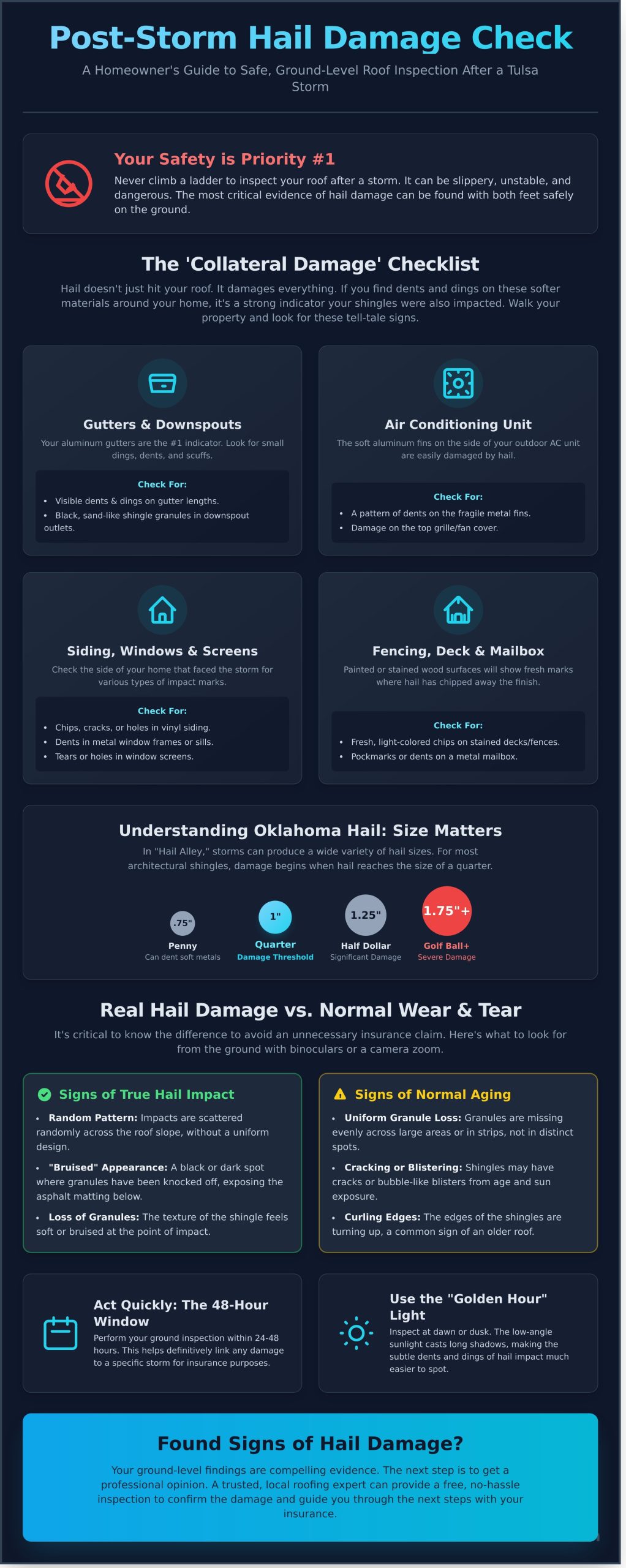
This is where the principle of ‘collateral evidence’ comes in. If a hailstorm was strong enough to damage sturdy items on your property, it was almost certainly strong enough to damage your asphalt shingles. Before you even look up, look around. A smart approach for how to spot hail damage on your roof from the ground begins with checking these areas:
- Gutters and Downspouts: Are they dented or dinged? Check the downspout openings for an accumulation of shingle granules, which look like coarse black sand.
- Air Conditioning Unit: The soft aluminum fins on your AC unit are easily dented by hail. If you see a pattern of damage here, it’s a strong indicator of roof impact.
- Siding and Windows: Look for chips, cracks, or holes in your vinyl siding and dents in window frames or screens.
- Mailbox and Fencing: Check any painted or stained wood surfaces for fresh chips or pockmarks.
Seeing damage in these places gives you a powerful reason to call for a professional inspection. While you can spot major issues like cracked or missing shingles from below, you won’t be able to see the subtle, bruised impacts that lead to future leaks. This initial check is about gathering evidence, not making a final diagnosis.
The Reality of Oklahoma Hail Patterns
As Tulsans, we know our storms are unique. Our position in the heart of “Hail Alley” means we don’t just get hail; we get severe hail. The complex process of hail formation within the supercell thunderstorms common to our region can produce hailstones of widely varying sizes and densities. For standard architectural shingles, the tipping point for damage begins when hail reaches 1-inch in diameter, or about the size of a quarter. High winds can also turn smaller hail into damaging projectiles, driving it against your roof and siding at a harsh angle.
When to Perform Your Inspection
Timing your walk-around is critical for two reasons: insurance and visibility. Most insurance policies require you to report damage in a timely manner, so performing your check within 24-48 hours of the storm is ideal. This helps definitively link the damage to a specific weather event. For the best view, use the “Golden Hour” light at dawn or dusk. The low-angle sunlight casts shadows across your roof, making the subtle textures of hail impacts far easier to see than the harsh, direct glare of the midday sun. And, of course, only begin your inspection after the storm has completely passed and the threat of lightning is gone.
The ‘Collateral Damage’ Checklist: Spotting Signs Without a Ladder
After a hailstorm, your first instinct might be to look up at your roof. But the most reliable clues are often right at eye level. Hail doesn’t just hit your shingles; it impacts everything on your property. This “collateral damage” is your best guide for how to spot hail damage on your roof from the ground safely. Before you even think about a ladder, walk your property and look for these tell-tale signs on softer, more vulnerable materials.
Your smartphone is your best friend for this task. Use its camera zoom to get a closer look at gutters, siding, and window frames from a safe distance. You’ll be surprised what you can see without taking a single step off the ground.
Gutters and Downspouts: The First Responders
Your aluminum gutters are one of the most reliable indicators of hail size and intensity. Look for dents and dings, no matter how small. Hail as small as 0.75 inches in diameter, about the size of a penny, can leave noticeable impact marks on soft metals. Check the bottom of your downspouts where water exits. If you see a pile of black, sand-like material, you’re looking at shingle granules. A massive loss of these granules is a serious red flag, as it exposes the shingle’s protective mat to UV rays. It’s crucial to understand what you’re seeing, as an expert in distinguishing hail damage from wear and tear can confirm if the granule loss is from the storm or just from age.
Siding, Windows, and Screens
Next, inspect the sides of your home, especially the side that faced the brunt of the storm. On vinyl siding, look for cracks, chips, or distinctive “half-moon” shaped impact marks. Check the metal trim around your windows (called casements or wraps) for the same kind of dents you looked for on your gutters. Don’t forget your window screens. Dents, tears, or holes in the screen mesh are clear evidence of high-velocity impacts that almost certainly affected your roof as well.
Air Conditioning Units and Outdoor Metal
Your outdoor AC condenser unit is another key piece of evidence. The delicate aluminum cooling fins on the top and sides are extremely fragile. Hail can easily flatten these fins, restricting airflow and reducing the unit’s efficiency. Insurance adjusters know this well; a badly damaged AC unit is often directly correlated with significant roof damage. Also, take a quick look at other metal items on your property. Fresh dings on a metal mailbox, chipped paint on patio furniture, or dents in a metal shed roof all tell the story of the storm’s power.
If you’ve walked your property and checked off multiple items on this list, there’s a very high probability your roof has sustained damage. Seeing these signs gives you the confidence to take the next step. While this ground-level check is essential, only a hands-on inspection can reveal the full picture. If what you’ve found is concerning, our trusted local team can provide a completely free, no-obligation inspection to give you clarity and peace of mind.
Distinguishing Real Hail Damage from Normal Wear and Tear
After a Tulsa hailstorm, it’s natural to worry about every dark spot you see on your roof. However, not all imperfections are signs of a costly problem. An essential step in how to spot hail damage on your roof from the ground is learning to separate true storm impact from the normal aging process of your shingles. Many issues can mimic hail hits to the untrained eye, leading to unnecessary stress.
A true hail hit is more than just a cosmetic issue; it’s a functional wound to the shingle. When a hailstone of 1.0 inch in diameter or larger strikes, it does two things. First, it knocks off the protective granules. Second, and more importantly, it fractures or bruises the underlying asphalt mat. This bruise is the key sign of damage. It creates a weak spot that compromises the shingle’s ability to shed water, leading to leaks down the road. Without that underlying bruise, you are likely looking at something else.
Hail Hits vs. Heat Blistering
Heat blisters are small, circular “pops” on a shingle’s surface, often caused by trapped moisture or gas due to poor attic ventilation. During a hot Oklahoma summer, this trapped gas expands and pushes the granules up, forming a bubble. Unlike a hail strike, which presses granules into the asphalt, a blister pushes them outward. Critically, hail damage feels ‘soft’ like a bruised apple while blisters are hard and brittle.
Mechanical Damage and Scuffs
Other common look-alikes are scuffs and scrapes. A fallen tree branch will create long, linear scuffs, not the random, circular dents left by hail. We also see “contractor scuffs,” which are patches of missing granules caused by foot traffic during a previous installation or repair. Insurance adjusters are trained to look for uniformity; a random pattern of impacts across an entire slope points to hail, while isolated scuffs in a clear path suggest mechanical damage.
You may also see what’s called “marring.” This is a cosmetic scuff where granules are missing, but the shingle mat below is not bruised or fractured. While it may look alarming, most standard homeowner policies (like the HO-3) only cover functional damage that shortens a roof’s lifespan, not cosmetic marring. The age of your roof plays a significant role here. A shingle that is over 15 years old is far more brittle and likely to fracture from an impact that would only mar a newer, more flexible shingle.
Finally, let’s address a common myth: hail does not blow shingles off your roof. Hailstones are projectiles that strike downward. The force responsible for ripping shingles away is high-velocity wind, which often accompanies severe thunderstorms. If you have missing shingles, it’s a wind damage issue, though it may have occurred during the same storm that produced hail. Understanding these differences is the best way to assess your situation and know when to call for a professional, hassle-free inspection.
Your 15-Minute Post-Storm Perimeter Walk: A Step-by-Step Protocol
After a Tulsa hailstorm passes and it’s safe to head outside, you can gain valuable peace of mind with a simple 15-minute inspection. You don’t need a ladder or any special equipment. Knowing how to spot hail damage on your roof from the ground is a powerful first step in protecting your home’s integrity. This quick protocol helps you identify the most obvious warning signs and build a record for a potential insurance claim.
Follow these four simple steps to assess your home’s exterior safely:
- Start on the North and West Sides: Storms in Green Country typically track from the northwest. This means the north- and west-facing slopes of your roof, along with the siding and windows on those sides, absorb the most direct impacts from wind-driven hail. Begin your walk there, as this is where damage is most likely to appear.
- Check Gutters, Downspouts, and Vents: Your home’s metal components are a clear indicator of hail’s intensity. Look for dents and dings on aluminum gutters, downspouts, and any visible roof vents or flashing. Significant denting here is a strong sign that your shingles sustained similar forceful impacts.
- Inspect the Drip Edge and Fascia: Look closely at the metal strip along the edge of your roofline, known as the drip edge. Hail often leaves clear pockmarks on this surface. Also, scan the wooden fascia boards directly beneath it for fresh, light-colored splinters or chips in the paint. These impacts show the hail was large enough to damage more than just your shingles.
- Perform the “Chalk Test” (If Possible): If you have a metal A/C unit, window trim, or another safely accessible metal surface, try this trick. Take a piece of sidewalk chalk and rub the long edge of it lightly across the surface. The chalk will skip over the flat areas and catch in the dents, making even subtle hail impacts immediately obvious.
Documentation for Insurance Success
Your phone is your most important tool. Take more photos than you think you need. Start with wide “context shots” of each side of your house, then move to “close-up shots” of specific damage. For any dents on gutters or siding, place a U.S. quarter right next to the mark before you take the picture. This gives the insurance adjuster undeniable evidence of the hail’s size and force, which is critical for a successful claim filed after a storm like the one on April 28, 2024.
The ‘Attic Check’ (The Only Indoor Step)
The most conclusive evidence of severe damage isn’t outside; it’s in your attic. During the day, carefully go into your attic and turn off the lights. Look up at the underside of the roof deck. Do you see any pinpricks of daylight? A hole created by hail is a direct path for water. Use a flashlight to scan the wood rafters and insulation for new, dark water spots or light-colored staining. This internal damage is the “smoking gun” that signals an urgent need for a professional inspection.
This ground-level check provides a solid starting point, but it can’t reveal the full story of your roof’s health. Bruising and granule loss on shingles, which severely shorten a roof’s lifespan, are nearly impossible to confirm from the ground. If you’ve found any of the signs listed above, your next step is to get a professional, trusted opinion. Let our GAF Master Elite certified team give you the complete picture. Schedule your free, no-obligation T-Town inspection today and get the honest answers you deserve.
Beyond the Ground: Navigating Insurance Claims with Rescue Roofing Tulsa
You’ve done the hard part. Learning how to spot hail damage on your roof from the ground is the critical first step in protecting your home. But think of that ground-level check as the trigger, not the final diagnosis. What you see from your lawn-dented gutters, damaged vents, or shingle granules in your downspouts-is just the evidence needed to call in a professional for a comprehensive, on-the-roof assessment. This is where your role ends and ours begins, ensuring your home gets the protection it deserves without the stress you’d expect.
At Rescue Roofing Tulsa, we offer a truly ‘Hassle-Free’ insurance claim process. What does that mean for you? It means we meet with your insurance adjuster on your behalf. We walk the roof with them, pointing out every bruise, fracture, and point of impact with the experienced eye they respect. We speak their language, ensuring that legitimate damage isn’t dismissed as merely ‘cosmetic.’ Many policies differentiate between ‘functional’ damage that compromises the roof’s integrity and ‘cosmetic’ damage that doesn’t. An untrained eye can’t tell the difference, but our GAF Master Elite certified team can, and we make sure your claim accurately reflects the true condition of your roof.
Why Professional Inspections are Non-Negotiable
A few bruised shingles might not seem urgent, but the real danger lies in what you can’t see. Hail doesn’t just dent; it compromises. Our certified inspectors are trained to identify subtle but severe issues that a ground-level check will always miss:
- Micro-fractures: Hail impacts create tiny, spiderweb-like cracks in the shingle matting. These cracks expand and contract with Tulsa’s temperature swings, allowing water to seep in over months or even years.
- Loss of Granules: The granules you see on the ground are the shingle’s first line of defense against UV rays. Once they’re gone, the asphalt underneath deteriorates rapidly, drastically shortening your roof’s lifespan.
- Hidden Moisture: Using advanced tools like thermal imaging cameras, we can detect moisture trapped beneath the shingles that is completely invisible to the naked eye. This is the precursor to leaks, wood rot, and mold.
Waiting until a brown spot appears on your ceiling is the most expensive mistake a homeowner can make. By then, you’re not just paying for a new roof; you’re paying for insulation replacement, drywall repair, and potentially mold remediation. A proactive, professional inspection saves you thousands.
Our Local Tulsa Commitment
After a big storm, your neighborhood will be flooded with out-of-state “storm chasers.” They promise a quick fix, but they disappear just as fast, leaving you with shoddy work and a voided warranty. Rescue Roofing Tulsa is a family-owned, local contractor. We live here. We’re your neighbors. Our reputation in the Tulsa community is everything. We aren’t going anywhere, which is why we proudly stand behind our work with a 10-year workmanship warranty. Our GAF Master Elite status-a certification held by only the top 2% of roofers nationwide-lends immediate credibility to your claim, ensuring adjusters take it seriously from the start. Don’t leave the safety of your home to a temporary visitor. Trust the proven, local experts who will be here for you long after the storm is over.
Your ground check gave you the warning sign. Now let us give you the solution and the peace of mind you deserve. Schedule your free, no-obligation Rescue Roofing Tulsa roof inspection today.
Secure Your Peace of Mind with a Professional Eye
After a Tulsa hailstorm, your safety is the top priority. Following the 15-minute perimeter walk and checking for collateral damage on gutters, siding, and AC units is the smartest, safest first move. Knowing how to spot hail damage on your roof from the ground gives you critical information without the risk of climbing a ladder. While this initial check is essential, it can’t reveal hidden issues like micro-fractures or weakened sealant that can lead to major leaks down the road.
That’s where we come in. Don’t let uncertainty linger. As a GAF Master Elite Certified contractor, we bring a level of expertise held by only 2% of roofers nationwide, and we back our work with a solid 10-Year Workmanship Warranty. For a definitive, hassle-free assessment of your roof’s condition, trust the local experts. Worried about storm damage? Get your free Tulsa roof inspection from the experts at Rescue Roofing. Let Tulsa’s Most Trusted Roofer provide the clarity and protection your family deserves.
Frequently Asked Questions About Roof Hail Damage
Can hail damage be seen from the ground?
Yes, you can often see initial signs of hail damage from the ground. Check for dents and dings on metal components like gutters, downspouts, and roof vents. While this is a safe first step, it only provides a partial picture. A professional inspection is always necessary to assess the full extent of damage on the shingles, as much of it can be invisible from a distance. This is a good starting point for learning how to spot hail damage on your roof from the ground.
What does hail damage look like on a roof from the ground?
From the ground, hail damage on asphalt shingles often appears as dark spots where protective granules have been knocked off. These spots can look bruised, bald, or discolored. Dented gutters, damaged siding, and battered vent covers are also clear, visible indicators of a significant hail event. If you see these signs around your home, it’s very likely your shingles have sustained damage that needs a professional assessment to prevent future leaks.
How much hail is needed to damage a roof?
Hail as small as 1 inch in diameter, which is about the size of a quarter, can cause significant damage to a standard asphalt shingle roof. The impact is worsened by high winds, the age of your roof, and the density of the hailstones. Because of Tulsa’s weather patterns, we recommend a professional inspection after any storm involving quarter-sized hail to ensure your home’s protection isn’t compromised.
Is it worth claiming hail damage on a roof?
Yes, it is absolutely worth claiming legitimate hail damage. Your homeowner’s insurance policy is specifically designed to protect your investment from storm-related events like hail. Ignoring the damage allows it to worsen, leading to leaks, wood rot, and far more expensive repairs down the road. Filing a claim ensures you can restore your roof’s integrity and protect your home’s value without bearing the full cost yourself.
How long do I have to file a hail damage claim in Oklahoma?
In Oklahoma, most homeowner’s insurance policies give you one year from the date of the storm to file a hail damage claim. It’s critical to review your specific policy, but this is the standard timeframe. We always advise acting quickly. Documenting damage and starting the claims process soon after a storm prevents minor issues from escalating and ensures you don’t miss the filing deadline. It’s the best way to guarantee a smooth, hassle-free process.
What happens if I ignore minor hail damage?
Ignoring what seems like minor hail damage can lead to major problems. Small impacts knock off protective granules, exposing the shingle’s asphalt layer to UV rays. This exposure causes the shingle to become brittle and crack. Over the next 18 to 24 months, this deterioration can allow water to seep through, causing hidden leaks, attic mold, and even structural wood rot. A small issue left alone often becomes a costly crisis.
Will my insurance rates go up if I file a hail claim?
No, your individual insurance rates will not increase because you file a hail claim. Hail damage is considered an “Act of God” or a no-fault claim. Insurance providers are not legally permitted to single you out for a rate hike for this type of claim. They may, however, raise rates for an entire ZIP code or region after a major storm, so you could pay a higher premium whether you file a claim or not.
Does a new roof increase home value in Tulsa?
Yes, a new roof provides a strong return on investment and increases your home’s value. According to the 2023 Cost vs. Value Report from Remodeling Magazine, a new asphalt shingle roof in our West South Central region recoups around 60.9% of its cost upon resale. For Tulsa homeowners, it also offers powerful curb appeal and gives potential buyers the peace of mind that comes with knowing the home is protected.