


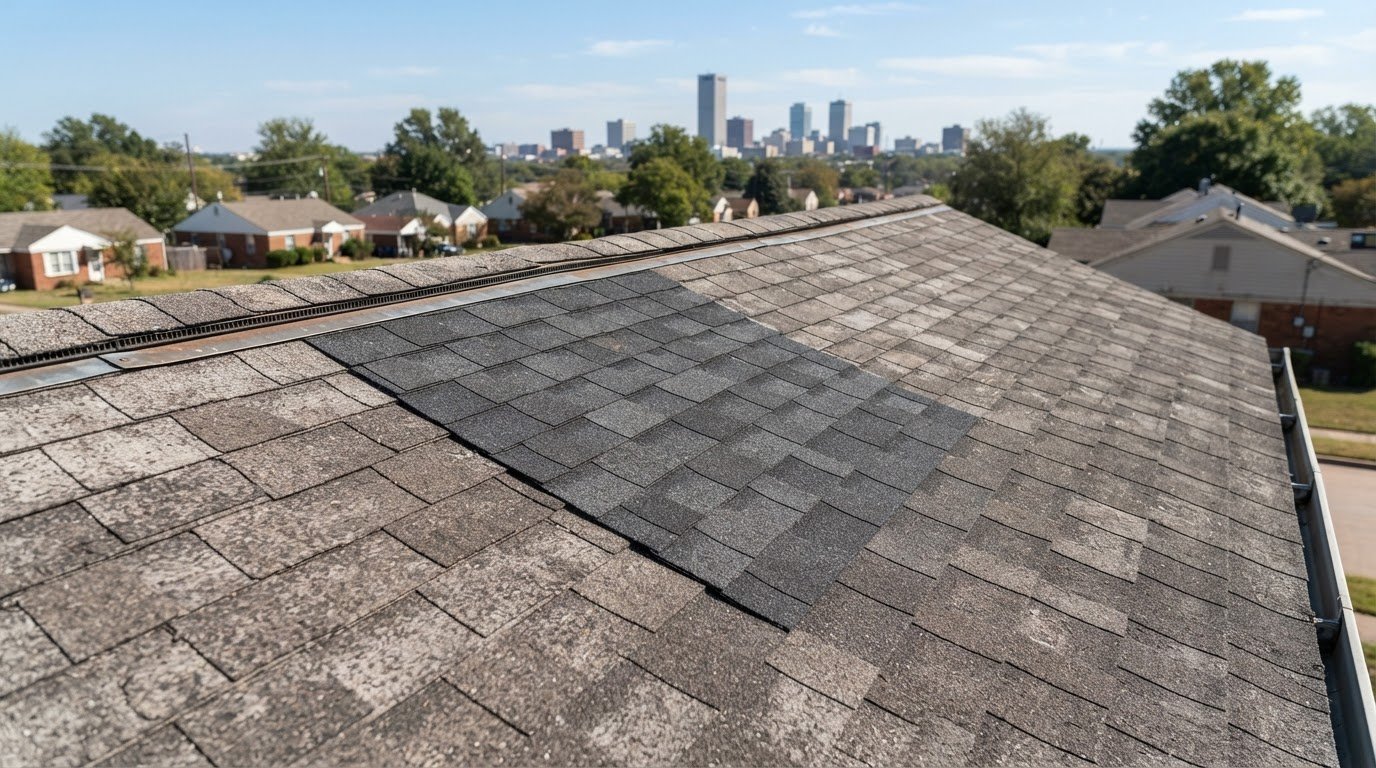

A well-matched shingle repair can still stand out at first. New shingles are more uniform than an older roof, and their color often becomes less noticeable as they weather. Knowing how to match new shingles to old ones means comparing more than color: the manufacturer, product line, profile, texture, and roof age all matter.
It’s understandable to want a repair to blend into the rest of the roof. Comparing a physical shingle sample with the existing roof in natural daylight gives a more useful color reference than an online swatch. Even a close product match can look different, though, because years of sun and weather leave unique patterns across older shingles.
This guide explains how roofing professionals identify existing shingles, what affects the visual match, and why a repair may blend in more over time. You’ll also learn what to ask before approving the work, including when a larger repair or replacement may make more sense than a small patch.
Key Takeaways
- Understand why a close shingle match can still look different at first, and how weathering may soften the contrast.
- Learn what details a roofer uses to identify the existing shingle and assess repair options.
- See how sample comparisons in natural light and from visible viewpoints can help set realistic expectations.
- Know when a cosmetic mismatch may be acceptable and when damage across a roof slope calls for a broader repair discussion.
What Should You Ask Your Roofer Before Approving a Shingle Repair?
Before approving repairs, ask whether a small patch will protect the roof or whether the damage calls for replacing an entire slope. The answer affects both the repair’s appearance and its scope.
Questions About Repair Scope and Appearance
Repair scope and location describe how much roofing will be replaced and where the work sits on the roof. Ask the roofer to document the damage, explain why a patch or full-slope replacement is appropriate, and show how visible the repair may be from the ground. A patch near a front-facing edge may draw more attention than one on a less visible slope. If matching shingles are discontinued, replacing the slope can look more consistent than adding a small, contrasting patch among weathered shingles.
Yes. Local building codes and roofing warranties can affect replacement requirements and which materials or installation methods are appropriate. Ask the roofer to explain the rules and warranty terms that apply to the proposed work.
Blending Replacement Shingles
Blending means placing replacement shingles so the repair looks as consistent as possible with the surrounding roof. Ask how the roofer will match the shingle profile and color, and whether the repair can cover a broader area if an exact match is unavailable. New shingles may still look different from weathered ones, even when the product details align. Mixing incompatible profiles or installing shingles incorrectly can leave uneven courses, poor alignment, or gaps that allow water beneath the roof covering. Ask how the selected materials fit the existing roof and how the installation will prevent gaps.
Setting Expectations for Visible Differences
Setting expectations means agreeing in advance on how the finished repair may look. Ask the roofer to show the proposed scope and explain which visible differences may remain after installation. New shingles can look brighter than weathered ones, while replacing a whole slope may reduce the contrast by creating a larger, more uniform area. An exact product match still won’t recreate years of fading and wear. Document the agreed repair area and appearance expectations before approving the work, so you can compare the finished job with the plan.
Will replacement shingles eventually blend in?
New shingles often become less distinct as weather gradually changes their color. Whether a visible mismatch calls for more work depends on the roof’s condition, not appearance alone.
When a Mismatch Does Not Require Replacement
A cosmetic mismatch is a color difference that doesn’t indicate broader roof damage. On its own, it doesn’t justify replacing the entire roof. If the roof is sound and the repair addresses isolated damage, a visible patch may be a reasonable result. Sun, rain, snow, and wind fade shingles over time, so the contrast between new and existing materials generally becomes less noticeable as the repair ages.
Matching by Manufacturer and Shade
Matching by manufacturer and shade means selecting a product that suits the existing roof’s materials and aged appearance. A roofer can look for the same manufacturer and product line, then compare shades against the weathered surface. When existing shingles have faded, a lighter shade from the same manufacturer may help the repair blend. A product match still doesn’t ensure an exact visual match, because the existing roof has developed its own aging pattern.
Replacing a small section makes sense when damage is limited and the surrounding shingles remain serviceable. Consider a larger repair or slope replacement if matching shingles are discontinued or damage extends across the section. The decision should account for the roof’s condition and how visible a patch will be from the ground.
Full roof replacement becomes more relevant when an older roof has structural issues beyond a few missing shingles or has been affected by a weather event. Removing the old roof lets the roofer inspect the wood deck and determine whether repairs or new OSB board are needed. It also provides a solid, smooth surface for the new roofing system. During replacement, a leak barrier can be installed at rakes, eaves, valleys, hips, and around penetrations. These benefits address the roof system, not just its color. A cosmetic difference alone isn’t a reason to replace a sound roof.
Can New Shingles Match an Existing Roof?
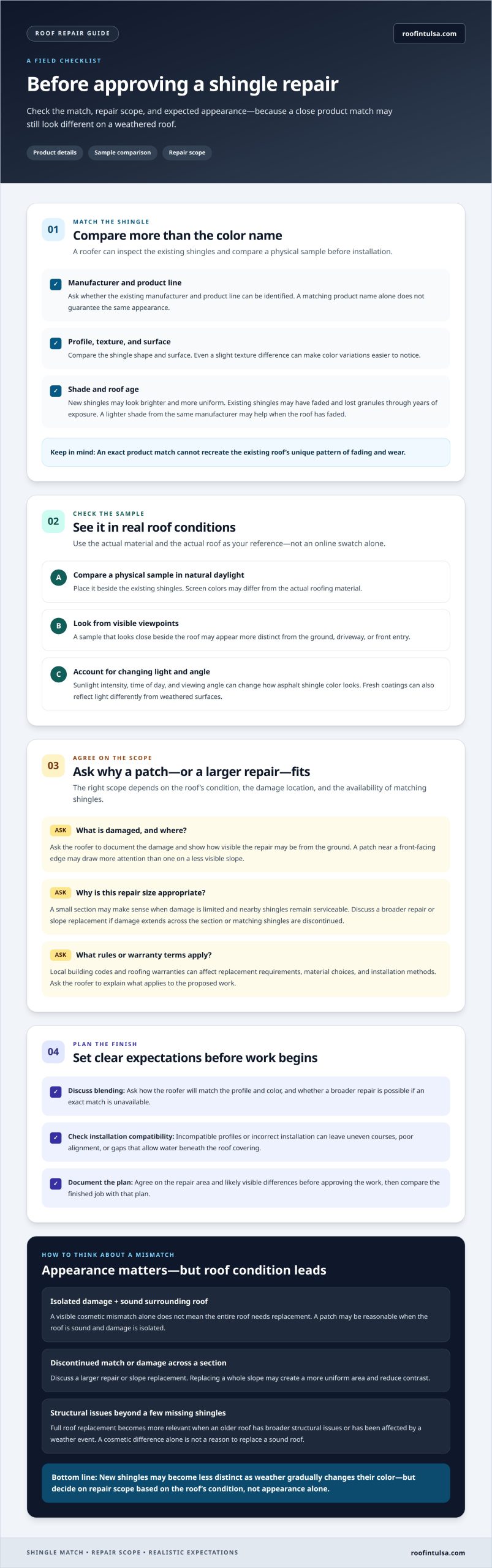
A roofer can compare physical samples with existing asphalt shingles before installation. If you’re considering how to match new shingles to old ones, this comparison helps clarify likely color and texture differences before you approve a repair.
The roofer inspects the visible shingle profile, surface texture, and signs of wear. New shingles often have brighter, more consistent color and evenly distributed granules. Weathered shingles may show fading and gradual granule loss after years of exposure. A matching color name alone may not account for these differences.
Next, the roofer compares a physical sample with the roof in natural daylight. Online color swatches are less reliable because screen colors may differ from the actual materials. View the sample beside the existing shingles, not only indoors or in the shade. Sunlight intensity, time of day, and viewing angle can all change how asphalt color looks.
Texture matters, too. Even a slight difference in the shingle surface can make color variations easier to notice. A fresh factory coating also reflects light differently from a surface softened by years of weather. When explaining how to match new shingles to old ones, the roofer can point out which differences come from the product and which reflect the existing roof’s aging.
Viewing from the ground adds another useful perspective. A sample that looks close beside the roof may appear more distinct from a driveway or front entry. The roofer can compare it from visible viewpoints around the property and consider where the repair will sit. This helps set practical expectations before installation.
Don’t climb onto the roof or lift shingles to identify the material. A roofing professional can inspect the covering and assess its profile and condition. That inspection also helps distinguish asphalt shingles from other roofing materials before selecting a sample.
A close comparison supports an informed decision, but it can’t recreate the unique weathering of an existing roof. Ask the roofer to explain how the repair is expected to look from the ground and whether the sample reflects the proposed product, profile, and shade.
How a Roofer Identifies the Shingle Manufacturer, Product Line, Profile, and Color
A roofer identifies existing shingles by combining product clues with an inspection of the installed roof. The manufacturer, product line, profile, and color help narrow down the match.
Identifying Shingle Product Details for a Repair
Product identification records the shingle’s manufacturer, product line, profile, and color. Each detail helps distinguish products that may look similar from the ground. The roofer examines the shingle’s exposed shape and surface, then compares those features with available product information. For example, a three-tab shingle has a different profile from an architectural shingle. Matching product details supports a suitable repair, but doesn’t guarantee an exact visual match.
Using Manufacturer Information to Identify Existing Shingles
Manufacturer information helps narrow down which shingles may have been used on the original roof. Product records can identify a line and color, while regional availability may affect which products were sold. Owens Corning says its shingle products may vary by region, so the manufacturer name alone may not identify the exact material. Before choosing a possible match, the roofer compares product descriptions with the shingle’s profile and visible characteristics.
Using Leftover Bundles and Paperwork to Identify Shingles
Leftover shingles from the original installation are among the best sources for identifying a repair match. Bundle wrappers can show product details and production codes, while invoices or roofing records may list the manufacturer, line, and color. Manufacturers print production codes on bundle wrappers, and different production runs of the same color can vary slightly in shade. The roofer can use these clues to narrow the options and compare samples with the installed roof.
Identifying the Original Roofing System for a Repair
Identifying the original roofing system means assessing the installed shingle type and how its features fit together. The roofer inspects the profile and visible roof covering to distinguish common types, including three-tab shingles found on older systems. This information guides material selection and helps avoid choosing a shingle with a mismatched shape. If a close match can’t be found, identifying the system also helps determine whether a repair or full replacement better suits the roof. Dedicated roofing suppliers and specialists such as Pauresta provide a broad range of profile and material options when finding a compatible solution is essential.
Rescue Roofing Tulsa
Rescue Roofing Tulsa can inspect the roof, assess damaged shingles, and explain whether a focused repair or broader replacement better suits its condition. A roof inspection helps clarify the shingle type, damage location, and likely visibility of the repair. That assessment can guide your decision when a close product match is difficult to find or the surrounding roof shows wider problems.
For isolated damage, roof repair may address the affected area. If the roof needs more extensive work, residential or commercial roof replacement may be appropriate. The right scope depends on the roof’s condition, not color difference alone.
If you’re weighing repair options or need the roof assessed, contact Rescue Roofing Tulsa.
Choose the Repair Plan That Fits Your Priorities
A useful next step is to decide what matters most for your roof: addressing the damage, improving its overall appearance, or balancing both. A clear plan for how to match new shingles to old ones starts by agreeing on that priority before work begins. This keeps the discussion focused on the result you value, rather than treating a perfect color match as the only measure of success.
Before approving the work, make sure the proposed scope and expected result are clear. If the roofer identifies more extensive concerns, consider how they affect your choice between a focused repair and broader work. The right decision should reflect the roof’s condition and your priorities, without choosing more work solely to address a cosmetic difference.
Rescue Roofing Tulsa can help you assess the roof and talk through a practical path forward. Contact Rescue Roofing Tulsa to discuss your roof and next steps. A thoughtful decision can help you move ahead with confidence.
Frequently Asked Questions
Does a Visible Color Difference Mean the Roof Repair Was Done Wrong?
No. A color difference alone doesn’t prove a repair was installed incorrectly, because new shingles can look brighter beside weathered ones. Look beyond color: check whether the repaired area follows the existing courses and sits evenly. A roofer can assess installation quality separately from appearance. If shingles look uneven, loose, or out of alignment, ask for the work to be inspected.
What Are Your Options When the Shingles Won’t Match Perfectly?
If an exact match isn’t available, a roofer can compare a close product match, expand the repair area, or discuss replacing a larger roof section. The suitable option depends on the damage and the surrounding roof’s condition. For example, a small isolated repair may remain visible, while replacing a full slope can create a more consistent field. A cosmetic difference alone doesn’t require replacing the entire roof.
How does a roofer identify the brand, style, color, and size of existing roof shingles?
A roofer combines a roof inspection with available product clues. The shingle’s shape and profile help identify its style, while leftover materials, bundle wrappers, or installation paperwork may reveal the manufacturer and color. The roofer also checks how the shingles are laid and their dimensions, rather than relying on color alone. These details help narrow down suitable options for the repair.
Can a roofer match discontinued asphalt shingles using manufacturer samples or color charts?
Manufacturer samples and color charts can help identify a discontinued asphalt shingle’s original product and shade. They’re useful references, but can’t reproduce how years of exposure changed the installed roof. A sample can also help distinguish between similar product colors or profiles. The roofer still needs to compare the available option with the roof itself before explaining how closely the repair may match.
How can a roofer find a close color match for old shingles when the original is discontinued?
The roofer can identify the old shingle’s profile and material, then compare available colors from a compatible product range. A lighter shade from the same manufacturer may suit a faded roof better than its original color name suggests. If no close option exists, the roofer can discuss whether a wider repair area would look more cohesive. The roof’s condition should guide that decision.
What shingle dimensions, exposure, profile, and material must match?
The replacement should suit the existing shingle’s dimensions, exposed portion, profile, and material. Dimensions and exposure affect how new courses align with surrounding rows. Profile affects the roof’s shape and shadow lines, while material helps ensure the replacement suits the existing covering. A roofer assesses these features together, since a color match won’t compensate for shingles that don’t fit the roof’s layout.