



Table of Contents
- Commercial Roofing Alternatives at a Glance
- TPO Roofing: Energy Efficiency and Durability
- EPDM Roofing: Proven Long-Term Performance
- PVC Roofing: Chemical and Grease Resistance
- Metal Roofing: Maximum Longevity
- Commercial Roof Replacement Cost Factors
- How to Evaluate Commercial Roofing Companies
- Commercial Roof Maintenance Best Practices
Last Updated: August 20, 2026
Commercial Roofing Alternatives at a Glance
When your commercial roof fails, you’re making a capital decision that affects your business for decades. The right commercial roofing alternatives cut energy costs, extend asset life, and minimize disruption. The wrong choice locks you into frequent repairs and early replacement.
Commercial roofing alternatives fall into two broad categories: single-ply membrane systems (TPO, EPDM, PVC) and metal roofing. Each performs differently under stress, costs differently upfront, and delivers different long-term value. Your choice depends on building type, climate, chemical environment, and ownership timeline.
Rescue Roofing has helped dozens of commercial property owners navigate this decision through accurate aerial quotes and thorough inspections. Before committing to any alternative, understand what separates a 20-year system from a 50-year one.
TPO Roofing: Energy Efficiency and Durability
TPO (Thermoplastic Polyolefin) dominates the commercial roofing market. Its reflective white surface acts like a mirror for solar heat, reducing air conditioning runtime and cooling costs measurably.
TPO sheets come in 45 mil, 60 mil, and 80 mil thicknesses with heat-welded seams rather than adhesive. Heat-welded seams create stronger bonds than tape, resisting wind stress and thermal expansion. This translates to fewer leak callbacks and longer repair intervals.
The material resists UV rays, punctures, and most chemical exposures, making it suitable for buildings with rooftop equipment and foot traffic. Quality varies with installation technique, membrane thickness, and contractor attention to seam and flashing detail.
TPO typically lasts 20-25 years with proper maintenance. Energy savings in the first five years often offset initial material cost, making TPO the go-to choice for budget-conscious property managers wanting efficiency without long-term metal roofing commitment.
Heat-welded seams are non-negotiable for TPO. If a contractor proposes adhesive seams to save money, walk away. Seams are where 90% of leaks originate.
EPDM Roofing: Proven Long-Term Performance
EPDM (Ethylene Propylene Diene Monomer) is synthetic rubber with over 50 years of proven commercial roofing performance. That track record matters, you’re betting on proven performance, not theory.
EPDM excels at weathering UV exposure, ozone, and temperature swings without degradation. Hail that punctures other materials often bounces off EPDM. In climates with extreme temperature variations, EPDM’s flexibility prevents cracking that rigid systems develop.
Attachment methods vary: fully adhered systems glue the membrane to the deck, ballasted systems weight it with stones, and mechanically attached systems use fasteners. Fully adhered offers best waterproofing; ballasted is fastest to install; mechanically attached is cheapest but requires more fastener maintenance.
EPDM seams use adhesive tape rather than heat-welding, which is the main weakness. Adhesive bonds degrade over time, especially in high-temperature environments. Petroleum-based products, oils, greases, and certain solvents destroy EPDM membranes. If your roof sits above a commercial kitchen or manufacturing facility venting oils, EPDM is a poor choice.
Longevity typically runs 25-30 years or longer. Lower material cost than TPO makes EPDM attractive for large-footprint roofs where per-square-foot savings compound.
EPDM’s 50-year track record makes it one of the most predictable commercial roofing alternatives. Choose it when proven durability matters more than modern energy features.
PVC Roofing: Chemical and Grease Resistance
PVC (Polyvinyl Chloride) roofing exists for one reason: it survives hostile chemical environments where other membranes fail. Restaurants, commercial kitchens, manufacturing facilities, and industrial plants generate grease, oils, solvents, and chemical vapors that degrade TPO and destroy EPDM. PVC resists them all.
The material is inherently resistant to grease, fats, oils, solvents, and industrial chemicals, this is base chemistry, not a coating. PVC is the only sensible choice for buildings where rooftop equipment vents these substances or where operations discharge them.
PVC uses heat-welded seams for strong, waterproof bonds. The membrane comes in reflective white or darker colors with high fire resistance ratings. In severe weather, PVC performs well against wind and hail.
The trade-off is cost. PVC runs higher upfront than TPO or EPDM, and installation is more specialized. If you don’t have chemical exposure problems, PVC wastes money. But if grease, oils, or solvents are part of your operation, PVC is the only durable choice.
Lifespan typically runs 20-30 years. In high-chemical environments, PVC outlasts alternatives by years because it doesn’t degrade the way they do.
Metal Roofing: Maximum Longevity
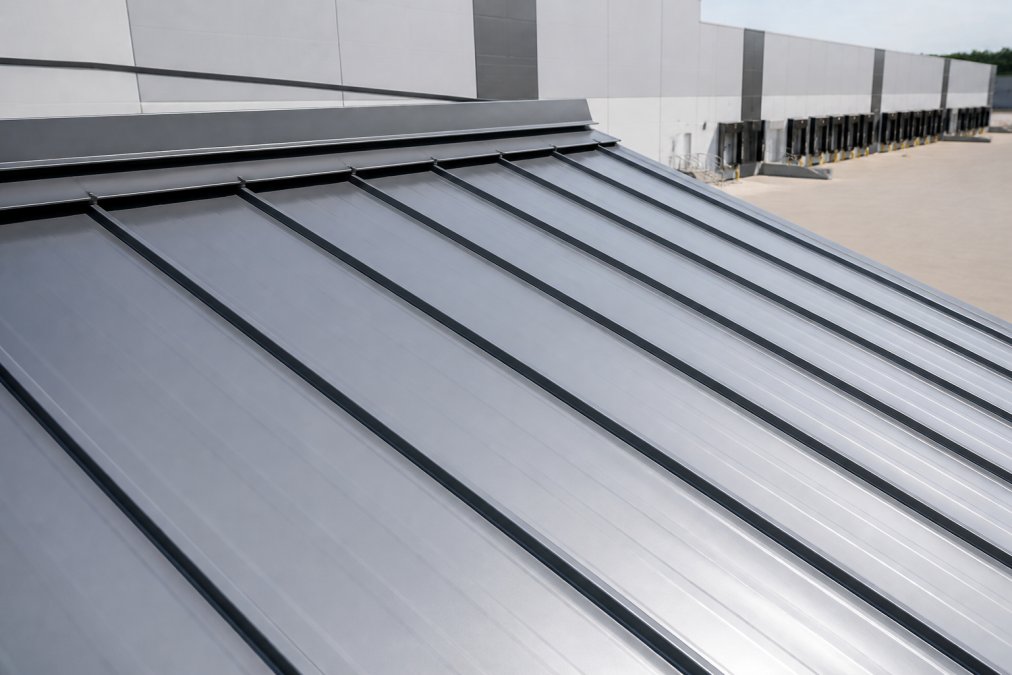
Metal roofing is the endgame choice. Standing seam metal systems last 40-70 years, meaning you might install it once and never replace it during ownership. That longevity transforms the financial calculus of roofing.
Standing seam systems conceal fasteners inside seams, eliminating fastener corrosion problems. The standing seams are mechanically locked or soldered, handling high winds, hail, and thermal stress without failing. Class 4 impact resistance and Class A fire ratings are standard.
Metal roofing pairs well with solar installations. The smooth surface and strong structure support solar arrays without additional reinforcement. If you’re considering renewable energy, metal roofing solves two problems: durability and clean energy compatibility.
Maintenance burden is low. Metal doesn’t develop seam leaks like membranes. Fasteners on exposed-fastener systems may need periodic replacement every 15-20 years, but that’s minor compared to membrane repairs. Metal systems accommodate thermal expansion by design.
Upfront cost is higher than single-ply membranes. But over 50 years, cost-per-per-year often drops below cheaper alternatives because you’re not replacing the roof twice. For long-term owners or high-visibility buildings where curb appeal matters, metal roofing justifies the investment.
Commercial Roof Replacement Cost Factors
Roofing cost isn’t determined by material alone. Seven factors drive the final price.
Roof size and complexity is the first lever. A 10,000-square-foot flat roof costs less per square foot than a 5,000-square-foot roof with multiple angles, penetrations, and edges. Complexity multiplies labor hours.
Existing roof removal adds cost. Stripping an old membrane takes less time than removing a metal roof with hundreds of fasteners. If the existing roof can stay in place, costs drop.
Deck condition determines whether you need structural repairs. A rotten deck or corroded substrate requires replacement before new roofing. Aerial inspections reveal these issues before work starts, preventing surprise costs.
Flashing and penetrations include details around edges, corners, HVAC units, skylights, and vents. Each penetration requires custom flashing. A roof with 20 penetrations costs more than one with two.
Geographic location and labor rates vary dramatically. Urban installation costs exceed rural areas. Union wages, permits, and competition all affect pricing.
Material choice directly impacts cost. TPO runs less than EPDM, which runs less than PVC, which runs less than metal. The cheapest material isn’t always best value if it fails in 15 years instead of 30.
Seasonal timing affects availability. Winter work costs more. Spring and fall are peak seasons with premium rates or long wait times.
| Factor | Impact on Cost | Strategy |
|---|---|---|
| Roof size | Large roofs have lower per-square-foot cost | Combine projects if possible |
| Existing roof removal | Adds 15-25% to labor | Consider overlay if deck is sound |
| Deck condition | Structural repairs multiply costs | Get detailed inspection first |
| Flashing details | Each penetration adds cost | Minimize new penetrations in design |
| Labor rates | Varies by location and season | Plan projects during off-peak |
| Material type | TPO lowest, metal highest | Match durability to ownership timeline |
| Permits and codes | Varies by jurisdiction | Budget for local requirements |
How to Evaluate Commercial Roofing Companies
Choosing a roofing contractor matters more than choosing a material. Mediocre material installed well outlasts premium material installed poorly.
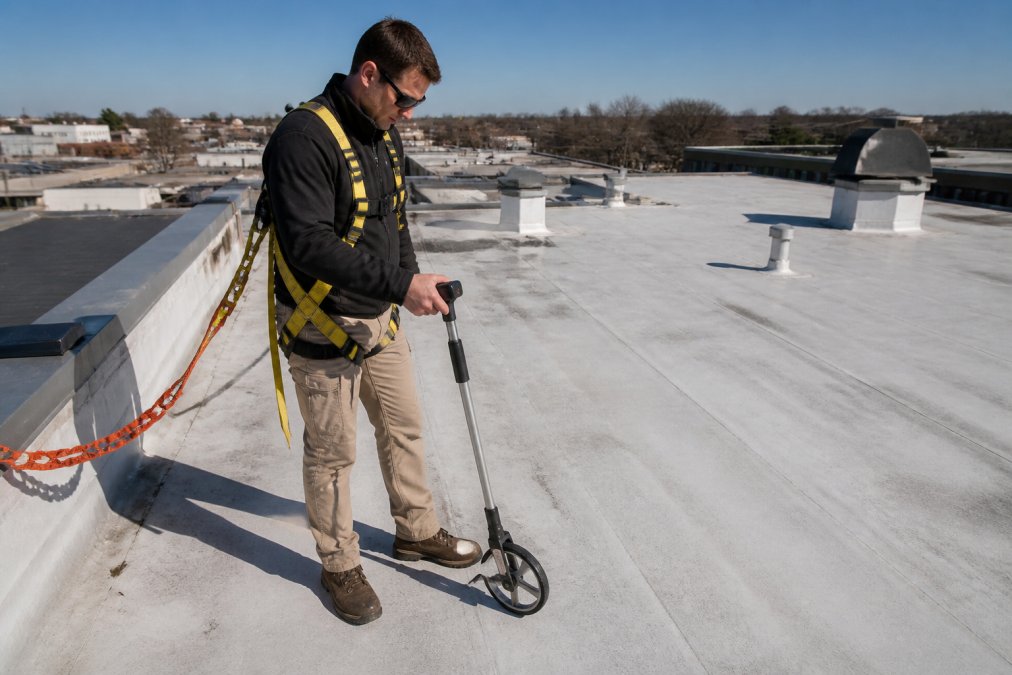
Ask for accurate aerial quotes. Legitimate contractors use drone imagery and software to measure roof dimensions, identify penetrations, and calculate material needs without climbing on your roof initially. This approach is faster, safer, and more accurate. If a contractor won’t provide an aerial quote, they’re behind the times or hiding something. Rescue Roofing uses accurate aerial quotes as standard practice.
Verify insurance and licensing. A licensed contractor carries liability insurance and workers’ compensation. Ask to see current certificates. Unlicensed roofers cost less upfront but leave you liable if someone gets hurt on your property.
Check references and track record. Ask for three commercial projects completed in the last three years. Call those references and ask: Did the project finish on schedule? Were there surprise costs? How’s the roof performing?
Understand their insurance claim process. If roof damage qualifies for insurance coverage, your contractor should handle communication with adjusters and coordinate with your insurance company. Ask directly: "Will you communicate directly with my insurance adjuster?"
Get the warranty in writing. Warranties vary wildly. Some cover materials only; others cover labor. A reputable contractor backs their work with written warranty specifying what’s covered, for how long, and what voids the warranty. Rescue Roofing provides clear warranty documentation.
Ask about financing options. Full roof replacements strain cash flow. Contractors offering financing make projects more manageable. Understand terms, interest rate, payment schedule, and prepayment penalties.
Request a detailed scope of work. Before signing, you should have a written document specifying: material type and thickness, attachment method, flashing details, debris removal, timeline, payment schedule, and warranty terms. Detailed scopes protect both you and the contractor.
Commercial Roof Maintenance Best Practices
A well-maintained roof extends its life by years. Here’s how to protect your investment.
Inspect twice yearly. Spring and fall inspections catch problems before they become leaks. Look for pooling water, membrane damage, fastener corrosion, flashing gaps, and debris. Document everything with photos.
Clear debris promptly. Leaves, branches, dirt, and standing water trap moisture against the membrane. Keep gutters, drains, and roof surface clean. This simple step extends membrane life by years.
Address leaks immediately. A small leak today becomes a structural problem tomorrow. Water damage spreads quickly. If you notice ceiling staining or water marks, get a roofer on the roof that week.
Maintain flashing and seals. Check caulking and sealants annually. Reapply caulk when it cracks or shrinks. This preventive step is cheap insurance.
Document all repairs. Keep a log of every repair, inspection, and maintenance activity. This documentation proves you maintained the system properly and helps identify failure patterns.
Schedule professional inspections after storms. Get a contractor to inspect after severe weather, even if you don’t see obvious damage. Small punctures or membrane tears can go unnoticed but cause problems later.
Budget for ongoing maintenance. Allocate funds annually for roof upkeep. Most facilities managers budget 0.5-1% of the roof’s replacement cost annually for maintenance.
Choosing commercial roofing alternatives requires balancing upfront cost, long-term durability, energy efficiency, and operational needs. TPO delivers energy savings and solid durability at moderate price. EPDM offers proven longevity at lower cost. PVC solves chemical exposure problems. Metal roofing provides maximum lifespan for long-term owners.
The contractor you hire matters as much as the material you choose. Rescue Roofing’s accurate aerial quotes, insurance claim assistance, and 24-hour availability remove friction from roofing decisions. Ask about financing options and warranty coverage. Get a detailed scope of work in writing, verify licensing and insurance, and check references before committing. Your roof is one of your property’s most critical assets. Invest the time upfront to choose wisely.
Frequently Asked Questions
What are the most durable commercial roofing materials available today?
Metal roofing offers the longest lifespan at 40-70 years, making it the most durable option for businesses seeking minimal replacement cycles. EPDM rubber roofing provides 25-30+ years of proven performance with excellent weather resistance. TPO and PVC membranes typically last 20-30 years. Your choice depends on your budget, climate exposure, and operational needs. Harsh weather conditions or chemical exposure may favor one material over another.
Is TPO or EPDM better for flat commercial roofs?
Both work well for flat roofs, but they serve different needs. TPO offers superior energy efficiency with its reflective white surface, reducing cooling costs significantly. EPDM provides a longer track record of durability and is typically more cost-effective upfront. TPO's heat-welded seams are stronger than EPDM's tape seams. Choose TPO if energy savings matter; choose EPDM if you prioritize proven longevity and lower initial cost.
How do I compare commercial roofing quotes from local contractors?
Request detailed quotes that specify material type, thickness, warranty length, labor timeline, and financing options. Ask about their inspection process, aerial quotes with professional imagery show thoroughness. Verify they handle insurance communication if you're filing a claim. Compare the same material specifications across quotes, not just price. Ask about their experience with your specific roof type and local weather conditions to ensure proper installation.
What factors should influence my choice of commercial roofing system?
Consider roof slope (flat vs. sloped), your building's use (restaurants need chemical resistance; warehouses need durability), local weather patterns, energy costs, and your budget for upfront investment versus long-term maintenance. If your roof experiences exposure to grease or oils, PVC becomes essential. Metal roofing suits businesses planning to stay in place 40+ years. Evaluate warranty coverage and whether the contractor assists with insurance claims.
This article was written using GrandRanker