



Table of Contents
- How Wind Actually Destroys a Roof: Uplift, Fasteners, and Deck Attachment
- Best Roofing Materials for High Wind Resistance: A Comparison
- Roof Wind Rating Standards: What the Labels and Codes Actually Mean
- How to Reinforce a Roof for High Winds Before Storm Season
- Roof Storm Damage Restoration: What Happens After the Wind Stops
- Choosing the Right Wind-Resistant Roof for Your Property
- Frequently Asked Questions
Last Updated: September 27, 2026
How Wind Actually Destroys a Roof: Uplift, Fasteners, and Deck Attachment
Wind rarely rips a roof off in one pull. It works from the edges inward, prying at weak points until the system gives way, and understanding that is the first step toward choosing the best roofing materials for high wind resistance.
Best Roofing Materials for High Wind Resistance: A Comparison
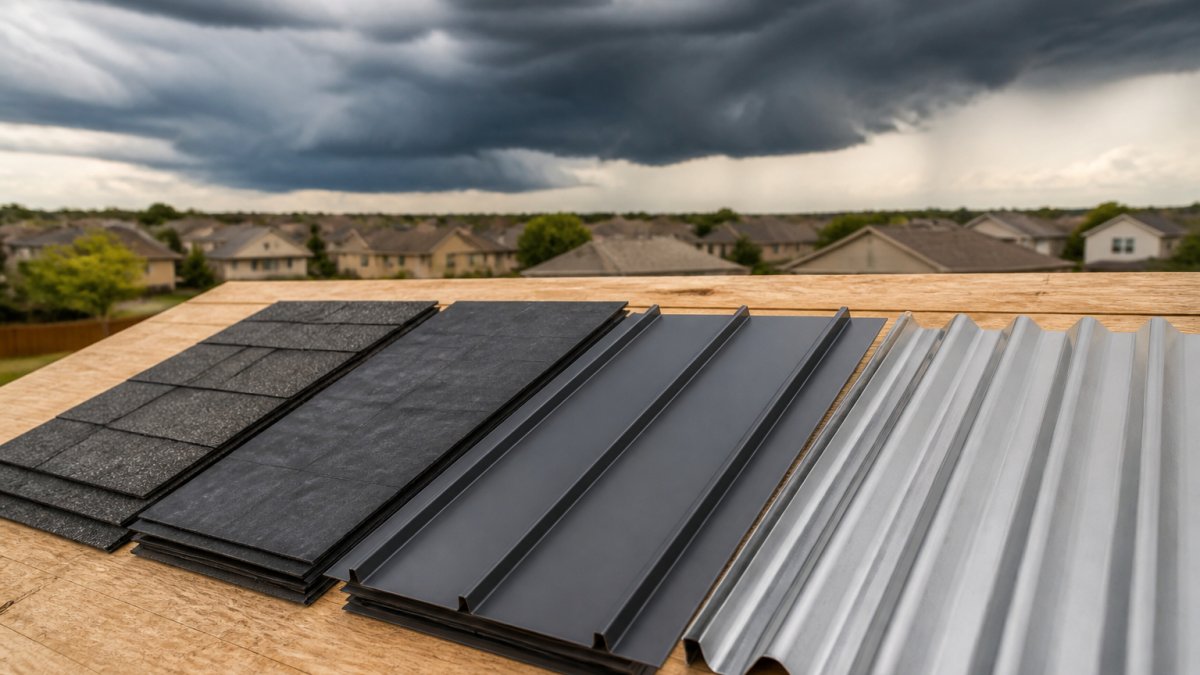
The best roofing materials for high wind resistance fall into four practical categories, each with different strengths, costs, and installation demands.
| Material | Wind Rating | Relative Cost | Best For |
|---|---|---|---|
| Standing-seam metal | 140-180 mph | High | Extreme wind zones |
| Class 4 asphalt shingles | Up to 130 mph | Low | Budget-conscious homes |
| Concrete and clay tile | High (mass-based) | High | Reinforced structures |
| Stone-coated steel | 120 mph | Mid-high | Shingle look, steel strength |
Standing-Seam Metal Roofing
Standing-seam metal is the gold standard for high-wind performance: continuous vertical panels lock together at raised seams with fasteners hidden beneath the folds, leaving no exposed holes for wind-driven rain or uplift.
Class 4 Impact-Resistant Asphalt Shingles
For most homeowners, Class 4 impact-resistant asphalt shingles are the best balance of price and protection, using a modified bitumen core, reinforced mat, and stronger adhesive strip that bonds each shingle to the one above.
Ask your contractor for the shingle’s wind warranty terms, not just the rating. Many manufacturers require a specific nailing pattern and a minimum number of fasteners per shingle to honor a 130 mph claim. Miss that detail and the warranty is void.
Concrete and Clay Tile Roofing
Heavy tile wins on mass: a concrete or clay tile roof resists uplift because so much weight holds it down, and each individually fastened tile interlocks to minimize gaps where wind can penetrate.
Synthetic Composite and Stone-Coated Steel
Two newer options deserve attention. Synthetic composite shingles, made from recycled polymers and rubber molded to mimic slate or cedar, carry wind ratings often above 110 mph and resist impact well at a fraction of natural slate’s weight.
Roof Wind Rating Standards: What the Labels and Codes Actually Mean
A wind rating is a tested claim, not a marketing number, and the label that matters most is the ASTM standard behind it. Roofing products are tested under ASTM International standards for wind uplift resistance to determine the wind speed they can withstand without failing.
Don’t confuse a material’s wind rating with your roof’s actual performance. The rating assumes correct fastening, proper underlayment, and a sound deck. Install the best shingle in the world over a rotting deck and it will fail in the first real storm.
How to Reinforce a Roof for High Winds Before Storm Season
Reinforcing a roof for high winds is mostly about connections, and much of it can be done before the season turns. The goal is to strengthen the chain from material to framing so no single link becomes the failure point.
Start with the deck, not the shingles
The roof deck is the substrate every other layer depends on. If sheathing pulls off the framing, the shingles go with it no matter how good they are. Two upgrades matter most:
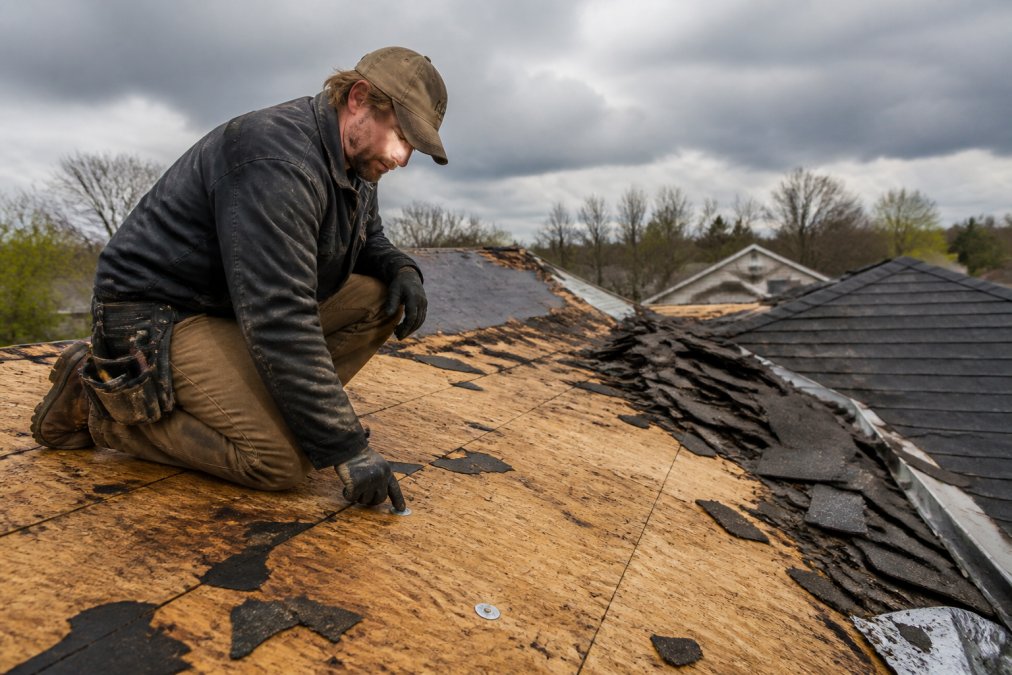
- Deck-to-framing attachment. Roof sheathing is typically fastened with 8d common nails at a code-minimum schedule. In high-wind zones, many jurisdictions require a tighter schedule, often 6 inches on center along panel edges and 12 inches in the field, plus ring-shank nails instead of smooth-shank, which resist withdrawal far better under uplift. Confirm what your local code requires before assuming your existing deck qualifies.
- Panel edge support. Sheathing edges that fall between framing members flex under pressure. Adding blocking or clips at unsupported edges stiffens the deck and reduces the chance of a panel peeling up at the corner.
Add a secondary water barrier
A secondary water barrier (synthetic underlayment or peel-and-stick membrane) sits between the covering and the deck, backing up the primary covering against wind-driven rain that gets past a lifted shingle; self-adhering products also add modest uplift resistance by bonding covering to deck. In high-wind zones, code often requires a specific barrier or taped-seam synthetic underlayment rather than felt.
Re-nail the perimeter and edges
The perimeter is where uplift starts. Edge metal, drip edge, and the first course take the highest pressure, so they need the most fastening. Common reinforcement steps:
- Re-secure edge flashing with additional fasteners at a tighter spacing than the original install.
- Verify the starter course is fully adhered or mechanically fastened per the manufacturer’s high-wind detail, not just laid down.
- Check ridge and hip caps, which are common blow-off points because they sit at the highest, most exposed part of the roof.
- Inspect gable-end overhangs, which catch wind from the side and can act like a lever on the framing.
Seal penetrations and openings
Vents, chimneys, skylights, and plumbing stacks are discontinuities in the roof plane, and that’s where wind finds a grip. Re-flashing or re-sealing them with high-wind-rated components reduces uplift risk and water intrusion. Securing these roof penetrations works in tandem with the structural integrity of wind-rated garage doors to prevent internal pressure spikes that can lead to catastrophic roof failure during extreme weather events.
Retrofit vs. full replacement: an honest decision framework
Not every homeowner can justify a full tear-off. A retrofit makes sense when:
- The existing covering is in good condition with remaining service life.
- The deck is sound and can accept additional fasteners.
- The goal is incremental improvement (better edge fastening, added underlayment, sealed penetrations) rather than a specific code-mandated rating.
A full replacement is the better call when:
- The covering is near end of life, so you’d be paying twice to retrofit now and replace soon.
- The deck is damaged, rotted, or under-fastened beyond what spot repairs can fix.
- You need to meet a specific code requirement or qualify for an insurance discount that only applies to a new, rated system.
If you do only one thing before storm season, tighten the perimeter. Edge flashing and the first course fail first, and re-securing them is the highest-return, lowest-cost reinforcement available.
Roof Storm Damage Restoration: What Happens After the Wind Stops
Roof storm damage restoration is the process of assessing, documenting, and repairing wind and water damage after a storm, usually through an insurance claim. The order you do things in matters more than most people realize.
Choosing the Right Wind-Resistant Roof for Your Property
Picking the right roof comes down to three questions: how much wind you face, what your structure can support, and what you can spend, plus meeting code, satisfying your insurer, and getting a return on the upgrade.
Step 1: Find out what your code actually requires
Before comparing products, confirm the minimum wind load your roof system must meet. Codes in high-wind zones set minimum design wind speeds and reference standards for testing and installation. A material legal in a mild inland climate may not satisfy code where you live, and an under-rated roof can fail inspection, complicate a permit, or jeopardize a claim.
Step 2: Match the material to your exposure and structure
- Extreme wind exposure, sound structure: Standing-seam metal is the clear winner. Concealed clips, interlocking panels, and ratings above 140 mph make it the benchmark.
- Tight budget, moderate zone: Class 4 impact-resistant asphalt shingles deliver strong protection for the money, with wind ratings up to 130 mph on many products.
- Reinforced structure, coastal salt air: Concrete and clay tile resist uplift through mass and don’t corrode in salt air, but confirm your framing can carry the load.
- Premium look, lighter weight: Synthetic composite and stone-coated steel bridge the gap between aesthetic and durability, though long-term performance data is thinner than for metal or asphalt.
Step 3: Run the cost-benefit, not just the sticker price
Sticker price is only part of the equation. A wind-resistant upgrade can pay back three ways:
- Avoided storm damage. A roof that survives a major storm avoids the deductible, the disruption, and the risk of interior water damage.
- Potential insurance premium reductions. Many insurers offer discounts for impact-resistant or wind-rated roofing, though the exact savings depend on the carrier, the policy, and the location. Ask your agent directly what documentation they require, often a manufacturer’s certification or an installer’s affidavit.
- Longer service life. Metal and tile typically outlast asphalt, which can offset a higher upfront cost over the life of the roof.
Step 4: Decide retrofit vs. replacement
If the existing roof is in good condition and the deck is sound, targeted reinforcement, better edge fastening, added underlayment, sealed penetrations, improves wind resistance without a tear-off. If the covering is near end of life or the deck is compromised, full replacement is the better investment, especially to meet code or qualify for an insurance discount that only applies to a new, rated system.
Step 5: Get it inspected and documented
Before you commit, get an inspection covering more than the visible shingles. Ask for documentation of deck fastening, underlayment condition, and edge details. That report tells you whether you’re choosing a material or rebuilding a system, and it’s the same documentation your insurer may request if you file a claim.
The right roof isn’t just the strongest material, it’s the one that meets your code, satisfies your insurer, and fits your structure. Confirm all three before you sign.
Frequently Asked Questions
What is the most wind resistant roofing material?
Standing-seam metal roofing holds the top spot, with wind resistance ratings that often exceed 140 mph thanks to concealed fasteners and interlocking vertical seams. Stone-coated steel and synthetic composite shingles follow closely, both rated around 110 to 120 mph. For homeowners who want a traditional look, Class 4 impact-resistant asphalt shingles reach up to 130 mph at a lower cost. The best choice depends on your budget, roof structure, and local wind zone.
What wind speed can rip off a roof?
Standard 3-tab asphalt shingles can start losing tabs at sustained winds near 60 to 70 mph, especially on older roofs with worn adhesive strips. Properly installed architectural shingles typically hold to 110 to 130 mph. Once wind speeds push past 130 mph, only reinforced systems like standing-seam metal or well-fastened tile reliably stay in place. The real weak points are usually the fasteners, edge flashing, and roof deck attachment, not the surface material alone.
How does roof shape affect wind resistance?
Roof shape changes how wind pressure builds across the surface. Hip roofs, which slope on all four sides, shed wind more smoothly than gable roofs and tend to perform better in high-wind zones. Steeper roof pitch also increases uplift pressure at the ridge and eaves, so those areas need extra fastening and secondary water barriers. A roofing contractor can assess your roof geometry and recommend reinforcement where wind load concentrates most.
What shingles are rated for 160 mph wind?
A few premium asphalt shingle lines carry ASTM D3161 Class F ratings or ASTM D7158 Class H ratings that reach 150 to 160 mph when installed with a specific nailing pattern and enhanced starter strips. These ratings only apply when the shingles go on exactly as the manufacturer specifies, including the right number of nails, placement, and underlayment. Ask your contractor to show the manufacturer’s installation requirements before assuming a shingle hits that number on your roof.
Wind will find the weakest point in any roof, and the difference between a roof that holds and one that fails usually comes down to installation and fastening, not luck. Rescue Roofing helps homeowners and property managers get this right, from accurate aerial quotes and thorough inspections to insurance claim assistance and flexible financing options. When you’re ready to protect your property before the next storm, get started with Rescue Roofing and secure a roof built to take the hit.