


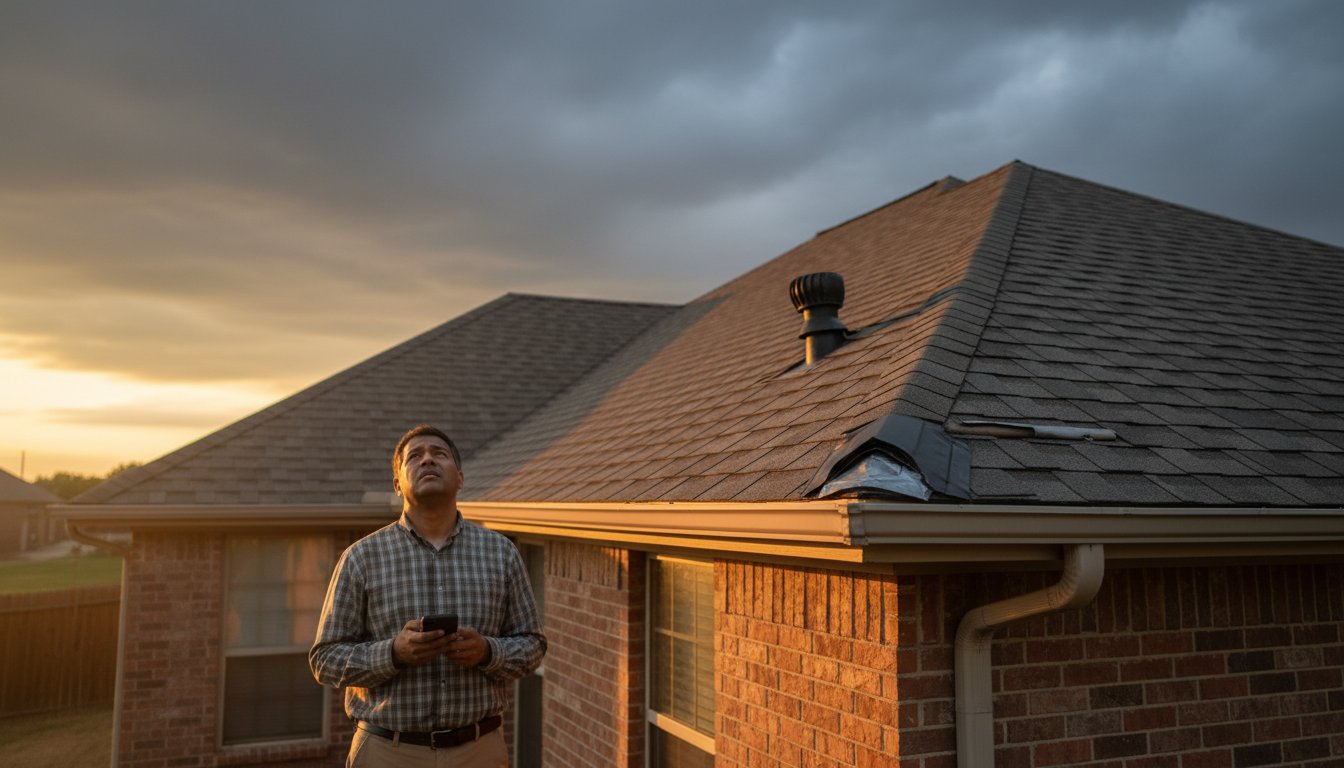

According to industry data from the National Roofing Contractors Association, nearly 70% of premature roof failures stem from poor installation quality rather than the materials themselves. When you invest in your home’s safety, you expect the results to last for decades, not fail during the first Oklahoma spring thunderstorm. It’s completely normal to feel overwhelmed by technical jargon or anxious when you spot a crooked shingle. You’ve worked hard for your home, and you shouldn’t have to worry about whether a contractor cut corners. Understanding the specific signs of a bad roofing job to look for is the first step in protecting your family and your investment.
We believe every Tulsa homeowner deserves a roof that offers total peace of mind. In this guide, we’ll help you spot poor workmanship before it leads to costly water damage or structural failure. You will learn how to identify ten critical visual and structural red flags, ranging from improper flashing to missing drip edges. We also provide a clear checklist of steps to take if you discover your recent installation is substandard, giving you the confidence to ensure your home remains dry and secure.
Key Takeaways
- Learn how to spot the visual signs of a bad roofing job to look for, such as mismatched shingle batches and poor uniformity that compromise your home’s curb appeal.
- Discover why “hidden” components like flashing and drip edges are the most common failure points when budget contractors cut corners.
- Understand how worksite professionalism and thorough cleanup serve as early indicators of the care taken during your roof’s installation.
- Identify the specific installation patterns required for Tulsa’s “Wind Alley” to ensure your roof stays secure during Oklahoma’s severe storms.
- Get a clear roadmap for documenting workmanship issues and communicating effectively with your contractor to protect your investment.
Visual Red Flags: The Initial Eye Test for Your New Roof
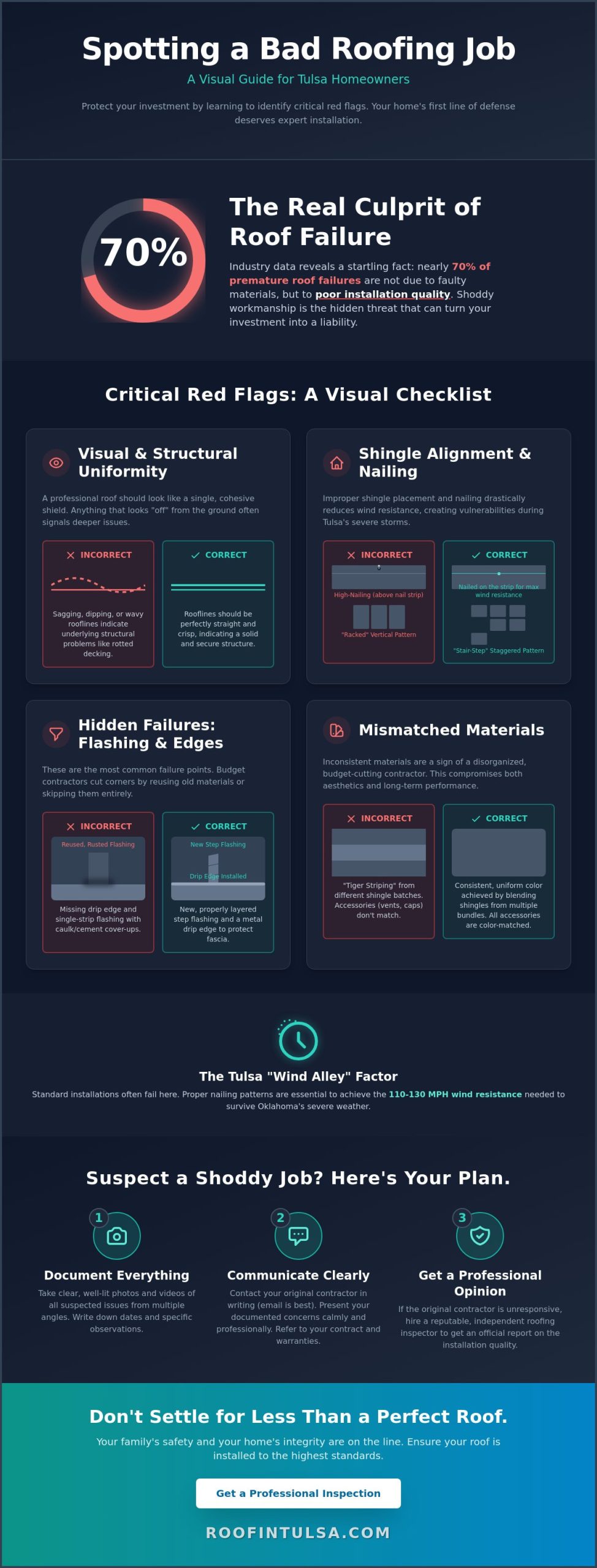
When you pull into your driveway, your new roof should look like a single, cohesive shield. Your first impression isn’t just about curb appeal. It’s a vital technical indicator of how well the crew followed industry standards. If something looks “off” from the sidewalk, it’s often a sign that the underlying work is compromised. One of the most common signs of a bad roofing job to look for is a lack of uniformity across the roof deck. Professional roofing requires precision, and a “sloppy” look usually translates to a “leaky” reality.
A roofline should be straight and crisp. If you notice dips, curves, or sagging sections, you likely have a structural issue. A roofline that bows often points to a failure in the decking or rafters. This happens when a contractor installs new shingles over rotting wood or fails to address proper roof ventilation, which leads to heat and moisture buildup in the attic. In our Tulsa climate, where summer temperatures regularly exceed 95 degrees, poor ventilation can warp your roof’s structure in just a few seasons. Symmetry is also essential. Crooked shingle lines aren’t just an eyesore; they create irregular channels that track water toward vulnerable seams rather than away from the home.
Shingle Alignment and Overhang Issues
The edges of your roof are its first line of defense against Oklahoma winds. Check your drip edge carefully. Shingles should extend past the edge of the roof by 0.5 to 0.75 inches. If they’re too short, water runs directly down your fascia boards, leading to rot. If they’re too long, high winds can catch the underside and peel them back like a lid.
- Avoid “racked” installation: This is a vertical installation method that creates a straight line of shingle joins. Most manufacturers prefer a “stair-step” pattern. Racking often voids your workmanship warranty and makes the roof prone to leaks.
- Check for high-nailing: If you see nail heads or shingles that seem to “flap” in a light breeze, the contractor likely used high-nailing. Nails must be placed in the specific nail strip to provide the 110-130 mph wind resistance promised by modern shingles.
Mismatched Materials and Shingle Batches
Consistency is a hallmark of quality. Look for “tiger striping” on your roof. This occurs when a contractor uses shingles from different production lots. Even if the color name is the same, subtle shifts in granule batches create visible horizontal stripes. Identifying these signs of a bad roofing job to look for early ensures you can demand a correction before the contractor leaves the site.
Professional sorting and color blending is a sign of an experienced crew. They will mix shingles from several different bundles to ensure a natural, even appearance. Finally, verify that all accessories match. Your ridge caps, pipe boots, and attic vents should complement the primary shingle color. Using leftover vents from a different job is a shortcut that suggests the contractor prioritized their profit over your home’s integrity.
The Hidden Failures: Flashing, Drip Edges, and Ventilation
Flashing acts as the critical seal for your roof system. It protects joints, valleys, and wall intersections from Oklahoma’s unpredictable storms. One of the most frequent signs of a bad roofing job to look for is the reuse of old, rusted flashing. Budget contractors often do this to save on material costs, but it’s a shortcut that leads to leaks within the first 24 months of a new install. Professional standards require replacing these components to ensure a watertight bond.
Citing common roofing cons, the National Insurance Crime Bureau highlights how corner-cutting during the installation phase often hides behind a finished appearance. This includes the omission of a drip edge. This metal strip is installed at the roof’s edge to direct water away from the fascia and into the gutters. Without it, your wood fascia will rot, and your gutters may pull away from the house under the weight of heavy 2-inch-per-hour rainfall typical of Tulsa springs.
Flashing Failures Around Chimneys and Valleys
Chimneys and vertical walls require “step flashing” to manage water flow correctly. This technique uses individual L-shaped pieces layered between each shingle course. If you see a single long strip of metal or a thick layer of black roof cement smeared around the base, it’s a cover-up for poor cuts and lazy craftsmanship. Valley liners must also be centered and fastened away from the center line. Puncturing the center of a valley shingle is one of the most common signs of a bad roofing job to look for, as it creates a direct path for water to enter your home.
Critical Ventilation and Decking Standards
A roof needs to breathe to stay durable. Proper ventilation requires a 50/50 balance between intake vents, located at the soffits, and exhaust vents at the ridge. Without this flow, your attic can reach temperatures exceeding 150 degrees in July, effectively baking your shingles from the inside out. This heat causes premature granule loss and shingle curling.
If you notice “bouncy” or soft areas when walking on the roof, it often indicates “decking over” rot. This happens when a contractor installs new shingles over soft, water-damaged wood instead of replacing the decking. For a deeper look at your system’s health, you can schedule a roof maintenance check to ensure your ventilation meets 2026 standards. If you’re worried about what’s happening under your shingles, chat with our team for a professional assessment of your attic health.
Worksite Red Flags: Cleanup and Professionalism Standards
A roofing project is a major construction event. However, it shouldn’t leave your Tulsa home looking like a disaster zone. Professionalism on the ground usually reflects the quality of work happening on the roof. If a crew leaves debris scattered across your lawn, it’s one of the most obvious signs of a bad roofing job to look for. A lack of respect for your property suggests they might be taking shortcuts with your shingles as well. We believe your home deserves the same care we would give our own families’ houses.
Before the first shingle is pulled, a quality contractor protects your investment. This includes using heavy-duty tarps to cover delicate landscaping and specialized shields for your outdoor AC unit. In 2024, the National Roofing Contractors Association (NRCA) recommends that homeowners verify their contractor follows strict safety and property protection standards. If you see workers tossing old materials directly onto your flowerbeds without protection, stop the job and ask for clarification immediately. A messy yard is a symptom of a messy installation mindset.
Post-Job Cleanup Expectations
A professional cleanup is a non-negotiable part of the process. You shouldn’t find a single stray nail in your driveway after the crew leaves. Zero is the only acceptable number when it comes to your family’s safety and your car tires. A reputable roofer will take the time to ensure the site is cleaner than they found it.
- The Magnetic Sweep: Every professional team uses a magnetic roller to scan your yard, sidewalks, and driveway at least twice before calling the job finished.
- Disposal of old shingles: Check that all old materials were hauled away in a designated dumpster. Ensure the contractor didn’t try to “recover” your roof by layering new shingles over old ones, which can void warranties and trap moisture.
- Gutter Check: Look inside your gutters for shingle granules or plastic strips. A crew that leaves your drainage system clogged hasn’t finished the job properly.
The Paperwork Trail
Trust is built on transparency and legal compliance. In Tulsa, a roofing contractor must pull a city permit for any full replacement. Skipping this paperwork is a massive liability for you as a homeowner. It means no local official will verify the work meets current building codes. Always demand a “Certificate of Completion” before you release the final payment to ensure all requirements were met.
You also need to understand your protection. A workmanship warranty covers the contractor’s installation errors for a specific period, while a manufacturer warranty only covers defects in the roofing materials themselves. T-Town Roofing provides clear, written documentation for both to ensure you have total peace of mind. We believe that an honest roofer is a neighbor who keeps their promises in writing, providing you with a hassle-free experience from start to finish.
The Tulsa Context: Why Standard Jobs Fail in Oklahoma
Tulsa sits in a unique geographic crossroad that demands more from a roof than most other cities in the U.S. Because we live in the heart of “Wind Alley,” a standard roofing installation often isn’t enough to withstand the 60 to 80 mph gusts that occur during spring supercells. One of the most critical signs of a bad roofing job to look for is a contractor who ignores these local environmental stressors. For instance, Tulsa roofs frequently experience thermal shock. This happens when temperatures drop from 100 degrees to 70 degrees in under 20 minutes during a summer thunderstorm. This rapid contraction causes shingles to crack or pull away from fasteners if they weren’t installed with precision.
Many “storm chasers” follow the clouds into Oklahoma every spring, but they rarely understand the 2026 local building codes. They often install impact-resistant shingles using basic methods that don’t account for our humidity or pressure changes. If your shingles are already lifting after a single season, it’s likely the installer treated your home like a project in a calmer climate. We believe your home deserves protection that’s built specifically for the Green Country weather patterns we know so well.
High-Wind Fastening Requirements
Oklahoma’s wind speeds require a 6-nail pattern rather than the standard 4-nail pattern used in many other states. If a roofer cuts corners here, your shingles are significantly more likely to tear away during a storm. Proper installation also requires specific starter shingles at the eaves and rakes to prevent wind uplift. When planning a roof replacement Tulsa standards must be the baseline, not an optional upgrade. Check your eaves; if you don’t see a dedicated starter course, it’s one of the clearest signs of a bad roofing job to look for before the next storm hits.
Handling Tulsa Storm Damage Claims
Bad roofers often “lowball” insurance estimates by skipping critical components like ice and water shields or high-quality ventilation. This leaves you with a roof that technically looks new but fails to meet local safety requirements. Be wary of any contractor offering to “cover your deductible,” as this is often a red flag for insurance fraud and usually leads to the use of sub-par materials to make up the cost. Utilizing professional insurance claim assistance ensures that your claim covers the full scope of work needed for a durable, code-compliant roof.
Don’t let a sub-standard installation leave your home vulnerable to the next Oklahoma storm. Contact T-Town Roofing for a detailed inspection to ensure your roof is built to last.
What to Do If You Suspect a Shoddy Roofing Job
Discovering that your new roof is failing is incredibly stressful. You’ve made a significant investment to protect your family, and seeing the signs of a bad roofing job to look for can feel like a betrayal of trust. The first and most important step is to stay calm. While your instinct might be to call the contractor and vent your frustrations, a methodical approach will yield better results for your home and your bank account.
Start by gathering evidence. Documentation is your strongest defense in any dispute. Take high-resolution photos and videos of every defect you see from the ground or a safe vantage point. Create a written timeline that includes when the work began, when you first noticed issues, and a log of every phone call or email sent to the company. This paper trail is vital if you eventually need to file a complaint or pursue a legal remedy.
An independent set of eyes is often the key to resolving these issues. A third-party inspection from a reputable professional provides an unbiased assessment of the workmanship. This expert can identify if the installation violates Oklahoma building codes or fails to meet manufacturer specifications. Having a formal report from a neutral expert gives you the leverage needed to demand repairs or seek a refund. If the original roofer refuses to cooperate, you can escalate the matter through the Better Business Bureau or consult with a local attorney about your options under state consumer protection laws.
Step-by-Step Remediation Guide
- Review your original contract. Look for specific workmanship guarantees and “cure periods.” These clauses outline how much time the roofer has to fix a mistake before they’re in breach of contract.
- Request a formal walk-through. Ask the project manager to meet you at your home. Use your documented signs of a bad roofing job to look for to point out specific defects, such as improper flashing or misaligned shingles.
- If the roofer stops responding to your messages, don’t leave your home vulnerable to the next Tulsa storm. Contact a trusted Tulsa roofing company for a comprehensive rescue inspection.
How to Choose Your ‘Rescue’ Roofer
Fixing a botched installation requires more skill than a standard replacement. You need a contractor with a proven track record of integrity. Look for the GAF Master Elite certification. Only 2% of roofing contractors in North America earn this designation, which requires rigorous testing and a commitment to ongoing training. Verify that the company has a local physical office and a long history of positive reviews from your neighbors. A truly local expert understands the specific wind and hail challenges we face in Green Country.
Don’t let a bad roof ruin your peace of mind. Schedule a free, no-obligation inspection with Rescue Roofing Tulsa today and let our team of experts make things right.
Secure Your Peace of Mind and Your Property
Your roof is your home’s most vital shield against unpredictable Oklahoma elements. Identifying the signs of a bad roofing job to look for early on can save you from costly structural repairs and internal water damage down the road. Whether it’s uneven shingle lines or poorly installed drip edges, your home deserves a standard of care that stands up to 80 mph winds and heavy spring rains. You shouldn’t have to guess if your family is protected.
As a local family-owned and operated business, we understand the unique challenges of the Tulsa climate. We back our expertise with a 10-year workmanship warranty and maintain our status as GAF Master Elite Certified contractors, a distinction held by only 2% of roofers nationwide. We believe in transparency and neighbors helping neighbors. If you’ve noticed red flags on your roof, it’s better to act now than to wait for the next storm to reveal a leak.
We’re here to help you navigate these concerns and ensure your home remains the safe haven it was meant to be.
Frequently Asked Questions
Can I fix a bad roofing job myself?
You shouldn’t try to fix a poor installation yourself because it often leads to safety risks and voided warranties. Most Tulsa roofing systems require specialized tools and fall-protection equipment that meets OSHA standard 1926.501. If you attempt a DIY repair, you might accidentally hide structural damage. It’s better to call a GAF Master Elite contractor to assess the situation and ensure the home stays protected.
How soon will a bad roof start leaking?
A poorly installed roof can leak during the first rainstorm after the job is finished. If flashing is missing or shingles are high-nailed, water can enter the decking immediately. Data from the National Roofing Contractors Association shows that 70 percent of roof leaks occur at penetrations like vents or chimneys. These leaks often appear within 30 days if the contractor didn’t follow the manufacturer’s specific sealing instructions.
What if the roofing company refuses to fix their mistakes?
You should contact the Oklahoma Construction Industries Board if a contractor won’t correct their work. You should also check if they’re a GAF Master Elite member, as manufacturers can sometimes intervene. We recommend keeping a paper trail of all signs of a bad roofing job to look for during your inspection. This documentation helps when you seek a resolution through legal channels or your insurance provider.
Is it normal to see some loose granules after a new roof installation?
It’s normal to see about 5 percent of the shingle granules wash into your gutters after the first two rains. Manufacturers over-apply these granules during production to ensure full coverage during shipping and installation. However, if you see bald spots on the shingles or large piles of grit after 60 days, it’s a sign of a manufacturing defect or rough handling during the installation process.
Does a bad roofing job void my shingle warranty?
Improper installation almost always voids the manufacturer’s material warranty. Most shingle manufacturers require contractors to follow specific guidelines, like the GAF Pro Field Guide, to keep the warranty valid. If a roofer uses the wrong nails or skips underlayment, the manufacturer won’t pay for future material failures. This is why we provide a 10-year workmanship warranty to give you peace of mind.
How do I know if my roofer used a 6-nail wind pattern?
You can verify the nail count by carefully lifting a shingle tab in a non-conspicuous area to see the fastening pattern. In Tulsa, high-wind zones often require 6 nails per shingle instead of the standard 4 nails. This 6-nail pattern increases the wind warranty on many architectural shingles to 130 mph. If you find only 3 or 4 nails, your roof is more likely to suffer damage during a spring storm.
Can a bad roofing job be repaired, or does it need a full replacement?
Minor issues like a single poorly flashed pipe boot can be repaired in about 2 hours, but widespread errors usually require replacement. If the entire field of shingles was installed with the wrong offset, a full replacement is necessary to ensure water shedding. Identifying specific signs of a bad roofing job to look for early can save you from a total loss. A professional inspection will determine if the system is salvageable.
Is it okay for a roofer to install new shingles over old ones?
We don’t recommend “nail-overs” because they hide rot in the underlying 7/16-inch OSB decking. Adding a second layer of shingles also adds roughly 2.5 pounds of weight per square foot to your home’s structure. This extra weight can cause rafters to sag over time. Starting with a clean deck ensures your new roof lasts its full 30-year lifespan and meets all local Tulsa building requirements.