


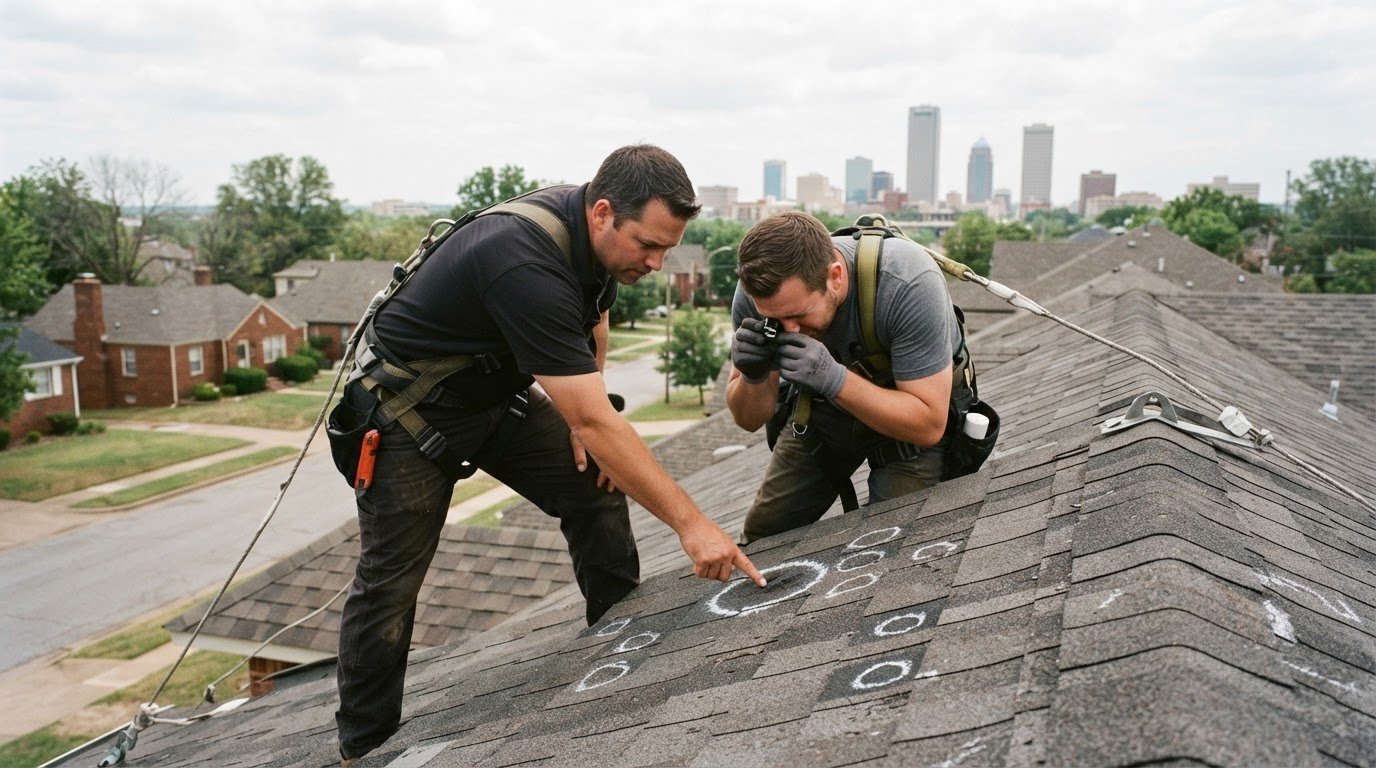

Your roofer can attend a roof reinspection and point out documented damage to the adjuster. To learn how to get your insurance company to re-inspect a roof, call your claims representative, then follow up by email with your claim number, date of loss, the damage or omissions you believe were missed, and an independent photo report. A clear, specific request gives the insurer information to review.
It can be frustrating when an initial inspection doesn’t seem to reflect what you see on the roof. A reinspection may involve the original adjuster, a different adjuster, or an engineer. Organized photos and repair records help keep the discussion focused on evidence.
This guide explains how to prepare for an independent roof inspection, request a reinspection, and take part when the insurer returns. It also explains the difference between a storm-damage claim review and an underwriting inspection, which may assess roof condition, age, materials, repairs, or risk when coverage is being considered. Knowing which review is underway helps you gather relevant information and choose a useful next step.
Key Takeaways
- Separate possible storm damage from age, wear, or maintenance issues, since insurers assess these differently.
- Keep inspection reports, photos, repair records, and insurer messages organized so you can support your claim clearly.
- Prepare an independent roof assessment with clear images and written findings to help identify damage that may have been overlooked.
- Recognize whether an inspection concerns a claim or underwriting, because the insurer may be evaluating different roof details.
Distinguishing weather damage from ordinary wear and tear
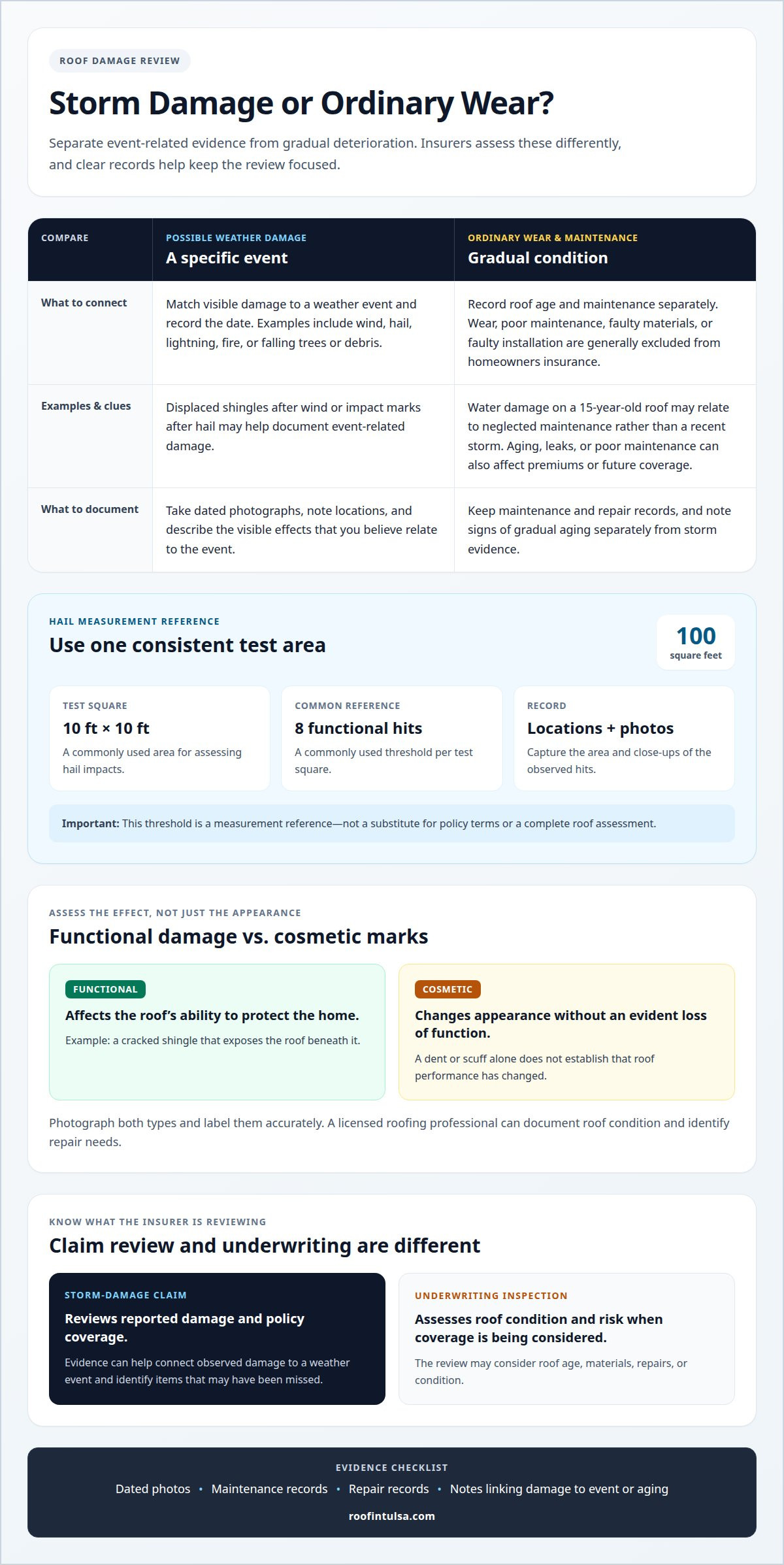
- Match the damage to a specific weather event. Wind, hail, lightning, fire, and falling trees or debris are examples of events that may be covered by homeowners insurance. Record the date and visible effects, such as displaced shingles after wind or impact marks after hail. Compare these patterns with gradual deterioration, which can occur without a single storm.
- Record age and maintenance separately from storm evidence. Homeowners insurance generally excludes damage caused by wear and tear, poor maintenance, faulty materials, or faulty installation. For example, water damage on a 15-year-old roof may relate to neglected maintenance rather than a recent storm. Roof damage, leaks, or aging can also lead to higher premiums, and an agent may inspect the roof at renewal. Poor maintenance could affect future coverage.
- Document hail damage using a consistent area. A commonly used hail test square measures 10 feet by 10 feet, covering 100 square feet. Inspectors may count functional hits within that area; a commonly used threshold is 8 functional hits per square. Record the locations and close-up photographs. The threshold is a measurement reference, not a substitute for the policy’s terms or a complete roof assessment.
- Distinguish functional damage from cosmetic marks. Functional damage affects a roof component’s ability to protect the home, such as a cracked shingle that exposes the roof beneath it. Cosmetic damage changes appearance without an evident loss of function. Photograph both types and label them accurately. A dent or scuff alone doesn’t establish that the roof’s performance has changed.
- Build a clear record before discussing coverage. Organize dated photographs, maintenance records, and notes connecting observed damage to weather or gradual aging. A licensed roofing professional can document the roof’s condition and identify repair needs, especially before you change insurers. This evidence helps distinguish a storm-related claim from an underwriting concern about existing condition.
How insurers inspect and evaluate roof damage claims
A reinspection asks the insurer to review roof damage or findings from its first inspection. A supplemental claim seeks payment for covered work omitted from the estimate, while appraisal addresses a disagreement about the loss amount under the policy.
State insurance rules can affect claim-handling and dispute procedures. Your policy also sets reporting and dispute deadlines, so review its instructions and act promptly.
Before a reinspection, avoid permanent repairs that could conceal damage before it’s documented. Don’t delay urgent steps to limit further damage: photograph the area and keep receipts for temporary repairs.
- Review your policy and claim notice. A practical way to understand how to get your insurance company to re-inspect a roof is to start with the claim instructions. Find the deadlines for reporting damage and disputing a decision. Some carriers set roof inspection deadlines as short as 30 days. Record the relevant dates and submit the insurance claim promptly through the insurer’s stated process.
- Arrange an independent roof assessment. A contractor’s written report and photographs can support your account of the damage. Keep installation or repair records that help explain the roof’s condition. The adjuster determines whether the damage meets policy requirements and which repair or replacement costs the insurer will cover.
- Attend the insurer’s inspection with your contractor. If you’re deciding how to get your insurance company to re-inspect a roof, attend the visit and point out specific documented areas. Explain what the first estimate may have missed. A typical on-site inspection takes 15 to 45 minutes. The adjuster may assess damage, policy coverage, and whether repairs or full replacement are warranted.
- Keep a complete claim file. Save the insurer’s request, inspection reports, photographs, estimates, receipts, repair records, and all claim communications. After the visit, follow up in writing on any unresolved item, including its location and the evidence supporting your position.
- Use the right next step. If an estimate omits necessary replacement items, a contractor can request a supplement. If you dispute the loss amount, appraisal under the policy is a separate option. For organized documentation, roof inspection and insurance claim assistance can help clarify the roof findings.
Getting an independent roof inspection before an insurer’s inspection
Arrange an independent assessment before the insurer’s inspection when possible. A clear report can help connect observed damage to storm conditions and identify items that need review.
-
Get the Insurer’s Request and Deadline in Writing
Ask the claims representative to email the inspection request, deadline, and documentation requirements. Compare the deadline with your policy’s reporting and dispute terms, since insurer requirements and acceptable inspector qualifications can vary. Keep the email with your claim records. If anything is unclear, reply in writing and ask which roof areas or records the insurer needs reviewed.
-
Clarify Who Pays for the Inspection
Ask who arranges and pays for each inspection before scheduling an appointment. The insurer arranges its reinspection; the homeowner commissions an independent inspection separately. Confirm payment terms with the roofing contractor before work begins and keep any written agreement. Don’t assume the insurer will reimburse an independent assessment unless it has confirmed that in writing.
-
Prepare the Independent Inspection
Arrange a professional roof inspection before the adjuster visits, and follow the insurer’s written standards for inspector qualifications and documentation. Ask the roofing contractor to record findings in writing and photograph each roof slope. For suspected hail damage, the report can mark and measure impact areas, with close-up photos of bruised or cracked shingles and granule loss.
Organize the report by roof area, matching each image to its written description. Include relevant repair records and note material or installation concerns separately from storm damage. This makes the evidence easier to discuss during the insurer’s inspection and helps identify disputed observations or omissions. If a leak needs prompt repair or temporary covering, document the damage first when practical, then retain repair records and receipts.
Insurance roof inspections and underwriting reviews
A claim inspection and an underwriting review answer different questions. Identify which review the insurer is conducting before sending evidence or arranging repairs.
- Ask what the inspection is evaluating. A claim review examines reported damage against the policy and claim evidence. An underwriting review assesses roof condition and risk when coverage is being considered or renewed. Insurers may request details about roof age, materials, repairs, and condition for either purpose, so ask the representative to identify the review in writing.
- Gather roof records for an underwriting review. Some carriers require inspections when a roof is over 10 to 15 years old. Some flag shingle roofs at 15- or 20-year thresholds, and many carriers require a roof certification to renew a policy once a shingle roof is more than 15 years old. Keep inspection reports, repair receipts, and before-and-after photos together.
- Request a reinspection with specific evidence. Call the claims representative, then follow up by email with your claim number, date of loss, suspected omissions, and independent photo report. The insurer may send the original adjuster, a different adjuster, or an engineer. A roofer can attend and point out documented damage, such as affected shingles, flashing, or roof areas missing from the first inspection.
- Ask for the revised findings. After the reinspection, request a copy of any revised estimate and engineer’s report. Compare each listed repair with the photos and report, including whether the estimate addresses damaged shingles, flashing, or other identified work. A roof inspection doesn’t guarantee policy renewal, so keep a complete record of the insurer’s decision and any requested repairs.
- Use a professional assessment to clarify roof condition. An independent report can organize photos, repairs, and roof details for a claim review or underwriting discussion. To document roof condition and damage clearly, schedule a professional roof inspection.
Rescue Roofing Tulsa: Roof Inspection
Rescue Roofing Tulsa can help when storm damage is unclear, an insurer’s estimate appears to miss roof details, or an underwriting review raises questions about the roof’s condition. A roof inspection can document visible damage and condition, giving you organized information to discuss with the insurer. Insurance Claim Assistance can help you understand the claims process and prepare for those conversations.
If the inspection identifies repair needs, its findings can help you choose an appropriate next step, whether that means completing a repair or discussing replacement. Clear documentation is useful, but the insurer makes its coverage decision under the policy terms.
For support with your roof and insurance claim, contact Rescue Roofing Tulsa.
Take the Next Step With a Clear Roof Plan
Knowing how to get your insurance company to re-inspect a roof gives you a practical way to raise specific concerns. Your next step is to turn the inspection findings into a clear plan for the property, whether you’re addressing an unresolved claim or a roof that needs attention outside the claims process.
Rescue Roofing Tulsa can assess the roof and identify whether repair or replacement is appropriate. Services include Roof Repair, residential roof replacement, and commercial roof replacement. The right option depends on the roof’s condition and the work needed, not simply on the insurer’s initial estimate. Keep the focus on a sound, documented decision for your home or building.
If you’re ready to discuss your roof’s condition, contact Rescue Roofing Tulsa for a roof inspection. A clear assessment can help you move forward with greater confidence.
Frequently Asked Questions
Can my roofer be at the re-inspection?
Yes, you can ask your roofer to attend and point out documented areas of concern. Before the visit, agree on which roof sections need attention and keep the discussion focused on visible conditions, such as a lifted shingle or damaged flashing. The roofer can explain their observations while the insurer’s adjuster records findings for the claim review.
Do I have to use the inspector my insurance company sends?
The insurer selects who conducts its inspection, which may be an adjuster or an engineer. You can also arrange an independent roof assessment to document your concerns, but it doesn’t replace the insurer’s review. If you disagree with the inspection process, ask your claims representative to explain the next review option available under your policy.
Is there a deadline to ask for a re-inspection?
There isn’t one universal deadline for every policy or claim. Your policy and the insurer’s written claim instructions determine the relevant reporting and dispute periods. For example, some carriers set roof inspection deadlines as short as 30 days. Check the dates tied to your specific claim and submit a written request promptly, keeping a copy for your records.
How do I request a roof re-inspection from my homeowners insurance company?
Call your claims representative and clearly state that you’re requesting another roof inspection. Then follow up in writing with the claim details, loss date, and specific findings you want reviewed. For example, explain that a roof slope or damaged area appears to be missing from the estimate. Ask the representative to confirm the next steps and inspection arrangements in writing.
What evidence should I provide to support a roof damage re-inspection?
Send a concise evidence package that makes each concern easy to locate. Label photos by roof slope or feature and pair each image with a short description. If an estimate line doesn’t match the observed condition, identify it and attach the relevant documentation. Include repair records that clarify any changes made after the loss.
Can I hire an independent roof inspector or public adjuster for an insurance re-inspection?
You can arrange an independent roof inspection to document the roof separately from the insurer’s assessment. Follow the insurer’s written requirements for acceptable qualifications and documentation. If the insurer still denies the claim after reinspection, a public adjuster is a separate option to consider; dispute options also depend on the policy and circumstances. Keep all reports and communications together.