


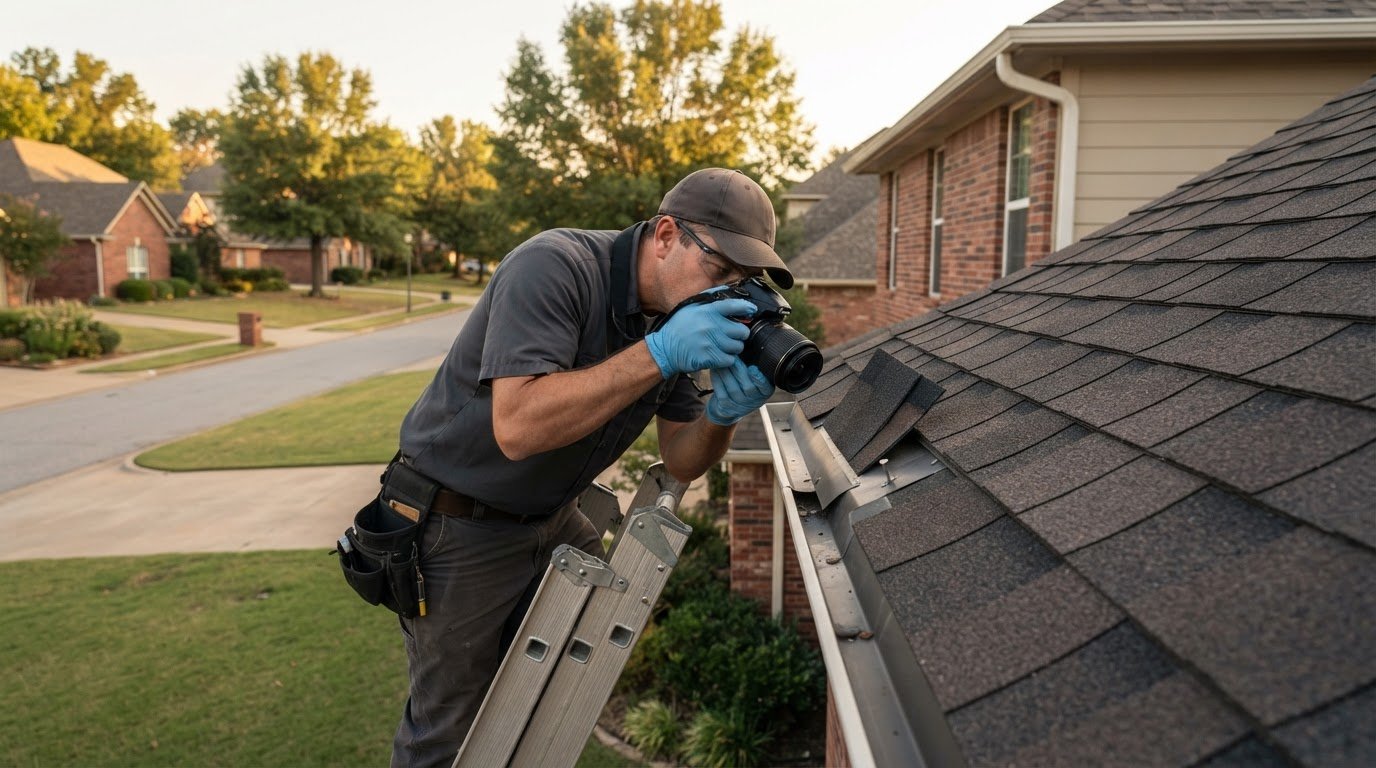

A roofer’s refusal to address a problem doesn’t leave you without options. If you’re wondering what to do if you’re unhappy with your new roof, document the visible issues, review your contract and warranty, and ask the contractor in writing to inspect and correct the work. If the problem remains unresolved, you can consider filing a complaint with the Better Business Bureau or your state licensing board.
It’s frustrating to find leaks, loose shingles, or other concerns after a roof installation, especially when you expected the work to protect your home. Clear records help keep conversations focused on the specific problem and the resolution you’re seeking.
This guide explains how to photograph and record roof issues, request repairs, and consider further options if the contractor won’t help. You’ll also learn what to include in a complaint and when a roofing inspection may clarify your next step.
Key Takeaways
- Record visible roof problems with clear photos and dated notes so your concerns are specific and easy to explain.
- Review your contract and workmanship warranty, then ask the contractor in writing to inspect and address the issue.
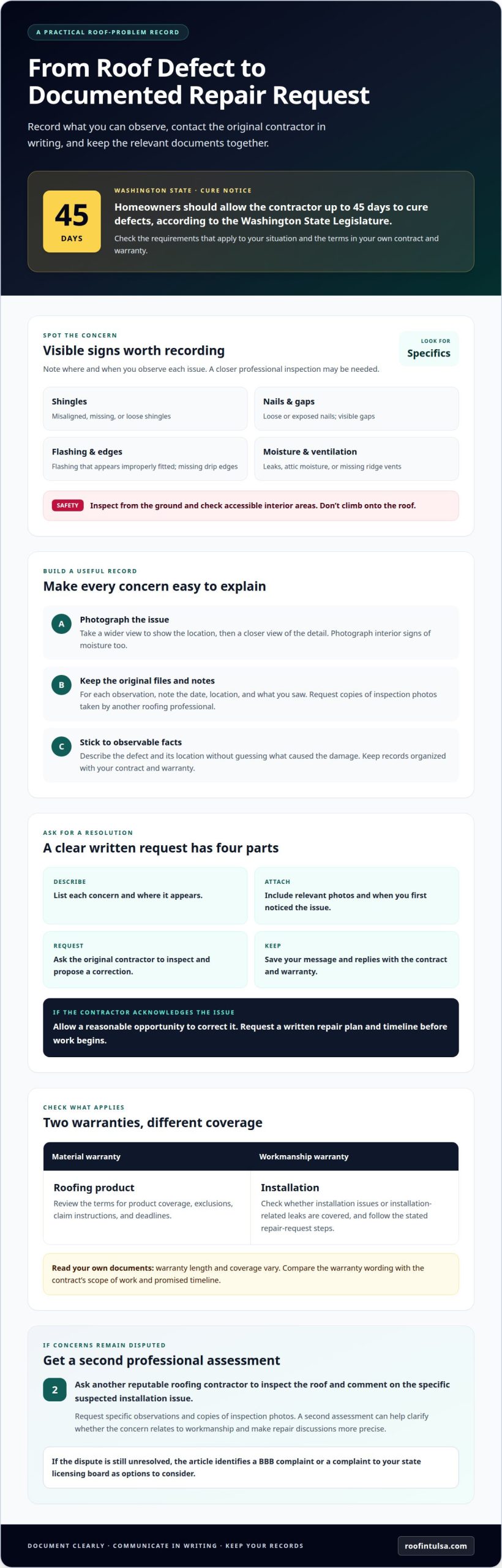
- If the contractor agrees to repairs, request a written plan and timeline; Washington State homeowners should allow up to 45 days to cure defects under the Cure Notice, according to the Washington State Legislature.
- If the dispute remains unresolved, learn what a BBB complaint or state licensing board complaint can do, and what limits each option has.
What Should You Do If Your New Roof Was Installed Incorrectly?
First, document the visible problem, then contact the roofing contractor who completed the installation. Before filing a complaint, explain your concerns calmly, request an inspection, and give the contractor a reasonable opportunity to correct any acknowledged issues.
-
Recognize Signs of Poor Workmanship
Look for specific installation problems before deciding the roof needs replacement. Examples include misaligned or missing shingles, loose or exposed nails, gaps, and flashing that appears improperly installed. Check inside for leaks or attic moisture, and note if shingles come loose after the work. Missing drip edges or ridge vents may also warrant closer review. Record where and when you observe each issue.
-
Contact the Original Roofing Contractor
Contact the company that installed the roof and describe each concern clearly. Share the locations, dates, and observations you recorded, then ask the contractor to inspect the areas in person. Keep the conversation polite and focused on the contract’s scope of work and the correction you’re seeking. If the contractor acknowledges a problem, allow a reasonable opportunity to fix it. Request a written repair plan and timeline before work begins.
-
Review the Workmanship Warranty
Read the workmanship warranty alongside your roofing contract. Check what installation issues it covers, how to submit a repair request, and whether it explains exclusions or required steps. Warranty length varies by roofer, so use the terms in your own documents rather than assuming a standard period. In Washington State, a homeowner is supposed to give a contractor up to 45 days to cure defects under the Cure Notice, according to the Washington State Legislature.
-
Get a Second Contractor’s Opinion
If the original contractor disputes your concerns, ask another reputable roofing contractor to inspect the roof. Request specific observations about the suspected installation issue, not just a general opinion. Ask for copies of inspection photos and keep them with your contract, warranty, and correspondence. A second assessment can clarify whether the problem relates to workmanship and give you more precise information for discussing repairs.
Identifying and documenting roof installation problems
Build a clear record that connects each visible defect to its location and the date you noticed it. Prompt documentation also helps you explain the concern in writing. Delaying attention to leaks can allow water damage to worsen.
-
Inspect for Installation Defects
Start with a visual check from the ground and note roof areas that appear uneven or incomplete. Look for loose or missing shingles, exposed nails, gaps, and flashing that seems improperly fitted. Check ceilings and accessible attic areas for moisture or signs of leaks. Don’t climb onto the roof to inspect it. Record what you can observe safely, then arrange a professional inspection if the problem needs closer assessment.
-
Photograph and Document the Damage
Take clear photos of each concern, including a wider view showing its location and a closer view of the detail. Photograph interior signs, such as a water stain or damp attic area, as well as visible exterior issues. Keep the original image files and note the date, location, and what you observed. If another roofing professional takes photos during an inspection, request copies. A dated, organized record can help distinguish separate issues and track changes.
-
Notify the Contractor in Writing
Send the original contractor a concise written notice describing each defect and where it appears. Attach relevant photos, include when you first observed the issue, and state that you’re requesting an inspection and a proposed correction. Keep a copy of your message and any replies with the contract and warranty. Written communication creates a useful record of the reported concerns and the contractor’s response. Avoid guessing what caused the damage; focus on observable facts.
Leaks can lead to water damage, so don’t leave active moisture concerns unreported. If you need a closer assessment, a roof inspection can help identify areas that need attention.
What Recourse Do I Have for a Bad Roofing Job?
Start with the contract and warranty documents to understand what remedies may apply. Your next steps depend on the written coverage, the cause of the problem, and the contractor’s response.
-
Check Material and Workmanship Warranties
Read the material warranty and workmanship warranty separately. Material coverage concerns the roofing product, while workmanship coverage addresses installation issues as described in its terms. Note covered defects, exclusions, claim instructions, and any stated deadlines. Compare those terms with the contract’s scope of work and promised timeline. Keep the documents together so you can refer to the exact language when contacting the contractor.
-
Review Coverage for Installation-Related Leaks
Check whether the workmanship warranty covers leaks caused by improper installation. If the roof is covered by that warranty, the contractor should repair installation-related leaks at no expense to you. Describe where water is entering and refer to the relevant warranty wording. Ask the contractor to inspect the affected area and explain the proposed correction in writing. Remember that material and workmanship warranties may cover different problems.
-
Consider Withholding Payment or Canceling
Before withholding payment or trying to cancel, review the contract’s payment, completion, and dispute terms. There is no universal right to stop payment or end a roofing contract, so don’t assume either step is permitted in your situation. Put the defect and requested correction in writing, and seek advice from a reputable attorney before taking action that could escalate the dispute.
- If the contractor refuses to correct an acknowledged problem, keep the contract, warranty, photos, and written exchanges organized. A surety bond may cover an eligible workmanship problem up to its limit at the time of installation, even if the roofing company is no longer in business. An attorney can explain whether a contract claim or another remedy fits your circumstances. Treat civil litigation as a last resort.
Filing complaints with the BBB or a state licensing board
If direct discussions haven’t resolved the dispute, organize your records before choosing a complaint route. The Better Business Bureau, a state licensing board, and an insurance claim each serve different purposes.
-
File a BBB Complaint
Submit a complaint to the Better Business Bureau with a concise account of the roofing dispute. Include the contract, dated photos, relevant messages, and the correction you requested. Stick to verifiable details, such as a leak that continued after installation or shingles that came loose. The BBB may help mediate communication, but it can’t force a business to act or issue a legally binding resolution. Keep copies of your submission and any responses.
-
File a State Licensing Board Complaint
Find the state licensing board that handles roofing contractors in your state, then review its complaint process. Licensing requirements vary by state, and homeowners can file with the board if the contractor is licensed. Provide a clear timeline, contract, photographs, and written communications. Explain what action you requested and whether the contractor responded. Keep the complaint factual; the board’s process and authority depend on state rules.
- Contact the roofer’s insurance company about a claim if the dispute involves a potentially covered workmanship problem. Filing a claim with the roofer’s insurer is free to the homeowner. Share the inspection findings and supporting documents, and describe the damage without guessing at its cause. An insurance claim is separate from a BBB or licensing-board complaint, so keep each record organized. For storm-related damage, Rescue Roofing Tulsa offers insurance claim assistance to help you manage the claim process.
- Review your homeowners insurance policy before assuming it will pay to correct defective installation. Coverage depends on the policy terms and the cause of the damage. Ask your insurer how it treats the cost of correcting faulty work compared with resulting damage, such as water-damaged ceilings. Keep the insurer’s instructions and claim correspondence with your roofing records. A complaint or insurance claim doesn’t guarantee that the contractor will take action.
Rescue Roofing Tulsa
Rescue Roofing Tulsa can help you assess a roofing concern and understand practical next steps. If visible defects or leaks remain after installation, a roof inspection can help identify areas needing attention. Depending on the roof’s condition, the next step may be a repair or, when necessary, a replacement. This can be useful when you need a clearer picture of the work involved before deciding how to proceed with the original contractor or your records. Keep your contract, warranty, and photographs available to support a focused discussion about the roof’s condition. For help assessing your roof or discussing possible repairs, contact Rescue Roofing Tulsa.
Choose a Practical Next Step for Your Roof
Knowing what to do if you’re unhappy with your new roof starts with deciding what outcome would address your concern. You may need a clear repair scope, an assessment of whether replacement is appropriate, or help understanding the roof’s condition. Keep your next conversation focused on the result you’re seeking and the information needed to make that decision. A manageable next step can turn an unresolved concern into a plan.
Rescue Roofing Tulsa offers Roof Repair and residential and commercial Roof Replacement. If you need help assessing your roof or considering the work ahead, the roofing team can discuss options based on the issue you’re facing. You don’t need to have every detail decided in advance.
Contact Rescue Roofing Tulsa for help, and move forward with a clearer path for your roof.
Frequently Asked Questions
What should I do if my roofer won’t fix the bad roof work?
If you’re deciding what to do if you’re unhappy with your new roof and the roofer refuses to act, consider voluntary mediation. Both parties work with a mediator to seek an agreement, but mediation doesn’t impose a decision. If the dispute remains unresolved, an attorney can explain whether legal action fits your contract and circumstances. Keep records of the contractor’s response and the remedy you requested.
How do you know if you have a bad roofing job?
Compare the finished work with the scope described in your contract, then look for problems affecting the roof’s performance. A leak that continues after installation deserves investigation, but it doesn’t establish the cause on its own. An inspection can help distinguish an installation defect from another source of damage. Focus on observable conditions and the specific work the contract says was completed.
What Should You Do if You’re Unhappy With Roofing Work?
If you’re wondering what to do if you’re unhappy with your new roof, first identify the outcome you want. You might seek correction of a specific area, an explanation of work that differs from the contract, or an independent assessment. Keep conversations centered on that issue rather than making broad statements about workmanship. If the contractor proposes a solution, clarify which areas it covers and how completion will be documented.
What steps do I take if I notice my roof job was completely botched?
If water is actively entering, move belongings away from the affected area and record any interior damage. Don’t attempt a roof repair yourself. Organize the contract, communications, and inspection records around the specific defects. If the original roofer won’t address them, an independent assessment can help clarify the work needed. You can then choose a complaint route or seek legal advice based on the dispute.
What does a typical roofing workmanship warranty cover, and how long does it last?
A workmanship warranty may cover problems caused by installation, such as a leak resulting from improper work, while material coverage concerns the roofing product. Coverage, exclusions, and duration depend on the written terms, so there isn’t one warranty period that applies to every roofer. Rescue Roofing Tulsa states that its roofing services carry a lifetime warranty. Review the applicable terms to understand the coverage.
What are my state’s rules for roofing contractor complaints, licensing, and consumer protection?
Requirements vary by state, including whether roofing contractors must be licensed and which board handles complaints. If a contractor is licensed, the relevant state licensing board may accept a complaint. Start with the board’s instructions to learn which contractors fall under its authority and what records to submit. Consumer protection processes also vary, so follow the rules of the agency handling your concern.