


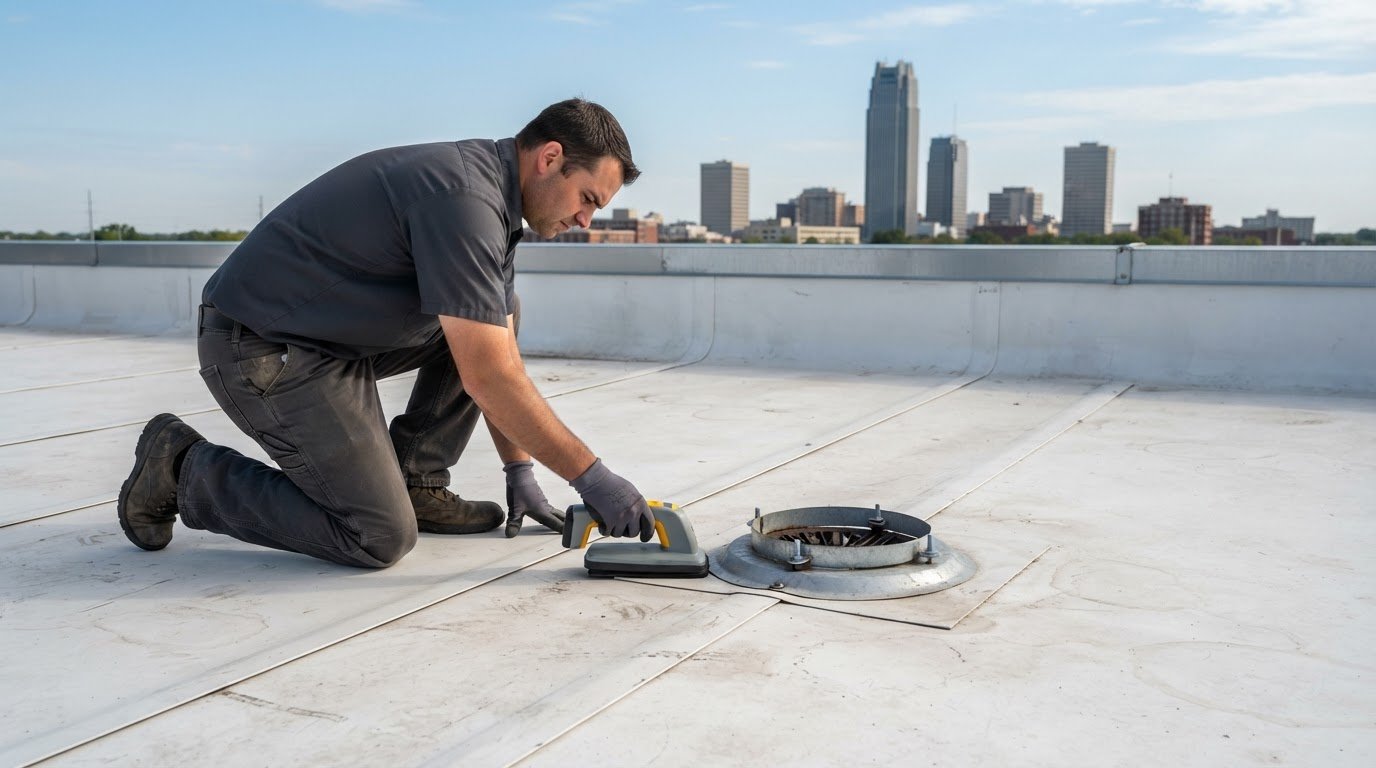

Moisture on a commercial roof doesn’t automatically mean the whole roof needs replacement. A commercial roof moisture survey in Tulsa helps locate wet insulation beneath the membrane, informing whether repairs, restoration, or replacement may be appropriate. Survey methods can include infrared imaging, electronic moisture scanners, or core samples.
It’s understandable to worry that water beneath the surface means extensive damage. But the location and spread of moisture matter: isolated wet areas may be repairable while other sections remain candidates for restoration; widespread saturated insulation may point toward replacement. Test results should be considered alongside the roof’s visible condition and history.
This article explains what a survey evaluates, how roofing experience helps interpret results, and how findings can inform the next step. You’ll also learn what distinguishes repair, restoration, and replacement, so you can assess the options for a commercial roof.
Key Takeaways
- Look beyond visible leaks: penetrations, seams, flashing, curbs, and drains can help reveal how water is entering or affecting the roof.
- Read moisture test results alongside the roof’s materials, condition, and visible signs; experience helps distinguish likely moisture intrusion from other findings.
- Use the location and spread of wet insulation to weigh whether targeted repairs, restoration, or replacement is the more suitable path.
- Understand what infrared imaging, electronic scanners, and core samples each reveal before deciding what the survey findings mean for your roof.
What Is a Commercial Roof Moisture Survey and Why Does It Matter?
A commercial roof moisture survey in Tulsa helps locate moisture and identify conditions that may allow water to enter. It connects roof details, drainage performance, and visible signs to the condition of a commercial roofing system.
The assessment follows likely water-entry points across the roof. Inspectors examine membrane seams for openings, flashing around penetrations and curbs for gaps, and drains for blockages or damage. For example, cracked flashing at a vent curb may let water reach insulation beneath the membrane. Interior ceiling stains and visible bubbling can point to areas that need closer attention, but each clue needs context.
Drainage and Ponding Assessment
Drainage review traces how water should move from roof slopes into drains or scuppers, then checks for clogs, damaged outlets, and low areas. Standing water remaining 48 hours after rainfall is a warning sign that the roof needs attention. Ponding can speed deterioration, increase leak risk, and affect structural integrity, so the survey connects water locations with membrane and drainage conditions.
Oklahoma building codes and insurance policies don’t establish one universal moisture-survey requirement in the facts available here. A survey documents roof conditions; applicable requirements depend on the project and the property’s policy.
Survey Preparation and Timing
Before the visit, arrange roof access and note known leaks, interior stains, recent repairs, and areas around rooftop equipment. This information can help focus the assessment on particular penetrations, seams, and drainage paths. There’s no single best season for every Tulsa roof; schedule an assessment when recurring leaks, ponding, or storm damage make one useful. Infrared surveys are commonly conducted after sunset, when temperature differences between wet and dry insulation can be detected.
The role of roofing experience in interpreting moisture tests
A moisture reading is evidence, not a repair plan. A roofing professional interprets it alongside the roof assembly, visible condition, and signs of failure. For example, a reading beneath a TPO membrane needs context, just as a blister on a built-up roof needs careful assessment. Experience helps connect test results to the materials and conditions on the roof.
Commercial roofing systems have different layers and details. Core samples can verify roofing materials, insulation condition, and moisture levels within the assembly. They can also show insulation thickness and whether multiple roofing systems were installed over time. These details matter: test results are more meaningful when considered alongside the roof’s construction, repair history, and visible damage.
Surface clues can help guide the assessment. Blistering or bubbling may indicate moisture trapped beneath roofing material, but appearance alone doesn’t show how far moisture extends. A roofing contractor considers whether test results align with the affected area, membrane condition, and likely water-entry points. This helps distinguish a localized concern from broader roofing problems.
- Material: Identify the roof assembly and its layers.
- Test result: Map readings to specific roof areas.
- Condition: Compare readings with visible signs and known repair history.
Useful qualifications show in clear, evidence-based explanations. Property owners should receive findings that distinguish measured moisture from visible damage and explain how each affects the roof’s condition. A commercial roof inspection by Rescue Roofing Tulsa can bring those observations together, helping connect the test results with practical next steps rather than treating one reading as the whole diagnosis.
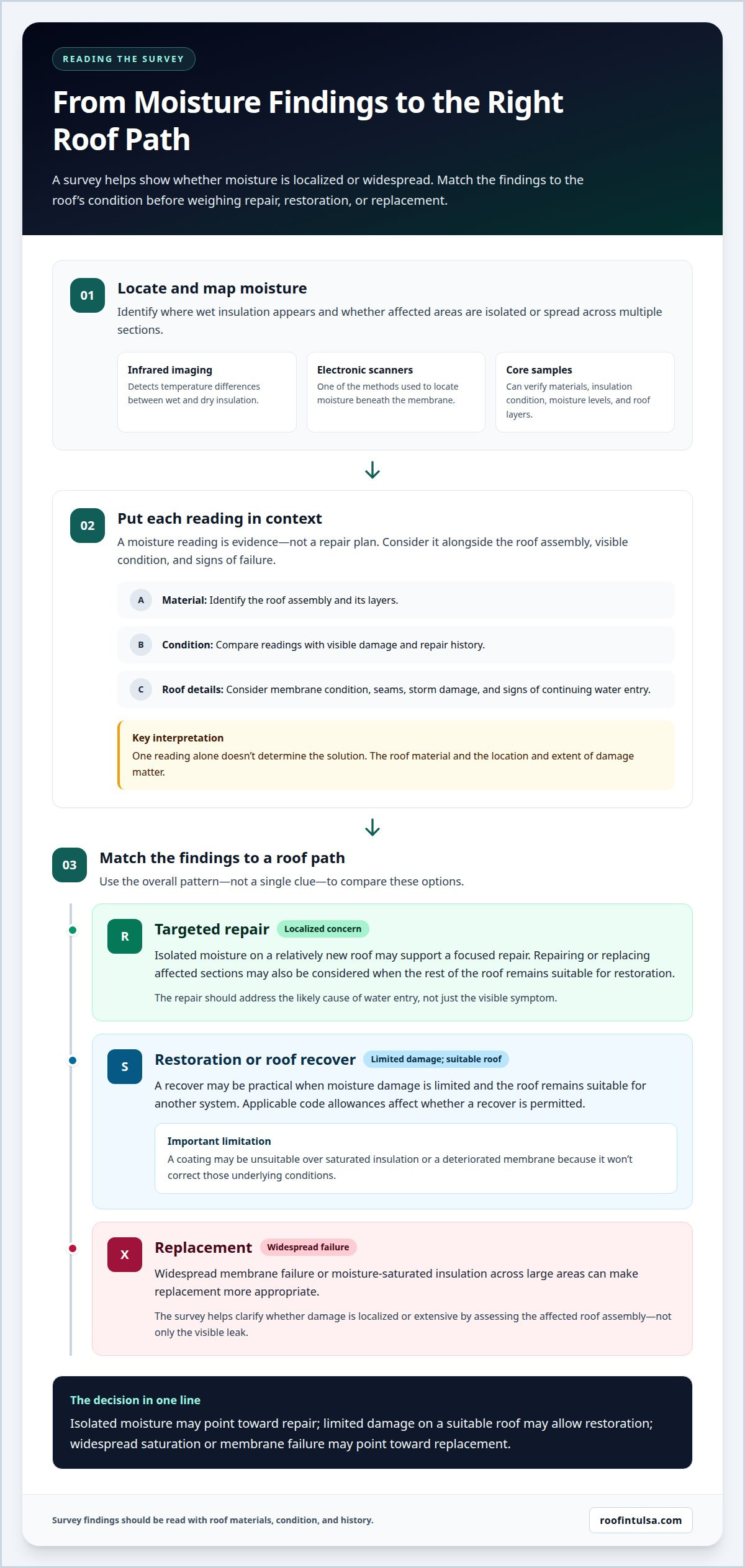
Using survey results to decide between repair, restoration, and replacement
Survey results help match the work to the roof’s condition. Isolated moisture on a relatively new commercial roof may support targeted repair, while recurring leaks or widespread membrane deterioration call for a broader evaluation. Findings should connect moisture locations with membrane condition, roof age, and the extent of affected insulation. One reading alone doesn’t determine the solution.
For PVC, TPO, and modified bitumen roofs, recommendations should account for the material and location of the damage. A puncture in one area raises a different repair question from moisture found across multiple sections. Storm damage, seam condition, and signs of continuing water entry also inform the repair plan. Addressing only a visible symptom can leave the underlying cause unresolved.
Restoration, including a roof recover, may be practical when moisture damage is limited and the roof remains suitable for another system. Applicable code allowances also affect whether a recover is permitted. If moisture is confined to isolated sections, those areas may be repaired or replaced while the rest remains eligible for restoration. Saturated insulation or a deteriorated membrane can make a coating unsuitable because the surface treatment won’t correct those underlying conditions.
Widespread membrane failure or moisture-saturated insulation across large areas can make replacement more appropriate. A survey helps show whether damage is localized or extensive, giving property owners a clearer basis for comparing repair, restoration, and replacement. For flat roofs, the assessment should account for the affected assembly, not just the visible leak.
Built-up roofing (BUR) blisters need a moisture check before re-bonding. A moisture meter can confirm that the area has dried before the repair proceeds. This matters because sealing in moisture can undermine the repair. A clear recommendation should explain which findings support the proposed work, what areas it addresses, and why it suits the roof’s condition.
What a commercial roof moisture survey evaluates
A moisture survey examines what lies beneath the roof surface, not just visible wear. It helps locate potentially wet insulation and show how moisture is distributed across the roofing system. That distinction matters: a small affected area and widespread wet insulation can lead to different decisions about repairs or replacement.
Infrared surveys use thermal imaging to identify temperature differences between wet and dry insulation. They’re commonly conducted after sunset, when those differences can be detected. The result is a map of areas that may need closer evaluation, not a standalone diagnosis. Weather and roof conditions can affect readings, so findings should be interpreted alongside the roof’s construction and visible condition.
Electronic moisture scanners measure differences in moisture levels beneath a membrane without damaging the roof. Surveyors can scan areas and identify readings that warrant further investigation. For example, a reading near a seam or rooftop penetration can be compared with surrounding areas to assess whether the signal appears localized or more extensive.
When non-destructive methods leave questions, core samples provide a closer look inside the assembly. A sample can reveal insulation thickness and whether multiple roofing systems were installed over time. It can also help verify material condition and moisture levels at that point. Because a core shows only the sampled location, its result needs to be considered alongside the broader survey pattern.
A complete evaluation combines these methods with roof details and reported concerns. Interior ceiling or wall stains, for example, can direct attention to a possible leak area. The survey can also relate suspected moisture to ponding, seams, or penetrations. Owners should look for findings that distinguish confirmed conditions from areas needing further investigation. This clarity helps determine whether targeted work is practical or a larger solution is needed.
To connect survey findings with the roof’s visible condition, arrange a commercial roof inspection.
Rescue Roofing Tulsa: Commercial Roof Replacement
Rescue Roofing Tulsa helps property owners turn roof findings into a practical next step. If survey results show localized damage, roof repair may address the affected area. If they indicate widespread deterioration or saturated insulation, commercial roof replacement may be more suitable.
A roof inspection can connect moisture findings with the roof’s visible condition and clarify which areas need attention. This can help when leaks recur, storm damage appears, or survey results raise questions about the roof’s overall condition. The right scope depends on the findings, not on one moisture reading alone.
For a straightforward discussion of your commercial roof, contact Rescue Roofing Tulsa.
Choose a clear next step for your roof
A commercial roof moisture survey in Tulsa can help frame the next decision, but its value lies in how the findings are used. Clarify which areas need attention, what work addresses the underlying condition, and whether the proposed scope matches the evidence. This gives property owners a practical basis for planning rather than reacting to a leak alone.
Rescue Roofing Tulsa provides commercial roof replacement and roof repair for commercial properties, as well as residential roof replacement. The appropriate service depends on the building and its documented condition. If you’re weighing survey results or planning work after roof damage, contact Rescue Roofing Tulsa to discuss the next step without rushing the decision.
Contact Rescue Roofing Tulsa to discuss your survey findings. A clear understanding of the roof’s condition can make the path forward feel more manageable.
Frequently Asked Questions
Can a Roof Still Be Restored If Moisture Is Found?
Yes, a roof may still be suitable for restoration when moisture is confined to limited areas and the remaining assembly is in suitable condition. For example, a localized section could be addressed while other areas remain candidates for restoration. The decision depends on moisture distribution, membrane condition, and whether the roof can support the proposed work. Widespread saturated insulation or extensive deterioration can make restoration unsuitable.
Why Is Moisture Detection So Important?
Moisture detection matters because water can damage insulation and roofing components without causing an obvious leak inside the building. Locating affected areas can help property owners distinguish a localized issue from a condition spread across the roof. That distinction supports better planning: a small affected area may call for focused work, while more extensive moisture can change the scope and type of solution considered.
What is a commercial roof moisture survey and how does it work?
A commercial roof moisture survey assesses whether moisture is present within a roof assembly and where it may be concentrated. The surveyor selects a suitable testing approach, examines the roof, and relates readings to its materials and condition. If results need confirmation, a core sample can provide a direct view of the assembly. The findings help inform decisions about repair or broader work.
Which roof moisture survey methods are used for commercial buildings?
Common methods include infrared imaging, electronic moisture scanning, and core sampling. Infrared equipment detects temperature patterns that may indicate differences between wet and dry insulation. Electronic scanners measure moisture-level differences beneath a membrane without damaging it. A core sample physically reveals the layers at one location. Each method provides different evidence, so surveyors may consider the results together.
Which Tulsa companies provide commercial roof moisture surveys and what are their credentials?
Rescue Roofing Tulsa provides commercial roofing services in Tulsa and is identified as a licensed and certified roofing contractor. Its listed commercial services include roof work for commercial properties. The available credential information doesn’t name particular certifications or license types, so no specific designation should be assumed. Property owners can use the survey findings to discuss whether roof repair or replacement fits the documented condition.
What information is included in a commercial roof moisture survey report?
A useful report presents survey findings in a way that connects them to the roof and its next steps. Look for the areas surveyed, the method used, readings that need attention, and any limitations or follow-up checks. The report should distinguish observed conditions from conclusions and explain how findings relate to possible repairs, restoration, or replacement, giving owners a clear basis for planning.