


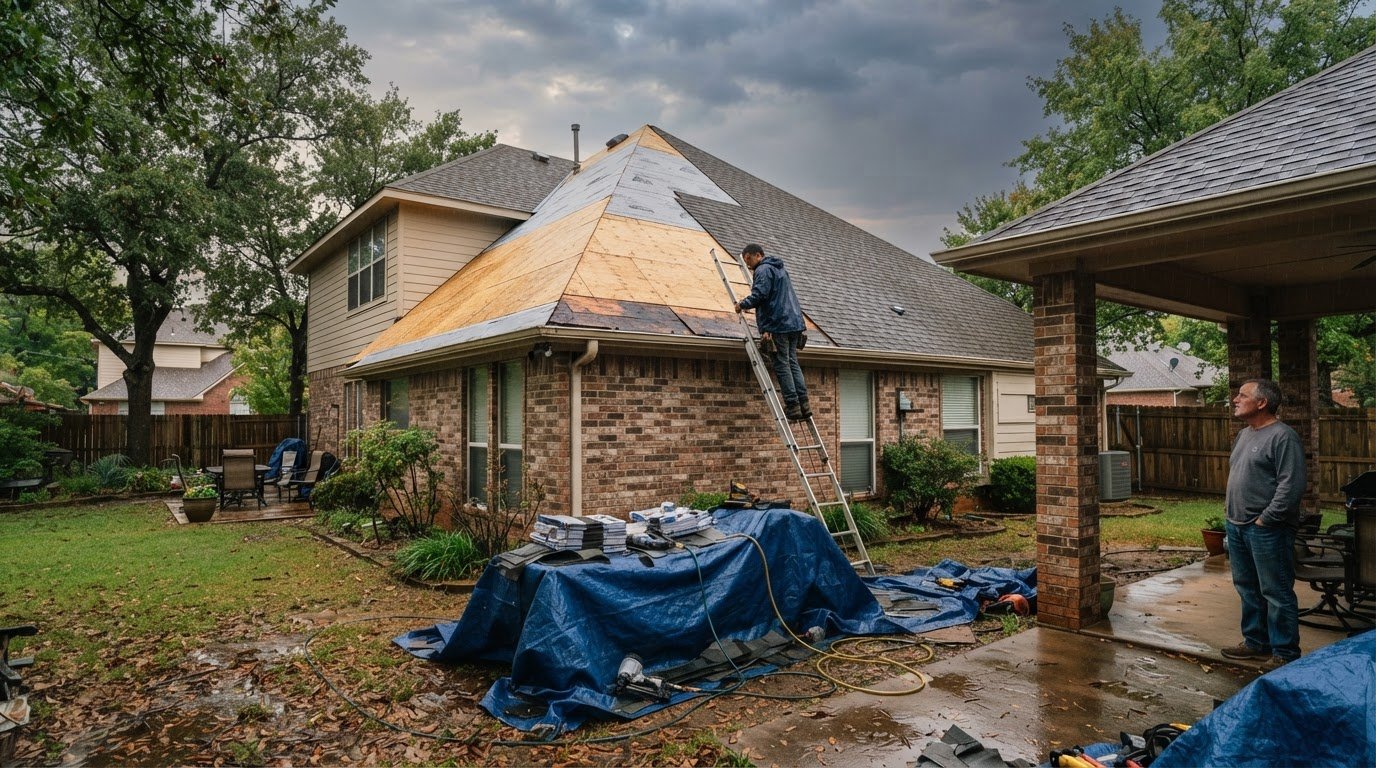

An asphalt shingle roof replacement on an average-sized home can often take one to two days, but weather or unexpected damage may extend the schedule. If you’re wondering what to do if your roofing job is taking too long, compare the progress with the agreed timeline, then ask what’s causing the delay and when the crew expects to return.
A stalled project can be stressful, especially if your home is exposed to the weather. A pause for rain, snow, or high winds may be necessary for safety. Ask for a clear explanation and a practical update rather than guessing whether the delay is reasonable.
This guide explains how to review the roofing timeline, ask about weather or hidden-damage delays, and keep a record of updates. You’ll also learn what to do if communication breaks down, how to protect your home during a pause, and when an inspection or repair may help address concerns about the work.
Key Takeaways
- Compare the work completed with the agreed schedule, keeping the repair’s scope and damage severity in mind.
- Ask for a clear explanation of delays, the next project milestone, and how unexpected damage could affect the timeline.
- When weather makes roof work unsafe, confirm how the home will be protected and when work is expected to resume.
- Keep written updates and photos so you can explain concerns clearly if the delay continues or the work appears incomplete.
How Long Does a Roof Repair Take?
Roofing contractor licensing and consumer-protection requirements vary by state. Use your state’s licensing agency and consumer-protection office to identify the rules that apply where you live.
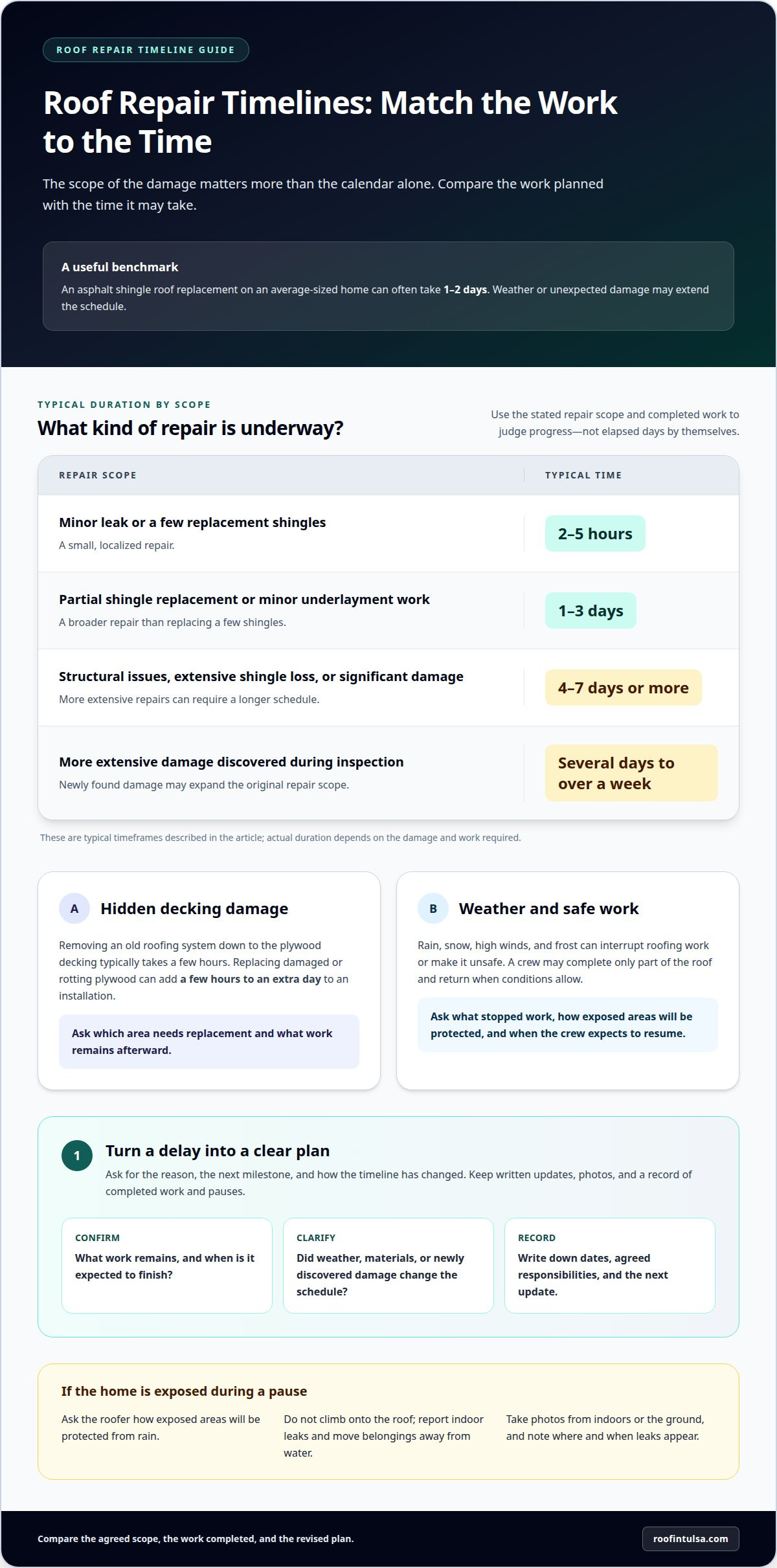
While work is delayed, ask the roofer to protect exposed areas from rain. Don’t climb onto the roof. Report indoor leaks and move belongings away from water.
- Match the estimated duration to the damage. A minor leak repair or replacement of a few shingles typically takes 2-5 hours. Partial shingle replacement or minor underlayment work typically takes 1-3 days. Repairs involving structural issues, extensive shingle loss, or significant damage can take 4-7 days or more. Compare the stated scope with the work completed, not just the calendar.
- Ask whether the inspection revealed a larger repair. A few missing shingles, for example, may expose damaged underlayment or weakened decking. More extensive repairs can take several days to over a week. Request a clear explanation of the newly discovered work and how it changes the remaining schedule. The revised timeline should reflect the actual damage, not just the original estimate.
- Ask whether hidden decking damage is affecting progress. Removing an old roofing system down to the plywood decking typically takes a few hours. Replacing damaged or rotting plywood can add a few hours to an extra day to an installation. Damaged wood can prevent shingles from fastening securely, so ask which area needs replacement and what work remains afterward.
- Document visible defects and any resulting damage. Poorly placed shingles, failed flashing, or gaps around vents can let water reach ceilings, insulation, and framing. Take photos from the ground or indoors, noting where and when leaks appear. Don’t inspect steep or damaged areas yourself. Share the evidence and ask how exposed sections will be protected while repairs are pending.
Requirements differ by state. Check with your state’s licensing agency and consumer-protection office to learn which rules apply where you live.
Questions to ask about timelines and contingencies
A short, specific conversation can turn uncertainty into a workable plan. Ask for dates, milestones, and what could change them.
- Ask what work remains and when it’s expected to be finished. Which tasks are complete, and which still need attention? Request a sequence, such as finishing the roof surface, completing the flashing, and cleaning up. An asphalt shingle replacement on an average-sized home can often take one to two days. A larger scope or changed conditions can shift that estimate, so ask what the current schedule assumes.
- Clarify whether the delay is before work starts or during the job. During busy periods such as late spring and summer, contractors may have full schedules that delay a project’s start. Ask whether the crew is waiting for an opening, materials, or another step. Then ask when you’ll receive the next update and who will provide it.
- Ask what could extend the timeline. Could weather, newly discovered damage, or work that depends on another task change the finish date? Ask for a specific example related to your roof. If hidden damage is found, request an explanation of the added work and how it affects the sequence. This helps distinguish a genuine scope change from an unexplained pause.
- Agree on a contingency plan and record it. What happens if rain interrupts work, or the crew cannot return as planned? Ask how exposed areas will be protected, when the next update will arrive, and what milestone comes next. Send a brief written recap of agreed dates and responsibilities. If you need help discussing a stalled project, talk through your roofing timeline.
Weather-related delays and safety
Rain, snow, high winds, and frost can interrupt roofing work. Ask what conditions paused the job, how the exposed roof will be protected, and when the crew expects to resume. Don’t climb onto the roof to inspect it.
- Ask what weather condition stopped work. Rain, snow, and high winds can make roof repairs unsafe. Ask for a plain explanation of the conditions and which tasks remain. For example, crews may stop before installing shingles if wind or rain makes the work dangerous. Knowing the specific reason helps you understand whether the pause affects one task or the whole job.
- Find out how the roof will be left overnight. If rain is expected later on installation day, crews may complete only part of the roof and return the next day. Ask which sections are complete and how open areas will be protected from water. Confirm who will update you if the forecast changes before the crew returns.
- Ask how frost affects the morning schedule. Frost can make a roof dangerous to work on. Crews may take extra safety precautions or start later, after the frost has gone. Ask whether the start time has changed and what work can safely continue meanwhile. A delayed start is different from a full-day pause, so clarify the plan for the remaining tasks.
- Keep people and belongings clear of the work area. During a weather pause, stay away from ladders, roof edges, and equipment. If water appears indoors, move belongings away and note the room and time. Send the roofer a photo from a safe place, then ask how they’ll prevent further exposure. Don’t try to cover or inspect the roof yourself during unsafe weather.
What to do when a home-improvement job is late
Use your contract, dated records, and written updates to address a delay methodically. Before changing payments or ending the agreement, review its terms and document the project’s current status.
-
Document Roofing Delays
Keep a dated project log of scheduled workdays, crew arrivals, completed tasks, and reasons given for pauses. Save the contract, change orders, invoices, photos, and messages together so the timeline is easy to follow. Note specific examples, such as an unfinished roof section or a new indoor leak. Take photos from a safe location, and avoid altering the roof or discarding evidence.
-
Communicate Concerns in Writing
Send a concise message describing the delay, the last completed task, and any urgent concern, such as water entering a room. Ask for a written update with the next work date, remaining tasks, and revised completion estimate. Keep a copy of your message and the reply. If you discuss the issue by phone, follow up with a brief written recap of what you agreed.
-
Weigh Withholding Payment and Its Risks
Don’t automatically withhold a scheduled payment. Compare the contract’s payment milestones with the work completed, and ask for an itemized explanation if an invoice doesn’t match your understanding. Withholding payment can escalate a disagreement or lead to a nonpayment claim, while paying for unfinished milestones may weaken your negotiating position. Document your concern and review the agreement before deciding how to proceed.
If delays or incomplete work remain unresolved, keep your records organized and seek advice about your options under the agreement and applicable local requirements. For help understanding the roof’s condition, discuss your roofing concerns with a local roofing professional.
Rescue Roofing Tulsa
Rescue Roofing Tulsa can help if a delayed roofing project leaves you unsure about your roof’s condition or next steps. A Roof Inspection can assess visible concerns, while Roof Repair can address damage that needs attention. If the roof’s condition calls for broader work, residential or commercial roof replacement may be the appropriate next step.
Share the project details, your concerns, and any photos taken safely from the ground or indoors. This gives the roofing team useful context for discussing what may need attention. If active leaks or unfinished work are affecting your home or building, explain where the problem appears and how the project has progressed.
For a clear assessment of your roofing concerns, contact Rescue Roofing Tulsa.
Take the Next Step Toward a Clear Plan
If you’re weighing what to do if a roofing job is taking too long, focus on the next decision, not just the missed days. A clear assessment can help distinguish unfinished work from a new roof concern and identify what needs attention. Keep your project notes and photos ready so you can explain the situation without relying on memory.
Rescue Roofing Tulsa handles Roof Repair, residential roof replacement, and commercial roof replacement. If the delay has left you concerned about leaks, exposed areas, or whether the roof needs broader work, share those details and ask about the appropriate next step. You don’t have to resolve every question before starting the conversation.
Talk with Rescue Roofing Tulsa about your roofing concerns. A steady, informed next step can help you move forward with greater confidence.
Frequently Asked Questions
How Long Does It Take to Replace a Roof?
An asphalt shingle roof replacement on an average-sized home can often take one to two days. The schedule may change if the project scope expands or roof conditions require additional work. To decide what to do if a roofing job is taking too long, compare the expected tasks with the current progress and ask what remains before completion.
How long should a typical roof replacement take?
An average-sized home with asphalt shingles can often be reroofed in one to two days. Use that as a general planning reference, not a deadline for every roof. Roof size, design, and the work included affect the schedule. Ask the contractor to explain the stages involved and how you’ll be told if the plan changes.
What weather or material delays commonly slow roofing jobs?
Rain, snow, high winds, and frost can interrupt work because roof surfaces may become unsafe. Material delivery issues can also affect the order of tasks. Ask which specific condition or material is holding up progress, what work can continue, and whether the roof is protected during the pause. A clear explanation helps distinguish a brief interruption from a change to the project schedule.
How can I ask a roofing contractor for a revised completion date?
Write a brief, direct message asking what tasks remain, why the work is delayed, and when it’s now expected to be complete. For example, ask when the crew expects to return and whether unfinished work depends on materials or another step. Request a written response, then keep it with your contract and project updates so both sides have a shared record.
What should a roofing contract say about schedule, delays, and completion?
A roofing contract should identify the work scope, materials, expected schedule, and process for communicating changes. It should also explain what completion includes, such as cleanup or final review, and how payments relate to the work. Read these terms before signing and keep copies of later written changes. Specific details make it easier to discuss a changed timeline.
What are reasonable steps if a roofer stops work or misses deadlines?
If you’re deciding what to do if your roofing job is taking too long, review the agreement, record what remains unfinished, and request an updated plan in writing. Save replies, invoices, and photos of visible conditions. Avoid rushing a decision about payment or ending the agreement. The contract and work completed may affect your next steps.