


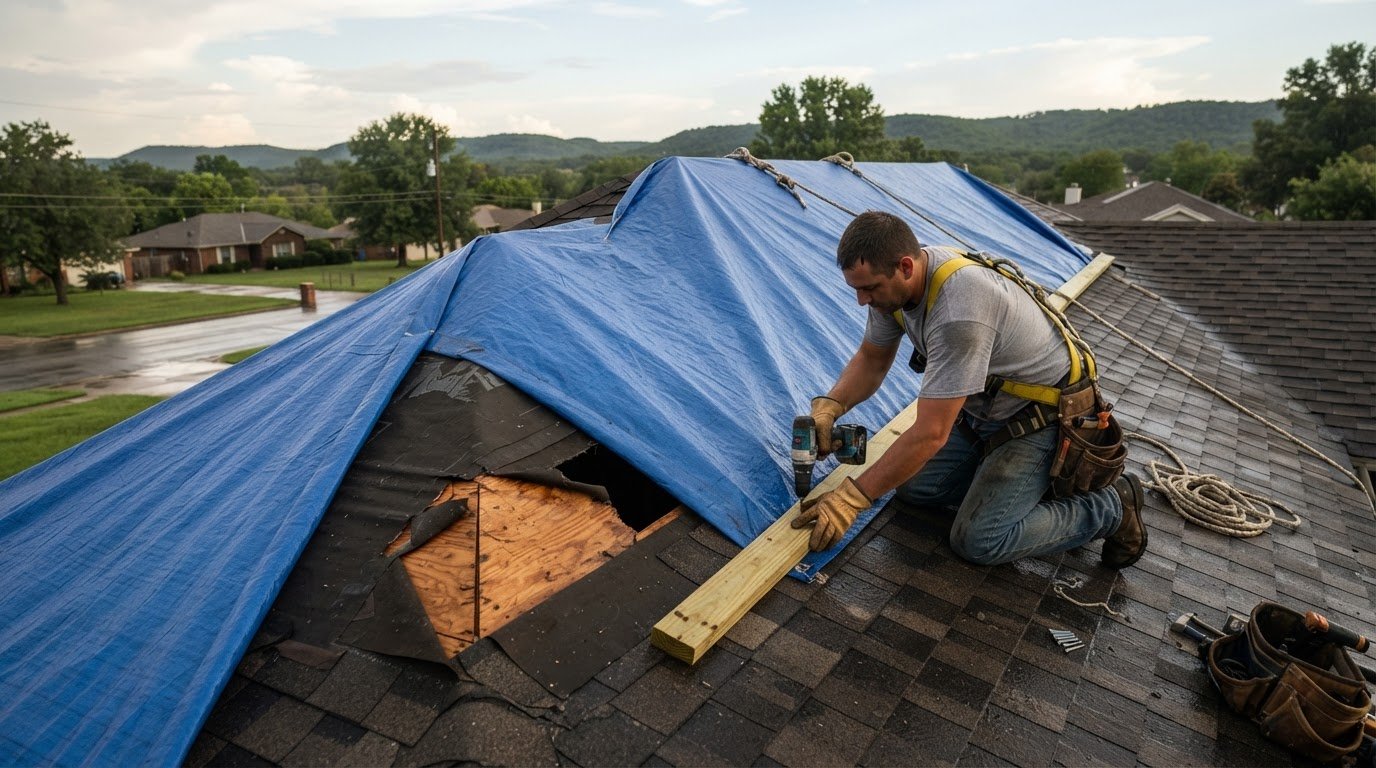

The cost of emergency roof tarping for properties in the Skiatook area depends on the size and location of the opening, roof access, and the temporary coverage needed. Rescue Roofing Tulsa uses these details to prepare an accurate quote for homeowners throughout the region. The final price depends on the specific job and is provided after a quote request.
When a storm leaves a roof exposed, it’s natural to worry about water getting inside while permanent repairs are arranged. Temporary protection can help limit further damage, but it doesn’t replace proper roof repairs.
This article explains what affects emergency roof-tarping costs, when temporary protection may be needed, and how a tarp can reduce exposure to the elements. You’ll also learn what to consider when arranging roof repairs, so you can understand the next steps and plan accordingly.
Key Takeaways
- Identify roof openings and exposed areas after storm damage to understand where temporary protection may help limit further water intrusion.
- Dry-in costs depend on the damage, roof access, and the amount of coverage needed, so the scope of the work shapes the quote.
- Use a roof tarp as temporary protection while planning permanent repairs, not as a substitute for fixing the damaged roof.
- Consider roof repair or inspection when you need to assess storm damage and determine the next step toward a lasting solution.
Storm damage and roof openings requiring emergency tarping
Skiatook averages approximately 4.2 significant hail events per year, and hail or fallen branches can leave roof openings exposed. Before a tarping contractor arrives, stay off the roof, photograph visible damage from a safe location, move belongings away from leaks, and note where water is entering.
Risks of Improper Tarp Installation
A poorly secured tarp can lift in the wind, rub against shingles, or let water collect beneath it. Carelessly placed fasteners can puncture roofing materials and create new leak paths. The tarp should cover the damaged area securely without causing avoidable damage to surrounding shingles. It’s temporary protection, not a repair, so plan for permanent work rather than leaving it in place indefinitely.
Signs That a Roof May Need Tarping
Look for missing or lifted shingles, a visible hole or puncture, or water entering through the ceiling after severe weather. A sagging roof area or a fallen tree on the structure calls for prompt assessment. If a tree has damaged the roof, a structural engineer should assess the property. Regular roof inspections can help identify loose shingles and worn areas before another storm creates an opening.
Preparing Before the Contractor Arrives
From the ground, take clear photos of the roof and any interior water damage, and note when the damage occurred. File an insurance claim promptly after storm damage, keeping the photos and notes together. If water is dripping indoors, move furniture and valuables out of its path. Don’t climb onto a damaged roof to place a tarp yourself.
Tell the contractor where you see leaks and whether a tree or debris struck the roof. A tarp should remain temporary: it generally shouldn’t stay on a roof beyond a few days and, at most, a couple of weeks. Left in place beyond 90 days, it can cause further roof damage, so arrange the next repair step promptly.
How much does an emergency roof dry-in cost?
There isn’t one fixed dry-in price for a storm-damaged roof in Skiatook. The quote depends on the opening’s size and location, roof access, damage extent, and temporary coverage required. Emergency tarping can often be completed within a few hours or less, depending on the damage. A contractor provides the price after reviewing the work involved. A Skiatook emergency roof tarping contractor can explain which job details shape the estimate.
For homes in Skiatook and northeastern Oklahoma, a dry-in can cover exposed roofing where hail damage, wind, or fallen debris has opened the roof. Board-up work is different: it protects an opening in a wall or window, rather than covering roof damage. A property with both types of openings may need separate temporary protection for each.
How can you compare nearby contractors? Look for reviews that describe storm-damage work, communication, and completed repairs, not only general praise. Compare stated response times carefully: a callback time and an arrival time are different. Share the roof’s location, visible damage, and access limits so the estimate reflects the job. A Skiatook emergency roof tarping contractor can use those details to describe the work scope.
Are local emergency roofing contractors licensed and insured in Oklahoma? Those details depend on the individual business, so a Skiatook address alone doesn’t establish either status. Reviews also don’t prove licensing or insurance. Treat credentials as separate facts from customer feedback.
Do contractors handle fallen trees and steep roofs? Roof damage from a tree, hail, or storms can involve different access and safety needs. Steep or difficult roof areas can affect the work scope and temporary protection plan. When a tree has damaged the structure, a structural engineer should assess the property alongside a roofing contractor.
Emergency service hours vary by business. An “emergency” label alone doesn’t state whether help is available overnight or on weekends. Workmanship warranties relate to permanent roofing work; temporary tarping isn’t the same as a roof repair warranty. Once the roof is protected, roof repair can address the underlying damage.
Emergency roof tarping costs
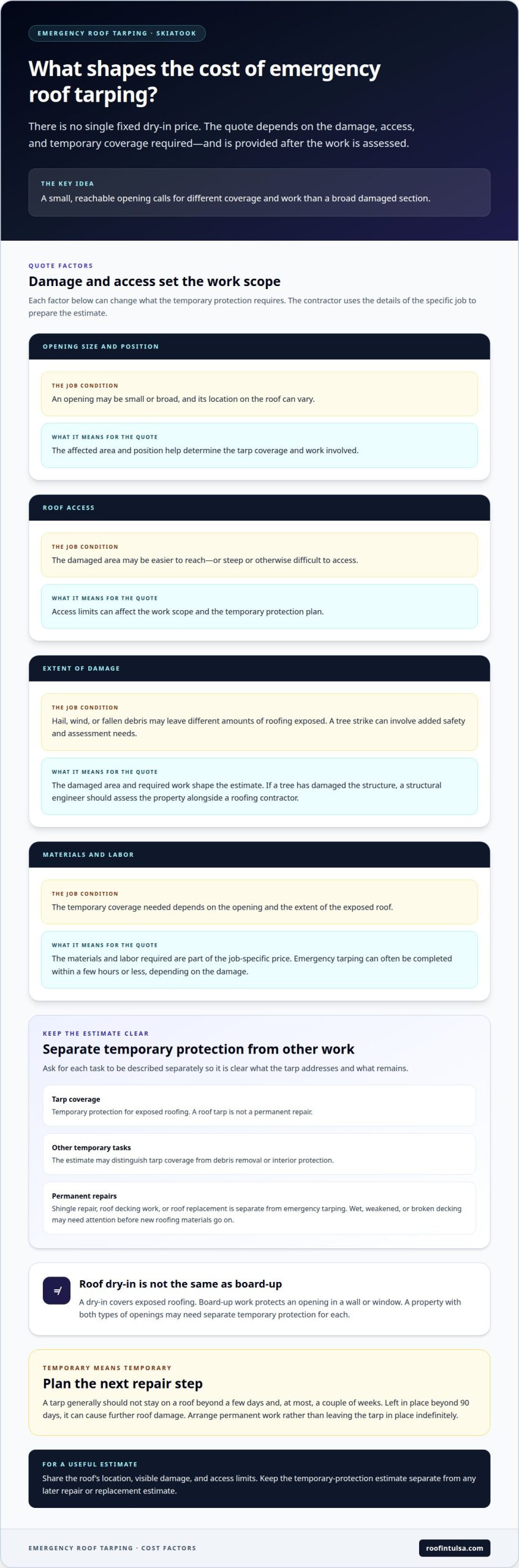
Emergency roof tarping is temporary protection, not the same scope as repairing shingles or replacing a roof. The price depends on the job and is provided after a quote request. Key factors include the opening’s size and position, roof access, the extent of damage, and the materials and labor required. A small, reachable opening calls for different coverage and work than a broad damaged section.
For a useful estimate, the affected area and the dry-in scope need to be assessed. The estimate may distinguish tarp coverage from debris removal, interior protection, or permanent repairs. Ask for each task to be described separately so you understand what the temporary work addresses and what remains to be done.
Roof decking replacement is a separate repair consideration. If the decking beneath damaged shingles is wet, weakened, or broken, it may need attention before new roofing materials go on. The amount of affected decking and the roof layers that must be removed shape the work. A surface tarp alone doesn’t establish whether the underlying deck is sound.
Roof replacement is a larger project than emergency tarping. A tarp can protect an exposed residential roof while the damage is assessed and permanent work is planned. Replacement scope depends on the roof’s condition and how much material needs attention. Keep the temporary-protection estimate separate from any later replacement estimate to distinguish the projects.
Do Skiatook roof tarping contractors provide free inspections or estimates? A free inspection or estimate isn’t automatic with emergency tarping. Treat the assessment, written work scope, and tarp installation as distinct items in the estimate.
For an insurance claim, keep storm photos, the estimate, and records of completed temporary work together. Note which areas the tarp covers and which repairs remain. This gives the adjuster a clearer record of mitigation and helps distinguish emergency protection from later repair or replacement work.
Benefits of temporary roof tarps
After storm damage, a roof tarp covers an opening while permanent work is arranged. It helps limit direct exposure to rain and windblown debris entering through damaged roofing. For homeowners, this barrier can help protect rooms and belongings below the affected area. On a commercial building, covering an exposed section can also help keep weather out of workspaces and away from stored materials.
Timing matters after a major storm. Roofing contractors may take 2-8 weeks or longer to replace a damaged roof because of project backlogs and logistical steps. A professionally installed tarp provides temporary coverage during that wait. It doesn’t repair broken shingles, restore damaged decking, or make the roof permanent. The next step remains assessing the damage and planning lasting work.
Temporary coverage also helps define the damaged area. Photos taken before and after installation can show the opening, tarp placement, and any interior effects. Keep those records with storm-related documents for insurance claims. The tarp itself doesn’t establish the cause or extent of damage, but organized images help track what was exposed and covered.
A tarp can reduce the rain and loose debris reaching an opening, but it can’t guarantee that no water will enter. Wind, roof shape, and the damaged area affect how well coverage performs. Treat the tarp as a bridge to permanent repairs, and keep follow-up work in view rather than considering temporary protection a completed project.
Once the roof is protected, arrange an assessment of the exposed area and the surrounding materials. That helps clarify whether targeted roof repair or broader work is needed. For help planning the permanent repair after temporary coverage, take the next step toward roof repair.
Rescue Roofing Tulsa
Rescue Roofing Tulsa can help you move from temporary roof protection toward a clear plan for the damaged roof. Once the immediate opening is covered, a roof inspection can assess affected shingles and underlying areas. Roof repair addresses damage that doesn’t require full replacement. If the inspection points to broader work, residential or commercial roof replacement may be the next step.
After storm damage, keep your photos and notes together and describe where the roof is exposed or leaking. This information helps frame the assessment and clarify what permanent work is needed after tarping. Temporary coverage reduces exposure, but it doesn’t restore the roof’s full condition or replace lasting repairs.
Contact Rescue Roofing Tulsa to discuss the roof damage and the next step for your property.
Plan the Next Step for Your Roof
Temporary protection is one stage in restoring a storm-damaged property. The next step is deciding what the roof needs once the affected areas can be assessed. For Skiatook property owners, Rescue Roofing Tulsa can help clarify the immediate roofing concern and plan the permanent work needed to address longer-term needs.
Rescue Roofing Tulsa offers roof repair, residential roof replacement, and commercial roof replacement. The right solution depends on the damage and the roof’s condition, not simply on the presence of a tarp. Clear communication about what needs attention can help you move from temporary coverage to a lasting solution.
If you’re ready to discuss the roof’s next step, contact Rescue Roofing Tulsa. A straightforward conversation can help you decide how to proceed and bring a little more clarity to a stressful situation.
Frequently Asked Questions
How Long Can You Leave a Tarp on a Roof?
A roof tarp is short-term protection, generally suited to a few days and, at most, a couple of weeks. Leaving one in place beyond 90 days can cause further roof damage. Arrange permanent roof work promptly, and keep an eye out for changes such as loose tarp edges or water appearing indoors. Don’t climb onto the roof to inspect the cover yourself.
Do you tarp roofs?
Rescue Roofing Tulsa provides emergency roof repair for urgent problems. Tarping offers temporary coverage, while roof repair addresses the damaged roofing itself. If a storm has opened your roof, describe where the damage is visible and whether water is entering the home. This helps clarify the repair concern and the next step for protecting the property.
Which contractors provide emergency roof tarping in Skiatook, Oklahoma?
Rescue Roofing Tulsa provides roof repair and roof inspections for storm-damaged properties in Tulsa and surrounding areas. An inspection can help assess visible damage and determine what permanent work the roof needs. If a tree has struck the structure, a structural engineer should also assess the property. Keep photos of the damage for your records and insurance claim.
Which Skiatook-area roof tarping contractors offer 24/7 emergency service?
Rescue Roofing Tulsa offers 24/7 emergency repair for urgent roofing problems. That emergency repair service is distinct from temporary tarping, which covers an exposed area while longer-term work is planned. For a leak or other urgent roof problem, note the affected rooms and visible damage from a safe place. This information helps explain the situation clearly.
What is the typical emergency roof tarping cost in Skiatook, OK?
The cost depends on the job and is provided after a quote request. Factors include the opening’s size and location, roof access, the extent of damage, and the temporary coverage needed. A small opening and a broad damaged section require different scopes of work. Keep the tarp estimate separate from later repair or replacement work.
How quickly can a contractor tarp a damaged roof in Skiatook?
Emergency roof tarping can be completed within a few hours or less, depending on the damage. That describes the installation itself, not the time between requesting help and a crew’s arrival. The opening’s size, roof access, and amount of coverage needed affect the work. Share those details when describing the damage.