



A roofer asking for a deposit isn’t automatically a warning sign. To find a roofer that doesn’t require a down payment, look for clear written payment terms and ask whether financing with no upfront payment is available. Don’t commit until you understand when payments are due and what each one covers.
It’s reasonable to want a clear answer before committing to a major roof project. A deposit may help cover materials or other project costs, but pressure to pay upfront, especially in cash or without a contract, deserves caution. This guide explains why roofers request down payments, how to recognize risky payment demands, and how contractor financing compares with personal loans, home equity options, and credit cards. You’ll have a clearer way to weigh payment terms and choose an approach that fits your situation.
Key Takeaways
- Compare contractor financing, personal loans, home equity options, and credit cards by interest, fees, approval timing, and whether your home is used as collateral.
- Promotional financing may ease early payments, but a dealer fee on a zero-financing deal could increase the total bill by up to 10%.
- Many roofers request an initial payment of 10% to 30% of the job cost; requests for 50% or more upfront deserve extra caution.
- Deposits may cover materials, especially when a project uses specialty products. Understanding the reason for the payment can help you assess the terms.
1. Comparing contractor financing with loans and credit cards
Contractor-provided financing can keep payment arrangements connected to the roofing project, but compare the full repayment terms before choosing it. Ask how the interest rate, fees, payment schedule, and any promotional period affect the total. Also ask whether the financing agreement could involve a mechanics lien, which may give a creditor a claim against your property if you don’t pay.
A personal loan gives you a separate borrowing option. A credit score of at least 640 is likely needed for a roof loan, though some personal loan providers may accept scores as low as 500. Home equity loans use your home as collateral and can take 4-6 weeks to approve. A credit card may offer an introductory 0% APR period lasting 6 to 18 months, but some cards charge an APR of 30% or more afterward. Roofing contractors may also charge a card transaction fee of 1.5% to 3.5%.
Compare the written loan or financing terms with the contractor’s payment schedule. For example, a short promotional period may not suit a household that needs longer to repay the balance. Approval, interest, fees, and whether your home secures the borrowing all affect which option fits.
To choose a reputable local roofing contractor, review recent local references and customer feedback, then compare written estimates. What credentials and reviews should you check before hiring a roofer? Verify any required license through the relevant state licensing authority, since licensing and insurance requirements vary by state. Review proof of insurance and ask for at least three recent local references; look for feedback describing communication, workmanship, and how concerns were handled.
Use the same careful process when assessing financing and roofing work. A clear contract, transparent payment terms, and verifiable credentials give you a firmer basis for making your decision.
2. Making a final decision: What is the best option to finance a roof?
The best financing choice depends on repayment time, approval, and whether you can manage the scheduled payments. Roof financing terms generally range from 3 to 12 years. A longer term can spread payments, while a shorter term means paying the balance sooner. Compare the full repayment schedule, not just the monthly amount.
Contractor financing may include promotional terms. Some offers provide 0% interest for 12 months or less, while lenders may offer 12 or 18 months of low payments without interest charges, depending on credit. Read what happens when the promotional period ends. A dealer fee on a zero-financing deal could increase the total bill by up to 10%, so review the contract’s total and payment conditions.
“100% financing” means financing the full project amount, not automatic approval or no repayment obligation. The lender’s decision and terms determine whether it covers the work. FHA Title 1 loans of $7,500 or less don’t require built-up home equity. By contrast, FHA 203(k) financing includes a 3.5 percent down payment, so it doesn’t meet a strict no-down-payment goal.
Can homeowners insurance pay a roofer directly without a down payment? An insurer can pay a roofer directly under an agreed claim payment arrangement, but that doesn’t automatically remove a deposit or deductible. The insurance settlement and the contractor’s payment schedule are separate. Review both before signing, and don’t agree to a roofer paying your deductible; offering to cover it is generally considered insurance fraud and is illegal in many states.
For storm damage, insurance claim assistance can help homeowners understand the claim process. Keep the approved work, materials such as shingles, deductible, and payment dates clear in the paperwork. A licensed roofing contractor’s financing offer is only useful if its terms fit your budget and timing.
3. Large upfront deposits and cash payment demands
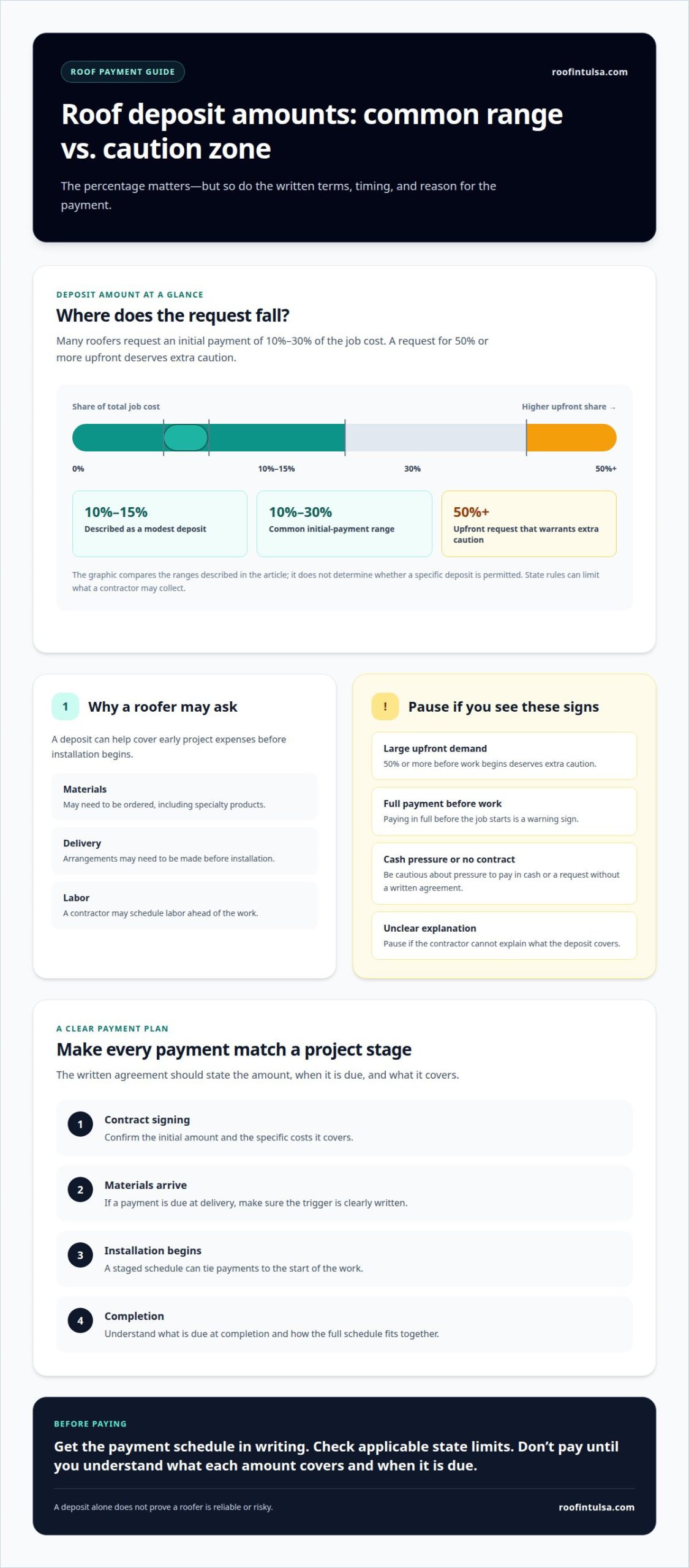
Roofers commonly request a down payment when you sign a contract. Many contractors charge an initial payment of 10 to 30 percent of the job cost, while a modest deposit is described as about 10-15 percent. A down payment is common, but many states limit the amount a contractor may collect. The state rules that apply determine whether a requested amount is permitted.
What is a reasonable roofing deposit and payment schedule? The amount should be clear in the written agreement, along with what each payment covers and when it is due. Some contractors request a smaller payment at signing, another when materials arrive, and a later payment when installation begins. For a repair or replacement, the schedule should match the project stages.
Be cautious if a contractor asks for 50% or more upfront, demands full payment before work begins, or pressures you to pay in cash. A request for money without a contract is another red flag. Paying a large amount before materials arrive or work starts can leave you with less leverage if the project stalls.
A reputable roofing contractor explains the payment terms before requesting money and includes the schedule in the written agreement. If the contractor won’t explain what a deposit covers, pause before paying. A clear contract shows what happens at signing, delivery, installation, and completion.
Are no-down-payment roofing offers legitimate or a scam? The offer alone doesn’t determine whether it’s trustworthy. Review the written terms, financing details, company history, and any pressure to sign or pay quickly. A credible offer should explain how the contractor gets paid and what you owe, without relying on vague promises. Compare those details with the roofing agreement before committing.
4. Why roofers request down payments
A down payment can help a roofing contractor cover early project expenses before installation begins. Materials may need to be ordered, delivery arranged, and labor scheduled. For a roof replacement, the amount and timing can depend on the work plan and materials involved. A deposit is a business arrangement, not proof by itself that a roofer is reliable or risky.
Specialty products offer one example. Some roofing contractors request a payment for materials when specialty products are used. Those materials may need to match a specific design or project requirement, so the contractor should explain what the payment covers and how it relates to ordering. A written agreement should distinguish material costs from later payments for labor or completed work.
Storm damage can complicate planning. A homeowner may be waiting for an insurance decision while the contractor needs to plan a repair or replacement. The estimate, approved scope, deductible, and payment schedule should be understood as separate parts of the project. Insurance coverage doesn’t automatically set the contractor’s payment terms, so the contract should state when each amount is due.
Use the reason for a requested deposit to assess whether it makes sense. Ask what it pays for, what project milestone comes next, and how the amount is handled if the work changes. If a contractor says a deposit covers specialty materials, the agreement should identify that purpose and connect it to the project schedule. Vague answers make it difficult to see how the payment supports the work.
The practical takeaway: a roofer may request money to fund project-specific materials and prepare the job, but the payment should have a clear purpose. If you need to replace your roof, explore roof replacement options and review the written scope and payment schedule before agreeing.
Rescue Roofing Tulsa
Rescue Roofing Tulsa provides roof inspections, repairs, and replacements in Tulsa and surrounding areas. If you’re weighing a roof project and its payment terms, an inspection can help clarify whether the roof needs repair or replacement. Understanding the work involved gives you a practical basis for reviewing the written scope and payment schedule.
For residential or commercial roofing, the right next step depends on the roof’s condition and the work required. Rescue Roofing Tulsa handles residential and commercial roof replacement, along with roof repair and inspection. Share your roofing concerns and payment questions so the project scope can guide your next decision.
Contact Rescue Roofing Tulsa to discuss your roof and the work it may need.
Take the Next Step With a Clear Roofing Plan
Choosing how to pay for roofing work is also a chance to set expectations before the project begins. Put your priorities in writing: the work your roof needs, the payment arrangement you can manage, and the questions you want answered before signing. This keeps the conversation focused on a practical plan rather than pressure to decide quickly.
If you’re still considering how to find a roofer that doesn’t require a down payment, start by discussing the roof’s condition and the scope of work. Rescue Roofing Tulsa offers residential roof replacement, commercial roof replacement, and roof repair, so the recommended work can match the property’s needs. A conversation about the project gives you a place to raise payment questions and understand the next steps.
Contact Rescue Roofing Tulsa today to discuss your roofing needs. You can move forward with a clearer understanding of the work and a plan that feels manageable.
Frequently Asked Questions
How do I select the best way to pay for a new roof?
Choose a payment method that fits your budget, repayment timeline, and comfort with borrowing against your home. Compare the total amount you’ll repay, not just the monthly payment, and account for interest, fees, and promotional terms. Someone who prioritizes predictable payments may prefer fixed installments, while a homeowner with savings may want to limit borrowing. Keep emergency expenses in your budget, too.
Can I pay monthly for a new roof?
Yes. Monthly payments are possible through financing or a loan, depending on the lender’s terms and your approval. The payment amount reflects the borrowed balance, interest, and repayment period. Before choosing a plan, check whether payments begin immediately, whether the rate changes, and what happens after any introductory period. A monthly schedule can spread repayment, but compare its total cost with other ways to pay.
What is the best option to finance a roof?
The best option is the one whose repayment terms fit your finances without creating an unsustainable monthly obligation. Compare contractor-arranged financing with personal borrowing and home-equity options, including whether your property secures the debt. Consider how soon the funds are needed, the full repayment amount, and how long you expect to carry the balance. A low initial payment alone doesn’t show which option costs less overall.
How do I find reputable roofers that offer no-down-payment financing?
To learn how to find a roofer that doesn’t require a down payment, separate the roofing agreement from the lender’s financing terms. Review the written terms to understand repayment obligations and the work covered. Make sure the roofing scope and payment arrangement are both clear before you agree.
How do roofing companies finance a roof replacement with no upfront payment?
A roofing company can arrange financing through a lender, which pays for approved work while the homeowner repays the loan under its terms. Financing can cover the project amount without an initial payment if the plan allows it and the borrower qualifies. Compare the lender’s repayment schedule with the contractor’s project milestones, then keep both agreements for reference.
What should a roofing contract include before work begins?
A roofing contract should identify the property, describe the work and materials, and state the total project amount and payment schedule. It should also explain how changes to the scope are approved, who handles debris removal, and what warranty applies. Read the full agreement before signing, including any financing documents. Keep a copy of the signed contract and written amendments so you can review the agreed terms.