




A denial is a decision to review, not a reason to give up. If you’re deciding what to do if your insurance claim is denied, read the notice for the reason, appeal instructions, and deadline. Then gather records that address the insurer’s explanation. Appeal and resubmission deadlines depend on the insurer’s stated timeframe or applicable state law.
A denial can feel final, especially when you’re already dealing with damage and uncertainty. Start by understanding what the insurer decided and what evidence could help correct or challenge that decision. This guide explains how to review a denial notice, organize supporting records, respond if an appeal is denied, and recognize when further action may be appropriate. Procedures vary by insurer and state, so use the notice and your policy to guide your next step.
Key Takeaways
- Read the denial notice closely to identify the insurer’s reason, appeal instructions, and filing deadline.
- Use the explanation of benefits to spot possible errors and understand what evidence may address the denial.
- Organize claim documents and communication records so your appeal clearly explains what you want reconsidered.
- If a denied claim involves storm-damaged roofing, Rescue Roofing Tulsa’s Insurance Claim Assistance can help support the property-claim process.
What’s a claim denial letter?
- Read the denial letter before deciding how to respond. A health insurer’s notice must explain the specific reason for denial, appeal instructions, submission requirements, and key deadlines. Match the stated reason to the service or claim involved. For example, the notice may say the plan considers a treatment medically unnecessary or that the claim was filed late. Keep the notice with your claim records.
- Write down the appeal deadline and follow the process in your plan documents. Procedures can vary by insurer and state law, including where to send materials and which forms to use. Make sure a resubmission or appeal arrives within the timeframe set by the insurer or applicable state law. If the notice is unclear, contact the insurer and record the explanation and instructions you receive.
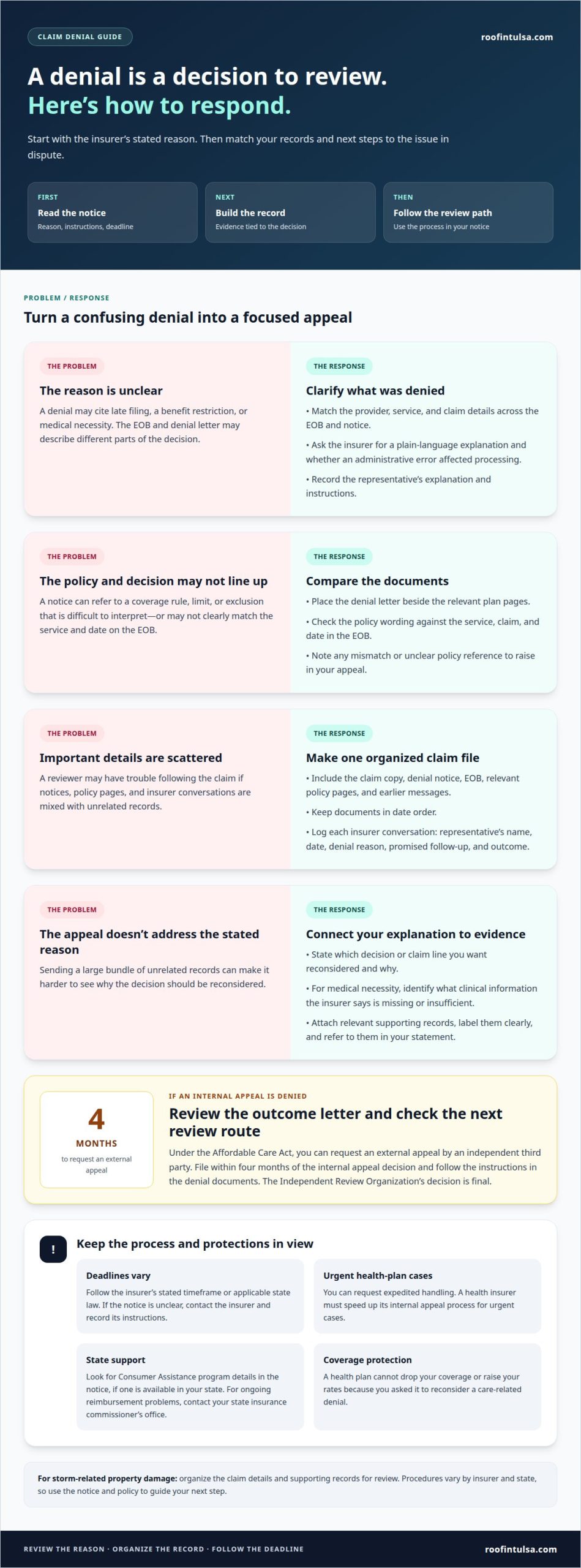
- Use your internal appeal rights if you disagree with a health plan decision. Under the Affordable Care Act, you can ask your health insurer to reconsider a denied claim or canceled coverage through an internal appeal. Submit the required form and supporting information by the deadline. If the case is urgent, request expedited handling. A health insurer must speed up its internal appeal process for urgent cases.
- If the internal appeal is denied, review the outcome letter. Under the Affordable Care Act, you can request an external appeal by an independent third party. File within four months of the internal appeal decision. The insurer does not have the final say once external review is requested, and the Independent Review Organization’s decision is final. Follow the external-review instructions included with the denial documents.
- Look for state assistance information in your health insurer’s notice. The insurer must provide details about a Consumer Assistance program if one is available in your state. For ongoing reimbursement problems, contact your state insurance commissioner’s office for assistance. A health plan also cannot drop your coverage or raise your rates because you asked it to reconsider a care-related denial.
Reviewing explanations of benefits and denial notices
A claim may be denied because it was filed late, a benefit restriction applies, or the insurer disputes medical necessity. Read the explanation of benefits (EOB) alongside the denial letter to identify the reason and the information that could address it.
-
Clarify the Denial Reason with the Insurer
Call the insurer using the number on the EOB or denial letter, and ask which claim or service the decision concerns. Request a plain-language explanation of the specific reason and any terms you don’t understand. If the notice seems inconsistent, ask whether an administrative error affected processing. Record the representative’s explanation and instructions. If you’re considering what to do if my insurance claim is denied, this clarification can help focus your next steps.
-
Compare the Denial Letter with the Policy
Place the denial letter beside your plan documents and find the benefit or coverage rule the insurer applied. Compare the service described in the letter with the policy wording, including any stated limits or exclusions. Check that the denial addresses the service and date shown on your EOB. Note any mismatch or unclear policy reference to raise in your appeal. This comparison can clarify what to do if my insurance claim is denied when the explanation seems inconsistent with the plan.
- Compare each EOB line with the denial notice. Confirm that the provider, service, and claim details match the care in question. An EOB and denial letter may explain different parts of the decision, so don’t assume a payment entry gives the full reason. If the notice is still unclear after you call, ask the insurer to explain how it reached its decision and document the response.
- For a medical-necessity denial, identify what clinical information the insurer says is missing or insufficient. An appeal may need additional information demonstrating why the care was medically necessary. Ask the insurer what supporting material its decision requires, then compare that request with the denial’s explanation. For storm-related property damage, insurance claim assistance can help organize the claim details for review.
Gathering records and supporting documents
- Create one file for the disputed claim. Add the claim copy, denial notice, explanation of benefits, and earlier messages with the insurer. Include the policy pages related to the disputed service or payment. Keep documents in date order so the appeal reviewer can follow what happened without searching through unrelated records.
- Keep a contact log for every conversation with the insurer. Record the representative’s full name, the date, the reason for denial or partial payment, promised follow-up actions, and the outcome. If the representative explains a processing issue, note the specific claim detail involved. This log can help distinguish a corrected administrative error from a disagreement that still needs an appeal.
- Prepare a short appeal statement that identifies the decision you want reconsidered and explains why. Refer to the specific service or claim line in dispute, then connect your explanation to the records you’re including. For example, if the denial concerns medical necessity, include relevant information that addresses that reason instead of sending a large bundle of unrelated documents.
- Attach a copy of the original claim and copies of earlier communications with the insurer. Add only records that support your appeal, such as documents addressing the disputed service or the insurer’s stated reason. Label each attachment clearly and refer to it in your appeal statement. A simple list of included records shows how each item relates to your request.
- Protect sensitive health information while preparing your appeal. For psychologists, the federal Health Insurance Portability and Accountability Act (HIPAA) requires protecting psychotherapy notes and providing only the minimum necessary information to meet their obligations. Keep those notes separate from other supporting records, and avoid including sensitive material that does not address the disputed claim. Save a copy of the submitted appeal and attachments with your contact log.
Insurance bad faith
- Distinguish a disputed decision from evidence of possible improper handling. A denied claim alone doesn’t establish bad faith. Look for a documented pattern, such as the insurer repeatedly overlooking the same submitted record or failing to explain a decision after follow-up. Compare each action with the policy, claim file, and written communications before drawing conclusions about the insurer’s conduct.
- Build a dated timeline from the claim file. Record when you submitted the claim, received each response, provided requested documents, and followed up. Include the representative’s name, the reason given for denial or partial payment, and the outcome of each conversation. A timeline can reveal where explanations changed or a promised action wasn’t completed.
- Preserve evidence related to your concern. Keep the denial notice, policy, submitted records, payment details, and copies of messages together. Save written explanations and note the date and substance of phone calls. If the insurer says a document was missing, retain proof of submission so your records show what it received and when.
- Use your records to decide how to escalate the dispute. Documentation may support an appeal, a complaint to your state insurance commissioner, or litigation. Keep the complaint focused on specific events, dates, and documents rather than assumptions about motive. For example, identify an unanswered message or conflicting reason and explain how it affected the claim decision.
- Get guidance suited to the type of claim before taking formal action. A storm-damage dispute involves property records, insurer communications, and the scope of reported roof damage. Organize those materials so the issue is clear. If a storm-damaged roof claim needs practical support, discuss your storm-damage claim and the records connected to it.
Rescue Roofing Tulsa: Insurance Claim Assistance
Rescue Roofing Tulsa provides Insurance Claim Assistance for property owners dealing with roof damage and an insurance claim denial. This support is relevant when the dispute concerns storm damage to a home or commercial building, rather than a health insurance claim. A roof inspection can document the roof’s condition, while claim records and the insurer’s stated reason clarify the dispute. Depending on the roofing work needed, the next step may be roof repair or roof replacement for a residential or commercial property. The insurer makes the claim decision, so continue to follow the appeal process and deadlines in your notice. Contact Rescue Roofing Tulsa to discuss Insurance Claim Assistance for your property claim.
Take the Next Step With a Clear Plan
Knowing what to do if my insurance claim is denied starts with treating property damage and the insurance decision as related but separate issues. Keep your appeal focused on the insurer’s decision, and make sure your roof’s condition is documented clearly. This gives you an organized basis for discussing the claim while planning necessary work.
For a storm-damaged home or commercial building, Rescue Roofing Tulsa provides Insurance Claim Assistance alongside roofing work. Depending on the property’s needs, that work may include roof repair, residential roof replacement, or commercial roof replacement. The right next step depends on the damage and the work required, not simply on the insurer’s decision.
Contact Rescue Roofing Tulsa to discuss your property claim and roofing needs. A careful, informed next step can help you move forward with greater confidence.
Frequently Asked Questions
What If the Appeal Is Also Denied?
If a health-plan internal appeal is denied, review the decision notice for external-review instructions and any further appeal levels. External review allows an independent third party to assess the decision, and you must file within four months of the internal appeal decision. The reviewer’s decision is final. For a property claim, keep the insurer’s latest decision with your records and follow the applicable policy or state process.
What should I do if my insurance company is acting in bad faith?
Document specific actions before deciding how to escalate. For example, note conflicting explanations or a record the insurer repeatedly fails to address, and preserve messages that show the sequence. Records of a disputed claim may support an appeal, a complaint to your state insurance commissioner, or litigation. Focus your account on what happened and the supporting documents, rather than assuming a denial alone proves bad faith.
Why Do Insurance Companies Deny Claims?
Insurers may deny claims because they were filed late, benefits are ineligible, or services are considered medically unnecessary. A plan may also decide that a service isn’t appropriate for the care setting or is experimental for the condition. For example, a denial might question whether a requested service fits the covered benefit. Identify the stated reason first: the evidence needed to challenge a coverage issue differs from the evidence needed to address medical necessity.
What are the deadlines to appeal a denied insurance claim?
Use the deadline in the insurer’s notice and follow applicable state rules, since appeal procedures and timeframes vary. For a health-plan external appeal, file within four months of the internal appeal decision. Don’t assume a resubmission follows the same timeline as an appeal. If the notice gives separate deadlines for different review stages, record each one and submit the correct materials through the stated process.
How do I file an internal appeal with my insurance company?
Send a written request for reconsideration through the channel and process described in the denial notice. Identify the decision and claim, explain what you want reviewed, and connect your reasons to supporting records. Keep a copy of the submission and note when and how you sent it. For urgent health cases, request expedited internal review. Insurers must speed up the process when a case is urgent.
What documents and evidence should I include in an insurance claim appeal?
Include the claim copy, denial notice, relevant policy details, and earlier communications with the insurer. Add records that directly address the denial reason, such as information supporting medical necessity when that is disputed. For storm-damaged roofing, organize property-damage documentation and claim correspondence so the issue is clear. Avoid sending unrelated sensitive records; include only material relevant to the decision you’re challenging.