


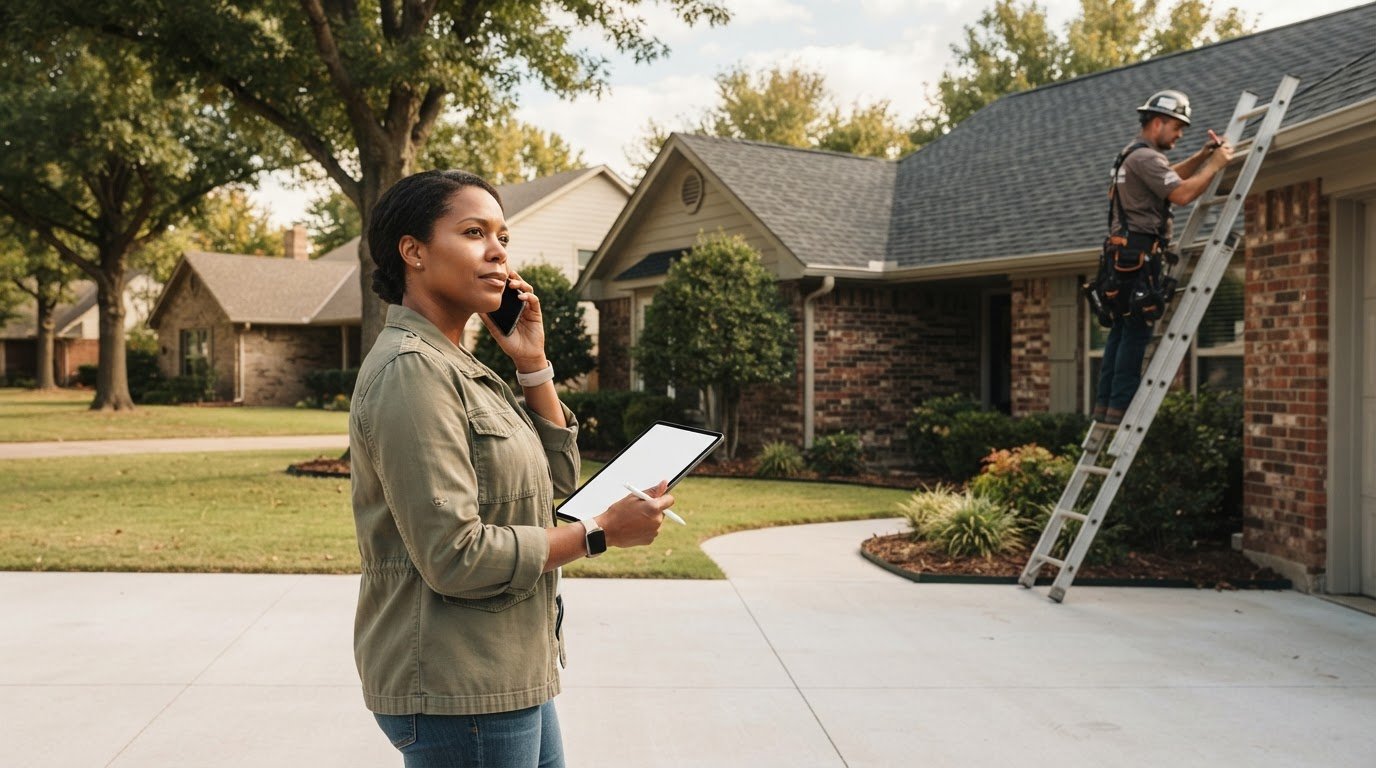

A roofer’s references can tell you what a polished estimate can’t. To answer what questions should I ask a roofer’s references, request three references from local jobs completed in the past 12 months and call at least two. Ask whether the work stayed on schedule and within budget, how the roofer handled questions or problems, and whether the crew protected and cleaned the property.
It’s reasonable to want more than a list of satisfied customers before trusting someone with your roof. A useful reference conversation gives you a clearer picture of the project, from the initial estimate to the final cleanup.
This checklist explains how to verify references and what to ask about warranties, payments, timing, cleanup, and problem resolution. You’ll be better prepared to compare customers’ experiences with the written scope and terms of a roofing estimate.
Key Takeaways
- Choose references whose projects resemble your roof work, so their experience gives you relevant details.
- Separate manufacturer coverage from workmanship coverage, and ask how each handles installation-related problems.
- Compare the written estimate with the agreed scope, materials, exclusions, and payment milestones before work begins.
- Ask how the crew protected landscaping and the home, and whether cleanup left nails or other debris behind.
- Find out who communicated schedule changes and how concerns were handled when the project didn’t go as planned.
How do I verify a roofing contractor’s references?
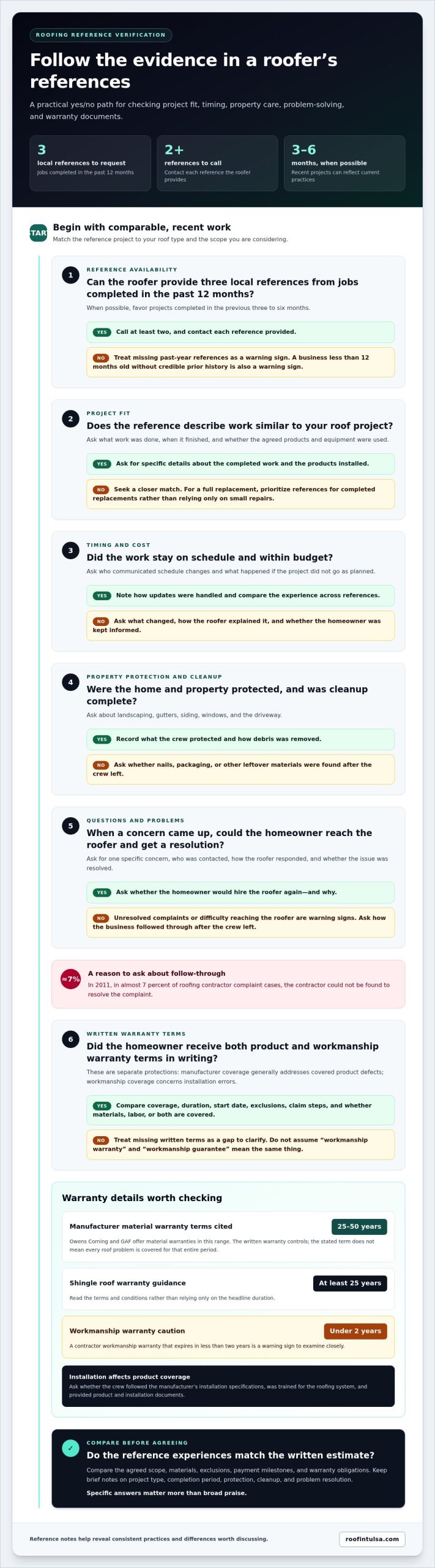
Start with three local references for roofing jobs completed in the past 12 months. Ask for projects finished in the previous three to six months when possible, because recent customers can describe current communication, materials, and cleanup. A reference is a previous customer who can share what the contractor’s work was like. To decide what questions I should ask a roofer’s references, first match their project to your roof’s type and scope.
Call at least two people on the list, and contact each reference the contractor provides. Ask what work was completed, when it finished, and whether the job resembles yours. For example, a homeowner planning a full replacement should prioritize references for completed replacement projects, rather than relying only on small repairs. Ask whether the roofer used the products and equipment agreed upon.
Would the homeowner hire the roofer again, and why or why not? Ask for a specific reason, such as clear updates, careful installation, or prompt attention to a problem, rather than accepting a simple yes.
What warning signs should I look for when checking roofing contractor references? Be cautious if the contractor can’t provide references from the past year, or if a reference describes unresolved complaints, surprise changes, or difficulty reaching the roofer. A roofing business less than 12 months old without credible prior history is also a warning sign.
Use these checks to make each call useful:
- Check the completed work. Ask whether you may view the finished roof, and look for consistent workmanship across visible areas.
- Ask about property protection. Find out how the crew protected landscaping, gutters, siding, windows, and the driveway from falling materials or equipment.
- Ask about cleanup. Check whether workers removed debris and whether the homeowner later found nails, packaging, or other leftover materials.
- Clarify permits and credentials. Ask which license or certification applied to the job, who issued it, and whether the contractor handled the permit process required for that project.
- Ask about complaints. Find out what went wrong, whom the homeowner contacted, how the contractor responded, and whether the issue was resolved.
Specific answers matter more than broad praise. Ask a reference to describe one concern and the roofer’s response. In 2011, in almost 7 percent of roofing contractor complaint cases, the contractor could not be found to resolve the complaint. That makes it practical to ask how the customer reached the contractor after the crew left and whether the business followed through.
Keep brief notes on each call: project type, completion period, protection measures, cleanup, and problem resolution. Comparing the same details across references can reveal consistent practices and differences worth discussing before you agree to the work.
Manufacturer warranties and workmanship warranties
A roof can have two separate protections: one from the product manufacturer and another from the roofing contractor. Ask references whether they received both warranties in writing, then compare the coverage, start date, exclusions, and claims process. A manufacturer’s material warranty generally addresses covered product defects, while workmanship coverage concerns installation errors.
Ask the reference which shingle brand was installed and whether the contractor followed its installation specifications. Owens Corning and GAF offer material warranties ranging from 25 to 50 years. That term doesn’t mean every roof problem is covered for that entire period. The written warranty controls, including conditions that may limit coverage or void it.
Installation matters. A product warranty may be void if the contractor didn’t install the materials according to the manufacturer’s specifications. Ask whether the crew was trained to install that roofing system and whether the homeowner received product and installation documents after the job. For example, ask what happened if a shingle issue arose and which warranty, if any, applied.
Compare coverage side by side before you sign. Check what each warranty covers, how long it lasts, and what steps the homeowner must take to make a claim. A shingle roof warranty should be at least 25 years, but read its terms rather than relying on the headline duration. Confirm whether coverage applies to materials, labor, or both.
- Ask about workmanship coverage. Did the contractor give the homeowner written terms for installation errors and leaks?
- Ask how long it lasts. Contractor workmanship warranties and separate workmanship guarantees can differ in their terms and duration.
- Ask what happens after a problem. Did the contractor inspect the roof, explain the cause, and complete covered repairs?
- Ask about limits. Did the terms explain exclusions, maintenance duties, and who handles the claim?
These terms vary, so don’t treat “workmanship warranty” and “workmanship guarantee” as interchangeable without reading the documents. A contractor’s workmanship warranty that expires in less than two years is a warning sign to examine closely. Ask references whether they received the promised documents and could reach the contractor when an issue came up.
Finally, compare the written warranty with the estimate’s materials and installation scope. The product named in the paperwork should match what was installed, and the contractor’s obligations should be clear. For a roof replacement, reviewing the roof replacement details can help you understand the project scope alongside the warranty terms.
Evaluating references on timing, cleanup, payment, and problem resolution
Ask each reference to compare the agreed schedule and final invoice with what actually happened. Then ask whether the property was left clean, whether payments followed the written agreement, and how the roofer handled concerns. Specific examples, such as a delayed start or a missed cleanup area, are more useful than a general rating.
What should I ask references about the roofer’s workmanship and materials? Ask whether the finished work matched the written scope, whether the materials matched the estimate, and whether the crew corrected any defects. If the homeowner noticed a concern, find out how promptly the contractor responded and what repair or explanation followed.
Use these questions to assess cleanup and property care:
- Ask what was left behind. Did the homeowner find nails, packaging, or cigarette butts after the crew finished?
- Ask how the site was protected. Were gutters, landscaping, driveways, pools, or spas protected during installation?
- Ask whether cleanup was checked. Did the crew inspect the ground and surrounding areas before leaving, or did the homeowner need to raise concerns?
- Ask about safety practices. Were safety measures followed consistently through each phase of the roofing project?
These details matter because a clean roofline doesn’t tell you whether nails remain in the driveway or flower bed. Ask the reference to describe a specific cleanup check, such as walking the yard after installation or checking the driveway before vehicles returned.
Payment conversations should focus on the agreed process, not a typical deposit amount. Ask whether the payment schedule was written down, whether each payment matched a completed stage, and whether the final amount exceeded the original quote. If it changed, ask what changed in the work and whether the homeowner approved the change before paying.
Timing deserves the same level of detail. Ask when the crew started, whether the work finished within the agreed timeframe, and how the contractor explained any delay. Did updates arrive before a missed date, or only after the homeowner asked? Clear communication helps homeowners understand the next step when weather or project conditions affect the schedule.
Problem resolution is a useful test of follow-through. Ask who the homeowner contacted, how the contractor responded, and whether the issue was fully resolved. In 2011, more than 30% of roofing contractor complaints were not satisfied. That makes it worthwhile to ask for a concrete example of a concern and its outcome, rather than relying on broad praise.
Record each reference’s answers about the schedule, cleanup, payment changes, and problem resolution. If accounts differ, ask what project detail might explain the difference, such as scope or site conditions. A reputable contractor should be able to discuss those details clearly in the written agreement.
Confirming estimates, scope, and payment schedules
Compare written roofing estimates before choosing a contractor. Consider both the proposed work and each contractor’s approach, not just the bottom-line total. Ask references whether the final work matched the written scope and whether changes were explained before the crew proceeded.
A useful estimate describes the roof work clearly enough for you to compare proposals. Check that each document identifies the materials, the areas being worked on, and the tasks included. For example, a replacement estimate should distinguish removing existing roofing from installing new shingles. It should also state how the contractor will handle underlayment, flashing, and debris disposal when those tasks apply.
Review these details in each written estimate:
- Work included. Does the scope explain what the crew will remove, replace, and finish?
- Materials. Are the material type and product details clear enough to compare across estimates?
- Exclusions. Does the contractor identify work that isn’t included, such as repairs to concealed damage?
- Changes. Does the agreement explain how an addition to the scope will be documented and approved?
- Cleanup. Does it describe debris removal and the condition in which the property should be left?
Ask references whether the contractor followed the estimate or made changes during the job. If the crew found damaged decking after removing shingles, for example, did the contractor explain the added work and record the homeowner’s approval? Clear documentation helps distinguish an agreed addition from an unexpected charge. Compare how each contractor handles this possibility before signing.
Payment terms should also appear in writing. Ask when payments were due, which project stages triggered them, and what the final payment depended on. For a residential roofing job, a typical reasonable deposit is 10 to 30 percent of the project value. Review the schedule as a whole and check that the amount due at each stage corresponds to defined work.
Ask references whether the contractor requested payment for work that wasn’t completed or changed the schedule after signing. Find out how the contractor explained any difference and whether the homeowner received a revised document. A clear answer should connect each payment to the written agreement, rather than relying on a verbal understanding.
Before accepting an estimate, compare its scope, exclusions, change process, and payment milestones with the other proposals. If one estimate omits debris removal or leaves the finish details unclear, ask for those terms in writing. That gives you a consistent basis for comparing three approaches and understanding what each contractor has agreed to complete.
Confirming project timelines and delay communication
Ask references when work started, how long it took, and whether the roofer met the agreed schedule. A standard residential roofing project typically takes anywhere from a few days to a week. The actual timeline depends on the roof’s scope, weather, and site conditions. Ask whether the contractor explained those factors before setting dates.
A lead time of two to four weeks is described as normal for established roofing companies. Ask references how long they waited between accepting the estimate and the crew’s arrival. Then find out whether the start date changed and how much notice the homeowner received. These answers help distinguish a communicated delay from a missed commitment.
Ask how the contractor handled weather interruptions. Did the crew pause work when conditions changed, and did the roofer explain how the delay affected the finish date? A promise to complete a project in three days regardless of weather can signal a rushed or unrealistic schedule. Ask references whether the actual timeline matched the plan.
Use these questions to assess project communication:
- Identify the contact. Did the homeowner have a number for the project manager, or the contractor’s owner or general manager if no manager was assigned?
- Check response quality. Did the contact provide clear answers about start dates, crew arrival, and changes?
- Ask about updates. Did the roofer share schedule changes before the homeowner had to ask?
- Check material coordination. Did manufacturer or material delivery timing affect the schedule, and how was that explained?
- Clarify responsibility. If a delay or site issue arose, did the contractor explain who would address it and any liability concerns?
Ask for a specific example of a delay, such as rain preventing roof work or materials arriving later than planned. Find out when the reference learned about the change, who contacted them, and whether the revised plan included a new expected finish. A prompt update with a clear next step is more informative than a vague assurance that the crew would return soon.
Responsiveness matters after installation, too. Ask whether the contractor returned calls about a repair, unfinished detail, or closeout inspection. If the homeowner noticed a loose shingle after the crew left, for example, did the roofer inspect it and explain the next step? The reference can describe the response without guessing at the cause.
Before signing, write down the expected start, work sequence, contact person, and how schedule changes will be communicated. If you’re planning roofing work and want to discuss timing, talk through your project schedule.
Rescue Roofing Tulsa: Residential Roof Replacement
Rescue Roofing Tulsa can help when reference checks point you toward a residential roof replacement or your roof needs a closer assessment. The company also handles roof repairs and inspections, giving homeowners options when a full replacement isn’t the right next step. If you’re comparing estimates, bring your questions about scope, schedule, materials, and warranty terms to the conversation. Clear expectations make it easier to understand the proposed work and decide how to proceed.
For commercial properties, Rescue Roofing Tulsa also handles commercial roof replacement. Contact Rescue Roofing Tulsa to discuss your roofing needs, or visit roofintulsa.com.
Take the Next Step With Confidence
Reference calls can help you make a decision, but your next conversation is where you can put those insights to work. Bring any unanswered questions and ask for clear explanations of the proposed work, so you can compare what you heard with what’s written down. If you’re still considering what questions should I ask a roofer’s references, focus on the details that matter most to your home and your comfort with the project.
Rescue Roofing Tulsa offers residential and commercial roof replacement, as well as roof repair. Whether you’re weighing repair against replacement or want to discuss a roofing project, a straightforward conversation can help you identify the right next step for your property.
Contact Rescue Roofing Tulsa to discuss your roofing needs. You’ve taken time to ask thoughtful questions; keep that confidence as you move forward.
Frequently Asked Questions
Can I See Three References From Local Jobs Completed in the Last 12 Months?
Yes. Ask for three references from local roofing jobs completed in the last 12 months, then confirm that each homeowner is willing to discuss the project. During each call, ask what kind of roof work was done and whether the job resembles yours. If a reference can’t describe the work or how they know the contractor, request another customer contact before relying on that recommendation.
What if There Are Unexpected Issues?
Ask how the contractor will explain an unexpected issue and document any proposed change before work continues. If removing shingles reveals damaged roof decking, for example, ask for photos, a written description, and an updated scope to review. Agree on who can authorize additions and how a change affects the schedule. This process helps you make an informed decision instead of trying to resolve a misunderstanding after the work is finished.
What questions should I ask a roofer’s past customers?
Ask past customers what went smoothly, what they would change, and whether they would choose the roofer again. Invite a concrete example, such as a question about material selection or a concern raised during installation. You can also ask whether the finished roof met their expectations and whether the contractor explained the completed work. Specific details help you understand the customer’s experience beyond a simple positive or negative recommendation.
How can I verify a roofing contractor’s references are legitimate?
Speak directly with each reference and ask them to describe the project in their own words. Ask what work the contractor completed, roughly when it happened, and how the customer first connected with the roofer. You can also ask whether they’re comfortable sharing a photo of the finished work or identifying the project location. Consistent, firsthand details make it easier to distinguish a real customer experience from a vague endorsement.
Did the roofer finish the project on time and within budget?
Ask the reference to compare the agreed completion date and estimate with the actual outcome. If either changed, ask what caused the difference and how the contractor explained it. For instance, a customer might describe a weather delay separately from a scope addition that changed the final bill. This distinction can show whether the roofer communicated project changes clearly and whether the customer approved them before work moved forward.
How did the roofer handle delays, unexpected costs, and problems?
Ask the reference to walk through a specific disruption, from the first update to the final resolution. Find out who contacted the homeowner, what explanation they received, and whether the contractor documented added work. If communication stopped or the proposed solution was unclear, ask how the customer tried to resolve it. A detailed account gives you a better sense of how the roofer responds under pressure.
Was the job site kept clean and protected from damage?
Ask the homeowner to check the areas around the house, not just the roof. Did the crew protect flower beds, outdoor furniture, gutters, and the driveway? Did the customer find nails or packaging after the crew left? Ask whether the homeowner had to point out damage or request more cleanup. A reference’s account of specific areas can help you discuss property protection expectations before work starts.
Did the roofer honor the workmanship warranty and fix issues afterward?
Ask whether the customer reported an installation concern after the crew left and what happened next. Find out how they contacted the contractor, whether someone inspected the issue, and whether the agreed correction was completed. If no problem arose, ask whether the homeowner knows how to make a warranty claim and has the written terms. This can clarify the difference between having a warranty document and seeing the contractor follow through.