




Could financing with predictable monthly payments also put the most at stake? Financing a roof with a home equity loan can make sense when you know the project cost and want a lump sum. But the loan is secured by your home, so missed payments carry serious risk. That concern is understandable, especially when a roof needs attention before you’ve planned for the expense.
The right choice depends on more than the interest rate. A home equity loan, a HELOC, and contractor financing differ in how you access funds, how payments may change, and what secures the debt. This guide explains how home equity loans work for roof projects, the risks to weigh, and how these options compare.
Before exploring financing, start with the roof’s condition, scope, and written quote. Rescue Roofing Tulsa provides free, no-obligation roof inspections and quotes to help define the project. The company also offers separate contractor financing with 0% interest and a 12-month no-pay option. Here’s what to understand about each path and what information to gather before deciding.
Key Takeaways
- Financing a roof with a home equity loan provides a lump sum you repay under lender-defined terms, with your home securing the debt.
- Compare the predictable structure of a home equity loan with a HELOC’s flexible credit line, while weighing the collateral and payment risks of each.
- Start with the roof’s condition and a clear project scope so you can compare financing options against a defined need.
- Review total repayment, fees, collateral, and expected funding timing before choosing a financing path.
- In Tulsa, a roof inspection and quote can help clarify the project scope. Contractor financing is a separate option with 0% interest and a 12-month no-pay option.
What Does Financing a Roof With a Home Equity Loan Mean?
Financing a roof with a home equity loan means borrowing a lump sum against the equity you’ve built in your home. You receive funds to use toward the roof project, then repay the principal and interest according to terms set by the lender. Because your home secures the loan, this differs from borrowing that relies only on your promise to repay.
The roofing work itself doesn’t determine whether you’re approved or what rate, fees, repayment period, or other terms you receive. A lender evaluates your application and property under its own criteria. A roof quote helps define the amount you may need, but it doesn’t guarantee financing or set the loan terms. For a general overview of the borrowing structure, see this Home Equity Loan reference.
How home equity connects to a roof project
Equity is the portion of your home’s value that isn’t covered by outstanding mortgage debt. In a simple calculation, if your home is worth more than the balance owed, the difference represents equity. The amount a lender may allow you to borrow can be different: lenders determine usable equity and approval based on their own criteria.
Get a written roof scope and quote before estimating how much to borrow. It can clarify the work involved and help you avoid basing a loan request on a rough guess. The quote informs your project budget; the lender decides the amount and terms of any loan.
What makes a home equity loan different from paying cash?
Paying from savings avoids taking on a new loan, but using a large portion of your savings can leave less available for other household needs. Borrowing may help preserve cash on hand, but it creates a repayment obligation and makes your home collateral for the debt. Neither approach suits every household.
Compare the complete borrowing cost, not just the monthly payment. Lender fees and other terms vary, so review the amount you’d receive, repayment schedule, fees, and total repayment before deciding.
To assess whether this path fits your situation, consider:
- Equity: Do you have enough equity to apply under the lender’s criteria?
- Repayment capacity: Can the expected payments fit your budget alongside existing obligations?
- Timing: Will the funds be available when the roof work needs to move forward?
- Collateral comfort: Are you comfortable securing the borrowing with your home?
A home equity loan may suit a homeowner who has sufficient usable equity, can manage the repayment, and is comfortable with the collateral risk. If any part of that picture feels uncertain, compare the loan’s full terms with other ways to pay. A clear roof scope gives you a sound starting point, while the financing decision remains yours.
Home Equity Loan Roof Financing: Payments, Timing, and Collateral Risk
A lump-sum loan can seem straightforward when a roof replacement or repair has a defined scope. But financing a roof with a home equity loan involves more than matching the amount borrowed to the project. You’re also taking on repayment terms and pledging your home as collateral. Weigh the potential convenience against the full cost, timing, and risk before deciding.
A secured loan puts your home at risk if you don’t meet the repayment obligations. That doesn’t mean a home equity loan is automatically unsuitable. It does mean you should carefully review your budget and the lender’s written terms.
Potential benefits when the project cost is known
A lump sum may align with a defined roofing scope because you can compare the amount borrowed with a written project quote. If the lender offers a fixed rate and set repayment schedule, payments may be easier to plan for. Don’t assume those features apply to every loan. Review the lender’s offer, including fees and total repayment, rather than judging the cost by its advertised rate alone.
A quoted rate is only one part of the picture. Compare how much you’ll repay over the full term and account for any lender fees stated in the offer. A lower-looking rate doesn’t automatically mean a lower total cost if other charges or terms change the amount you pay.
Risks and timing questions to weigh
Your home is the collateral, so missed payments can have serious consequences, including the possibility of losing the property. Consider whether the planned payment would remain manageable if other household costs changed. Your decision should reflect your comfort with that risk, not just whether the loan can cover the roofing work.
Funding may also take time. Depending on the lender’s process, an application, property valuation, and closing steps can affect when funds are available. Ask the lender about its process and expected funding timing, then compare that schedule with the roof’s condition. If there are active leaks or other urgent concerns, a roof inspection can help clarify the work needed and how quickly it may require attention.
Before moving forward, make sure you can answer these questions:
- Payment: Is the payment predictable under the actual loan terms, and does it fit your budget?
- Total cost: What will you repay across the full term, including any fees disclosed by the lender?
- Timing: When does the lender expect funds to be available, and does that fit the roof’s needs?
- Collateral: Are you comfortable with the home securing the loan?
A written roof scope can make the financing comparison more grounded. If you’re in Tulsa, a roof inspection and quote can help clarify project details before you weigh payment options.
Home Equity Loan vs. HELOC vs. Roofing Contractor Financing
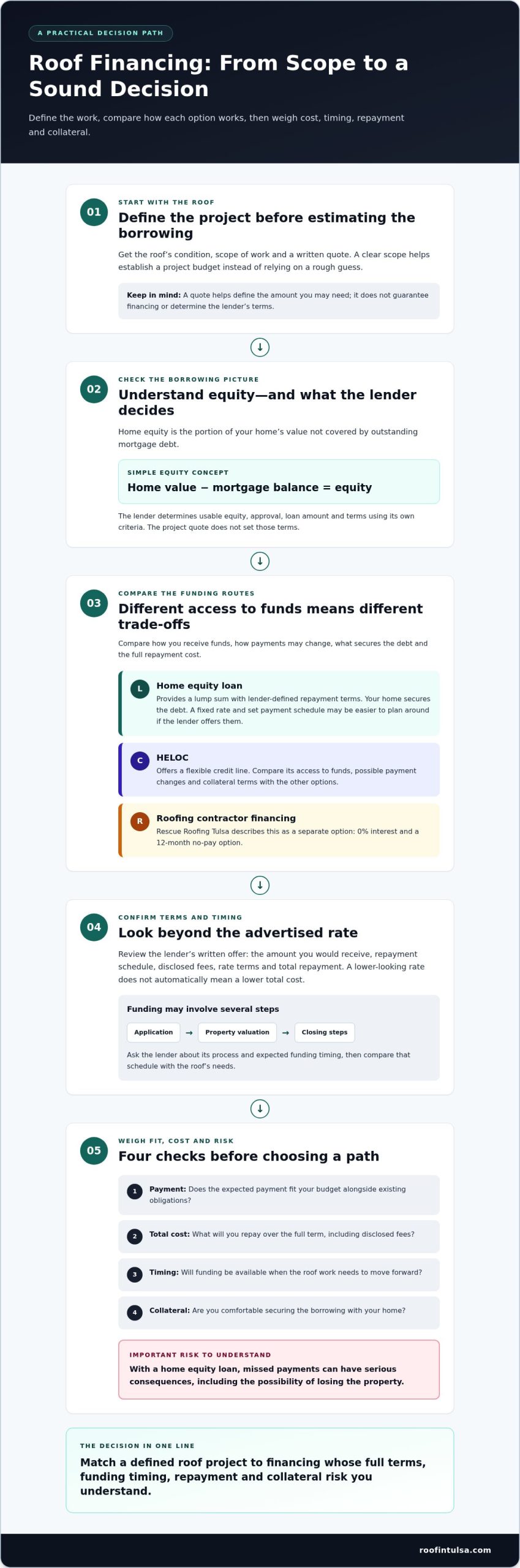
These options differ in how you access funds, how payments are set, and whether your home secures the borrowing. Start by defining your roof scope, then compare each option’s actual terms. A home equity loan gives you a lump sum; a HELOC gives you access to a credit line, subject to lender terms. Contractor financing is a separate option tied to the roofing project, not a home equity loan.
| Feature | Home equity loan | HELOC | Roofing contractor financing |
|---|---|---|---|
| Funding structure | One-time lump sum | Credit line with draws, subject to lender terms | Financing offered through the roofing contractor |
| Payment predictability | Depends on the loan’s rate and repayment terms | Depends on the line’s rate and repayment terms | Depends on the stated plan terms |
| Flexibility | Funds are issued as a lump sum | May allow draws as needed, subject to lender terms | Terms relate to the contractor’s financing offer |
| Collateral | Secured by your home | Secured by your home | Distinct from home equity borrowing; review the plan terms |
When a lump-sum home equity loan may fit
A home equity loan may be worth comparing when a written roof scope defines the project and you’re comfortable using your home as collateral. Don’t assume it guarantees approval, a particular rate, tax treatment, or funding speed. Review the lender’s offer closely, including fees, repayment schedule, and the total amount you’d repay over the full term.
How a HELOC or contractor plan differs
A HELOC generally lets you draw from a credit line rather than receive all the funds at once. Its rate and repayment terms depend on the lender, so review how access to funds and payments work. Rescue Roofing Tulsa offers a separate contractor financing option with 0% interest financing and a 12-month no-pay option. These terms don’t make it a home equity loan.
For a defined replacement project, a lump sum may be easier to match to the quoted scope. A HELOC may offer access to funds over time, which can be useful if the project needs evolve, but its terms determine how borrowing and repayment work. Contractor financing gives you another path to compare without tying the decision to a home equity loan. None is automatically the cheapest or right choice for every homeowner.
Compare the full repayment obligation, fees, payment timing, and collateral before choosing. Keep the roofing quote and financing terms side by side so you’re comparing options against the same project scope. For a clear starting point, request a Tulsa roof inspection and quote before weighing how to pay.
How to Decide Whether a Home Equity Loan Fits Your Roof Project
A financing decision is easier once you know what the roof needs. Start with the roof’s condition, define the work, then compare the loan with your household budget. This keeps the decision grounded in a real project rather than an estimate based on guesswork. If the roof may need replacement, the Tulsa roof replacement guide can help you understand the planning questions involved.
Keep roof protection and financing on separate tracks. If you’re concerned about a leak or other damage, arrange an assessment rather than waiting for a loan decision. Understanding the roof’s condition helps you determine how urgent the work is; you can then weigh the financing process against that timeline.
Gather the roof and household information first
Request a roof inspection and written scope before estimating how much you might need to borrow. The scope should clarify the work being considered, so you can compare loan amounts against the actual project instead of a rough guess. If you’re still assessing the roof, use this new roof warning-sign checklist as a starting point, not a substitute for a professional inspection.
Next, list your household’s existing debt obligations and decide what monthly repayment would feel manageable. Consider how a new payment fits alongside those obligations and regular expenses. A lender makes its own approval decision, but your budget helps you judge whether taking on another repayment commitment feels comfortable.
Compare lender terms before committing
Review actual lender disclosures side by side. Compare the annual percentage rate (APR), fees, payment structure, and total repayment over the full term. A quoted rate alone doesn’t show the complete cost. Also review how the home serves as collateral and whether you’re comfortable with that risk.
Ask the lender about its approval steps and expected funding timeline. Requirements and timing can differ, so don’t assume that a roof quote means financing will be approved or that funds will arrive by a particular date. Keep lender estimates in writing, and compare the expected timing with the roof’s condition and project schedule.
Use this order to keep the decision clear:
- Assess the roof: Arrange an inspection, especially if you’re concerned about damage or active leaks.
- Define the work: Get a written scope and quote before estimating the amount to finance.
- Check your budget: Review existing obligations and set a comfortable repayment limit.
- Compare loan disclosures: Evaluate APR, fees, payment terms, total repayment, collateral, and funding timing.
- Decide without rushing: Weigh the lender’s process against the roof’s needs before committing.
Financing a roof with a home equity loan may fit when the project scope is clear, the payments work within your budget, and you’re comfortable with the home securing the loan. General tax or legal information isn’t a substitute for guidance about your own circumstances, so consult an appropriate professional if you need personalized advice. For a clear project starting point in Tulsa, request a roof inspection and quote.
Explore Roof Financing and Roof Replacement in Tulsa
Before choosing how to pay for roof work, get a clear picture of the roof’s condition and project scope. A roof inspection and written quote can help you understand what work is being considered and give you a useful reference point as you compare financing options. It won’t determine lender approval, set loan terms, or guarantee a particular project price, but it can help you avoid making a borrowing decision based only on a rough estimate.
Rescue Roofing Tulsa provides free, no-obligation roof inspections and quotes for homeowners in Tulsa. Its Aerial Quote system provides roof measurements and price quotes within 24 hours, giving you project details to consider alongside your financing plans. Whether you’re exploring financing a roof with a home equity loan or comparing other options, start by understanding the work itself.
What to expect from a Tulsa roof quote
A quote outlines the proposed roofing work and materials so you can compare the project scope with the amount you may be considering borrowing. Use it to organize your questions and understand what the quote covers. It is not a loan approval, a promise that a lender will provide funds, or a financing qualification. Those decisions and terms come from the lender or financing provider.
Rescue Roofing Tulsa’s roofing services include a lifetime warranty. The company also offers separate contractor financing with 0% interest and a 12-month no-pay option. This is distinct from a home equity loan, which is a borrowing arrangement secured by home equity. The offer doesn’t establish a homeowner’s eligibility or add terms beyond those stated.
Request a free inspection and quote
A roof assessment can help you understand whether the work involves repair or replacement before you choose a way to pay. The inspection and quote are free and come with no obligation. With a written scope in hand, you can compare financing choices against the roofing work being considered while keeping the lender’s terms separate from the contractor’s quote.
For a Tulsa roof inspection and quote, use the contact wording CALL TEXT 918-407-4834. Get a quote within 15 minutes! This is a starting point for understanding the project, not a promise of financing approval or loan timing. Review your options and choose a payment approach that fits your situation.
Request a Tulsa roof inspection and quote to get a clearer view of the work before deciding how to pay.
Take the Next Step With a Clear Project Plan
The goal isn’t to choose a loan simply because it appears convenient. It’s to make a decision that fits the roof work and your household’s ability to manage repayment. If financing a roof with a home equity loan remains under consideration, keep the project details and lender disclosures together. That gives you a practical basis for reviewing the commitment before you sign.
You can also begin with the roof itself. A professional assessment can turn uncertainty about damage or needed work into a clearer plan, whether you’re considering repair or replacement. You don’t have to settle on financing before understanding the project. Take the next step at a pace that feels right, and make the borrowing decision with the full picture in view.
Request a roof inspection and quote to clarify the work ahead. A well-informed plan can help you move forward with confidence.
Frequently Asked Questions
Can I use a home equity loan to pay for a roof replacement?
Yes. You can generally use a home equity loan to fund a roof replacement, subject to lender approval and the loan’s terms. Before applying, get a written roofing scope so the requested amount reflects the planned work. Then compare the loan’s full repayment cost and consider that your home secures the borrowing. Financing a roof with a home equity loan is a personal financial decision, not a requirement for completing the project.
How much home equity do I need to finance a roof?
There’s no single equity amount that guarantees approval. Lenders set their own criteria, and the amount of usable equity depends on the lender’s valuation of your home and your existing mortgage debt. Ask the lender how it calculates the amount you may borrow, and don’t treat a roof quote as confirmation that the loan will be approved.
Does a home equity loan have a fixed interest rate?
Often, home equity loans have a fixed interest rate, but the offer’s terms determine whether yours does. Check the loan disclosure for the rate type, whether payments can change, the repayment period, fees, and total amount due. A fixed rate can make the payment schedule more predictable, but it doesn’t by itself show whether the loan fits your budget or costs less overall than another option.
How long does it take to get a home equity loan for a roof?
Timing varies by lender and application. The process may include reviewing your finances, valuing the property, and completing closing steps, so don’t assume funds will be available by a specific date. Ask the lender for its process and expected timeline before planning roof work around the loan. If the roof has active damage, arrange an assessment promptly rather than waiting for financing to determine what needs attention.
Can I use a home equity loan for roof repairs instead of a replacement?
Yes. A home equity loan can generally fund roof repairs as well as a replacement, subject to lender terms and approval. For a smaller repair, compare the borrowing costs with other ways to pay, since fees and repayment obligations may matter even when the project scope is limited. A roofer’s written assessment can help distinguish a targeted repair from broader work before you decide how much, if anything, to borrow.
Is interest on a home equity loan for a roof tax deductible?
It may be, depending on how the funds are used and your tax circumstances. Interest may qualify only when loan funds are used to buy, build, or substantially improve the home securing the loan, and applicable limits may affect eligibility. Don’t assume a roof expense automatically qualifies. Keep records of how the funds were used and consult a qualified tax professional about your situation.
What happens to a home equity loan if I sell my house?
Because the loan is secured by the home, selling usually means arranging to repay the remaining balance as part of the sale, often from the proceeds at closing. The exact payoff process depends on the loan documents and sale details. Contact the lender early for a payoff statement and instructions, then account for the balance when estimating the proceeds you’ll have after the sale and other obligations are handled.