


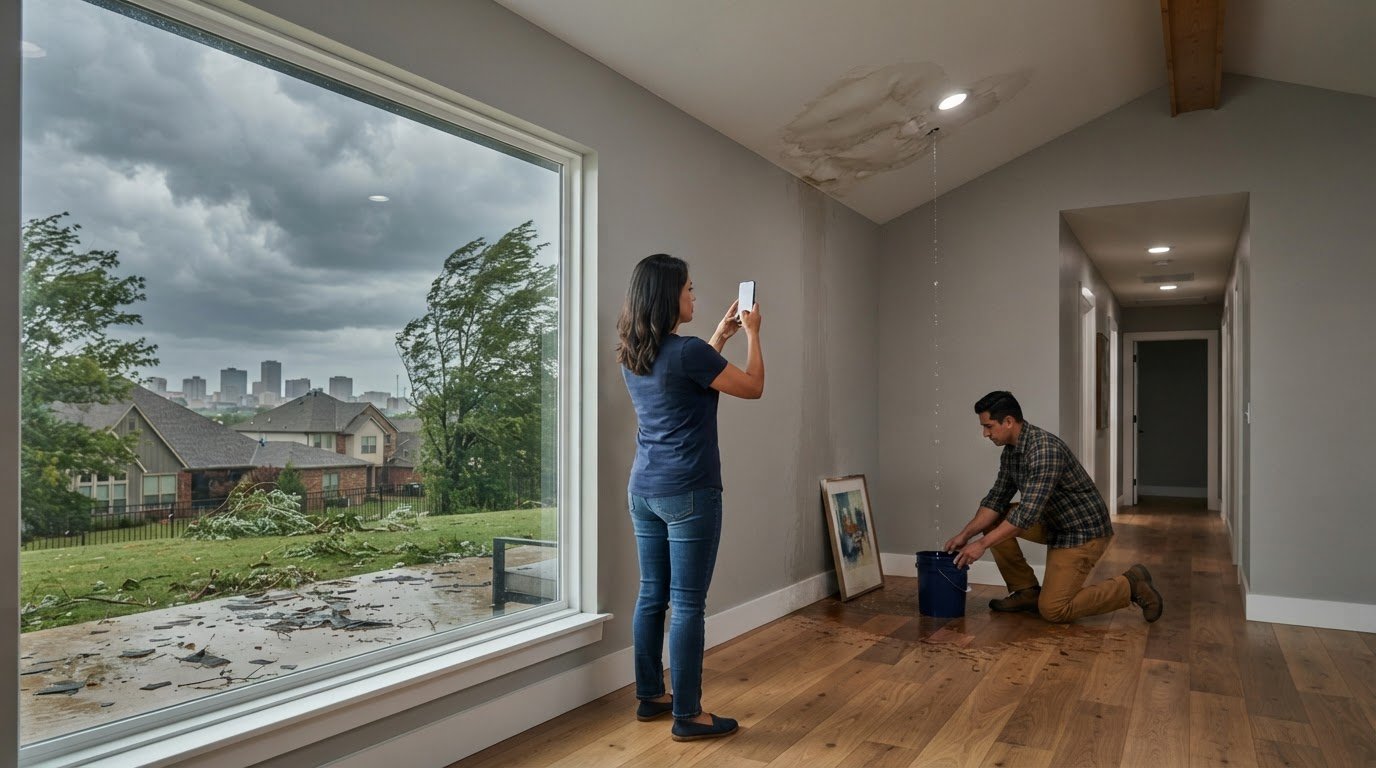

What should you do first when a storm leaves water coming through your ceiling or debris near your home? It’s natural to worry about damage spreading, but knowing what to do when you have a roofing emergency can help you respond calmly and safely. Start by protecting people, not by climbing onto the roof.
You don’t need to diagnose the damage yourself. First, keep people away from hazards. Then, if it’s safe, limit water damage indoors and record what you can see. These steps can help you explain the situation when you arrange professional help, but they don’t replace a roof inspection or repair.
This guide explains how to recognize urgent damage, what you can do safely inside, and what details to share with a roofer and your insurer. Rescue Roofing Tulsa provides emergency roof repair, roof inspections, and Insurance Claim Assistance in Tulsa, Oklahoma, and surrounding areas. Follow the steps in order: protect people, limit interior damage, document what happened, then get professional guidance on what comes next.
Key Takeaways
- Active water entry, a roof opening, or visible sagging calls for prompt professional assessment. A concern without a current leak or visible change may be suitable for a scheduled inspection.
- Knowing what to do when you have a roofing emergency starts with moving people away from hazards and staying clear of water near electrical equipment.
- Safe indoor steps can help protect belongings, but they don’t repair the roof. Leave roof access and temporary protection to roofing professionals.
- Record when and where the damage appeared, whether water is still coming in, and take photos from a safe location.
- Before calling Rescue Roofing Tulsa for emergency roof repair in Tulsa, prepare the property address and a clear description of what you can safely see.
How to Tell Whether You Have a Roofing Emergency in Tulsa
Not every roof concern needs the same response. A loose shingle or stain that isn’t changing may be suitable for a scheduled inspection. Active water entry, an opening in the roof, or visible sagging calls for prompt professional assessment. Consider whether people are exposed to an immediate hazard and whether damage is continuing, rather than trying to judge the roof’s condition from one mark or drip.
Check only what you can see safely from indoors or from the ground. Don’t climb onto the roof, especially after a storm, when surfaces may be slippery or debris may be unstable. A roof has connected components that can be difficult to assess from below; Understanding Roof Components explains why visible damage may need professional evaluation instead of a guess based on appearance.
Which roof problems need urgent attention?
Contact a roofing professional promptly if you notice any of these conditions:
- Water is actively dripping or spreading across a ceiling or wall.
- A section of roofing is missing, or an opening leaves the home exposed to weather.
- A fallen branch or other debris has struck the roof, particularly if it has made a hole or is still unstable.
- A roofline or ceiling appears visibly sagged, bowed, or newly changed.
Ongoing water entry can damage ceilings, walls, belongings, and roofing materials. If water is near lights, outlets, wiring, or electrical equipment, don’t enter that area or touch wet surfaces. Move people away and prioritize safety over retrieving belongings or inspecting the damage. A sagging surface or roofline is also a reason to keep clear. What you can see from a room may not show the extent of hidden damage. Rescue Roofing Tulsa provides emergency roof repair and roof inspections to assess visible damage and determine appropriate next steps.
When can a roof concern wait for an inspection?
A concern may be less urgent if there’s no active leak, exposed opening, falling debris, or visible change to the roof or ceiling. For example, a shingle lying in the yard or a small area of wear visible from the ground doesn’t show whether the roof is still keeping out water. “Not leaking right now” isn’t proof that the roof is sound.
If you’re unsure whether damage is worsening, arrange a professional assessment. Note what you observed and whether anything changes, but don’t test the roof by climbing up or disturbing materials. A Tulsa roof repair guide offers broader context on roof concerns and repair needs.
When deciding what to do when you have a roofing emergency, use a simple threshold: active water, an opening, falling debris, or visible sagging means prompt help is appropriate. If you see a possible electrical or structural hazard, stay clear first. When no immediate hazard is apparent, a professional inspection can help determine the next step without putting you at risk.
What to Do First During a Roofing Emergency
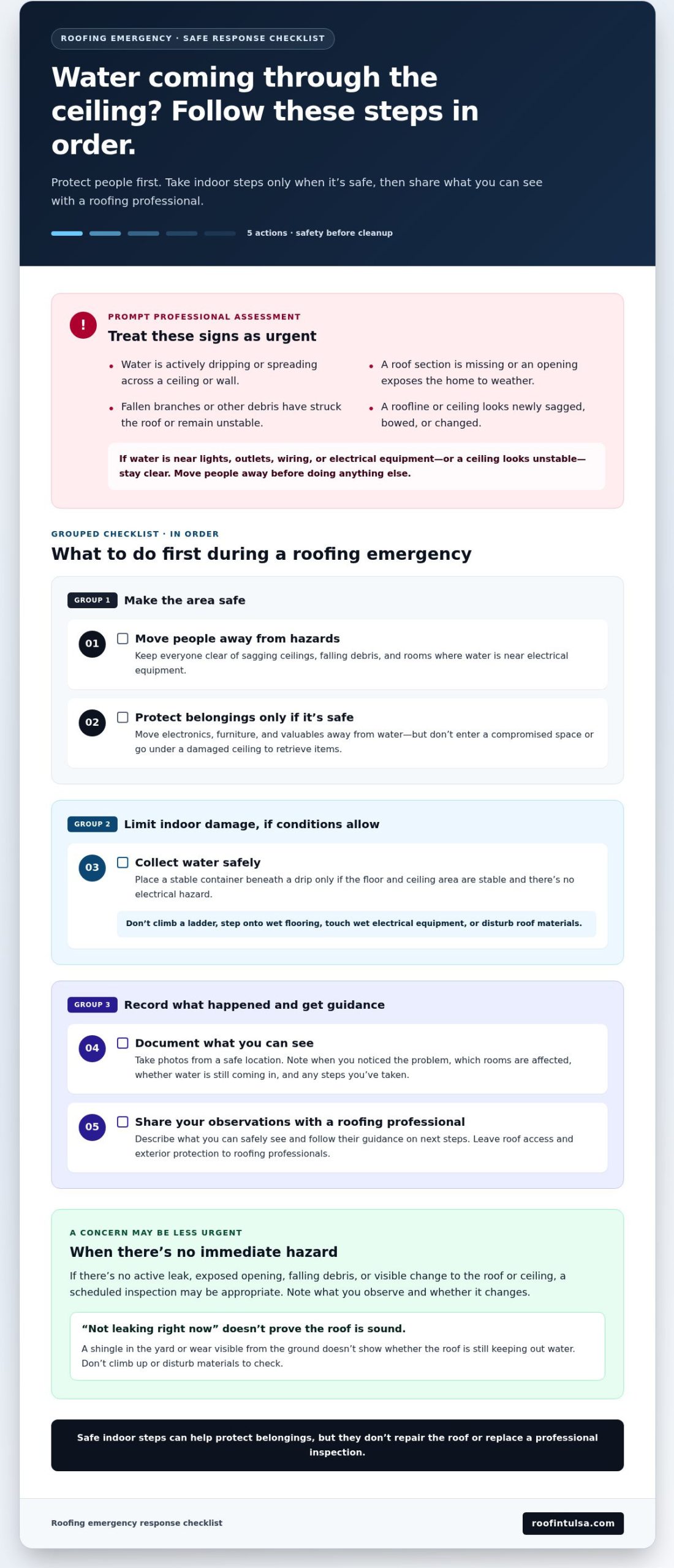
In a stressful moment, a simple order can make the next steps clearer. If you’re deciding what to do when you have a roofing emergency, focus on safety before cleanup or repairs. Don’t enter an unstable area, touch wet electrical equipment, or climb onto the roof. These steps can help you respond carefully, but they can’t guarantee that further damage will be prevented.
- Move people away from hazards. Keep everyone clear of sagging ceilings, falling debris, and rooms where water is near electrical equipment.
- Protect belongings if it’s safe. Move electronics, furniture, and valuables away from the affected area without entering a compromised space.
- Collect water safely. If the floor and ceiling area are stable and there’s no electrical hazard, place a container beneath a drip.
- Document what you see. Take photos from a safe spot and note where water is entering and whether it continues.
- Call a roofing professional. Share what you observed and follow their guidance on next steps.
Protect people and belongings before addressing the leak
Start with the room, not the roof. If a ceiling looks bowed, material is falling, or the area feels unsafe, keep people out. Don’t move under the damaged section to retrieve belongings. When access is safe, move items that could be damaged by water. Never handle a wet light, outlet, appliance, or electrical panel. If water is near electrical equipment, stay clear and make safety the priority.
Contain water without climbing onto the roof
A bucket or other stable container can catch drips if you can reach the spot safely. Move items out of the path of water, but don’t climb a ladder, step onto wet flooring, or enter an area with visible instability to place a container. Leave roof access and exterior protection to roofing professionals. The place where a leak appears indoors may not show where water is entering, so don’t disturb roof materials or attempt a repair during an emergency.
Once people are safe, make a brief record of what happened: when you noticed the problem, which rooms are affected, and whether water is still coming in. Photos taken from a safe location can help explain the situation. Note any steps you’ve taken, too. For background on how policies may address roof damage, Understanding Roof Replacement Coverage can help you prepare for an insurance conversation. Coverage depends on the policy and circumstances.
Rescue Roofing Tulsa provides emergency roof repair in Tulsa, Oklahoma. If it’s safe to do so, call or text and describe the visible damage and any ongoing leak. For practical information about leak repairs outside an immediate emergency, see this guide to fixing roof leaks. You can also contact Rescue Roofing Tulsa for help with urgent roof concerns.
Temporary Roof Protection or Emergency Roof Repair: What Makes Sense?
A leak can make it tempting to climb up and cover the damage yourself. Don’t. A roof may be slick, unstable, or affected by damage you can’t see from the ground. You don’t need to get onto it to take sensible first steps. Keep your actions indoors and leave roof access to roofing professionals.
Temporary protection and permanent repair serve different purposes. A temporary measure may limit exposure while the damage is assessed, but it isn’t necessarily a lasting fix. The appropriate response depends on the visible conditions and a professional assessment.
| Response | What it can involve | What to keep in mind |
|---|---|---|
| Safe indoor measures | Moving belongings away from water and catching a drip with a container if the area is safe to reach. | These steps can help protect items, but they don’t repair the roof or establish the source of a leak. |
| Professional temporary protection | A roofer assesses exposed areas and determines whether temporary protection is appropriate to limit immediate exposure. | It addresses an urgent condition, but shouldn’t be assumed to be permanent or suitable for every type of damage. |
| Permanent repair | A professional evaluates the damage and determines the repair work needed to address it. | The visible problem may not show the full scope. The next steps depend on the assessment. |
What can a homeowner do while waiting for professional help?
Keep people away from unsafe areas. If the room is safe to enter, move electronics, furniture, and other belongings out of the affected area. Place a stable container under a drip only if you can do so without entering a visibly compromised space or going near electrical equipment. Take clear photos from a safe position, such as indoors or from the ground. Don’t climb a ladder, step onto the roof, or try to secure a tarp or household material overhead.
What does an emergency roofer assess and address?
A roofing professional can inspect visible damage and determine an appropriate response. That may involve temporary protection to limit exposure, a repair, or further inspection to understand the work required. A tarp or other temporary covering isn’t automatically a permanent repair, and visible damage alone doesn’t establish the full repair scope. Rescue Roofing Tulsa provides emergency Roof Repair in Tulsa, Oklahoma, and can explain next steps based on the roof’s condition.
That distinction can make what to do when you have a roofing emergency easier to decide: manage belongings and water from a safe indoor location, but don’t risk climbing onto the roof to stop a leak. Temporary protection can address immediate exposure; professional assessment helps determine whether additional repair is needed.
How to Document Roof Damage and Prepare for an Insurance Conversation
A clear record can help you explain what you observed and when, especially if water is still entering or the damage changes. Document only what you can see safely. Don’t climb onto the roof or enter an unstable area to get a better view. If immediate safety steps or professional help are needed, take those first rather than delaying them to collect photos.
What details and photos should you keep?
Use your phone or a written note to capture the conditions as accurately as possible. Describe what you see, not what you assume caused it. Keep the record together so you can refer to it when speaking with your insurer or roofer.
- Write down when you first noticed the damage and the rooms or areas where it appears.
- Note whether water is actively entering and record any changes you observe.
- Photograph affected rooms, visible water, and damaged belongings from a safe position.
- Take exterior photos only from a safe viewpoint on the ground, without approaching unstable roof areas.
- Keep relevant messages, inspection information, and receipts or records for emergency steps you take, if applicable.
If cleanup or repair has already changed the scene, keep any photos and notes you made beforehand. If you haven’t documented it yet, record the current condition safely. A short timeline can help distinguish what you first noticed from what happened afterward.
How can a roofer help with insurance claim assistance?
Rescue Roofing Tulsa offers Insurance Claim Assistance for homeowners dealing with roof damage. A roofer can inspect the roof, explain visible roofing conditions, and provide information about repair needs. The roofer doesn’t decide whether an insurance claim is covered or approved. Coverage depends on the individual policy and claim, so documentation or an inspection doesn’t guarantee a particular outcome.
For an insurance conversation, have your notes, photos, relevant communications, and inspection details available. Describe when you noticed the damage and whether water entry is continuing. Keep your account factual. If you don’t know what caused the damage, say so rather than guessing. You can also ask your insurer what information it needs and keep a record of that conversation.
Once immediate conditions are recorded, understanding the Tulsa roof repair process can help you follow the repair discussion. If you’re unsure what to do when you have a roofing emergency, an organized record gives the roofer and insurer a clearer starting point without requiring you to inspect the roof yourself.
For help with a roof inspection or Insurance Claim Assistance in Tulsa, Oklahoma, contact Rescue Roofing Tulsa.
Getting Emergency Roof Repair in Tulsa: Next Steps
Once everyone is safe and you’ve noted what you can see, contacting a roofing professional can help clarify what should happen next. You don’t need to identify the exact cause or inspect the roof yourself. A concise description gives the team a useful starting point and keeps the conversation focused on immediate concerns.
What should you tell the roofing team when you call?
Before calling or texting, gather a few basic details. Share only what you know from a safe location. If you don’t know the cause of the damage, say so. Don’t climb onto the roof or enter an unsafe room to fill in missing details.
- Location: Give the property address in Tulsa, Oklahoma, or the surrounding area.
- Visible damage: Describe what you can see, such as missing roofing, debris, or a ceiling stain.
- Water entry: Say whether water is coming in now, where it appears indoors, and whether the condition has changed.
- Interior concerns: Mention any affected rooms, visible ceiling changes, or water near electrical equipment. Stay out of unsafe areas.
- Safe contact details: Provide a phone number where the team can reach you safely, and say whether calling or texting works better.
A free, no-obligation roof inspection and quote are available. Rescue Roofing Tulsa states, “Get a quote within 15 minutes!” This is the quote response time, not a promise of an emergency arrival or repair time.
How Rescue Roofing Tulsa helps with the next steps
Rescue Roofing Tulsa provides Roof Repair, including emergency repair, and Roof Inspection in Tulsa, Oklahoma. Licensed and certified roofing professionals can assess the roof and explain the repair needs. The company also offers Insurance Claim Assistance to help customers navigate the claims process. Coverage decisions remain with the insurance provider.
Rescue Roofing Tulsa is Open Daily – 24 Hours. Having your address, a clear description of visible damage, and a safe way to reach you ready can make the initial conversation more straightforward. You don’t need every answer before calling. Explain what’s happening and what you can safely observe.
If you need help with emergency Roof Repair or a Roof Inspection in Tulsa, call or text CALL TEXT 918-407-4834 to discuss the situation and next steps.
Take the Next Step With Confidence
A roofing emergency can feel like several problems at once, but you don’t have to resolve every question immediately. Focus on the next safe decision, then use professional guidance to understand what the roof needs. Knowing what to do when you have a roofing emergency means acting carefully, asking clear questions, and making informed choices as new information becomes available.
Rescue Roofing Tulsa provides roof repair and inspections for homeowners facing urgent roof concerns, along with Insurance Claim Assistance. A free, no-obligation inspection and quote can help you understand the roof’s condition and discuss possible next steps. Open Daily – 24 Hours. Get a quote within 15 minutes!
When you’re ready to talk through the damage, call or text Rescue Roofing Tulsa. You’ve already taken an important step by putting safety first. The next one is a clear conversation about how to move forward.
Frequently Asked Questions
What should I do first if my roof is leaking during a storm?
Move everyone away from the leak and any ceiling that looks changed, then avoid rooms where water is near electrical equipment. If you’re wondering what to do when you have a roofing emergency, don’t go outside or climb up to inspect the roof while the storm is active. From a safe location, note which room is affected and whether the leak is spreading. Contact a roofing professional once you can do so safely.
Is a small roof leak considered an emergency?
A small leak can still need prompt attention if water is actively entering, spreading, or affecting a ceiling, wall, or electrical area. A slow drip into a stable, accessible area may be less urgent than a changing ceiling or water reaching wiring. Don’t assume the visible drip marks the roof opening; water can travel before it appears indoors. If you’re unsure whether conditions are worsening, request a professional assessment.
Can I put a tarp on my roof myself?
It’s safer to leave roof tarping to a professional, particularly after wind or rain. Wet surfaces, loose materials, and hidden damage can make roof access hazardous, and a tarp isn’t a guaranteed or permanent repair. Don’t use a ladder or climb up to cover a hole. If the room is safe, protect belongings indoors and record what you can see from the ground or inside the home while arranging professional help.
What should I do if a tree branch damages my roof?
Keep people away from the area beneath the impact and don’t try to remove a branch that’s resting on the roof or appears unstable. From a safe place, check for visible openings, interior leaks, and changes to the ceiling, then report those details to a roofing professional. If the branch has affected electrical equipment or caused visible sagging, stay clear of the area. Take ground-level photos only if you can do so safely.
Does homeowners insurance cover emergency roof repair?
It depends on your policy and the circumstances of the damage, so an emergency repair isn’t automatically covered. Contact your insurer to ask how to report the incident, what documentation it needs, and whether it has specific instructions before repairs proceed. Keep notes of the conversation and save relevant records. A roofer can explain observed roof damage and provide Insurance Claim Assistance, but only your insurer can determine coverage for your claim.
How do I document roof damage for an insurance claim?
Make a dated record of when you first noticed the issue, where it appeared, and whether it changed. Photograph each affected room, visible water, and damaged belongings without entering unsafe spaces. If exterior damage is visible from the ground, record it from there rather than climbing onto the roof. Keep copies of messages, inspection information, and receipts for any emergency steps you take. Describe what you observe without guessing at the cause.
Can I call a roofer for emergency roof repair in Tulsa at any time?
Rescue Roofing Tulsa is Open Daily – 24 Hours and provides emergency roof repair in Tulsa, Oklahoma. Calling doesn’t mean a particular arrival or repair time is guaranteed. Be ready to describe the property location, what you can see, and whether water is entering. If there’s an immediate threat to anyone’s safety, move away from the hazard first. You can also request a free, no-obligation roof inspection and quote.
What should I tell a roofing contractor when I report an emergency?
Give the property address, explain what happened, and describe the visible damage in plain terms. For example, say that a branch struck one roof area and water is now appearing in a bedroom, if that’s what you observed. Mention whether the leak is continuing and whether access to the affected room is unsafe. Share a safe contact number and any photos taken from a secure location. Don’t climb onto the roof to gather more details.