



What if the biggest risk to your new-roof budget isn’t the material you choose, but work you didn’t know to include? If you’re wondering how to budget for a new roof in Tulsa, start by finding out what your roof actually needs. Storm damage, roof complexity, and differences in estimate details can all affect the project’s scope and final cost.
A practical budget starts with clear information, not guesswork. A project-specific roof inspection and written estimate can identify the work your home needs before you set a savings target or consider financing. If storm damage may be involved, insurance claim assistance can help you navigate the process, but coverage and payment depend on your policy and claim outcome.
This guide explains the factors that shape a roof replacement estimate, how to plan for unexpected repairs, and what to compare when estimates cover different materials or work. You’ll also learn how to build a savings or financing plan and choose a sensible next step. A clear scope and room for uncertainty can make planning for a new roof more manageable.
Key Takeaways
- Learn why roof age or a visible problem alone can’t define replacement scope, and what an inspection can clarify.
- See how materials, roof layout, access, and existing layers can affect the work in an estimate.
- Understand how to budget for a new roof by separating confirmed work from allowances, exclusions, and unresolved conditions.
- Compare savings, financing, and possible insurance proceeds as separate parts of your funding plan, without assuming a claim will be approved.
- Follow a simple sequence to document concerns, review a written estimate, and set a practical reserve.
How to Budget for a New Roof: Start With the Project You Actually Need
A useful roof budget is based on the work your property needs, not a home’s age or what someone else paid. It accounts for the roof’s condition, material choice, property access, and how you expect to fund the project. If you’re learning how to budget for a new roof, first determine whether the next step is repair, replacement, or a closer inspection.
Age can be a reason to look more closely, but it doesn’t reveal a roof’s full condition. A ceiling stain, lifted shingle, or leak may point to a concern, but the symptom alone doesn’t establish its cause or the amount of work needed. Inspection findings can help clarify the next step and the scope to plan for.
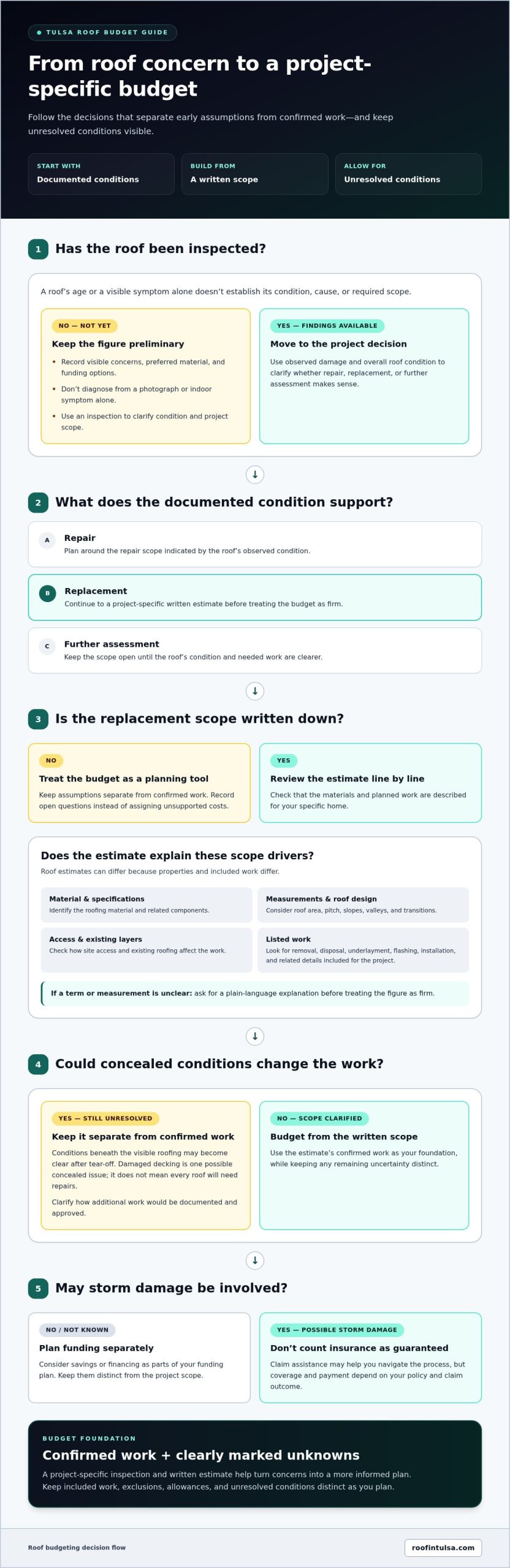
A realistic roof budget starts with documented conditions, a clear scope, material choices, and a written estimate, not assumptions about what the roof needs.
Replacement, repair, or further inspection: clarify the project first
Observed damage and overall roof condition help determine whether a repair, replacement, or further assessment makes sense. Don’t try to diagnose the roof from a photograph or an indoor symptom. The source and extent of a problem may not be visible from the ground. A roof inspection can help turn concerns into a more informed plan. For broader context on what replacement may involve, see this Tulsa roof replacement guide.
What a preliminary roof budget can and cannot tell you
A preliminary budget helps organize your plans, but it isn’t a confirmed project price or scope. Before an inspection, note your preferred material, possible funding approach, and known concerns. Roof measurements, geometry, access, and existing conditions can all affect the work required. Understanding types of roofs and their components can also help you follow what an estimate describes.
Keep planning assumptions separate from items confirmed in a written estimate. You may know you want to explore replacement, for example, without knowing whether existing layers need removal or what condition lies beneath them. Record those details as open questions rather than assigning them unsupported costs. This makes early planning more realistic and later estimate reviews easier.
- Known: Visible concerns, your preferred material, and the funding options you’re considering.
- To be assessed: The roof’s condition, measurements, access, and the work needed for your property.
- To clarify in writing: Included work, exclusions, allowances, and conditions that could change the final scope.
Once those details are available, a written estimate can give your budget a firmer foundation. Until then, treat your working figure as a planning tool, not a commitment. Rescue Roofing Tulsa provides roof inspections and residential roof replacement in Tulsa and surrounding areas to help homeowners move from initial concerns toward a project-specific scope.
What Goes Into a New Roof Budget? Understand the Main Cost Drivers
Once replacement is the project under consideration, the next question is what work the roof requires. Two homes with similar floor areas can have different project scopes. Roofing material, roof area, pitch, access, and the number of existing layers can all affect the work involved. Material, measurements, roof geometry, site access, existing layers, and concealed conditions are key variables that make each roof estimate project-specific.
Materials and roof design: why specifications matter
Material choice affects more than appearance. Different roofing materials can call for different installation methods and related components, so a budget should identify the material rather than use a broad assumption such as “new shingles.” Roof design matters, too. A simple roof and one with multiple slopes, valleys, or transitions may require different labor and detail work. The estimate should describe the material and work planned for the specific home.
Measurements deserve attention as well. Roof area isn’t always the same as a home’s floor area, and pitch and layout affect how the roof is measured and accessed. A steep or difficult-to-reach section may need different handling from an open, easily accessible roof. If you don’t recognize a measurement or term in an estimate, ask for it to be explained in plain language before treating the figure as a firm budgeting number.
Labor, tear-off, and repairs beyond the visible surface
Review the written estimate line by line. It may itemize removal of existing roofing, disposal, underlayment, flashing, and installation. Depending on the roof and the work specified, ventilation-related details or other components may also be included. Don’t assume every project needs identical materials or repairs. The goal is to understand what the estimate includes for your roof and what it leaves open.
Conditions beneath the visible roofing may only become clear as work progresses. After tear-off, damaged decking or another concealed issue could change the required work. That doesn’t mean every roof will need repairs. It does mean your budget should distinguish confirmed work from items that depend on what’s uncovered.
- Check what’s included: Look for removal, disposal, installation materials, flashing, and any related work listed for the project.
- Note what may change: Identify concealed conditions and how additional work would be documented and approved.
- Compare like with like: Estimates are easier to review when materials and included work are clearly described in each one.
Clear documentation helps keep an unexpected finding from becoming a vague allowance. If concealed damage changes the scope, the revised work should be explained in a documented scope change before it becomes part of the project plan. That gives you a chance to understand what was found, what work is proposed, and how the change affects your budget.
A project-specific roof inspection and written estimate can turn these variables into a clearer plan. For a Tulsa roof project, learn more about roof inspection and replacement planning with Rescue Roofing Tulsa.
Insurance, Financing, and Savings: Plan for What You Can Control
A roof project may be funded through savings, financing, potential insurance proceeds, or a combination of these. Treat them as separate planning paths until you know what’s available. Savings show what you can contribute directly. Financing depends on the written terms and your decision to use it. Don’t count insurance proceeds as guaranteed funds before the insurer reviews the claim.
A deductible is the amount your policy requires you to pay toward a covered claim, not a cap on your total out-of-pocket roof expenses. Your final share can also depend on policy terms, the approved scope, and work or conditions the policy doesn’t cover.
When storm damage and insurance enter the budget
Hail and wind can be concerns for Tulsa roofs, but a storm doesn’t prove that your roof was damaged or that a claim will be covered. Document visible concerns with notes and photos taken safely from the ground, and don’t climb onto the roof. A professional inspection can help describe the roof’s condition. Look for changes such as missing or displaced shingles and note any leaks or stains you observe indoors.
Coverage depends on your policy, the cause and extent of damage, the documentation submitted, and the insurer’s decision. Review your policy and keep relevant records, including inspection findings, safely taken photos, and claim communications. Rescue Roofing Tulsa offers insurance claim assistance to help homeowners navigate the process. That guidance can support documentation and next steps, but it can’t guarantee coverage, claim approval, or payment.
Using savings or financing without guessing at the terms
Start with the written roof estimate, then compare its scope with funds you can use while preserving household reserves for other needs. Rescue Roofing Tulsa offers financing options to consider as part of your plan. Before including financing in your budget, review the actual written terms and payment obligations. Don’t build a plan around an assumed rate, payment, approval, or eligibility.
Keep a simple worksheet with separate entries for:
- Available savings: Funds you’re prepared to put toward the project without counting money reserved for other priorities.
- Financing considered: The terms shown in writing, once available, rather than a guessed monthly payment.
- Potential insurance proceeds: An amount to treat as uncertain until the insurer makes a decision and explains what the policy applies to.
This separation shows what you control and what remains unsettled. If the inspection or estimate changes the project scope, update your funding plan before relying on an earlier figure. A careful budget lets you assess each option without treating possible claim proceeds as a substitute for savings or financing.
How to Build a Practical New Roof Budget Step by Step
Turn inspection findings and the written scope into a working household plan. Keep confirmed project details separate from assumptions, possible additions, and funding you haven’t secured. This makes it easier to see what you know, what still needs clarification, and which decisions are yours to make.
- 1. Document concerns. Note visible issues, when you noticed them, and any related observations. Keep photos taken safely from the ground with your records.
- 2. Define the scope. Use inspection findings to identify whether the plan involves replacement and what work is currently understood to be needed.
- 3. Review the written estimate. Record materials, included work, exclusions, allowances, payment schedule, and conditions that could change the scope.
- 4. Identify funding. List available savings separately from financing under written terms and possible insurance proceeds that remain uncertain.
- 5. Set a personal reserve. Consider known unknowns, household priorities, and how much flexibility you want if the project scope changes.
This step-by-step approach to how to budget for a new roof gives you a clearer basis for planning without relying on a generic percentage or guessed costs.
Compare estimates by scope, not by headline total
A lower headline total may reflect a different scope, so compare the details side by side. Review material specifications, removal and disposal, flashing, stated repair assumptions, cleanup, exclusions, and payment schedules. Note how each estimate handles concealed conditions. A Tulsa roof maintenance guide can also help you consider care needs beyond the replacement project itself.
Use a worksheet to organize the comparison. Leave figures blank until they’re supported by written project or funding details.
- Confirmed work: Scope and items clearly included in the estimate.
- Allowances: Items assigned an allowance rather than a final specification.
- Exclusions: Work or materials the estimate says are outside its scope.
- Unresolved conditions: Questions about what may be found once existing roofing is removed.
- Funding plan: Savings, written financing details, and possible insurance proceeds, tracked separately.
Set a reserve and prepare for project changes
Choose a reserve that fits your comfort level and the uncertainties identified for your roof. There’s no single percentage that suits every project. Separate planned work from possible discoveries during tear-off, such as concealed damage that can’t be assessed beforehand. If new work is proposed, ask for the finding, revised scope, and budget impact to be documented and approved before proceeding.
Keep your worksheet with the estimate and update it as questions are resolved. For help grounding your plan in the roof’s actual condition, request a project-specific roof inspection and written estimate from Rescue Roofing Tulsa.
Plan Your Tulsa Roof Replacement With a Clear, Project-Specific Estimate
A reliable roof budget takes shape in stages: inspection, scope clarification, a written estimate, and a review of how you plan to fund the work. Each step replaces an assumption with information you can use. If you’re working out how to budget for a new roof, this process connects your home’s condition with the proposed work and your household’s financial plan.
Rescue Roofing Tulsa provides roof inspections and residential roof replacement for homeowners in Tulsa and surrounding areas. An inspection can help clarify whether replacement is the right next step, while a written estimate lays out the proposed scope. If storm damage may be involved, insurance claim assistance can support you through the process, but it doesn’t promise coverage, claim approval, or payment.
What to prepare before requesting a roof assessment
A little preparation can make it easier to discuss your roof and understand the assessment. Gather what you know, even if some details are uncertain. You don’t need to diagnose the issue yourself or climb onto the roof to provide useful context.
- Approximate roof age, if known, and records of past repairs or inspections.
- Dates or details of storms you observed and any visible concerns noticed safely from the ground.
- Questions about proposed scope, material specifications, exclusions, and how unexpected conditions would be documented.
Leave close inspection to roofing professionals. Ground-level observations and existing records provide useful context, but they can’t establish the full roof condition.
Turn the estimate into a confident next step
Once you have a written estimate, review it alongside your funding plan. Check that you understand the proposed work, what’s excluded, and which items remain assumptions or depend on conditions discovered during the project. Note unanswered budget questions and use them to guide a clear discussion before deciding how to proceed.
Keep insurance, savings, and financing distinct in your planning. If an insurance claim is part of the picture, treat potential proceeds as uncertain until the insurer makes a decision. Claim assistance can help organize information and explain process steps, but the policy and insurer determine the outcome. Financing options can also be considered based on the written terms available to you.
A clear estimate won’t remove every uncertainty, but it can show what’s known and where you may need more information. That gives you a steadier basis for deciding whether the timing, scope, and funding plan feel right for your household. You can request a roof assessment from Rescue Roofing Tulsa to discuss your roof and develop a project-specific estimate.
Take the Next Step With a Plan You Can Trust
A roof budget doesn’t need to answer every question before you begin. It should help you make the next decision carefully, show where more information is needed, and give you a way to adjust as the project becomes clearer. That’s the practical value of learning how to budget for a new roof: you can move forward thoughtfully instead of settling on a number too soon.
Use your notes to start a focused conversation about your roof and the work it may need. Rescue Roofing Tulsa can help you understand the assessment and estimate process, discuss residential roof replacement, and provide insurance claim assistance for customers navigating storm-damage claims. Financing options are also available to consider as part of your planning.
Discuss your roof replacement plan with Rescue Roofing Tulsa and take the next step at a pace that feels right. A clearer understanding of your roof can make the decisions ahead more manageable.
Frequently Asked Questions
How much should I budget for a new roof?
Set your budget after you have a written estimate for your home rather than relying on a generic figure. To understand how to budget for a new roof, first identify the proposed work, then consider your chosen materials, household funds, and unresolved project conditions. If you’re early in the process, treat your budget as a planning draft and update it when inspection findings and project details are available.
What factors affect the cost of replacing a roof?
Roof area, material choice, pitch, layout, and access can all affect the work involved. Valleys, roof penetrations, and transitions may also require specific installation work. Existing roofing layers and conditions beneath the surface can add uncertainty until removal begins. For a clearer comparison, review how each estimate describes its components rather than assuming two roofs with similar home sizes need the same scope.
Does homeowners insurance pay for a new roof?
It may, depending on your policy, the cause and extent of damage, the information submitted, and the insurer’s decision. A storm doesn’t automatically mean a roof claim will be covered. Review your policy and keep records of relevant observations and professional inspection findings. A deductible is only one part of your potential out-of-pocket responsibility; other costs may depend on the approved scope and policy terms.
Should I repair my roof or budget for a replacement?
The roof’s condition and inspection findings help determine whether repair or replacement is the more suitable plan. A localized issue may call for a different response than widespread deterioration or recurring problems, but a symptom alone can’t show the extent of the underlying condition. Note where and when you’ve seen leaks or damage, then use a professional inspection to discuss the roof’s condition and practical next steps.
How can I compare roof replacement estimates?
Compare estimates by checking whether they describe similar materials and work. Look for removal, disposal, underlayment, flashing, cleanup, repair assumptions, exclusions, and payment timing. Pay attention to allowances and items that depend on conditions found during removal. If an estimate is unclear, ask for the scope to be explained in writing so you can distinguish confirmed work from possible additions before making a decision.
Can I finance a new roof?
Yes, financing can be one way to plan for a roof replacement, and Rescue Roofing Tulsa offers financing options. Before including financing in your household budget, review the actual written terms, including payment obligations and relevant conditions. Don’t base your plan on an assumed monthly payment or approval. Compare the documented terms with the project estimate and the amount you prefer to contribute from available savings.
How much extra should I set aside for unexpected roof repairs?
There’s no single reserve amount that fits every roof or household. Base your reserve on the uncertainties identified in the estimate, such as areas that can’t be assessed until existing materials are removed, and on what feels manageable for your finances. Ask which possible findings could change the work, and keep those separate from planned items. This helps you prepare without relying on an unsupported percentage.