


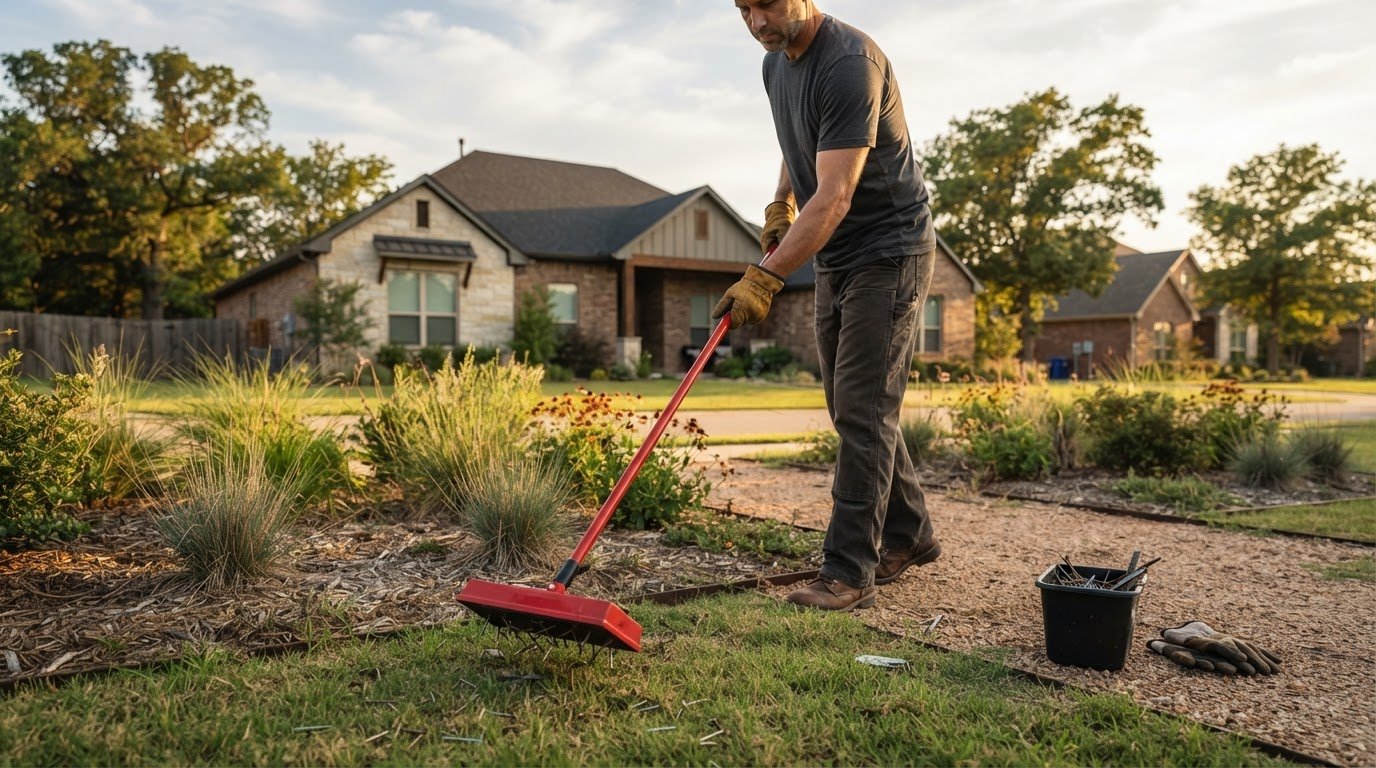

A roofing nail you can’t see can puncture a tire or hurt someone walking through the yard. After roof work or a storm, nails can blend into grass, mulch, and gravel, so a quick glance may not be enough. If you’re searching for how to deal with roofing nails in yard areas safely, start with a careful, methodical search.
It’s reasonable to feel uneasy when sharp debris is scattered where family and pets spend time. Reduce the risk by using the right pickup method, moving slowly, and checking each area more than once. If nails keep appearing after cleanup, consider whether there may be another source or a roof concern.
This guide explains how to collect visible nails, sweep for hidden ones, and check the yard again after the first pass. You’ll also learn what to do if nails continue to appear or you suspect roof damage. For Tulsa homeowners, a professional roof inspection can help assess whether the roof needs attention.
Key Takeaways
- Grass, gravel, and planting beds can all hide roofing nails, so search each surface carefully.
- Use a magnetic nail sweeper suited to the surface, then inspect high-use areas instead of relying on the magnet alone.
- Consider recent roof work, storms, and repeated finds when investigating where nails may have come from.
- A second pass from a different direction can help reveal nails missed during the first search.
- Recurring nails or visible shingle damage may warrant a professional roof inspection. Don’t climb onto the roof to investigate.
Roofing Nails in Your Yard: Why They Matter and Where to Start
Finding a roofing nail outdoors can be unsettling. Small, dark fasteners are easy to overlook in grass, gravel, and planting beds, but a nail where people walk or vehicles pass can cause trouble. It may injure a foot, get caught in a pet’s paw, or puncture a tire. Search systematically rather than guessing where it came from.
Quick answer: Use a magnetic nail sweeper to collect magnetic nails, then search the yard methodically and inspect the ground again. Keep children and pets away until cleanup is complete.
Nails may be left behind after roof work, uncovered during mowing or other yard maintenance, or have been in the landscaping for some time. Finding one doesn’t confirm its source. Note where it turned up and whether there has been recent roof work or a storm, then focus on clearing the area safely.
Where roofing nails are easiest to miss
Grass can hide a nail just below the blades, while mulch, gravel, and leaf litter can conceal one among other debris. Check near the home and any known work areas, then search walkways, driveway edges, and places where leaves or loose material gather. These edges are easy to miss during a casual scan. Keep children and pets away while you work and until you’ve finished checking the area.
Is one roofing nail enough to take seriously?
Yes. Pick up even one nail carefully because it can still be stepped on or driven over. Use it as a reason to inspect nearby ground, not as proof of a roof problem. An isolated nail and repeated discoveries are different clues. If nails keep turning up, note their location and timing, but don’t assume that either pattern identifies the source.
Careful cleanup matters because even one overlooked roofing nail can create a hazard where people, pets, and vehicles regularly pass.
To deal with roofing nails in yard areas, first limit access and identify surfaces where a nail could disappear from view. A magnetic sweeper can help collect metal fasteners, while a slow, organized search helps you cover the ground beyond the spot where the first nail appeared.
Why Roofing Nails Spread Across Tulsa Yards
A nail in the yard can have several possible sources. It may be left behind after roof work, appear with roofing debris after a storm, or have been hidden in soil or landscaping for some time. Mowing, raking, or moving gravel can bring an older fastener into view. Its location may offer clues, but it can’t confirm what happened.
Tulsa properties have different surfaces, from lawns and gravel drives to landscaped beds and outdoor storage areas. Each can conceal debris in a different way. Consider recent activity around the yard and where the nail was found before drawing conclusions.
What to check after roofing work or a storm
If roof work or a storm has recently affected the property, inspect the ground near the home and around access routes or areas where materials may have been staged. Check nearby paths, lawn edges, and landscaping. Storm cleanup or ordinary yard work can also uncover nails that were already hidden. Timing and proximity alone don’t prove what caused a particular nail to appear.
A possible source is a clue to investigate, not a confirmed cause.
What recurring nails may indicate
When more nails appear, note where and when you find them. A cluster in one area or new finds after cleanup gives you useful context to compare with recent roof work, storms, or yard maintenance. Repeated discoveries may be a reason to review the work history and roof condition, but nails in the yard alone don’t establish that the roof is damaged.
For broader upkeep guidance, see this Tulsa roof maintenance guide. If nails keep turning up or you notice other signs of roof damage, a professional inspection can help assess the roof. Tulsa homeowners can learn about a roof inspection.

How to Find and Pick Up Roofing Nails Safely
A calm, organized search helps you cover the yard more thoroughly than a quick glance. A magnetic nail sweeper can collect magnetic roofing nails, but it works best as part of a careful process. Keep children and pets away until you’ve finished and secured the collected nails.
- Secure the area. Keep people clear and pets indoors or away from the search zone. Choose a time when you can move slowly and see the ground clearly.
- Prepare the sweeper. Select a magnetic sweeper suited to the surface, then read and follow its instructions. Check any cautions about nearby devices or surfaces that could be affected by a magnet.
- Search in sections. Divide the yard into manageable areas. Move steadily in overlapping passes, deliberately covering lawn borders, driveway edges, walkways, and visible debris zones.
- Collect nails safely. Use the sweeper’s collection or release method as directed. Put the nails in a secure container, keep it away from children and pets, and avoid handling nails with bare hands.
- Recheck the area. After covering each section, inspect the ground and make another pass from a different direction. A magnet helps locate metal fasteners, but it doesn’t replace a visual check.
Choose a cleanup tool for the yard surface
A wheeled magnetic sweeper can be practical across larger, relatively even areas such as a lawn or driveway. A handheld magnetic tool is easier to guide around tight edges, steps, and smaller planting areas. Choose a tool that can stay close to the ground on the surface you’re checking, and follow its instructions for use and nail release.
Use a repeatable search pattern
Work through one section at a time instead of sweeping only where a nail catches your eye. Overlap each pass slightly, then move to the next strip. Treat lawn borders, paths, driveway edges, and landscaping as separate zones so you can keep track of what you’ve covered.
Overlapping passes make a search more reliable because they reduce the gaps an unplanned sweep can leave behind. A consistent pattern gives you a clear way to cover the ground and remember which areas you’ve already checked.
If nails continue to appear or you suspect roof damage, a professional roof inspection can help assess the roof safely. Don’t climb up to investigate on your own.
How to Check the Yard Again and Prevent Missed Nails
A first sweep is a useful start, but a second look can catch nails hidden by grass, gravel, or debris. After the initial search, make another slow pass from a different direction. Then visually check places people and vehicles use most, including walkways, driveway edges, lawn borders, and transitions between grass, gravel, and planting beds.
A final sweep for lawns, driveways, and garden beds
Use the magnetic sweeper where it can move close to the ground, and check narrow gaps or spaces around steps that the tool can’t reach. A handheld magnet may help in tight areas if it’s safe for the surface and nearby objects. Look closely at garden beds and visible debris zones, too. No single pass can guarantee that every nail has been removed.
Keep children and pets away until the search is finished and collected nails are secured. A checklist can make future checks easier to repeat after roof work, yard work, a storm, or newly discovered debris:
- Make sure people and pets are clear of the search area.
- Walk a second, slow pass from a different direction.
- Check high-use routes and the edges where surfaces meet.
- Inspect spots the sweeper couldn’t reach.
- Secure collected nails, then visually scan the ground once more.
A magnet can collect magnetic nails, but it can’t replace a careful surface inspection. Use both methods, especially where people walk or tires roll. That final visual check is an important part of a safe yard cleanup.
What to do if nails keep appearing
If you find more nails, note the date, location, and whether roof work, a storm, or yard maintenance happened around that time. A repeated pattern may help you decide what to check next, but recurring nails alone don’t confirm the roof’s condition. If you also suspect damage, review this Tulsa roof repair guide and arrange a professional roof inspection. Don’t climb onto the roof to investigate.
For an assessment of recurring debris or suspected roof damage, schedule a roof inspection.
When Roofing Nails Point to a Roof Concern in Tulsa
A single nail in the yard can have several explanations, including old debris uncovered during yard work. By itself, it doesn’t prove that your roof is damaged or needs repair. Context matters: repeated finds, especially near the home or after roofing work or a storm, are useful to note. Visible shingle damage or other signs of a roof concern make a professional assessment a sensible next step.
Stay on the ground. Don’t climb onto the roof to look for a missing nail or inspect shingles. From a safe location, note what you can see and where and when nails appear. If you notice visible damage, don’t disturb it. Arrange an inspection to get a clearer assessment.
When a roof inspection may help
Consider an inspection if nails keep appearing, particularly alongside visible shingle damage or following a recent roofing event. These clues may warrant a closer look, but they don’t identify the cause on their own. Rescue Roofing Tulsa provides roof inspections and repairs for homeowners in the Tulsa area. An inspection can assess the roof directly rather than relying on yard debris as a diagnosis.
If an assessment identifies roof replacement as a concern, this roof replacement guide for Tulsa homeowners offers more information about that next step. Finding nails alone isn’t a reason to conclude that replacement is needed.
A clear next step for Tulsa homeowners
For many homeowners, the immediate priority is removing the nails and monitoring the yard. If the finds continue or you’ve noticed roof damage, a professional inspection can help clarify what needs attention. It’s a practical way to make an informed decision without putting yourself at risk by climbing onto the roof.
If you’re concerned about recurring nails or possible roof damage, Rescue Roofing Tulsa can help with an inspection or repair. Talk with Rescue Roofing Tulsa.
Keep Your Yard Safe With a Careful Follow-Up
Safe cleanup starts with a steady search, not a quick glance. Use a magnetic sweeper suited to the surface, work in overlapping passes, and inspect the ground visually afterward. A second pass from another direction and a close look at high-use areas can help catch what the first search missed.
Keep children and pets away until cleanup is complete and collected nails are secured. If nails continue to appear, note where and when you find them. Repeated finds don’t prove roof damage, but visible shingle damage or other concerns are good reasons to arrange a professional inspection. Don’t climb onto the roof to investigate.
Rescue Roofing Tulsa provides roof inspections and roof repair for homeowners in Tulsa and surrounding areas. Talk with Rescue Roofing Tulsa to discuss an inspection or repair.
Frequently Asked Questions
How do I find roofing nails in grass?
Use a magnetic nail sweeper and move slowly across the lawn in overlapping passes. Divide the grass into sections, then check borders, paths, driveway edges, and spots where leaves or clippings collect. After sweeping, inspect the surface closely and repeat the search from another direction. Keep children and pets away until you’ve finished checking and secured any collected nails.
Will a magnetic sweeper pick up roofing nails?
Yes, a magnetic sweeper can pick up roofing nails that are magnetic. Choose a tool suited to the surface, such as a wheeled sweeper for an open lawn or driveway and a handheld magnet for tight spaces. Follow the tool’s instructions, including how to release collected nails safely. A magnet doesn’t replace a visual inspection and may not collect every type of metal fastener.
Can roofing nails puncture a car tire?
Yes. A roofing nail on a driveway or another area where a vehicle travels can puncture a tire if driven over. Check driveway edges, the route from the garage to the street, and areas where roofing debris may have collected. Use a magnetic sweeper, then inspect the ground visually. Avoid driving over a suspected nail while moving a vehicle during cleanup.
What should I do if I keep finding roofing nails in my yard?
Collect them safely and note where and when each new nail appears. Consider whether roof work, a storm, or yard maintenance happened around that time. Repeated finds alone don’t prove roof damage, but they can be a reason to look into the source. If you also notice visible roof damage or have concerns, a professional roof inspection can assess the roof safely.
Are roofing nails dangerous for dogs and children?
They can be. A nail hidden in grass, mulch, or gravel could injure a child who steps on it or a pet who walks over or investigates it. Keep children and pets away from the search area until you’ve completed a careful sweep and visual check. Store collected nails securely so they can’t be reached or scattered again.
Should I check my roof if I find nails in the yard?
Finding a nail is a reason to stay observant, but it doesn’t confirm roof damage. Look for additional context, such as repeated finds or visible shingle damage, from a safe position on the ground. Don’t climb onto the roof to investigate. If you’re concerned, a professional inspection can assess its condition and whether roof repair may be needed.
How often should I sweep my yard after roof work?
Do a careful sweep after roofing work, then make a second pass from a different direction and visually check high-use areas. There isn’t one schedule that suits every yard because surfaces and work areas differ. Recheck if yard work uncovers debris or you find more nails later. Keep people and pets away until the search is complete and collected nails are secured.