


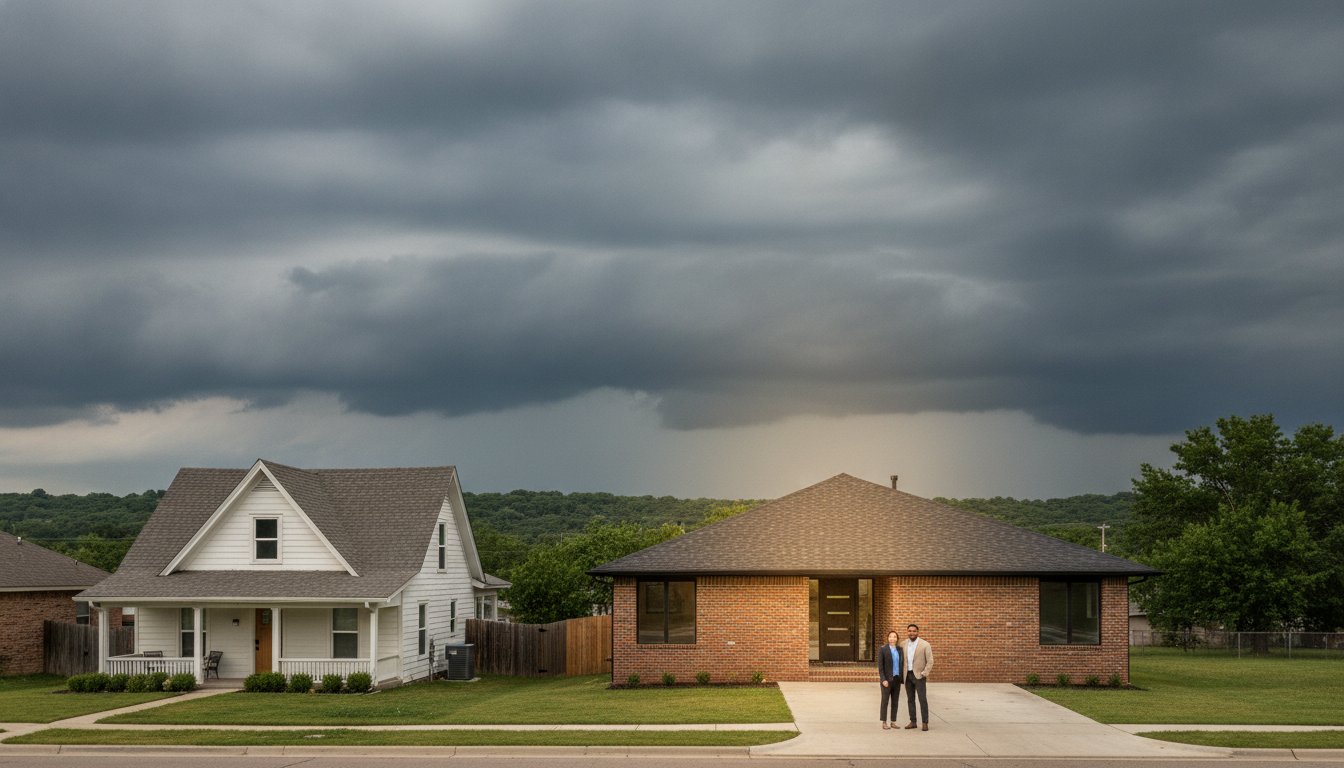

Could the specific shape of your home be the primary reason your insurance premiums are climbing as fast as the Oklahoma wind? In Tornado Alley, the debate of gable vs hip roof tulsa isn’t just about architectural style. It is a critical decision for your family’s safety and your long-term financial health. We understand the pit in your stomach when the sirens sound. You want to know that your roof will stay put and that you aren’t overpaying for coverage in an increasingly expensive market.
We agree that your home should be a sanctuary, not a source of constant worry during storm season. This guide will show you exactly how different roof slopes impact wind resistance and insurance rates. You’ll discover how the right choice can lead to significant premium discounts, especially with 2026 Oklahoma initiatives like the Strengthen Oklahoma Homes grant program. We will compare the structural integrity, curb appeal, and cost-effectiveness of both styles to help you make an informed choice for your next replacement. From surviving 100-mph gusts to increasing your home’s resale value, we have the local expertise you need to protect what matters most.
Key Takeaways
- Learn why the aerodynamic design of a hip roof offers superior protection against Oklahoma’s severe spring windstorms compared to traditional gable ends.
- Understand the long-term financial benefits of gable vs hip roof tulsa choices, including how certain shapes can qualify you for significant insurance premium discounts.
- Discover how to leverage 2026 Oklahoma state grants and impact-resistant materials to further reinforce your home’s structural integrity.
- Balance your need for interior attic volume and vaulted ceilings with the exterior curb appeal and durability required for the Tulsa climate.
- Find out how a professional inspection can determine if your current structure is a candidate for a roof shape transition to maximize storm safety.
Understanding Gable and Hip Roofs: Definitions for Tulsa Homeowners
Choosing a new roof involves more than just picking a shingle color. In our local community, the debate of gable vs hip roof tulsa often starts with the basic silhouette of the home. These two styles dominate our skyline because they offer distinct advantages for the unpredictable Oklahoma climate. While many modern builds in South Tulsa or Broken Arrow use a combination of both, understanding their basic structures is the first step toward a safer home.
The Anatomy of a Gable Roof
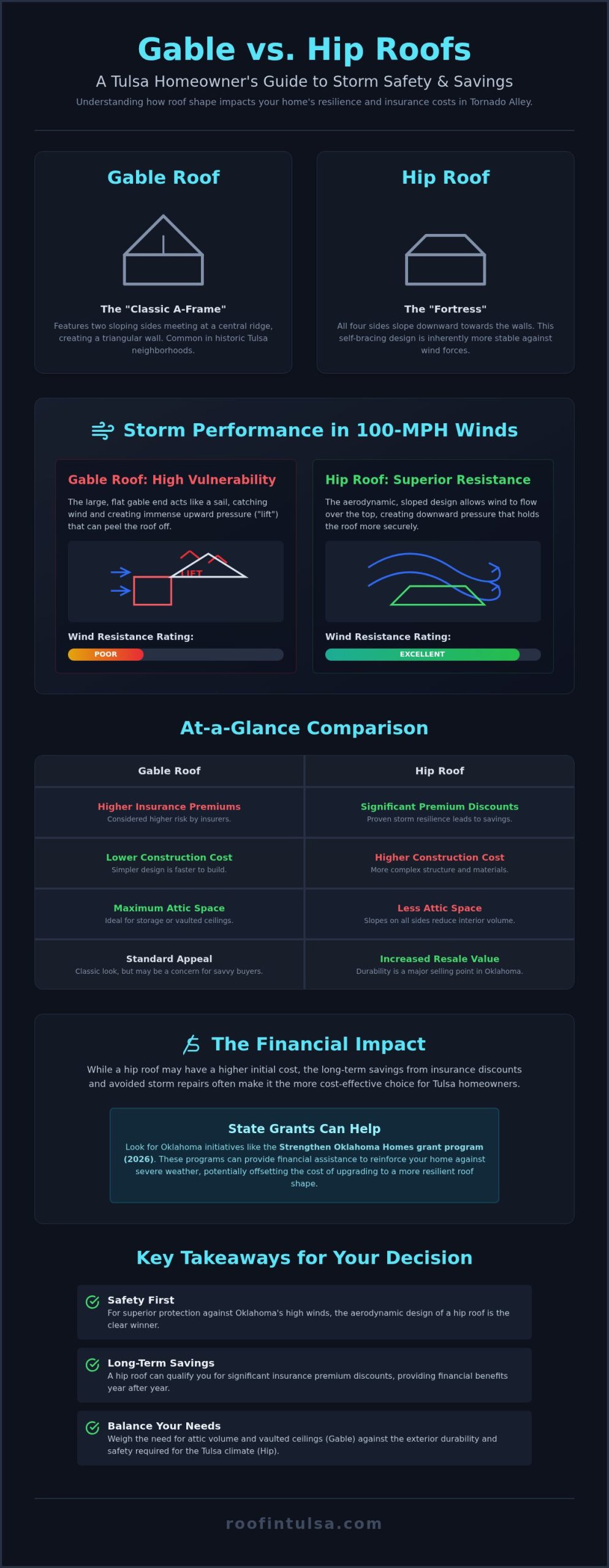
You probably recognize the gable roof as the classic “A-frame” design. It features two sloping sides that meet at a central ridge, creating a triangular wall known as the gable end. This design is a staple in historic Tulsa neighborhoods like Swan Lake or Florence Park. It provides excellent drainage for heavy spring rains and allows for more attic space. Common variations include:
- Side-Gable: The most frequent version, where the front and back of the house are the sloped sides.
- Cross-Gable: This is used on more complex floor plans where two gable sections meet at a right angle.
Gable roofs are popular because they’re straightforward to build and repair. However, that triangular wall can act like a sail during high-wind events if it isn’t properly braced. We often see these roofs in older areas where architectural charm is a high priority.
The Anatomy of a Hip Roof
A Hip roof is different because it has no vertical walls on the roofline. Instead, all four sides slope downward toward the home’s exterior walls. The “hip” itself is the external angle where two adjacent sides meet. From the street, these roofs often look more compact and “tucked in” compared to gables. Tulsa homeowners often prefer this style for its inherent stability. Variations include:
- Simple Hip: Slopes on all four sides that meet at a ridge.
- Pyramid Hip: All four sides meet at a single point at the top.
- Cross-Hipped: This covers L-shaped or T-shaped homes where two hipped sections join.
Many residents feel a hip roof looks sturdier. This isn’t just an aesthetic preference. The lack of flat vertical surfaces means wind can flow over the house from any direction without catching a large flat area. Most Tulsa homes aren’t strictly one or the other. We often see hybrid designs where a large hip roof covers the main structure, while smaller gables add character over dormers or entryways. This mix provides the best of both worlds: the wind resistance of a hip and the classic beauty of a gable.
Storm Performance: Why Roof Shape Matters in Oklahoma Wind
Living in Northeast Oklahoma means preparing for more than just a light breeze. When 100-mph straight-line winds or tornadic gusts hit, your home’s geometry determines how well it stands its ground. The debate over gable vs hip roof tulsa isn’t just about looks; it’s about physics. Wind interacts with these two shapes in fundamentally different ways, which can be the difference between a secure home and a major insurance claim.
Aerodynamics play a massive role during our spring storm season. A hip roof, with its four sloping sides, allows wind to pass over the structure with minimal resistance. In contrast, a gable roof features large, flat vertical walls. These gable ends act like a parachute, catching the full force of the wind. This creates intense pressure that can lead to structural failure if the roof isn’t properly reinforced for the local climate.
Why Hip Roofs Win in Tornado Alley
The hip roof is widely considered the gold standard for wind resistance. Because all four sides slope inward, the roof essentially braces itself. When high-velocity winds strike a hip roof, the force is deflected downward, pinning the roof more securely to the house walls. This reduces the “lift” effect that often peels away shingles or entire roof sections. Statistical data from major wind events consistently shows that hip-shaped homes sustain less damage than their gable-ended neighbors. This resilience is a key factor in why many homeowners choose this shape during a full replacement to protect their families.
Gable Roof Vulnerabilities and Solutions
Gable roofs are beautiful, but they face a unique challenge called the “sail effect.” High winds hitting the flat side of a gable can create a vacuum on the opposite side, literally lifting the roof off the rafters. To combat this, we recommend specific structural reinforcements during our installation process:
- Hurricane Straps: Metal connectors that tie the roof trusses securely to the wall plates.
- Cross-Bracing: Adding diagonal support in the attic to prevent the gable wall from collapsing inward or outward.
- Impact-Resistant Materials: Using Class 4 shingles to prevent the initial shingle blow-offs that lead to larger failures.
Because of these vulnerabilities, consistent roof maintenance is vital for anyone with a gable-style home. Catching a loose shingle or a weak brace early can prevent a catastrophic failure when the sirens go off. If you’re worried about how your current structure will handle the next big storm, a professional roof inspection can provide the peace of mind you deserve.
The Financial Impact: Construction Costs vs. Insurance Savings
Many homeowners find themselves at a financial crossroads when comparing gable vs hip roof tulsa options. While the initial price tag is a major factor, it’s only one piece of the long-term puzzle. A hip roof typically requires a higher upfront investment because the design is more intricate. It involves four sloping sides instead of two, which means more materials like shingles, underlayment, and specific ridge caps are necessary to cover the extra angles. We believe in being transparent about these costs so you can plan your budget with confidence.
The Cost of Complexity
The labor involved in a hip roof installation is more intensive than a standard gable. Your roofing contractor must spend more time measuring and cutting shingles to fit the “hips,” where two roof planes meet. This complexity naturally increases the project’s duration. Additionally, while the hip shape is excellent for wind resistance, the increased number of seams requires precision. Choosing high-quality asphalt shingles or impact-resistant materials is essential here. This ensures those seams remain watertight through our heavy Oklahoma rains and prevents the need for early repairs.
Insurance Discounts and Oklahoma Grants
The higher initial cost of a hip roof is often offset by substantial long-term savings. In Oklahoma, insurers view hip roofs as lower risk because of their aerodynamic performance. On average, homeowners with hail-resistant roofing can see premium savings of about 12.4%, which is roughly $420 annually. If your home meets the IBHS FORTIFIED Home – Roof standards, you might qualify for an additional 8.5% discount. These savings add up quickly, making the more durable shape a smart financial move over time.
Strategic financial help is also available through the “Strengthen Oklahoma Homes” grant program. This initiative offers up to $10,000 for homeowners to upgrade their roofs to these higher standards. It’s vital to mark your calendar: applications open on Monday, January 12, 2026, at 12:00 p.m. CT, with a second round on July 13, 2026. We take pride in offering insurance claim assistance to help you navigate these complex administrative steps. By combining these grants with insurance reductions, the return on investment for a more durable roof shape often reaches 150-200% over 15 years. We’re here to help you weigh these numbers so you can make a choice that protects both your family and your wallet.
Space and Style: Attic Room vs. Tulsa Curb Appeal
Beyond storm safety and insurance rates, the choice of gable vs hip roof tulsa fundamentally changes how you experience your home from the inside out. While one offers the grandeur of high ceilings, the other provides a sleek, modern silhouette that defines many of our local suburban developments. Choosing between a gable vs hip roof tulsa is a decision that impacts your daily comfort as much as your long-term structural integrity. We believe your roof should be as beautiful as it is functional.
Living Space and Storage Potential
Gable roofs are the undisputed champions of interior volume. If you dream of a vaulted living room or a finished attic bedroom, the steep vertical walls of a gable provide the necessary headroom and floor space. Conversely, hip roofs have four sloped sides that meet at the top; this significantly limits vertical space. This can make attic storage a bit of a “crawl” situation for many homeowners. However, the uniform shape of a hip roof attic is often easier to insulate effectively. This is a huge benefit during those 100-degree Tulsa summers. Proper insulation and ventilation are easier to maintain in a hip roof, helping you keep cooling costs down when the Oklahoma heat is at its peak. For homeowners who want the safety of a hip roof but need more light, we often suggest adding dormers to break up the roofline and reclaim some of that lost interior space.
Aesthetic Trends in Tulsa Neighborhoods
Your choice should also reflect the character of your specific community to maximize your home’s resale value. In Midtown Tulsa, preserving the classic “A-frame” gable is often essential for maintaining the architectural integrity of historic bungalows. These neighborhoods thrive on that traditional charm. In contrast, newer developments in South Tulsa and Jenks often favor complex hipped rooflines to create a sense of luxury and stability. The right roof shingles can accentuate these shapes; using shadow lines adds depth to a hip roof while bold colors highlight a gable’s peak. A roof that fits the neighborhood aesthetic can significantly boost your resale value. Buyers in our area look for homes that feel both beautiful and “Oklahoma tough.” If you are ready to update your home’s look and protection, we invite you to schedule a professional roof inspection to see which style best suits your property’s unique footprint.
Making the Choice with Rescue Roofing Tulsa
Choosing the right structure for your home is a significant decision that affects your family’s safety for decades. In our community, the debate over gable vs hip roof tulsa often comes down to who you trust to guide you through the process. At Rescue Roofing Tulsa, we bring years of experience dealing with the specific wind and hail damage patterns that define our region. We don’t just see a house; we see a neighbor’s home that needs to withstand the next spring storm with confidence.
Our team specializes in helping you navigate the transition from one roof shape to another. If your current gable roof has suffered repeated wind damage, we can evaluate if a hip roof conversion is structurally feasible for your property. We pride ourselves on transparent pricing and expert project management. Most importantly, we handle the administrative heavy lifting for you. We know that dealing with insurance companies in Tornado Alley is stressful. That is why we offer specialized insurance claim assistance to ensure your carrier recognizes the value of your storm-resistant upgrades.
Our Local Tulsa Roof Replacement Process
When you partner with us, you can expect a methodical and supportive approach. We begin with a comprehensive inspection to determine if you need a roof repair or a total replacement. We never suggest a full replacement if a reliable repair will protect your home. If a new roof is the best path forward, we integrate structural reinforcements like hurricane straps and enhanced bracing as standard practice. We understand the physics of Oklahoma wind, and we build to exceed local codes. From the first inspection to the final shingle, our team keeps you informed every step of the way.
Get Started with a Trusted Tulsa Partner
Your home’s safety shouldn’t wait until the next siren sounds. We invite you to schedule a no-obligation roof shape assessment. Our experts will walk you through the gable vs hip roof tulsa comparison specific to your home’s architecture and your neighborhood’s style. We also offer flexible financing options to help you invest in a storm-resistant roof without immediate financial strain. If you have immediate concerns following a storm, our 24/7 emergency repair services are always available to secure your property. We are locally owned, regionally focused, and deeply committed to the well-being of our Tulsa neighbors. Contact us today to see how we can make your roof truly Oklahoma tough.
Protecting Your Tulsa Investment for the Long Term
Deciding on a gable vs hip roof tulsa is a choice that shapes your home’s safety and value for years to come. You’ve learned how the aerodynamic stability of a hip roof can offer superior wind resistance and potential insurance savings. You also know that a properly braced gable roof can preserve the classic character of Midtown neighborhoods while providing essential attic space. Each home is unique, and the right decision depends on your specific priorities for storm protection and curb appeal.
Rescue Roofing Tulsa is a locally owned and operated team that understands the challenges of Tornado Alley. We provide specialized insurance claim assistance to maximize your coverage and 24/7 emergency storm damage support for immediate peace of mind. We’re ready to help you evaluate your current structure and plan for a more resilient future. Get Your Free Tulsa Roof Inspection and Shape Assessment Today. Your home deserves the expert care of a neighbor who knows Oklahoma weather.
Frequently Asked Questions
Does a hip roof lower my insurance in Oklahoma?
Yes, a hip roof can lead to lower insurance premiums because it is more aerodynamic. In Oklahoma, many carriers recognize the reduced risk of wind damage associated with this shape. When comparing gable vs hip roof tulsa insurance benefits, you might see an average premium savings of around 8.5% for fortified standards. We recommend checking with your agent about specific wind-mitigation credits. Our team provides the documentation needed to help you secure these long-term financial benefits.
Can I change my gable roof to a hip roof during a replacement?
You can change your roof shape during a replacement, but it requires a significant structural modification. This process involves altering the trusses or rafters to create the new inward slopes. It is a complex project that requires professional engineering oversight to ensure your home’s walls can support the new load distribution. We can evaluate your current structure during an inspection to determine if a shape transition is a viable option for your property.
Which roof style is better for heavy Oklahoma rain and drainage?
Gable roofs are often considered superior for rapid drainage because they typically have a simpler, steeper pitch. This design allows heavy Oklahoma rainwater to flow directly off the two sloped sides into your gutter system. While hip roofs also drain well, they feature more valleys where two roof planes meet. These valleys require expert installation and high-quality flashing to prevent water from pooling or leaking during the intense downpours common in our region.
Are gable roofs safe in a tornado?
Gable roofs are safe when built to modern codes, but they are more vulnerable to high winds than hip designs. The flat vertical walls can catch wind like a sail, potentially leading to roof lift. To ensure safety in Tornado Alley, we use hurricane straps and structural bracing to tie the roof truss securely to the wall plates. These reinforcements are essential for protecting your home during the 100-mph gusts frequently seen in Tulsa.
Do hip roofs have better ventilation than gable roofs?
Gable roofs are generally easier to ventilate because they can utilize large vents on the flat gable ends. These allow for significant airflow through the attic space. Hip roofs require a more strategic combination of soffit vents and ridge vents because they lack those vertical walls. While hip roofs can be ventilated effectively, the process is more technically demanding. Proper airflow is critical for managing the intense heat of Oklahoma summers and preventing moisture buildup.
Which roof shape is more expensive to repair after a storm?
Repairing a hip roof is often more expensive due to its complex geometry. When evaluating gable vs hip roof tulsa repair costs, the hip design involves more ridge caps and specialized cuts where the planes meet. These areas are time-consuming for contractors to seal correctly. However, because hip roofs are less likely to suffer catastrophic wind failure, you may face fewer major repairs over time. We provide transparent estimates to help you understand these specific maintenance costs.
How do I know if my roof has a gable or hip design?
You can identify your roof style by looking at the ends of your home. A gable roof looks like an upside-down “V” with a triangular wall section visible at the top of the house. If all sides of your roof slope downward to meet the walls, you have a hip design. Many Tulsa homes feature a cross design where multiple sections of different styles meet. We can help you identify your specific roof type during a routine inspection.
Is a “clipped gable” roof as strong as a hip roof?
A clipped gable, also known as a jerkinhead roof, offers a middle ground in terms of strength. It features a small sloped section at the top of the gable peak, which reduces the sail effect and improves wind resistance. While it is more durable than a traditional gable, it generally does not offer the same level of aerodynamic stability as a full hip roof. It is an excellent choice for homeowners who want a unique look with enhanced protection.