


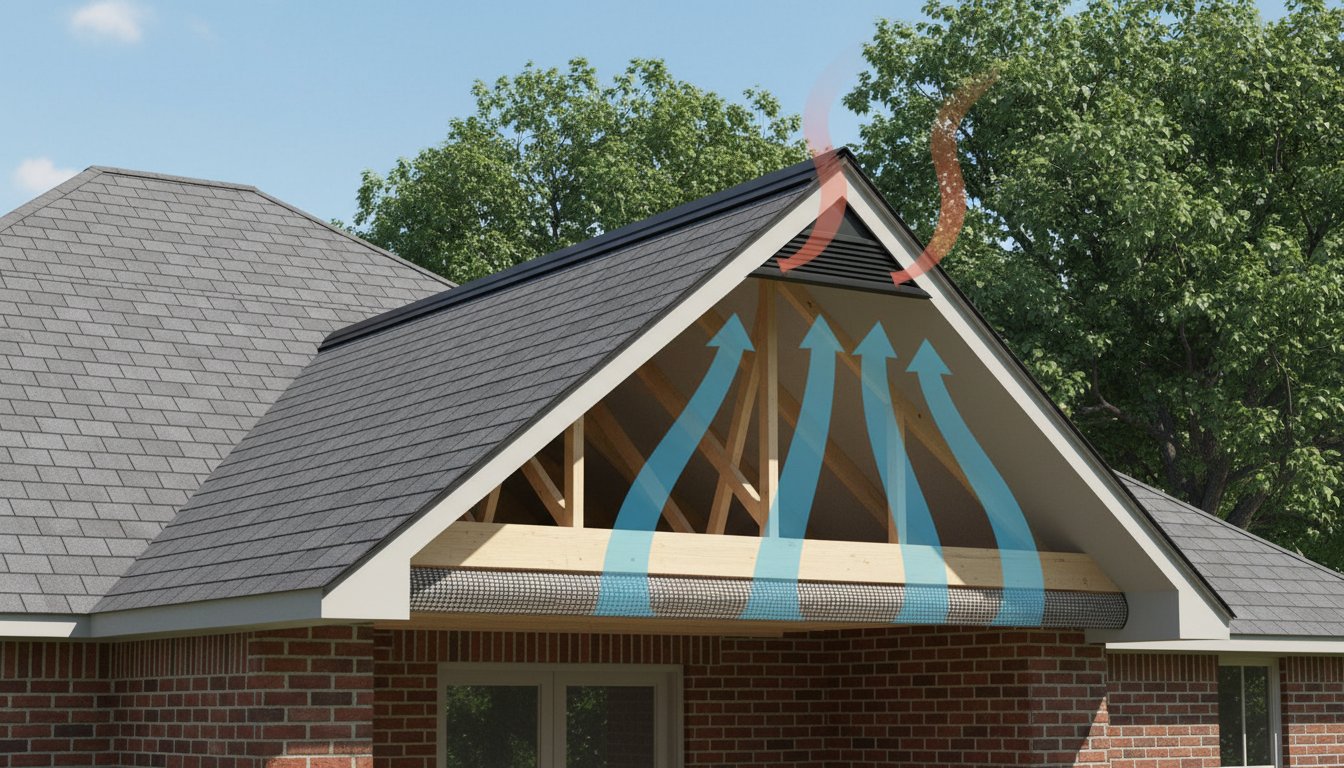

Last July 2025, a homeowner in Midtown Tulsa discovered that while their thermostat was set to 72 degrees, their attic had reached a staggering 150 degrees. This intense heat wasn’t just a comfort issue; it was actively destroying their shingles from the inside out. Many Oklahomans don’t realize that poor airflow can cut a roof’s lifespan by 10 years or more. Understanding roof ventilation issues and solutions is the most effective way to prevent your shingles from curling and your cooling costs from spiraling out of control.
We understand the stress of watching your energy bills climb while worrying about mold growth or shingles that look decades older than they are. As your local experts at Rescue Roofing Tulsa, we’re here to help you protect your family’s home with honest, professional advice. This guide identifies the most common ventilation failures found in Green Country homes and provides the exact steps to fix them. You’ll learn how to achieve a cooler, more comfortable house during the 100 degree days of August and ensure your roof stays durable for the long haul.
Key Takeaways
- Understand why Tulsa’s unique humidity makes a balanced intake and exhaust system essential for protecting your roof deck from “hidden rot.”
- Learn how to identify common roof ventilation issues and solutions, such as fixing “short-circuited” airflow or unblocking painted-shut intake vents.
- Discover how proper attic airflow can lower your summer energy bills by preventing your HVAC system from overworking in 150-degree attic heat.
- Explore modern upgrades like Ridge Vents and SmartVents that provide a high-efficiency, long-term fix for homes without traditional overhangs.
- Find out how a professional 21-point inspection ensures your home stays protected with a hassle-free, local approach to roof health.
The Role of Roof Ventilation in Tulsa’s Extreme Climate
Roof ventilation is a balanced system of intake and exhaust vents that work together to regulate your attic’s temperature and moisture levels. It isn’t just about letting heat out; it’s about creating a continuous cycle of fresh air. In Tulsa, our “Green Country” climate brings a unique set of challenges that homeowners in drier states like Arizona don’t face. While they deal with dry heat, we battle high humidity levels that often exceed 70% during the summer months. This moisture makes understanding roof ventilation issues and solutions vital for protecting your home’s structural integrity.
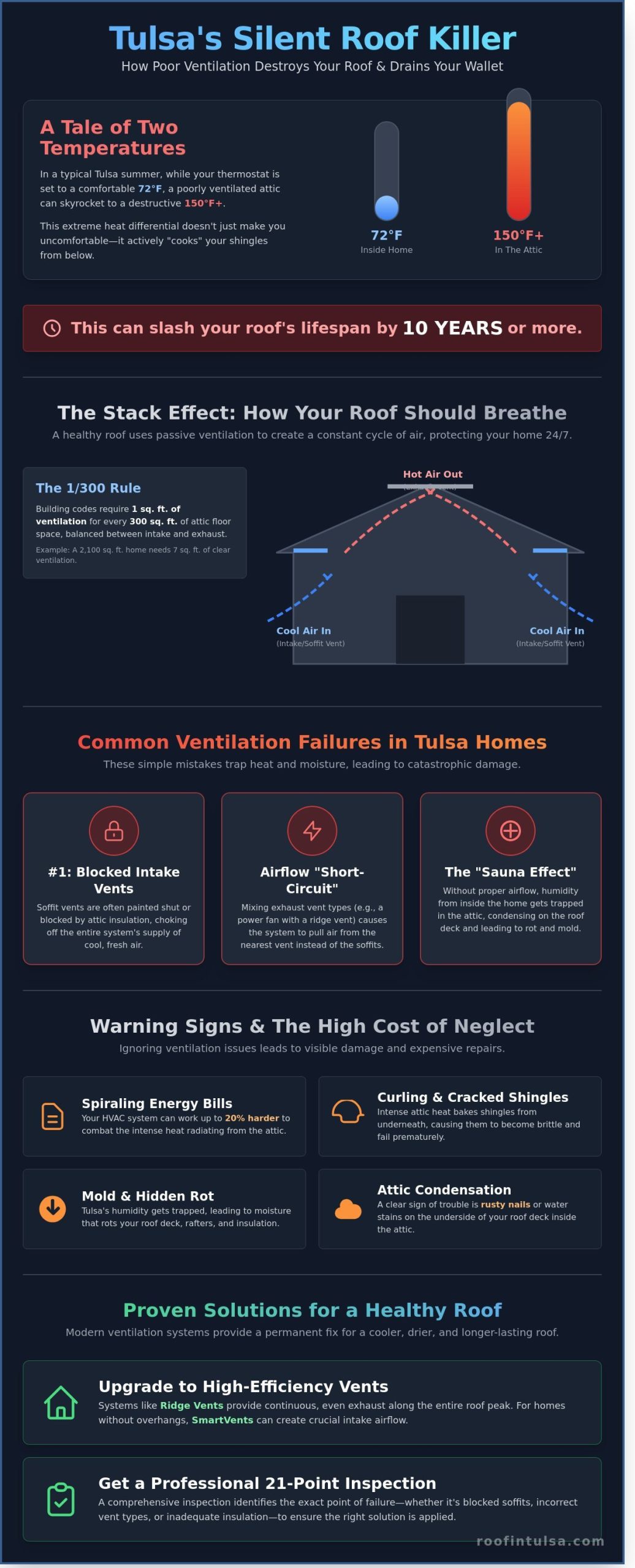
Proper airflow acts as a thermal buffer. When Tulsa hits those 100-degree days in July and August, an unventilated attic can reach temperatures upward of 150 degrees. This extreme heat radiates downward, forcing your air conditioning system to work 20% harder and shortening the lifespan of your shingles. To prevent this, Oklahoma building codes generally follow the 1/300 rule. This standard requires 1 square foot of net free ventilation area for every 300 square feet of attic floor space. For a 2,100-square-foot home, you need at least 7 square feet of clear, unobstructed ventilation to keep the air moving effectively.
Thermal Buoyancy and the Stack Effect
The science behind a healthy roof relies on the principles of passive ventilation to move air without mechanical help. This process, known as the stack effect, happens when hot air naturally rises because it’s less dense than cool air. In a well-designed system, hot air escapes through exhaust vents near the roof’s peak, creating a vacuum that pulls cool, fresh air in through the soffit vents at the eaves. If your attic is poorly designed, this hot air gets trapped against the roof deck. T-Town Roofing professionals often recommend passive systems for Tulsa residential properties because they’re reliable, quiet, and don’t require electricity to keep your home comfortable during a power outage.
Ventilation vs. Insulation: Finding the Balance
Many homeowners believe that adding more insulation is the only way to lower energy bills. However, adding thick layers of fiberglass or cellulose without checking your ventilation can cause severe damage. If you block your soffit vents with insulation, you stop the intake of cool air. This creates a “sauna effect” where moisture from daily activities like showering or cooking gets trapped in the attic. When this humid air hits the underside of a hot roof deck, it condenses into water droplets. Over time, this leads to mold growth and wood rot in your rafters.
Our team at T-Town Roofing evaluates the whole-attic health during every inspection. We don’t just look at the shingles; we check for blocked vents and signs of moisture. Solving roof ventilation issues and solutions requires a bird’s-eye view of how your home breathes. We ensure your insulation levels meet modern R-value standards without suffocating the airflow your roof needs to survive Oklahoma’s volatile weather. By balancing these two components, you protect your roof deck from the inside out and ensure your 30-year shingles actually last for three decades.
Common Roof Ventilation Issues and Warning Signs
Most homeowners assume that ventilation is just about the holes on top of the roof. In reality, it’s a balanced system that requires precision. The #1 most common issue we encounter in Tulsa is blocked or “painted shut” intake vents. These are the vents located under your eaves, known as soffits. Often, professional painters or well-meaning DIYers accidentally seal these openings with thick layers of latex paint. Other times, attic insulation is pushed too far into the corners, physically choking off the airflow. Without fresh air entering at the bottom, your exhaust vents at the top simply cannot function.
Another frequent mistake is the “short circuit” problem. This happens when a contractor mixes different types of exhaust vents on a single roof area. For example, combining a ridge vent with a motorized power fan creates a conflict. Instead of pulling cool air from the soffits, the power fan pulls air from the ridge vent just a few feet away. This leaves the lower half of your attic stagnant and hot. Understanding these roof ventilation issues and solutions is the first step toward protecting your home from structural damage. Proper airflow must follow established building science principles to ensure moisture and heat move upward and out without interruption.
Physical symptoms of poor airflow are often easy to spot if you know where to look. You might notice rusty nails poking through the roof deck in your attic. This isn’t usually a leak; it’s moisture from your shower or kitchen condensing on cold metal. You may also feel “hot spots” on your upstairs ceiling. If one room feels 5 degrees warmer than the rest of the house, your attic is likely acting like a giant radiator. If you’re worried about these signs, it’s a good idea to schedule a professional inspection with our local team to catch problems before they scale.
The ‘Attic Sauna’ Test: DIY Diagnostics
You can perform a basic check yourself. Safely enter your attic on a sunny afternoon. If the heat hits you like a wall or you smell a faint musty scent of mildew, your ventilation is failing. Look toward the edges of the roof for “light at the edges.” You should see small points of daylight coming through the soffit vents. If it’s pitch black, your intake is blocked. In Tulsa, we also look for ice dams during our rare winter freezes. When heat stays trapped in the attic, it melts snow on the roof which then refreezes at the cold gutters. This 100% indicates a heat leakage and airflow problem.
Shingle Deterioration and Premature Aging
Excessive heat literally “bakes” your shingles from the underside. This isn’t just a cosmetic issue. It causes the asphalt oils to evaporate, making the shingles brittle. Most manufacturers will actually void your warranty if they find the roof wasn’t ventilated to their specific standards. In the Oklahoma sun, dark-colored shingles can reach temperatures of 160 degrees. Because of this, dark roofs require 15% more ventilation than lighter-colored alternatives to maintain the same lifespan.
Distinguishing between storm damage and ventilation failure is vital for insurance purposes. While hail creates circular bruises, ventilation failure causes “blistering” or shingles that curl upward at the edges. Our team specializes in identifying these roof ventilation issues and solutions to ensure your attic stays dry and your shingles last for their full 30-year rating. We’ve seen hundreds of roofs in the Tulsa area fail 10 years early simply because the attic couldn’t breathe. It’s a preventable problem that we’re here to help you solve.
The Financial Consequences of Poor Attic Airflow
Ignoring your attic’s airflow isn’t just a maintenance oversight; it’s a direct drain on your bank account. In the peak of a Tulsa July, an unventilated attic can easily reach temperatures of 150 degrees Fahrenheit. This intense heat radiates downward, forcing your air conditioning system to work 40% harder just to maintain a comfortable 72 degrees in your living space. According to the Department of Energy ventilation guidelines, proper airflow is a critical component of home energy efficiency that many homeowners overlook until the bills arrive. High attic temperatures don’t just stay in the attic. They penetrate your ceiling insulation and heat your drywall, creating a constant cycle of mechanical stress on your cooling equipment.
Beyond the monthly utility spike, poor airflow creates a breeding ground for “hidden rot.” During winter, warm air from your home escapes into the attic and meets the cold roof deck, causing condensation. This moisture slowly weakens your rafters and plywood decking. If a storm hits and you try to file a claim, an adjuster might find that your roof failed because of internal moisture damage rather than wind. They often deny these claims, citing a lack of proper maintenance. When you eventually list your home, savvy inspectors will flag these roof ventilation issues and solutions as a major red flag. This often leads to a $5,000 to $10,000 reduction in your asking price or a demand for a full roof replacement before closing.
To get ahead of these issues before listing your property, you can find out more about how a comprehensive inspection can provide peace of mind.
Impact on HVAC Longevity
Your air conditioner’s lifespan is tied to how hard it has to fight your attic. Most units are designed to last 15 to 20 years, but constant operation in a “heat box” environment can cut that life expectancy by 30%. This leads to expensive repairs like blown blower motors or seized compressors years before they should occur. Replacing a full HVAC system in Tulsa can cost upwards of $8,000; however, a professional ventilation upgrade often costs less than $1,500. In a 2022 internal review of Tulsa homes, residents who corrected their attic airflow saw an average of 22% savings on their summer cooling costs immediately. This simple fix pays for itself within three to four seasons. Of course, even with perfect ventilation, your HVAC system needs expert care; you can learn more about E.R.S. Heating & Cooling to see how professionals approach system longevity.
Ventilation and Your Roof Warranty
Many homeowners don’t realize that the “lifetime” warranty from manufacturers like GAF or Owens Corning has strict requirements. If your attic isn’t vented to their specific ratios, they can void your shingle warranty entirely. Manufacturers argue that excessive heat “bakes” the shingles from the inside out, causing premature granule loss. As a GAF Master Elite contractor, T-Town Roofing ensures every installation meets these rigorous standards. We provide the professional documentation you need for future insurance claims or warranty audits. Addressing roof ventilation issues and solutions now provides the peace of mind that your investment is fully protected. Our goal is to make the process hassle-free while ensuring your home remains the safest place for your family.
Proven Solutions for Tulsa Roof Ventilation Problems
Solving roof ventilation issues and solutions starts with understanding how air moves through your specific attic space. In Tulsa, where summer temperatures frequently exceed 100 degrees for 10 or more days straight, your roof needs a balanced system to survive. If your attic lacks proper airflow, temperatures can soar to 150 degrees; this literally cooks your shingles from the inside out and voids many manufacturer warranties. We focus on creating a system that protects your investment while keeping your home comfortable.
Upgrading to ridge vents is often the most effective move for modern gable roofs. These vents run the entire length of your roof peak, providing a continuous exhaust path for hot air. When our GAF Master Elite certified team installs these, we ensure they are paired with proper intake. A well-installed ridge vent can lower attic temperatures by up to 30 degrees during a typical July afternoon. It’s a low-profile solution that doesn’t ruin your home’s curb appeal.
Correcting intake is the second half of the equation. You can’t exhaust air that isn’t there. For homes without traditional overhangs, we install SmartVents. These are tapered pieces of heavy-duty plastic that sit under the shingles at the eave, creating a necessary 1-inch intake gap. If you have existing soffit vents, we often find they are blocked by blown-in insulation. We install rafter baffles to maintain a clear 2-inch channel for air to move freely from the soffit to the ridge.
Solar-powered attic fans offer a modern, Oklahoma-friendly solution for high-heat areas. These units don’t add a cent to your PSO or AEP electric bill because they run entirely on sunlight. They’re especially useful for hip roofs that don’t have long ridge lines for passive venting. A single solar fan can move up to 1,500 cubic feet of air per minute, providing active cooling when the sun is at its strongest.
Passive vs. Active Ventilation Systems
Passive systems like ridge vents and turbine vents, often called Whirlybirds, rely on natural physics. In Tulsa, where wind speeds average 10.6 mph, turbines are quite common. They are durable, but some homeowners find them noisy during 40 mph gusts. Active power vents use electricity to pull air out. They’re powerful, but if your attic floor isn’t perfectly sealed, they might actually pull cooled air from your living room through light fixtures. For most Oklahoma homes, a passive ridge vent system stands up best to our severe thunderstorms and high winds.
Retrofitting Older Tulsa Homes
Homes in Midtown or Cherry Street, many built in the 1920s and 30s, present unique challenges. These historic structures often have “closed” soffits with zero intake. We use creative roof ventilation issues and solutions like hidden intake strips or specialized gable vents that match the original 1920s architecture. This allows us to protect the wood structure from rot without compromising the classic aesthetic that makes these neighborhoods special. It’s about blending modern science with historic preservation.
This challenge of modernizing older homes isn’t unique to Tulsa; for another perspective on tackling complex roofing projects, you can learn more about SYNERGY ROOFING – ROOFING & SKYLIGHT SPECIALIST.
High-quality ventilation is the best way to extend the life of your roof and lower your cooling costs. If you aren’t sure if your attic is breathing correctly, we’re here to help. Contact Tulsa’s most trusted roofer for a free ventilation assessment today.
How Rescue Roofing Tulsa Solves Your Ventilation Needs
Rescue Roofing Tulsa understands that identifying roof ventilation issues and solutions requires more than a quick glance from the driveway. Our team utilizes a “Hassle-Free” 21-point roof and attic inspection process to ensure your home breathes correctly. This isn’t a surface-level check; we climb into the attic space to measure the actual net free ventilating area. We look for blocked soffit vents, crushed insulation baffles, and telltale signs of moisture on the underside of your roof decking. Since 2012, we’ve helped over 3,500 Tulsa homeowners avoid premature roof failure by catching these hidden details early.
We’ve earned our reputation as Tulsa’s most trusted roofer by solving complex airflow corrections that other contractors often ignore. Proper airflow isn’t just about adding more vents. It’s about the precise balance between intake and exhaust. If that balance is off, your attic stays trapped in a cycle of heat and moisture. Our specialists focus on roof ventilation issues and solutions that prioritize the long-term health of your shingles and your energy bills. We stand behind every correction with a 10-year workmanship warranty on all repairs. This is a full decade of protection that gives you peace of mind, far exceeding the 1 or 2 years offered by many local competitors.
When storm damage strikes, ventilation is frequently overlooked during the chaos of repairs. High winds or large hail can damage ridge vents or compromise turtle vents, leading to leaks months after the clouds clear. If we find these issues during a storm repair, we handle the insurance side for you. We’ve worked with every major carrier in Oklahoma since our founding. Our team documents the lack of proper ventilation as a code requirement or a necessary part of the “restore to pre-storm condition” clause. This ensures your insurance company covers the upgrades needed to keep your home safe and functional.
Expert Local Knowledge
Tulsa sits in a unique climate zone where humidity levels often exceed 70% during the summer months. This moisture is a silent killer for roof decks if it’s not managed. Our team knows the specific building codes for T-Town and the surrounding suburbs like Broken Arrow and Owasso. As a GAF Master Elite contractor, a status held by less than 2% of roofers nationwide, we provide specialized ventilation systems that qualify for enhanced warranties. Our local team lives in the neighborhoods we serve, and we’re committed to keeping our neighbors’ homes protected from the Oklahoma elements.
Get Your Free Ventilation Assessment
During a Rescue Roofing inspection, you receive a full digital report with photos of your current setup. We explain exactly where the airflow is failing and provide clear, honest pricing with no hidden fees. If a full upgrade is needed, we offer flexible financing options with rates as low as 0% for qualified homeowners. Don’t let a hot attic destroy your investment. Schedule your free roof and ventilation inspection today!
Secure Your Tulsa Home’s Future Performance
Tulsa’s extreme weather patterns demand a roof that breathes correctly. You now understand how proper airflow prevents the 150-degree attic temperatures that destroy shingles and drive up energy bills by 20% or more. Addressing roof ventilation issues and solutions today ensures your home stays comfortable during our humid Oklahoma summers. Don’t let trapped moisture rot your decking or void your shingle warranty. We’ve served the Tulsa community as a family-owned business for years, and we’re ready to help you navigate these challenges with ease.
As a GAF Master Elite Certified contractor, a distinction held by fewer than 2% of roofers nationwide, we provide the highest level of expertise. We protect your investment with a 10-year workmanship warranty and offer a 24/7 emergency repair response for your peace of mind. Our team understands the specific needs of local neighborhoods from Midtown to Jenks. Let us handle the technical details so you can enjoy a safe, efficient home without the stress.
Get a Free Roof Ventilation Inspection from Tulsa’s Most Trusted Roofer
We look forward to protecting your home and giving your family the security you deserve.
Frequently Asked Questions
How do I know if my roof has enough vents?
You need 1 square foot of net free ventilation area for every 300 square feet of attic floor space. If your home has a 1,500 square foot attic, you require at least 5 square feet of total vent space divided equally between intake and exhaust. You can identify problems by checking for brittle shingles or ice dams, which indicate your roof isn’t breathing correctly during our 100-degree Tulsa summers.
Can I have too much roof ventilation?
Yes, you can have too much ventilation if the system is unbalanced. This issue occurs in 15% of older Tulsa homes when homeowners install powerful motorized fans that actually pull air-conditioned air from the living room into the attic. A proper system maintains a 50/50 ratio between intake vents at the eaves and exhaust vents at the peak to keep your home pressurized correctly.
Will adding roof vents lower my electric bill in the summer?
Adding vents can reduce your summer cooling costs by 10% to 15% by lowering peak attic temperatures. When your attic reaches 150 degrees in July, your air conditioner works significantly harder to keep your bedrooms at a comfortable 72 degrees. Implementing the right roof ventilation issues and solutions helps your HVAC system run more efficiently and extends the life of your cooling equipment by several years.
What is the best type of roof vent for Oklahoma high winds?
Ridge vents with an internal weather filter are the most reliable option for Oklahoma’s frequent 60 mph wind gusts. These vents sit low to the roofline and prevent rain from blowing into your attic during heavy spring thunderstorms. As a local GAF Master Elite contractor, we recommend Cobra Ridge Vents because they provide consistent airflow while withstanding the high-velocity winds common in Green Country.
Does a new roof include new ventilation by default?
A new roof doesn’t always include a full ventilation upgrade by default unless it’s specified in your contract. At T-Town Roofing, we perform a 21-point inspection on every project to ensure your intake and exhaust system meets the 130 mph wind warranty requirements. We replace damaged or outdated vents as a standard part of our quality installation process to protect your home and your investment for decades.
How much does it cost to fix roof ventilation issues in Tulsa?
Repairing common roof ventilation issues and solutions in Tulsa typically costs between $300 and $1,200 depending on the complexity of the project. For example, adding a single solar-powered attic fan might cost $650; while installing new soffit vents across a 2,000 square foot home often reaches $1,100. These figures reflect 2024 labor and material rates for professional, insured roofing crews in the Tulsa metro area.
Can I fix my own roof ventilation or do I need a pro?
You should hire a professional because improper vent placement can lead to roof leaks or dangerous mold growth. Cutting into your roof deck requires specialized tools and a deep understanding of local building codes. A certified roofer ensures your 50-year shingle warranty stays valid; many manufacturers void their coverage if they find evidence of DIY modifications or incorrect airflow calculations that damage the shingles.
Why is my attic so hot even though I have vents?
Your attic stays hot because your intake vents are likely blocked by insulation or debris. Without fresh air entering through the soffits, your exhaust vents can’t effectively move the 140-degree air out of the space. About 40% of the homes we inspect in Tulsa have “short-circuited” systems where air only moves between two high vents, leaving the rest of the attic air stagnant and humid.