


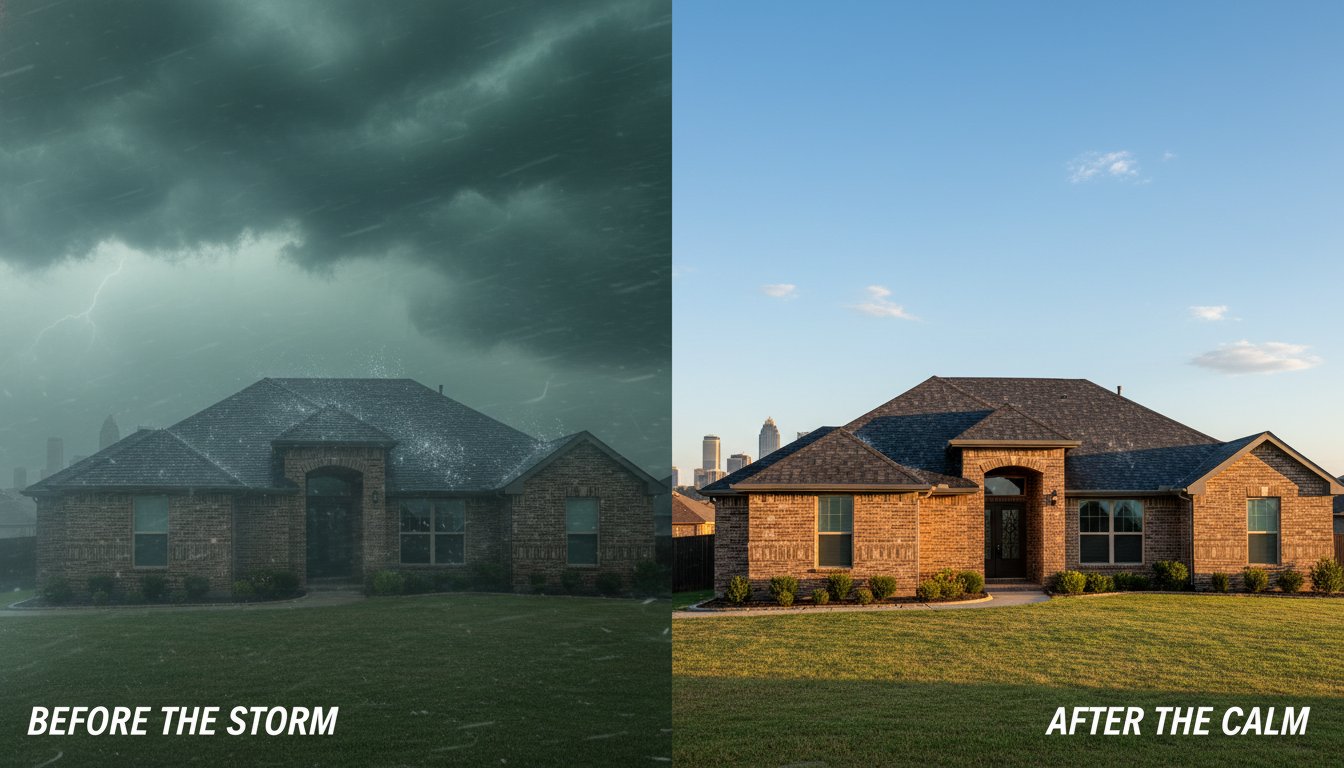

Did you know that a single afternoon of Oklahoma weather can subject your shingles to more stress than a decade of calm sunlight in other states? It’s exhausting to watch the horizon turn green and wonder if your home is truly ready for the common roof problems in oklahoma caused by hail, high winds, and intense heat. You’re likely tired of the confusion surrounding insurance claims and the fear of out-of-state contractors who disappear as soon as the sun comes back out.
We believe your roof should be your first line of defense, not your biggest source of anxiety. This guide provides a clear path to identifying and fixing damage while navigating the latest 2026 building codes and residential endorsement standards. You’ll learn how to spot hidden storm damage, understand the new 14-day insurance response laws, and gain the confidence to choose a local expert who treats you like a neighbor instead of a claim number. By the end of this survival guide, you’ll have a proactive plan to keep your home safe and dry regardless of what the Oklahoma sky delivers.
Key Takeaways
- Identify the common roof problems in oklahoma caused by the “triple threat” of high winds, large hail, and intense UV exposure.
- Learn how to distinguish between functional storm damage and natural aging to streamline your insurance claim process.
- Master a seasonal maintenance checklist designed to protect your home from thermal shock and attic humidity issues.
- Understand the 2026 building codes and legislative updates that protect your rights as a homeowner.
- Discover the red flags of out-of-state “storm chasers” and the benefits of working with a local Tulsa expert.
Understanding Oklahoma’s “Triple Threat” Climate Patterns
Living in the heart of the plains means your home is on the front lines of some of the most volatile weather in the country. We often refer to this as the “Triple Threat” because it combines high-velocity winds, large-diameter hail, and flash flooding into a single, high-stakes season. These forces don’t just happen individually; they often strike all at once. This unique combination is why homeowners frequently encounter common roof problems in oklahoma that wouldn’t exist in more temperate regions. It’s a demanding environment that requires a roofing system built for resilience.
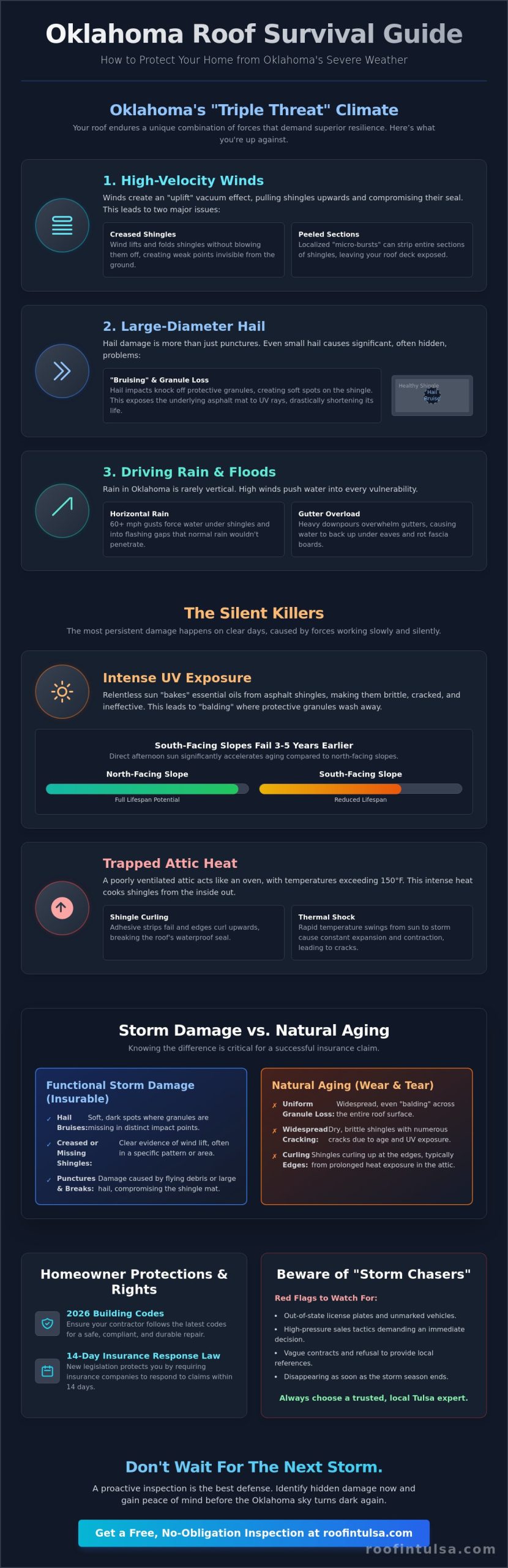
Tulsa sits in a prime location within Tornado Alley, which subjects your roof to extreme “uplift” pressures. When high winds sweep across your roof deck, they create a vacuum effect that tries to pull shingles upward. If the seal is even slightly compromised, the wind can peel back entire sections. We also see “micro-bursts” during the spring. These are sudden, localized bursts of air that hit with enough force to strip shingles off a single side of a house while leaving the neighbor’s roof untouched. Beyond the wind, Oklahoma’s climate introduces intense humidity. In our “Green Country” region, this moisture often leads to algae and moss growth. These organisms aren’t just an eyesore; they trap moisture against your shingles and accelerate the breakdown of the underlying materials.
The Impact of Oklahoma Hail and Wind
Hail damage is often misunderstood by many property owners. While large stones can puncture a roof, smaller hail often causes “bruising.” This is a soft spot where the protective granules have been knocked away, leaving the asphalt mat exposed to the sun. High winds also cause “creased” shingles. This happens when a shingle is lifted and folded back but doesn’t actually blow off. These creases are often invisible from the ground but leave your roof vulnerable to the next storm. During the June storm season, we also see significant damage from flying debris and falling limbs that can compromise even the sturdiest roofing systems. It’s why a professional eye is so important after a major weather event.
Flash Floods and Driving Rain
Vertical rain is a rarity here. Instead, we deal with horizontal “driving” rain that is pushed by 60-mph gusts. This force pushes water into tiny gaps in your flashing or under shingles that would remain dry during a normal storm. If your gutters lack the capacity to handle Tulsa’s heavy autumnal downpours, water can back up under the eave and rot your fascia boards. If you notice water spots on your ceiling or dampness in your attic after a storm, it’s vital to seek Fast & Reliable Roof Repair in Tulsa, OK to prevent structural damage. Catching a small leak early is the best way to avoid a full replacement later.
The Silent Roof Killers: UV Radiation and Attic Humidity
While the crashing thunder of a June storm is hard to miss, the most persistent common roof problems in oklahoma actually happen on the clearest, hottest days of the year. The sun is a relentless force in our state. It works slowly but surely to degrade the materials protecting your family. Understanding how heat and humidity interact with your roofing system is the first step in extending the life of your home. Ignoring these silent common roof problems in oklahoma is often what leads to expensive, unexpected repairs down the road.
Oklahoma’s weather is famous for its drastic swings. Thermal shock is the rapid expansion and contraction of roofing materials. Imagine a shingle sitting in the 100°F sun all afternoon. Suddenly, a cold thunderstorm rolls in, dropping the temperature by 30 degrees in minutes. This constant tug-of-war between heat and cold causes shingles to crack and lose their structural integrity over time. It’s a physical stress that eventually breaks down even the highest quality materials.
UV Degradation and Shingle Brittleness
Asphalt shingles rely on essential oils to stay flexible and shed water. Intense UV exposure effectively “bakes” these oils out. This process makes the shingles brittle and prone to cracking under the slightest pressure. You might notice “balding” shingles where the protective granules have washed away, leaving the asphalt mat exposed. In our region, south-facing roof slopes typically fail 3-5 years earlier than north-facing ones because they bear the brunt of the direct afternoon sun.
The Critical Role of Proper Ventilation
Many homeowners don’t realize that a roof can be destroyed from the inside out. If your attic lacks proper ventilation, heat becomes trapped. This trapped air can reach temperatures well over 150°F, effectively cooking your shingles from underneath. This causes shingles to curl and lose their adhesive seal, making them easy targets for the next high-wind event. Poor ventilation also traps Oklahoma’s high humidity, which can lead to moisture soaking into the wooden roof deck and causing rot. For more specific advice on keeping your airflow healthy, see our Roof Maintenance: A Tulsa Homeowner’s Guide. Taking a proactive approach to your attic’s health is one of the best ways to protect your investment.
Identifying Storm Damage vs. Natural Aging for Insurance
Filing an insurance claim often feels like the most stressful part of homeownership in Tulsa. You know a storm hit, but you aren’t sure if the marks on your shingles warrant a full replacement or a simple repair. Understanding how to separate normal wear from storm-related common roof problems in oklahoma can save you weeks of frustration. It also helps you approach your insurance company with confidence and clarity. We believe our role is to act as your guide, helping you understand exactly what the adjuster is looking for when they arrive at your property.
Insurance companies primarily focus on “functional damage.” This means the damage must specifically reduce the roof’s lifespan or its ability to shed water effectively. Aesthetic weathering, such as slight fading or minor surface scratches that don’t compromise the shingle, is rarely covered. Adjusters typically use the “10×10 Square” rule to evaluate hail impact density. They mark off a 10-foot by 10-foot area on each slope of the roof. If they find a specific number of hits—usually between 6 and 10 depending on your policy—they may approve a full replacement for that slope or the entire roof.
Granule loss is perhaps the most debated topic during the inspection process. You might see shingles “balding” or find piles of granules in your gutters. While we previously discussed how UV rays cause this over time, storm-driven loss is a different matter. If a hailstone physically displaces granules and exposes the underlying asphalt mat, it creates a weak spot that will eventually leak. Don’t wait too long to address these issues. Oklahoma homeowners should generally file claims within one year of a storm. Waiting longer makes it significantly harder to prove that the damage was caused by a specific weather event rather than gradual neglect.
Signs of Functional Hail Damage
When inspecting your roof, look for circular indentations or “bruises.” These often feel soft to the touch, similar to a bruise on an apple. You should also check your “soft metals” for signs of trouble. Dents in your gutters, roof vents, or the metal fins of your AC unit serve as “collateral damage” evidence that adjusters use to confirm a hail event occurred. It’s important to remember that functional damage must reduce the roof’s lifespan or water-shedding ability to qualify for a successful claim.
Natural Aging and Wear
As roofs get older, they develop “crazing” or tiny hairline cracks. This is a natural part of the aging process over 15 to 20 years and isn’t usually covered by insurance. There’s also a big difference between shingles blown off by a 70-mph gust and shingles that have simply lost their adhesive seal because they’ve reached the end of their useful life. For help with these non-storm issues, check out A Homeowner’s Guide to Roof Repairs. Knowing these differences helps you set realistic expectations and ensures you’re prepared for the next steps in protecting your home.
Proactive Maintenance: The Tulsa Homeowner’s Seasonal Checklist
Waiting for a leak to appear is the most expensive way to manage your home. In our region, common roof problems in oklahoma often start as small, manageable issues that escalate quickly during a severe weather event. By following a consistent seasonal schedule, you can catch these vulnerabilities before they turn into emergency repairs. Think of your roof as a shield that needs regular tuning to stay effective against our state’s unpredictable elements.
- Spring (March-May): This is your most critical window. Before “Tornado Alley” reaches its peak, inspect your roof for cracks caused by winter’s freeze-thaw cycles. Clear all gutters to ensure they can handle the heavy spring deluges.
- Summer (June-August): Focus on heat management. Check your attic temperatures to ensure your ventilation system is working. If your attic feels like an oven, your ridge vents might be obstructed, which leads to the “shingle cooking” we discussed earlier.
- Fall (September-November): Clear away leaves and organic debris. In neighborhoods with mature trees, this debris creates moisture traps that encourage mold and rot along the roofline.
- Winter (December-February): Monitor for ice damming after a rare Oklahoma snow. Pay close attention to flat roof sections on commercial or modern residential properties, as heavy snow load can cause structural stress.
The Importance of Gutter Health
Your gutters do more than just move water; they protect your entire structure. When gutters are clogged, water can’t escape. It often “wicks” upward into the roof deck, causing the wood to rot from the edge inward. In Tulsa, our clay-heavy soil makes downspout extensions a necessity. Without them, water pools at the base of your home and causes foundation shifting. For homeowners in heavily wooded areas like Midtown or Riverside, installing leaf guards is a smart investment to keep this system flowing freely year-round.
Professional Inspections vs. DIY
We always recommend safety first. You don’t need to climb a steep-pitch roof to check its health. A simple binocular inspection from the ground can reveal missing granules or shifted shingles. However, a professional eye is invaluable when you’re preparing to sell your home. A certified inspection report provides a clear, documented history of your roof’s condition, which is a powerful tool during real estate negotiations. If you aren’t sure what to look for from the ground, review our list of Signs You Need a New Roof in Oklahoma. If you suspect your roof has reached the end of its life, we invite you to contact us for a professional roof inspection to secure your home’s future.
Navigating the Repair Process with a Trusted Tulsa Contractor
After a major storm rolls through Green Country, you’ll likely see a sudden influx of trucks with out-of-state license plates. These “storm chasers” follow the hail, often moving from state to state without a permanent presence. While they might offer quick fixes, they are rarely around when a labor warranty issue arises two years later. Choosing a local partner is the best way to handle common roof problems in oklahoma because we live in the same neighborhoods we serve. We understand that your home is more than just a project; it’s your family’s safety.
Beyond just fixing shingles, a local expert acts as a vital bridge between you and your insurance company. We speak the language of adjusters and understand the specific documentation required to get your claim approved. One of the most effective ways to lower your future premiums is by upgrading to Class 4 Impact Resistant shingles. These materials are specifically designed to withstand the “Triple Threat” climate we discussed in earlier sections. Many Oklahoma insurers offer significant discounts for these shingles because they drastically reduce the likelihood of future claims. It’s a proactive step that pays for itself over time.
Our Insurance Claim Assistance Process
We’ve refined our process to remove the administrative burden from your shoulders. It starts with a professional inspection where we document every instance of damage with high-resolution photos and detailed notes. Next, we meet your insurance adjuster on-site. Having a professional roofer present ensures that no damage is overlooked during their walkthrough, which leads to a more accurate estimate. Finally, we handle the supplement process. If we find hidden rot or structural issues once the old roof is torn off, we provide the necessary evidence to your insurer to ensure those additional repairs are covered too.
Choosing Local for Long-Term Protection
Accountability is the foundation of trust. We maintain a physical office right here at 7310 E 71st St, so you always know where to find us if you have questions. This local presence ensures we are experts in Tulsa and Broken Arrow building codes, including the strict 2026 requirements for drip edges and ice and water shields. Dealing with common roof problems in oklahoma requires a long-term perspective that only a neighbor can provide. A labor warranty is only as good as the company’s commitment to staying in the community. Don’t let the stress of storm damage weigh you down. Schedule your free roof inspection with Rescue Roofing Tulsa today and let us guide you back to a safe, secure home.
Secure Your Home Against Oklahoma’s Unpredictable Skies
Your home is likely your most significant investment. Protecting it from common roof problems in oklahoma requires more than just reacting after a storm. By understanding the “Triple Threat” of our climate and keeping up with seasonal maintenance, you can extend the life of your roof and avoid the stress of unexpected leaks. We’ve walked through the latest 2026 building codes and explained how to distinguish between natural aging and functional storm damage to help you feel empowered during the insurance process.
You don’t have to navigate these challenges alone. We are locally owned and operated right here in Tulsa. Our team specializes in insurance claim assistance to ensure you receive the full coverage you deserve. We also provide 24/7 emergency repair services because we know that storms don’t wait for business hours. Take the first step toward total peace of mind today. Get Your Free Roof Inspection & Storm Damage Assessment and let us help you protect what matters most. We’re proud to be your neighbor and your trusted roofing partner. Stay safe and dry out there.
Frequently Asked Questions
How do I know if I have hail damage if my roof isn’t leaking?
You can identify hail damage by looking for circular “bruises” or dark indentations on your shingles where protective granules have been knocked away. Check your “soft metals” like gutters, downspouts, and roof vents for dents, as these are clear indicators of a significant hail event. Even without a leak, these impacts compromise the shingle’s integrity and lead to premature failure if they aren’t addressed by a professional.
Will my insurance rates go up if I file a claim for storm damage in Oklahoma?
In most cases, insurance companies don’t raise your individual rates solely because you filed a claim for an “Act of Nature” like hail or wind. Oklahoma is a high-risk state, so rates are often adjusted based on the claims history of an entire zip code or region rather than your specific home. Filing a legitimate claim for storm damage is a standard part of maintaining your property’s value in our climate.
How long does a typical roof last in Tulsa compared to other states?
A standard asphalt shingle roof in Tulsa typically lasts between 15 and 20 years, which is often shorter than the 25-year lifespan seen in milder states. The combination of intense UV radiation, high humidity, and frequent severe storms accelerates the aging process of roofing materials. Choosing high-quality, impact-resistant shingles can help your roof reach the upper end of that range despite our volatile weather patterns.
Can I just repair a section of my roof, or do I need a full replacement?
You can often repair a localized section of your roof if the surrounding shingles are still flexible and in good condition. However, if the roof is nearing 15 years of age or the damage is widespread across multiple slopes, a full replacement is usually the safer and more cost-effective choice. We evaluate the overall health of your roof deck and shingles to provide an honest recommendation for your home.
What are the best roofing materials for Oklahoma’s extreme weather?
Class 4 impact-resistant shingles are currently the best choice for Oklahoma homes because they are specifically engineered to withstand large hail and high winds. These shingles are built with a polymer-modified asphalt that allows them to flex rather than crack under pressure. Many local homeowners choose these materials not only for their durability but also to qualify for significant discounts on their annual insurance premiums.
How often should I have my roof inspected in Tulsa?
We recommend a professional inspection at least once a year and after every major storm event that passes through your neighborhood. Regular inspections help identify common roof problems in oklahoma like minor shingle uplift or hidden hail bruising before they escalate into costly interior leaks. Being proactive with your inspections is the most reliable way to ensure your roof reaches its full expected lifespan.
What is the difference between a “certified” roofer and a general contractor?
A certified roofer specializes exclusively in roofing systems and must pass specific CIB-approved exams to receive the 2026 Residential Roofing Endorsement. While general contractors manage various types of construction, they may lack the specialized training and equipment required for complex roofing installations. Working with a dedicated roofing expert ensures your project adheres to the latest safety standards and qualifies for the best manufacturer warranties.
Do I need a permit for roof repairs in Tulsa, OK?
Yes, the City of Tulsa requires a building permit for all roof replacements and most significant repair projects to ensure they meet current building codes. Professional contractors handle the permitting and inspection process on your behalf to guarantee the work is performed safely and legally. This documentation is also essential for maintaining your home’s insurance eligibility and protecting your property’s value during a future sale.