


That small, dark spot on your ceiling. The single shingle you found in your yard after a heavy Tulsa storm. These are the signs that can send a wave of stress through any homeowner. Suddenly, you’re faced with urgent questions: How serious is this? Will this cost a fortune? And who can you trust to repair your roof with honesty and integrity? The uncertainty can feel just as damaging as the water itself. As your local, trusted roofing experts, we understand that feeling, and we’re here to help you find clear answers and lasting peace of mind.
This guide is designed to give you the confidence you need to protect your home. We will walk you through how to identify common roof problems, help you understand the key factors in deciding between a repair and a full replacement, and explain what to expect from a professional repair process. Our goal is to empower you to make an informed, pressure-free decision and ensure the work is done right. Let’s get you back to feeling safe and secure under a durable, reliable roof.
First Steps: How to Identify Common Roof Problems
Before you can address a problem, you have to know it exists. When it comes to your roof, identifying issues early can save you from the stress and expense of major water damage. The good news is that you can often spot the first signs of trouble yourself-all from the safety of the ground. A quick visual check of your property, especially after a major storm, is a proactive first step in determining if you need to call a professional to inspect or repair roof damage.
We’re here to help you know what to look for. Think of this as your trusted checklist for protecting your home and your peace of mind.
Exterior Warning Signs
Your roof is a complex system of layers and components designed to keep your home safe. Understanding the basics of common roof construction helps you recognize when a key part is failing. From your yard, look carefully for these exterior warning signs:
- Missing, Cracked, or Curling Shingles: After a heavy windstorm, scan your roof for shingles that are lifted, cracked, or have blown off entirely. Shingles with curling or cupped edges are often a sign of aging and are no longer providing adequate protection.
- Damaged Flashing: Flashing consists of metal strips installed around chimneys, vents, and skylights. If you see pieces that look rusted, dented, or pulled away from the roof, you have a vulnerability that water will exploit.
- A Buildup of Shingle Granules: Notice an excess of black, sand-like granules in your gutters or on the ground near your downspouts? This means your asphalt shingles are losing their protective top layer and are nearing the end of their effective lifespan.
- Sagging Roof Deck: Look for any visible dips, depressions, or a “swooping” look along your roofline. A sagging roof is a serious red flag that may indicate a structural issue with the decking underneath, often caused by trapped moisture.
Interior Red Flags
Sometimes, the most telling signs of roof damage appear inside your home. If you notice any of the following red flags, it’s a strong signal that water has already breached your roof’s defenses and is causing problems you can’t see from the outside.
- Water Stains or Discoloration: Yellow or brown circles on your ceilings or streaks running down your walls are a classic sign of a persistent roof leak.
- Peeling or Bubbling Paint: Excess moisture seeping into your drywall or plaster will cause paint to bubble and peel, typically near the ceiling or around window frames.
- Damp Spots or Musty Smells: If your attic smells damp, like mildew or mold, or if you find wet spots on the insulation or wood, it’s a clear indication that water is getting in.
- Spikes in Energy Bills: A damaged or poorly ventilated roof can trap heat in the summer and let it escape in the winter, forcing your HVAC system to work overtime and driving up your utility costs.
While these visual checks are an excellent starting point, they don’t always reveal the full picture. If you’ve spotted any of these signs or have simply been through a severe Tulsa storm, the most reliable and safest next step is to call a trusted, local professional. An expert inspection provides an honest assessment of whether you need to repair your roof and gives you the confidence to make the right decision for your home.
The Big Decision: Should You Repair or Replace Your Roof?
When you notice a problem overhead, the first question is always the same: is this a simple fix, or is it time for a whole new roof? Deciding whether to repair your roof or invest in a full replacement is one of the most critical financial choices a homeowner can make. It’s a balance between a short-term solution and long-term security. As your local, trusted roofing advisors, we’re here to provide clear, honest guidance to help you protect your home.
When a Roof Repair is the Smart Choice
In many situations, a targeted, professional repair is the most sensible and cost-effective solution. A repair is often the best path forward if your roof’s overall structure is still sound and the damage is contained. Consider a repair when:
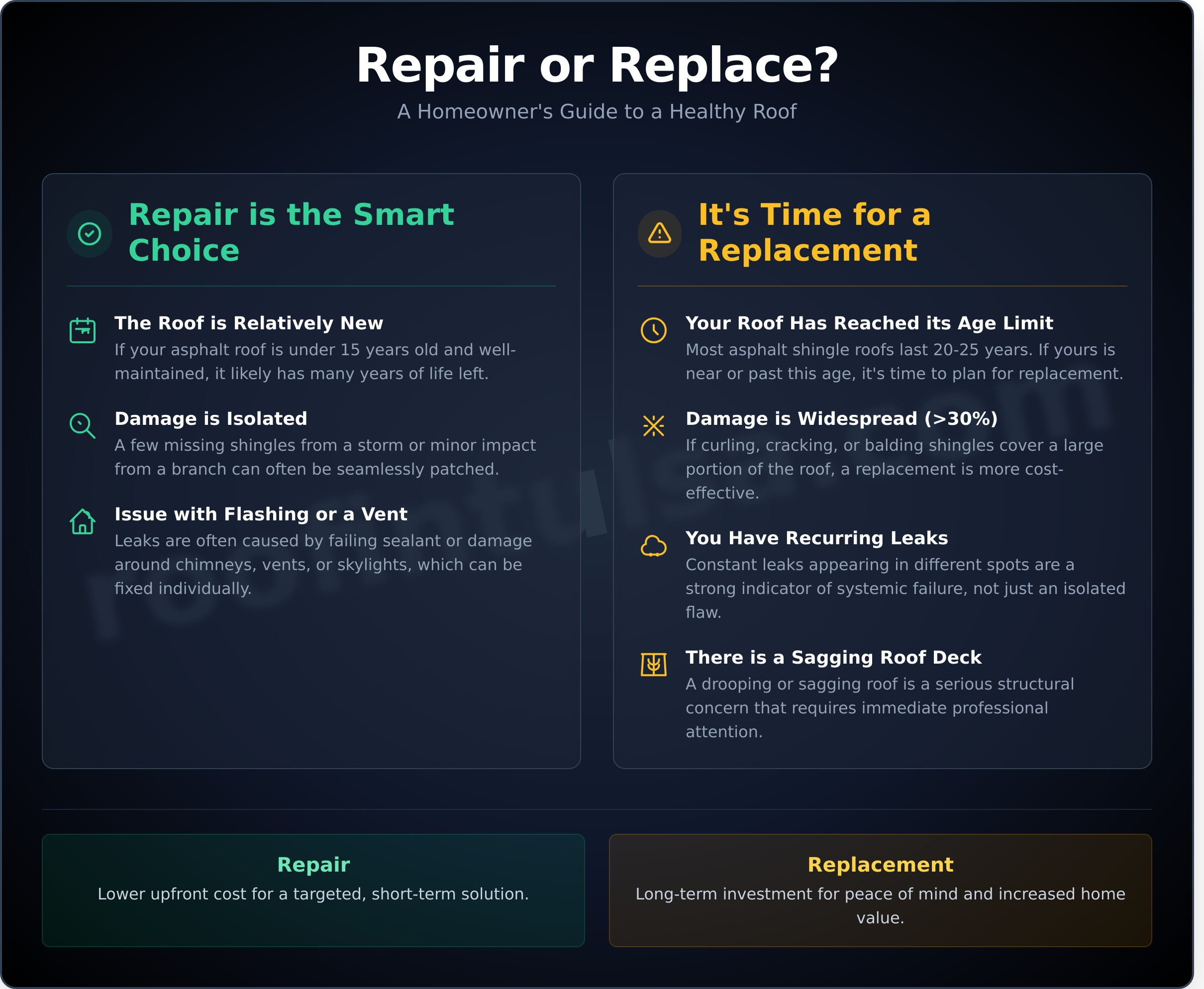
- The roof is relatively new. If your asphalt shingle roof is under 15 years old and has been well-maintained, it likely has many years of life left.
- Damage is isolated to a small area. A few shingles blown off during a Tulsa storm or minor damage from a fallen branch can often be patched seamlessly.
- The issue is with flashing or a vent. Leaks are frequently caused by failing sealant or damaged flashing around chimneys, vents, or skylights-components that can be repaired or replaced individually.
Signs It’s Time for a Full Roof Replacement
Sometimes, a simple repair is just a temporary band-aid on a much larger problem. A full replacement is a significant investment, but it becomes necessary when the entire roofing system’s integrity is compromised. Here are clear signs that a replacement is the only safe option:
- Your roof has reached its age limit. Most asphalt shingle roofs last 20-25 years. If yours is approaching or past this age, it’s time to plan for a replacement.
- Damage is widespread. If you see curling, cracking, or balding shingles across more than 30% of your roof, a replacement is more economical than numerous small repairs.
- You have recurring leaks. Constant leaks appearing in different spots are a strong indicator of systemic failure, not just an isolated flaw.
- There is a sagging roof deck. A drooping or sagging roof is a serious structural concern, often caused by trapped moisture and rot, that requires immediate attention.
Considering the Costs and Long-Term Value
While a repair offers a lower upfront cost, a full replacement provides lasting peace of mind, a comprehensive warranty, and protection you can count on for decades. A new roof not only safeguards your home but also increases its resale value and can improve energy efficiency. Every quality installation must adhere to the highest professional roofing standards to ensure durability and performance. Making this choice can feel overwhelming, but you don’t have to do it alone. Unsure what’s right for you? Get a free, honest assessment.
The Professional Roof Repair Process: What to Expect
Facing a roof issue can be stressful, but understanding the professional repair process can bring you significant peace of mind. A trustworthy, local contractor follows a clear, methodical plan to ensure your home is protected and the job is done right the first time. Here’s a step-by-step look at what you can expect when you partner with an experienced team to repair roof damage.
Step 1: Thorough Inspection and Damage Assessment
The process begins not with a guess, but with a fact-finding mission. A certified roofer will safely access your roof to conduct a comprehensive inspection of the entire system. Using their expertise, they identify not just the obvious leak or damage, but its root cause. Afterward, you should receive a clear, detailed report-often with photos-that explains the findings and outlines a precise plan for repair. This gives you the honest information you need to make a confident decision.
Step 2: The Repair Work Itself
With your approval, our skilled crew gets to work. Quality is our top priority, which means we don’t just patch the problem; we provide a lasting solution. The work focuses on durability and craftsmanship, including:
- Matching Materials: We source shingles, flashing, and other components to match your existing roof for a seamless, professional finish.
- Proper Preparation: Damaged sections are carefully removed, and the underlying deck is inspected and prepared to ensure a solid foundation for the new materials.
- Expert Installation: New materials are secured according to strict manufacturer specifications and industry best practices to guarantee performance.
- Watertight Sealing: All seams, flashing, and penetration points are meticulously sealed to prevent any future water intrusion and protect your home.
Step 3: Final Inspection and Cleanup
Our commitment to quality doesn’t end when the last shingle is nailed down. Before we consider the job complete, a site supervisor conducts a final quality assurance check to ensure every detail meets our high standards. We then perform a meticulous cleanup of your property, using magnetic rollers to find and remove stray nails and debris. You’ll be left with a durable, expertly repaired roof and a spotless yard-plus all the documentation for your repair and warranty for your records.
Understanding the Factors That Influence Roof Repair Costs
One of the first questions homeowners ask is, “How much will this cost?” While that’s a completely fair question, there is no one-size-fits-all price to repair roof damage. The final cost depends on several unique factors, which is why a thorough, professional inspection is the only way to get an honest and accurate estimate for your specific situation.
An experienced roofer will assess your property and provide a detailed quote based on the specific needs of your home. The price reflects not just materials, but the expertise and labor required to protect your home for years to come.
Key Cost Variables
Several key factors directly influence the final price of a roofing repair project. Understanding them can help you see exactly where your money is going:
- The Extent of the Damage: Replacing a few missing shingles after a windstorm is a much smaller job than repairing underlying wood rot and water damage that has affected the roof deck. The more widespread and severe the problem, the more labor and materials are required.
- Your Roofing Material: The cost of materials varies significantly. Architectural asphalt shingles, common in Tulsa, are generally the most cost-effective to repair. Materials like metal, slate, or clay tile require specialized skills and are more expensive to fix.
- Roof Slope and Accessibility: A steep, high-pitched roof (a “high pitch”) requires more safety equipment, staging, and time for our crews to work safely. Similarly, a roof that is difficult to access can also increase labor costs.
- Local Permit Fees: Depending on the scope of the work, some municipalities may require a permit for the repair, which is a standard administrative cost included in the project.
Repairing Storm Damage and Insurance Claims
Here in Tulsa, we know that severe weather can strike with little warning. High winds and hail are common causes of roof damage that are often covered by homeowners insurance. When you need to repair roof damage after a storm, navigating the insurance process can feel overwhelming, but proper documentation is the key to a successful claim.
A trusted, local roofer can be your greatest asset. We can perform a detailed inspection, document all damage with photos, and meet with your insurance adjuster on-site to ensure nothing is overlooked. This hassle-free approach gives you peace of mind. We specialize in insurance claims. Let us help.
Why DIY Roof Repair is Risky: The Value of a Professional
When you notice a small leak or a few missing shingles, the temptation to grab a ladder and attempt a quick DIY fix is understandable. It seems like a simple way to save money. However, what looks like a minor issue on the surface can often be a sign of a more complex problem. Attempting to repair roof damage without professional training is a significant gamble-one that can cost you far more in the long run and put your safety at risk.
The Dangers of DIY
Working on a roof is inherently dangerous and requires specialized knowledge. Before you decide to tackle the job yourself, it’s crucial to understand the risks involved:
- Serious Personal Injury: The most significant risk is a fall. Even a single-story fall can result in life-altering injuries. Professionals use specific safety equipment and are trained to navigate steep and potentially unstable surfaces.
- Causing More Damage: Walking on your roof incorrectly can break shingles, damage the underlayment, and compromise the entire system. An improper repair, like using the wrong sealant or nails, can trap moisture and lead to rot and structural decay.
- Voiding Your Warranty: Many roofing material manufacturers will void their warranty if work is performed by an unlicensed individual. A failed DIY repair could leave you responsible for the full cost of future problems.
The Professional Advantage
Hiring a trusted, local roofing company provides security and a guaranteed quality result. It’s not just about fixing a problem; it’s about protecting your home and your family for years to come. The value of a professional is clear:
- Training, Licensing, and Insurance: A professional team is fully licensed and insured, protecting you from any liability in case of an accident on your property. Their training ensures they can accurately diagnose and properly repair roof issues of any size.
- Quality Materials and Tools: Professionals have access to superior-grade materials and the specialized equipment needed to ensure a durable, long-lasting repair that integrates seamlessly with your existing roof.
- Guaranteed Workmanship: Reputable contractors stand behind their work. A workmanship warranty gives you complete peace of mind, knowing that if any issues arise from the repair, they will be resolved at no cost to you. For a truly hassle-free solution, trust your project to Tulsa’s local experts.
Your Partner in Protecting Your Tulsa Home
Your roof is your home’s first line of defense against the elements. As we’ve covered, knowing how to spot trouble early and understanding the immense value of professional expertise are the most important steps you can take to protect your investment. While a DIY approach may seem tempting, a professional repair ensures the safety, integrity, and longevity of your home, providing true peace of mind.
When the time comes to repair roof damage, you deserve a local partner you can trust. As a locally owned and operated Tulsa company, we’re your neighbors. We are insurance claim specialists ready to make the process hassle-free and offer 24/7 emergency services, ensuring you’re never left to deal with a crisis alone.
Don’t wait for a small leak to become a big problem. Take the first step toward a secure, durable roof today. Schedule your free roof inspection today! We are here to provide the protection and peace of mind your family deserves.
Frequently Asked Questions
How long does a typical roof repair take to complete?
Most minor repairs, such as replacing a few missing shingles or sealing a pipe boot, can be completed in just a few hours. For more extensive damage that requires replacing underlying materials, the job may take a full day. As your trusted local roofer, we always provide a clear and honest timeline after our free inspection so you know exactly what to expect. Our team works efficiently to restore your home’s protection with minimal disruption.
Can you repair my roof during the winter or in bad weather?
We can perform many repairs during the winter, provided the weather is dry and safe for our crew. For shingles to seal correctly, they need some warmth and sun, so we monitor conditions closely. We will not work in active rain, snow, or high winds to ensure a quality, lasting repair. If you have an emergency leak during bad weather, we can often apply a temporary solution to protect your home until a permanent fix is possible.
Will a roof repair fix my leak for good?
A professional repair should absolutely provide a long-term solution for the specific leak. Our expert team doesn’t just patch the problem; we find the root cause to ensure a durable fix. If we find the leak is a symptom of a larger issue or an aging system, we provide an honest assessment. Our goal is to repair roof issues correctly the first time, giving you the peace of mind that comes from a job done with integrity.
How can I tell if a roofing contractor is reputable and trustworthy?
Look for a local contractor who is fully licensed and insured in Oklahoma. A trustworthy roofer will have a strong track record of positive online reviews and be willing to provide local references. Top-tier certifications, like our GAF Master Elite status, are also a key indicator of quality and professionalism. A reputable company will always offer a detailed, written estimate and stand behind their work with a solid workmanship warranty, just as we do for our Tulsa neighbors.
Does my homeowner’s insurance cover roof repairs?
In many cases, yes. Homeowner’s insurance typically covers damage from sudden events like hail, wind, or fallen tree limbs. It generally does not cover issues caused by old age or lack of maintenance. Navigating the claims process can be stressful, which is why we specialize in making it hassle-free. We can document the damage and work directly with your adjuster to ensure your claim is handled fairly and efficiently, restoring your home and your peace of mind.
What is a roof tune-up and do I need one?
A roof tune-up is a proactive maintenance service designed to prevent major problems before they start. Our technicians perform a detailed inspection, seal exposed fasteners, secure loose flashing, and address other minor issues that could lead to leaks. We recommend a tune-up for any roof over five years old. It’s an affordable way to extend your roof’s lifespan and avoid a more costly need to repair roof damage in the future.