

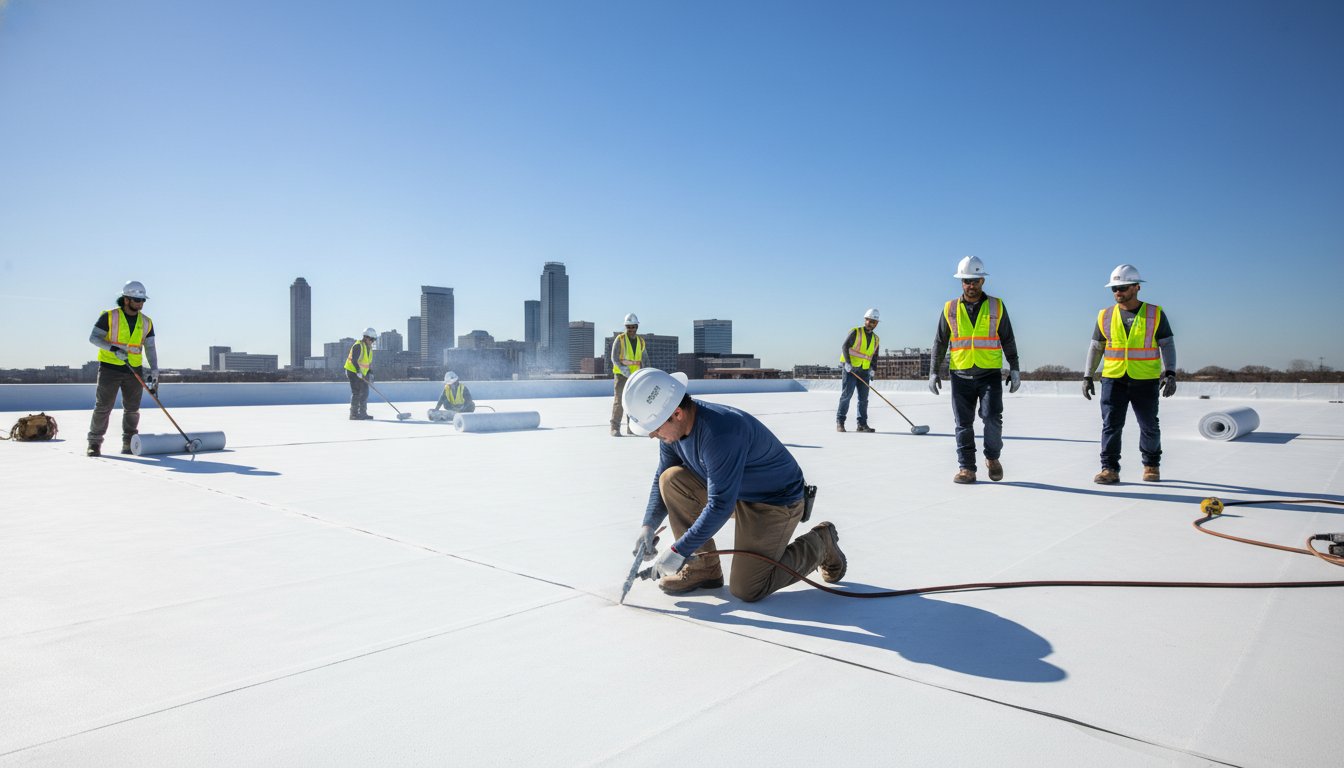

As a business owner, choosing a new roof is one of the most significant investments you’ll make in your property. The pressure is immense, especially in Tulsa, where you need a shield against Oklahoma’s punishing hail, high winds, and relentless sun. Navigating the different types of commercial roofing systems can be overwhelming, leaving you to worry about making a costly mistake. With terms like TPO, EPDM, and Metal being thrown around, how can you be sure you’re choosing the right protection for your assets and your budget?
We believe you deserve peace of mind, not confusion. As Tulsa’s trusted local roofer, we created this guide to provide clear, honest answers. We’ll break down the most common commercial roofing options-from single-ply membranes to durable metal and restorative roof coatings. Our goal is to equip you with the knowledge to understand the pros and cons of each system, prevent unnecessary business disruptions, and feel confident when you speak with a contractor. You’ll be prepared to make a smart, cost-effective choice that maximizes your return on investment for years to come.
Single-Ply Membrane Roofing: The Modern Standard for Flat Roofs
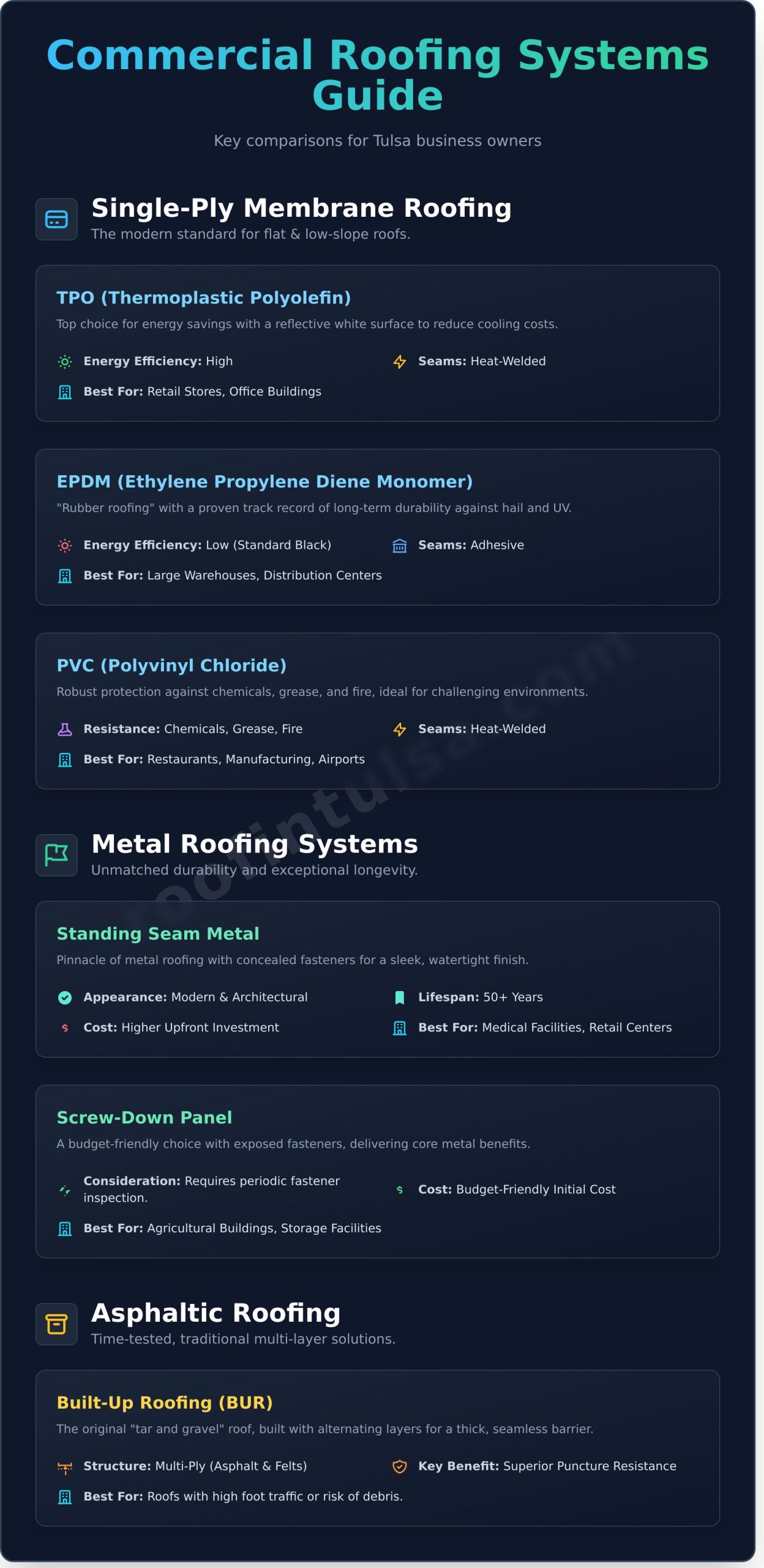
When it comes to modern commercial roofing systems, single-ply membranes have become the trusted standard for buildings with flat or low-slope roofs. These systems consist of flexible sheets of compounded synthetic materials that are rolled out across the roof surface to create a durable, protective layer. Their popularity stems from a powerful combination of benefits: they are cost-effective, relatively quick to install, and offer excellent energy efficiency. While there is a wide range of commercially available roofing materials, these membranes provide a reliable, seamless solution for most commercial properties. Understanding the three main types-TPO, EPDM, and PVC-is the first step to choosing the right protection for your investment.
TPO (Thermoplastic Polyolefin) Roofing
TPO is a top choice for Tulsa businesses focused on energy savings. Its standard white, reflective surface is highly effective at deflecting the sun’s harsh rays, which can significantly reduce cooling costs during our hot summers. The seams are heat-welded by our expert crews, fusing them together to create a strong, monolithic surface that resists leaks. As a newer technology, it’s vital to choose a reputable manufacturer to ensure a high-quality, durable formulation. TPO is an ideal solution for most retail stores and office buildings.
EPDM (Ethylene Propylene Diene Monomer) Roofing
Often referred to as “rubber roofing,” EPDM has a long and proven track record of durability spanning decades. This material offers exceptional resistance to hail and UV radiation, making it a reliable, long-term choice for property owners seeking peace of mind. It also remains flexible in cold temperatures, preventing cracks from thermal shock. The primary drawbacks are that its standard black color absorbs heat and its seams are sealed with adhesive rather than being heat-welded. EPDM is best suited for large warehouses and distribution centers where long-term durability is the top priority.
PVC (Polyvinyl Chloride) Roofing
For buildings with unique environmental challenges, PVC offers superior protection. This robust membrane is highly resistant to chemicals, oils, grease, and fire, making it an excellent choice for restaurants with grease vents or for manufacturing plants. Like TPO, its seams are heat-welded for outstanding strength and leak prevention. While PVC systems often come with a higher initial cost, their specialized durability is essential for specific applications, including airports and industrial facilities that require maximum resistance to harsh conditions.
Metal Roofing Systems: Unmatched Durability and Longevity
For business owners seeking the ultimate in protection and long-term value, metal stands out among all commercial roofing systems. Suitable for both low-slope and steep-slope designs, a professionally installed metal roof offers an exceptional lifespan that often exceeds 50 years. This investment provides lasting peace of mind, especially here in Oklahoma, where resilience is non-negotiable. Metal roofs deliver superior performance against fire, high winds, and hail, safeguarding your assets when it matters most. Beyond its strength, metal is also highly versatile, available in a wide array of colors and styles to perfectly match your company’s brand aesthetic.
Standing Seam Metal Roofing
Standing seam systems represent the pinnacle of metal roofing technology. The design features interlocking panels with raised seams and concealed fasteners, which eliminates screw penetrations and creates a sleek, modern look. This construction provides a continuous, watertight barrier from the eave to the ridge. As noted by industry leaders like the National Roofing Contractors Association, this system is engineered for maximum performance and durability.
- Benefits: Superior weather-tightness, minimal maintenance needs, and a clean, architectural appearance.
- Considerations: A higher upfront investment compared to other metal options.
- Best for: Architectural buildings, retail centers, medical facilities, and any business seeking top-tier performance and curb appeal.
Screw-Down Metal Panel Roofing
Also known as exposed fastener roofing, this system involves overlapping metal panels that are fastened directly to the roof structure with visible screws. The screws are fitted with rubber washers to create a seal. This straightforward installation makes it a more economical choice upfront, delivering the core benefits of metal-strength and longevity-at a more accessible price point.
- Benefits: A more budget-friendly initial cost while still providing excellent durability.
- Considerations: The exposed fasteners require periodic inspection and maintenance to ensure the washers haven’t degraded, which could lead to leaks.
- Best for: Agricultural buildings, storage facilities, warehouses, and utility structures where function and cost-effectiveness are the primary goals.
Asphaltic Roofing: Traditional, Time-Tested Solutions
When you think of a classic flat roof, you are likely picturing an asphaltic roofing system. For decades, these have been the trusted standard for protecting commercial properties, from warehouses to office buildings. Their core principle is simple but incredibly effective: building up multiple layers to create a redundant, watertight barrier. This layered approach provides exceptional toughness and superior resistance to punctures from foot traffic or storm debris, delivering long-term peace of mind.
While based on the same time-tested material, there are two primary types of asphaltic commercial roofing systems to consider, each with its own distinct advantages.
Built-Up Roofing (BUR)
Often called “tar and gravel” roofs, BUR systems are the original multi-ply roof. They are constructed on-site by alternating layers of hot liquid bitumen (asphalt) with reinforcing fabrics known as roofing felts. The system is typically finished with a top layer of gravel or a reflective coating to protect the underlying layers from UV rays and weather.
- Pros: Creates a thick, seamless, and highly durable membrane with outstanding water and puncture resistance.
- Cons: The installation process is labor-intensive, the system is very heavy, and the hot asphalt application produces strong odors.
- Best For: Industrial facilities and buildings where maximum durability and puncture resistance are the top priorities.
Modified Bitumen (Mod-Bit)
Modified Bitumen is the modern evolution of BUR. These systems start as factory-manufactured rolls of asphalt that have been “modified” with rubber or plastic polymers. This addition gives the material enhanced flexibility, especially in fluctuating temperatures, preventing cracks and extending its service life. These rolls are then installed in one or two layers on the roof.
- Pros: Offers greater elasticity and is easier to install than traditional BUR. It is available in various application methods and can come with “cool roof” granular surfaces to improve energy efficiency.
- Cons: The seams between the rolls can be a point of failure if not perfectly sealed by an experienced professional.
- Best For: A versatile and reliable choice for a wide range of commercial buildings, offering a great balance of performance and value.
Roof Coatings & Restoration Systems: Extend Your Roof’s Life
Is your commercial roof showing signs of age but is still structurally sound? A full replacement isn’t always the only answer. Roof coatings and restoration systems offer a practical, cost-effective solution to extend the life of your existing roof, providing years of added protection and performance without the high cost and disruption of a tear-off.
Applied as a liquid, a roof coating cures to form a seamless, waterproof membrane directly over your current roofing material. This monolithic layer seals leaks, bridges small cracks, and creates a highly reflective surface. The key benefits are clear:
- Lower Costs: Restoration is significantly less expensive than a full roof replacement.
- Minimal Disruption: Application is faster and quieter, meaning little to no downtime for your business operations.
- Improved Energy Efficiency: “Cool roof” coatings reflect sunlight, lowering the roof’s temperature and reducing your building’s cooling costs.
- Sustainability: By restoring instead of replacing, you keep old roofing materials out of the landfill.
This approach is one of the most efficient ways to manage and maintain commercial roofing systems, turning a potential liability into a durable, energy-saving asset. Two of the most trusted coating technologies are silicone and acrylic.
Silicone Roof Coatings
Known for superior performance in harsh conditions, silicone coatings provide a durable, flexible, and impermeable barrier. They are a trusted solution for building owners who need absolute peace of mind against leaks.
- Pros: Unmatched waterproofing capabilities and can withstand ponding water indefinitely without breaking down. It also offers excellent UV resistance, protecting the underlying roof from sun damage.
- Cons: The surface can become slippery when wet and tends to attract and hold dirt, which can reduce its reflectivity over time.
- Best for: Restoring flat or low-slope roofs, especially those with persistent ponding water issues.
Acrylic Roof Coatings
Acrylic coatings are a popular and cost-effective choice, valued for their high reflectivity and environmental benefits. These water-based systems are easy to work with and provide reliable protection for the right type of roof.
- Pros: Highly reflective for maximum energy savings, budget-friendly, and easy to clean or re-coat to extend its lifespan.
- Cons: Not recommended for roofs with poor drainage, as it can break down when exposed to ponding water for extended periods.
- Best for: Pitched metal roofs or flat roofs that have positive drainage and no history of water pooling.
Deciding between these options requires a professional assessment of your current roof’s condition. For an honest evaluation and to see if a restoration system is right for your property, trust a local expert. Find out more by visiting us at roofintulsa.com.
How to Choose the Right System for Your Tulsa Property
Selecting the ideal roof for your Tulsa business is one of the most important decisions you’ll make for your property’s protection. The “best” option isn’t a single product, but a tailored solution that balances your budget, your building’s specific needs, and long-term durability. This practical checklist will help you navigate the key factors to find a system that provides lasting value and peace of mind.
Assess Your Building’s Structure and Use
Before exploring materials, it’s essential to understand your building’s unique demands. The right material heavily depends on its design and daily operations. A thorough assessment should answer key questions:
- What is the roof slope? Is your roof flat or low-slope, which is typical for commercial properties, or does it have a steeper pitch? This is the primary factor in determining compatible materials.
- Is there heavy foot traffic? If maintenance crews frequently access rooftop equipment like HVAC units, you need a durable surface that can withstand regular traffic.
- Are there special conditions? Restaurants with grease exhausts or industrial facilities with chemical exposure require specialized membranes resistant to specific contaminants.
Consider the Tulsa Climate
As a local Tulsa roofer, we know our weather is anything but predictable. Your roof must be ready for everything Oklahoma throws at it. When choosing between commercial roofing systems, prioritizing features that counter our climate is a smart investment.
- Hail Resistance: To protect against severe storms, consider impact-rated materials. EPDM (rubber) and metal roofing offer excellent durability against hail damage.
- Energy Efficiency: Intense summer sun can drive up cooling costs. A reflective white TPO membrane or a specialized roof coating can lower your building’s surface temperature and reduce energy bills.
- Wind Performance: With the threat of high winds, wind uplift resistance is critical. Standing seam metal roofs are engineered to provide some of the best protection available.
Evaluate Your Budget and Long-Term Goals
A commercial roof is a significant investment, and the cheapest option upfront is rarely the most cost-effective over time. It’s crucial to compare the initial installation cost with the total cost of ownership, which includes maintenance, repairs, and the system’s expected lifespan. Are you looking for a reliable 20-year solution, or is a 50+ year investment a better fit for your long-range plans?
The best first step is a professional evaluation. An expert can assess your property and provide honest recommendations tailored to your specific needs and budget. Get a free inspection today.
Your Trusted Partner for Commercial Roofing in Tulsa
Choosing the right roof for your business is a significant decision that protects your property, inventory, and daily operations. As we’ve explored, understanding the differences between materials like modern TPO, durable metal, and life-extending roof coatings is the first step. The best choice always depends on your specific building, budget, and the unique challenges of our local climate. Making an informed decision is crucial for the long-term health of your investment in commercial roofing systems.
You don’t have to make this decision alone. As local, licensed, and insured specialists in TPO, metal, and flat roof systems, we have the expertise to guide you. We understand Tulsa’s weather and are committed to providing honest advice and quality solutions. Take the next step toward securing your business with confidence. Schedule Your Free Commercial Roof Inspection with Our Tulsa Experts today.
Let our team provide the peace of mind that comes from knowing your business is protected by Tulsa’s most trusted roofer.
Frequently Asked Questions About Commercial Roofing
What is the most common type of commercial roofing system?
In our experience, TPO (Thermoplastic Olefin) roofing is one of the most popular choices for Tulsa businesses. It offers a fantastic balance of durability, energy efficiency, and cost-effectiveness. Other common systems include EPDM (a durable rubber membrane) and Modified Bitumen, which is known for its strength and resistance to foot traffic. The right choice depends on your building’s specific needs, and we’re here to help you weigh the options for lasting protection.
How long does a commercial roof typically last?
A commercial roof’s lifespan depends heavily on the material, quality of the installation, and ongoing maintenance. A well-installed TPO or EPDM roof can last between 20 to 30 years. Metal roofing systems often last even longer, sometimes 40 years or more. Regular inspections and prompt repairs are the key to maximizing the life of your investment and ensuring your business stays protected from the Oklahoma weather for decades to come.
What is the most energy-efficient commercial roofing system for the Oklahoma heat?
For the intense Oklahoma sun, a “cool roof” is your best defense against high energy bills. White TPO and PVC roofing systems are highly reflective, bouncing solar heat away from your building instead of absorbing it. This significantly reduces the strain on your air conditioning system during our hot summers, leading to lower utility costs. Choosing one of these energy-efficient commercial roofing systems provides both superior protection and a strong return on your investment.
Can my existing commercial roof be repaired or does it need to be replaced?
This depends on the age of your roof and the extent of the damage. Minor issues like isolated leaks, seam separation, or small punctures can often be repaired effectively, extending the life of your current roof. However, if the damage is widespread, the membrane is past its service life, or you’re facing constant repair calls, a full replacement is often the more reliable and cost-effective long-term solution. An honest inspection from a trusted professional will give you a clear answer.
How much does a new commercial roof cost in the Tulsa area?
The cost of a new commercial roof in Tulsa varies widely based on several key factors. These include the total square footage, the type of roofing material you select (like TPO, EPDM, or metal), the complexity of the roof, and the condition of the underlying structure. For a clear, honest, and accurate price, the best step is to schedule a free, no-obligation inspection. We can assess your property and provide a detailed quote tailored to your specific needs.
What is the difference between a low-slope and a flat roof?
While the terms are often used together, no roof is ever truly flat. Every commercial roof is designed with a slight, intentional “low slope” to ensure proper water drainage. This slope prevents water from pooling, which is a major cause of leaks and long-term structural damage. Understanding this distinction is crucial when selecting from different commercial roofing systems, as each is engineered to perform optimally on a low-slope surface to protect your property effectively.