


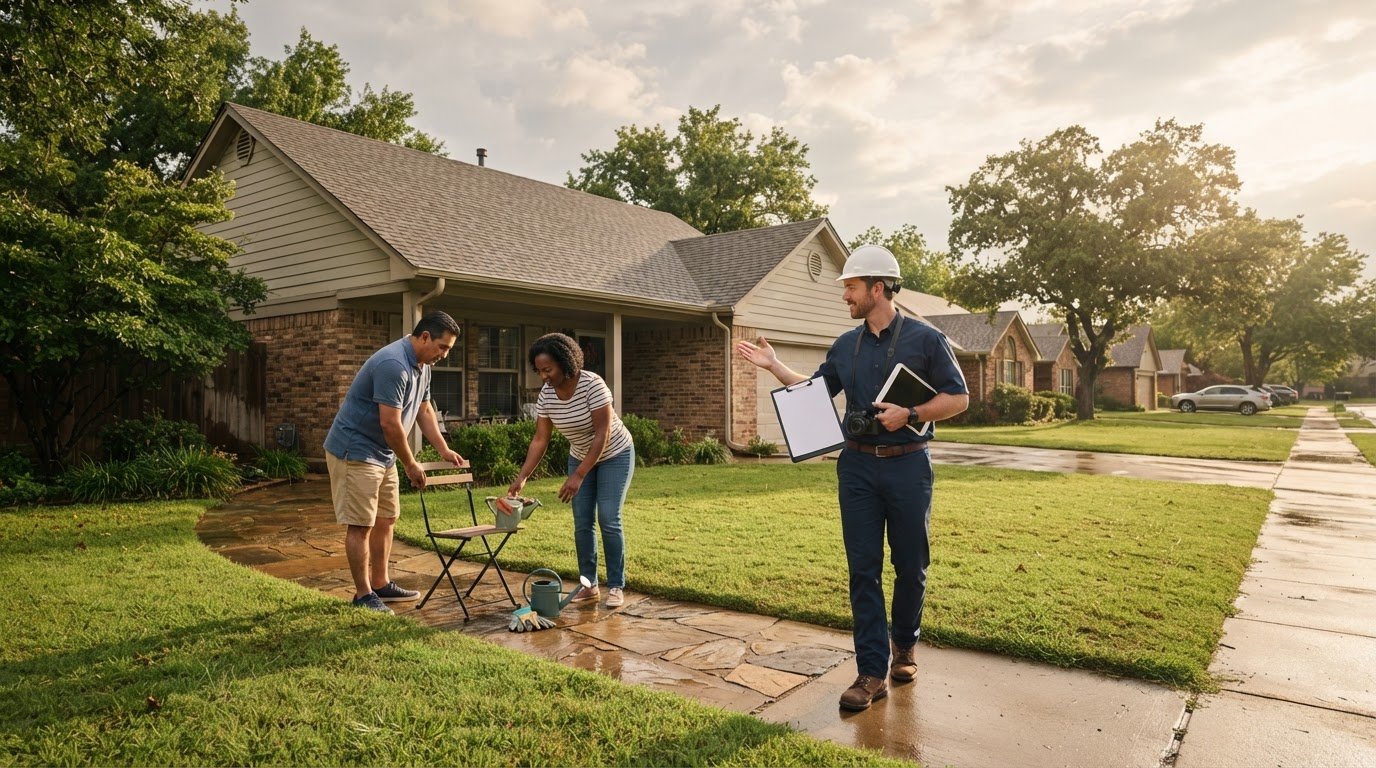

What if the best way to prepare for a roofer’s visit is knowing what not to do? If you’re wondering what to do before the roofer arrives, you don’t need to climb onto the roof or clear storm debris yourself. A few simple steps around your home can help keep your family and belongings safer while giving the roofer useful information about the problem.
It’s understandable to worry about noise, falling debris, pets, children, and disruption, especially after a Tulsa storm has left you concerned about a leak or roof damage. Getting ready doesn’t mean tackling the repair yourself. Your role is to make the visit safer and smoother; roof inspections, repairs, and replacement work are best left to roofing professionals.
This checklist explains what to move or protect, how to prepare for access, and which photos or details may help the roofer understand your concerns. You’ll also learn what to leave untouched and how to plan household activity during the visit, without needing a full repair or replacement guide.
Key Takeaways
- Match your preparations to the visit, whether it’s an inspection, repair, replacement, or urgent leak assessment.
- Write down when the issue began and which rooms are affected. Gather relevant inspection notes, invoices, or insurance records.
- For scheduled work, clear access areas and move vehicles or outdoor items as practical, following the agreed arrangements.
- Knowing what to do before the roofer arrives means keeping your concerns and records ready, not climbing onto the roof to investigate.
- When the roofer arrives, explain the issue, share useful records, and point out affected areas from a safe location.
Before the Roofer Arrives: Start With the Visit Type
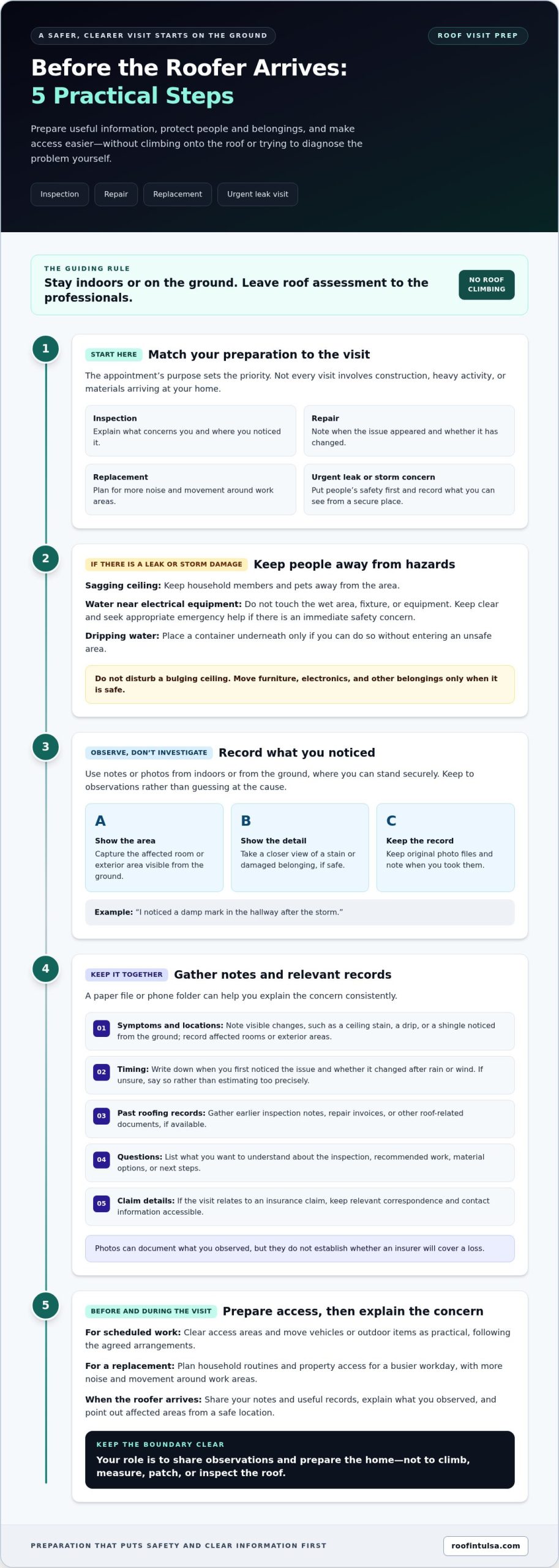
A few simple preparations can make a roofing visit more organized and less stressful. Start by considering the appointment’s purpose. An inspection, targeted repair, planned replacement, and urgent leak visit call for different preparations. Not every appointment involves construction, heavy activity, or materials arriving at your home. The right answer to what to do before the roofer arrives depends on what the roofer is coming to assess or do.
For every visit, prepare from the ground or indoors. Don’t climb onto the roof to look for damage, take measurements, or try a quick fix. A roof can be slippery, unstable, or unfamiliar, and damage that looks minor from below may be difficult to assess safely. If you want background on roof parts, this overview of types of roofs and their components can help without requiring you to inspect them yourself.
How an inspection, repair, and replacement visit differ
For an inspection, explain what concerns you and where you’ve noticed it. A ceiling mark, loose-looking material, or a change you spotted after a storm can help focus the conversation. For a repair, note when the issue first appeared and whether it has changed. Describe what you’ve observed rather than trying to patch or investigate the roof yourself.
Replacement work usually brings more activity around the home than an inspection or focused repair. Expect more noise and movement around work areas, and plan household routines and property access accordingly. The visit type sets the priority: share observations for an inspection, explain the specific problem for a repair, and prepare for a busier workday when a replacement is scheduled.
What to do first if the appointment follows a leak or storm
Start with people’s safety. Keep household members and pets away from visibly sagging ceilings. If water is near a light fixture, outlet, or other electrical equipment, don’t touch the wet area or fixture. Keep clear and seek appropriate emergency help if there’s an immediate safety concern.
If water is dripping, place a container underneath only when you can do so without entering an unsafe area. Move furniture, electronics, and other belongings away from the affected room if it’s safe, and don’t disturb a bulging ceiling. Take photos from a dry, secure indoor location or from the ground outside. These images can document what you’ve noticed without putting you on a ladder or roof. For more context on responding to roof damage, the Tulsa roof repair guide covers repair concerns.
These first steps help you keep the area safer while preserving useful details for the roofer. You don’t need to diagnose the cause or decide what repair is needed. Focus on what you can see, when it began, and which areas of the home are affected.
What to Gather Before a Roofer Arrives in Tulsa
A clear record of what you’ve noticed makes an inspection or repair conversation more useful. You don’t need to diagnose the roof. Focus on what you observed, when it began, and what has changed. That gives the roofer a practical starting point and helps keep storm damage details organized without guessing at the cause.
A simple roof-visit information checklist
Before the appointment, collect a few notes and relevant paperwork. Keep them together on paper or in a phone folder so they’re easy to find. Include:
- Symptoms and locations: Note visible changes, such as a ceiling stain, a drip, or a shingle you noticed from the ground. Record which rooms or exterior areas are affected.
- Timing: Write down when you first noticed each issue and whether it changed after rain or wind. If you’re unsure of the date, say so rather than estimating too precisely.
- Past roofing records: Gather earlier inspection notes, repair invoices, or other roof-related documents, if available.
- Questions: List what you want to understand about the inspection, recommended work, material options, or next steps.
- Claim details: If the visit relates to an insurance claim, keep relevant correspondence and contact information accessible.
This small file can help you explain the concern consistently, especially if several rooms or separate symptoms are involved. Stick to observations: “I noticed a damp mark in the hallway after the storm” is more useful than assuming where water entered or what caused it.
How to document damage without creating more risk
Take photos indoors or from the ground, where you can stand securely. A useful set might show the affected room, a closer view of a stain or damaged belonging, and the exterior area as visible from the ground. Keep the original files and note when you took them. Photos can help document what you observed, but they don’t establish whether an insurer will cover a loss.
Don’t use a ladder or walk on the roof to get a better angle. OSHA provides fall protection standards for roofing for workplace safety. Your preparation is simply to stay off roof surfaces and leave roof access and assessment to professionals.
If water or storm damage has affected belongings, keep relevant items and records organized while you learn what the insurer’s process requires. Avoid throwing away damaged materials or making assumptions about claim documentation before you understand the next steps. For more context, the Tulsa homeowner’s roofing and insurance guide discusses roof protection, repairs, and insurance considerations.
Having your notes and records ready can make it easier to discuss an inspection, repair, or insurance concern with Rescue Roofing Tulsa. Explore Tulsa roofing inspection and repair support to understand a practical next step.
How to Prepare Your Home and Yard for the Roofer’s Arrival
How much you need to move or protect depends on the appointment. A brief inspection may call for little more than clear access to the home and the areas you want to discuss. A repair may involve activity near one part of the roof. A replacement can bring more noise, equipment, and movement around the property, so it usually calls for more planning. When deciding what to do before the roofer arrives, focus on the visit’s scope rather than treating every appointment like a full construction day.
Protect vehicles, outdoor items, and indoor belongings
For scheduled roof work, use the arrangements made with the roofer to decide where vehicles should be parked and which access areas need to stay open. Move a car from a driveway or other work area if that’s part of the plan. Clear walkways and relocate movable patio furniture, planters, grills, or fragile décor from areas where work may happen. There’s no universal safe distance for every home, so follow project-specific instructions rather than guessing where materials or debris might go.
Inside, consider what’s stored in the attic before a replacement project. If belongings are exposed or could be affected by dust or vibration, cover or move them where practical. You don’t need to empty the entire attic automatically. Focus on fragile, valuable, or uncovered items. For a short inspection, extensive indoor preparation is unlikely to be necessary unless the roofer has arranged to access a particular area.
- Inspection: Keep the entrance and relevant indoor areas accessible.
- Repair: Clear the agreed access route and nearby outdoor items as appropriate.
- Replacement: Plan for more activity, and prepare vehicles, yard items, and attic belongings according to the work arrangements.
Plan for pets, children, and household routines
Roof work can be noisy and unfamiliar. If a replacement or substantial repair is scheduled, choose a calm indoor space for pets or make another suitable plan to keep them away from activity. Keep children clear of ladders, tools, work vehicles, and areas identified for the crew. Explain that these are work zones, not places to play or watch from close by.
Think through household routines, too. If noise may affect naps, remote work, or an anxious pet, plan a quieter room or time away if that suits your household. Follow the roofer’s directions about access and areas to avoid. Don’t move barriers or enter work areas to retrieve an item without first making sure it’s safe.
Weather can shift plans in Tulsa, particularly around storms, rain, or strong winds. Check the forecast before scheduled work and share any concerns or changes that affect access with the roofer. If conditions change, follow the roofer’s guidance about next steps rather than trying to adjust the work area yourself. Preparation matched to the visit helps protect your household without creating extra tasks for a simple inspection.
What Not to Do Before the Roofer Arrives
Getting ready for a roofing visit doesn’t mean investigating the roof or making a repair yourself. The safest preparation is to share what you’ve observed and leave roof access and repair work to professionals. A wet surface, loose material, or hidden damage can make a roof or ladder hazardous, even if the problem looks manageable from the ground.
Roof access and do-it-yourself fixes can increase risk
Don’t climb onto a wet, damaged, or unfamiliar roof, and don’t use a ladder to get a closer look. Weather, unstable surfaces, and damage you can’t see may increase the risk of a fall or injury. Leave tarping, shingle removal, and repairs to equipped roofing professionals. You can still help by describing what you noticed and showing photos taken safely from indoors or the ground.
If a ceiling is bulging or sagging, keep people out of the room. Don’t puncture it or stand underneath to investigate. Water may have collected above the ceiling, and disturbing it could make the situation more dangerous. If water is near an outlet, light, or electrical equipment, stay away from the wet area and don’t touch fixtures, cords, or outlets. Seek appropriate emergency help if there’s an immediate safety concern.
Avoid assumptions about storm damage and insurance
After severe weather, it’s natural to connect a new leak or visible change to the storm. Still, describe what you observed rather than presenting the cause as certain before an assessment. For example, note that a stain appeared after a storm, but don’t assume you know where water entered or what caused the damage.
Keep photos, invoices, and relevant correspondence organized if an insurance claim may be involved. Don’t conceal, discard, or alter damaged items or materials before you understand the documentation process. If something must be moved to protect people or prevent further damage, make a note of what you moved and keep any related records. Photos can help document visible conditions, but they don’t guarantee insurance coverage or claim approval. A Tulsa roof replacement homeowner’s guide can help you understand replacement considerations as you discuss the roof’s condition and next steps.
In short, what to do before the roofer arrives is stay clear of hazards, preserve useful information, and avoid work that belongs on the roof. If you’re concerned about storm damage, schedule a roof inspection or repair discussion with Rescue Roofing Tulsa.
The Roofer Is Here: Make the Visit Clear, Safe, and Productive
A calm, clear handoff helps the roofer focus on the reason for the visit. Start with your main concern and when you first noticed it. Share relevant photos or records, point out affected rooms or property areas from safe, accessible locations, and clarify whether the appointment is for an inspection, repair, replacement discussion, or storm-related concern. You don’t need to direct roof access or suggest a diagnosis. Your observations are a helpful starting point; the roofer’s assessment will guide the next steps.
A brief arrival-day handoff homeowners can follow
Keep the conversation simple and specific. If you noticed a ceiling stain after rain, describe when it appeared and where it is. Have previous inspection notes or repair records ready. Ask what the visit will cover and how the roofer will explain findings or recommendations. This gives you a shared understanding of the appointment before it moves forward.
- Explain the concern: State what you noticed and when, including whether anything has changed.
- Show the relevant information: Share photos and records, and point out affected areas without approaching unsafe spaces.
- Clarify the visit: Ask what the inspection or work discussion includes and what information may be useful afterward.
- Take notes: Write down findings, suggested next steps, and any records or details you need to provide later.
If several concerns are involved, mention the most urgent one first, then cover the others. That keeps the conversation organized without leaving out details that may matter.
When the visit leads to repair, replacement, or claim support
Recommendations depend on the roof’s condition and the assessment, so the first conversation may lead to a repair discussion, a replacement plan, or more information about an insurance claim. Ask for unfamiliar terms to be explained in plain language. You can also ask what the next step is and which records to keep. For background before a replacement conversation, this Tulsa roof replacement guide covers considerations homeowners may want to understand.
Storm concerns can feel stressful, particularly when you’re also managing damage inside your home. Share what you’ve observed and any relevant correspondence, then let the assessment guide the discussion. Rescue Roofing Tulsa provides roof inspections, repairs, replacements, and insurance claim assistance for homeowners in Tulsa and surrounding areas. If you need help with a roofing concern, contact Rescue Roofing Tulsa to discuss the next step.
Take the Next Step With Confidence
You don’t have to solve a roofing concern before the appointment. Your part is to help the roofer understand what you’ve noticed and keep your household safe. The assessment can bring clearer direction, whether the concern needs attention now or simply calls for a closer look.
Keep your notes handy, share what you’ve observed, and give yourself room to ask questions. That’s a practical answer to what to do before the roofer arrives, and it can help turn an uncertain situation into a more informed next step.
If you’re ready to discuss a roof concern, connect with Rescue Roofing Tulsa. You can move forward one conversation at a time with support from a local roofing team.
Frequently Asked Questions
Should I stay home when the roofer arrives?
Being home can help you explain what you’ve noticed and answer questions, but arrangements vary by visit. For a quick inspection, you may mainly want to be available at the start or reachable to discuss concerns. For planned work, agree ahead of time on access and how you’ll receive updates if you won’t be there. Keep your notes and relevant records easy to find so you can share them when needed.
What should I move before a roofer comes to inspect my roof?
For a short inspection, you may not need to move much. Keep the entrance and any agreed access route clear, and move an item only if it blocks an area the roofer needs to see. Scheduled repairs or replacement work can call for more preparation, such as relocating a vehicle or patio furniture. Follow the arrangements for your project rather than relying on a fixed clearance distance.
Can I go on the roof before the roofer arrives?
No. Don’t climb onto the roof or use a ladder to investigate, even if you want a closer look at a loose shingle or suspected damage. Wet, damaged, or unfamiliar surfaces can be hazardous. Instead, photograph what you can see from indoors or from the ground, using a safe, stable spot. Note where the concern appears, then let the roofer assess the roof directly.
What should I do if my ceiling is leaking while I wait for a roofer?
Keep people away from any sagging or bulging ceiling, and don’t puncture it. If water is near a light, outlet, or electrical equipment, stay clear and don’t touch the wet fixture or cords. Catch a drip in a container only if you can do so safely. Move belongings away when possible, and document visible damage with photos from a secure location. Seek emergency help if there’s an immediate safety risk.
Should I move belongings out of the attic before roof work?
For substantial work, moving or covering vulnerable attic belongings is a sensible precaution, especially if items are exposed to dust or could be affected by vibration. Prioritize uncovered boxes, fragile items, and possessions that would be difficult to clean or replace. You may not need to clear the whole attic for a small repair or inspection. Base your preparation on the planned scope and any access arrangements discussed for the project.
Do I need to be home for a roof inspection?
Being home isn’t a universal requirement, but it can make an inspection more useful. You can explain where you’ve seen a stain, when a noise occurs, or which concern you most want assessed. You’ll also have a chance to hear the findings and ask questions directly. If you can’t be there, prepare concise notes and arrange how relevant observations or results will be shared.
What should I tell the roofer when they arrive?
Start with the main symptom, when you first noticed it, and whether it has changed. Mention affected rooms or exterior areas, but separate what you observed from what you think caused it. Share earlier inspection notes, repair records, or relevant claim correspondence if you have them. Ask what the visit will cover and what the findings mean. This is a useful way to approach what to do before the roofer arrives.
Should I prepare differently after a storm in Tulsa?
After a storm, note when you noticed a leak or visible change and take photos only from safe indoor or ground-level locations. Keep an eye on changing weather and share relevant updates that may affect access or the visit. Describe what you observed without assuming the storm caused a particular defect. Photos and notes can help explain the situation, but they don’t determine insurance coverage or guarantee a claim outcome.