



Table of Contents
- Re-Roofing vs Replacement: What’s the Difference?
- Side-by-Side Comparison: Cost, Lifespan, and Structural Impact
- Roof Replacement Cost vs Repair: What You’re Actually Paying For
- Roof Overlay Pros and Cons: The Case For and Against Layering Shingles
- How Long Does a Roof Replacement Take? Timeline and Disruption
- When to Choose Re-Roofing vs Replacement: A Decision Framework
- Frequently Asked Questions
Last Updated: September 13, 2026
Re-Roofing vs Replacement: What’s the Difference?
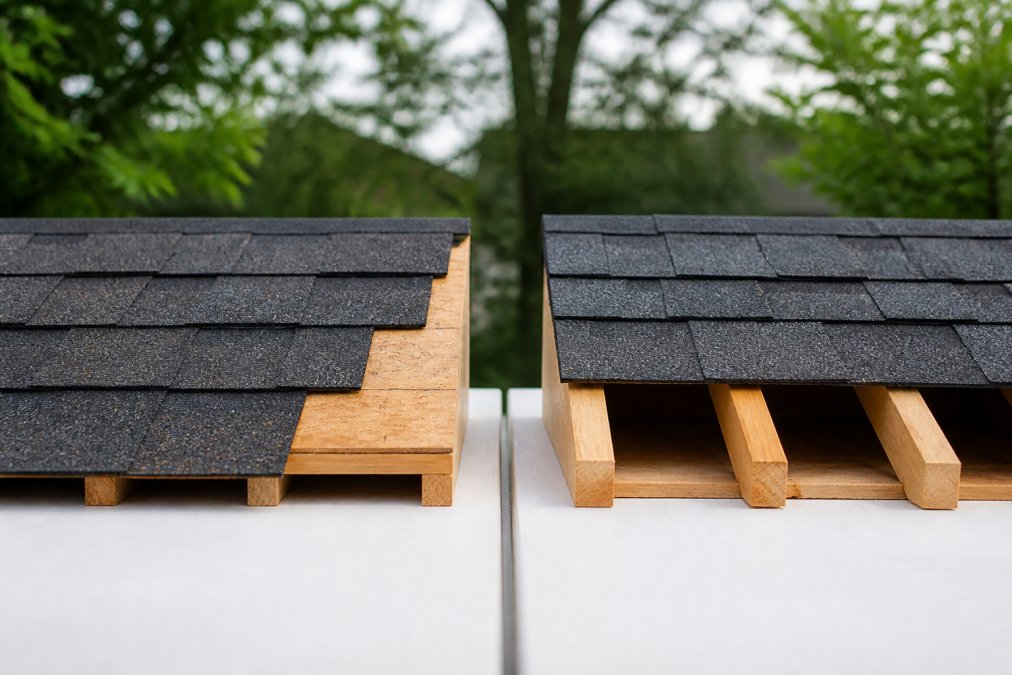
The difference between re-roofing and roof replacement comes down to one decision: do you tear off the old roof or build over it? Re-roofing, also called a roof overlay, adds new shingles on top of the existing layer. A full replacement strips the roof down to the deck and starts over. Rescue Roofing walks homeowners through this exact choice every week, and the answer is rarely as simple as the price tag suggests.
What Is Re-Roofing?
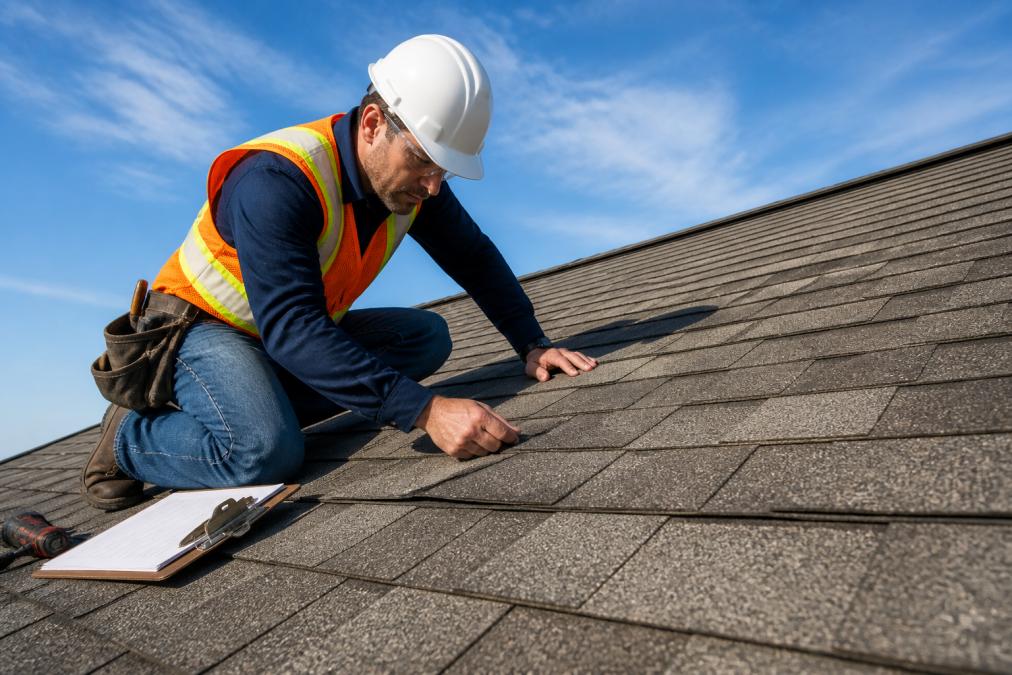
Re-roofing is the process of installing a new layer of shingles directly over an existing roof without removing the old material. Crews inspect the deck, replace visibly damaged sections, then nail new asphalt shingles on top. Existing underlayment and flashing usually stay in place unless they show obvious failure.
- Faster installation, often completed in a single day
- Less landfill waste since old shingles stay put
- Lower material and labor costs
- No tear-off disposal fees
The tradeoff is real: building codes in many jurisdictions cap how many shingle layers a roof can carry (codes.iccsafe.org).
What Is a Full Roof Replacement?
A full roof replacement is the complete removal of all existing roofing materials down to the roof deck, followed by installation of a new roofing system from the deck up. That includes new underlayment, flashing, ventilation components, and shingles. It is the only option that lets a contractor inspect and repair the structural deck, where hidden water damage usually hides.
Replacement costs more upfront but delivers a clean slate: one shingle layer, fresh moisture barrier, and a warranty covering the whole assembly.
Side-by-Side Comparison: Cost, Lifespan, and Structural Impact
| Factor | Re-Roofing (Overlay) | Full Replacement |
|---|---|---|
| Upfront cost | Lower (no tear-off or disposal) | Higher (full tear-off) |
| Labor time | 1 day typical | 1-3 days typical |
| Lifespan added | Shorter, limited by old layer | Full new roof lifespan |
| Structural inspection | Surface only | Full deck access |
| Shingle layers after | Adds one layer | Resets to one layer |
| Warranty coverage | Material-focused | Full system |
| Best for | Sound deck, one layer, tight budget | Damage, age, multiple layers |
The structural load capacity question is the one homeowners ask least and should ask most. Every shingle layer adds weight to the deck and framing. Most residential structures handle two layers, but a third pushes past what many building codes allow and what some older framing was designed to carry (codes.iccsafe.org).
Adding a second or third shingle layer without checking the deck is the most common overlay mistake. If the underlying layer has trapped moisture, you seal that damage in place and pay for it later with rotted decking and interior water damage.
Roof Replacement Cost vs Repair: What You’re Actually Paying For
Roof replacement cost vs repair is not a straight dollar comparison. A repair fixes a localized problem, while re-roofing and replacement address the roof as a system at different depths.
A repair makes sense when damage is isolated: a few missing shingles after a storm, a single flashing failure, or a small leak around a vent. Once damage spreads or the roof is past its service life, repair money disappears into a roof that will keep failing.
Re-roofing sits in the middle: cheaper than a full replacement because it skips tear-off labor and disposal, but only viable when the deck is sound and existing layers are within code limits.
Replacement costs more because you pay for removal, disposal, new underlayment, flashing, ventilation, and full installation, a complete roofing system.
What Drives the Price Difference
The gap between an overlay and a full replacement is a stack of costs that only appear when the old roof comes off:
- Tear-off labor: Removing one layer of asphalt shingles typically adds roughly $1,000 to $2,000 to a standard 2,000-square-foot roof, and each additional layer adds more (homeadvisor.com).
- Disposal fees: Dumpster rental and landfill tipping fees for shingle waste commonly run $400 to $800 per project.
- Deck repair: Rotted sheathing often needs replacement once exposed. Plywood or OSB sheathing typically costs $50 to $100 per sheet installed, and widespread rot can require dozens of sheets.
- Underlayment and flashing: A full replacement includes new synthetic underlayment and flashing, which an overlay usually skips, adding several hundred to over a thousand dollars.
- Ventilation upgrades: Ridge vents, soffit vents, and intake baffles are far easier to install during a full tear-off.
Typical Cost Ranges
Pricing depends on roof size, pitch, material, layers to remove, regional labor rates, and whether the deck needs structural work.
These ranges shift with roof size, pitch, material, layers to remove, regional labor rates, and whether the deck needs structural work. A steep, cut-up roof with three layers to strip can cost two to three times a simple gable roof with one layer.
The Insurance Angle Most Homeowners Miss
Insurance is where the cost comparison gets genuinely complicated. When a storm damages a roof, the adjuster’s scope determines whether the insurer pays for a full replacement or a partial repair. Many policies include recoverable depreciation, holding back part of the payout until work is completed and invoiced. If the approved scope is a repair and the homeowner wants a full replacement, the difference usually comes out of pocket.
A few practical points worth knowing:
- Actual Cash Value vs. Replacement Cost Value: ACV policies pay the depreciated value of the roof, which on an older roof may not cover a full replacement. RCV policies pay the cost to replace, minus deductible, once work is done.
- Age of roof matters: Many insurers will not pay replacement cost on a roof past a certain age, often 15 to 20 years, and some will not renew a policy on a roof that old.
- Overlay claims: If an overlay is approved, the insurer pays for the overlay, not a tear-off. Homeowners who want a full replacement may need to cover the difference.
- Documentation: Photos, receipts, and a contractor’s written scope help support a claim. A contractor experienced with insurance work can communicate directly with the adjuster to clarify scope.
Ask any contractor for a written scope before signing. A quote that says “re-roof” without specifying tear-off, underlayment, and flashing leaves room for surprise charges once the crew opens up the roof. The same scope document is what an insurer will compare against when reviewing a claim.
Pricing depends on roof size, pitch, material, and layers to remove. Rescue Roofing provides accurate aerial quotes so homeowners get a real number before anyone climbs a ladder, and the team can walk through financing options to spread a full replacement across monthly payments.
Roof Overlay Pros and Cons: The Case For and Against Layering Shingles
Roof overlay pros and cons come down to what you value: immediate savings or long-term certainty. An overlay is legitimate when conditions are right, and a mistake when used to avoid a problem the roof actually has.
Pros of a roof overlay:
- Lower upfront cost and no disposal fees
- Fast installation with minimal disruption
- Less material sent to landfill
- Adequate when the deck is sound and only one layer exists
Cons of a roof overlay:
- Adds weight and can breach shingle layer limits
- Hides deck damage and moisture problems
- Shorter effective lifespan since the old layer still ages underneath
- Some manufacturers limit warranty coverage on overlays
- Can complicate future tear-off and inspection
The environmental angle cuts both ways. Overlays keep old shingles out of landfills, but a roof that fails early from hidden damage creates more waste over time than doing the job once, properly.
How Long Does a Roof Replacement Take? Timeline and Disruption
How long does a roof replacement take? Most residential replacements finish in one to three days, depending on roof size, pitch, weather, and layers to remove. A simple overlay can wrap in a single day; a large or steep roof with multiple layers can stretch to three or four.
Disruption is usually lighter than homeowners expect. Crews work outside, and most noise happens during tear-off. For commercial properties, scheduling around business hours keeps operations running, critical for restaurants and medical offices where a closed roof means a closed business.
- Day 1: Tear-off, deck inspection, and any decking repairs
- Day 2: Underlayment, flashing, and shingle installation
- Day 3: Ventilation, ridge cap, cleanup, and final inspection
Weather is the wild card. Rain delays tear-off and installation, and no reputable crew installs shingles over a wet deck. Flexible scheduling and 24-hour availability help when a storm forces a fast turnaround.
When to Choose Re-Roofing vs Replacement: A Decision Framework
Choosing between re-roofing and replacement comes down to four checks: deck condition, existing layers, roof age, and whether you plan to stay or sell. Run through them honestly and the answer usually makes itself clear.
The Structural Load Question Nobody Asks
Before any other check matters, one technical question comes first: can your framing carry another layer of shingles? This is the gap most guides skip, and the one that can turn a budget overlay into a structural problem.
Asphalt shingles weigh roughly 200 to 350 pounds per square (100 square feet) installed. A second layer adds that weight on top of the existing roof. Most modern framing, trusses or rafters spaced 16 to 24 inches on center, handles two layers. But older homes, especially pre-1970s builds with 24-inch rafter spacing and lighter sheathing, may not have that margin. Add snow load in northern climates and the calculation tightens further.
A few practical signals that load capacity needs a closer look:
- Sagging rooflines: Visible dips or waves in the roof plane suggest the framing is already stressed.
- Cracked or bowing rafters: Visible from the attic, these indicate the structure is carrying more than it should.
- Older home, unknown framing: Pre-1970 construction often used lighter framing than modern code requires.
- Heavy roofing material: Clay tile, concrete tile, and slate are far heavier than asphalt shingles, and overlaying them is rarely feasible.
A qualified contractor or structural engineer can assess this before committing to an overlay. Skipping the check is how homeowners end up with sagging decks and expensive repairs.
The Decision Checklist
- Deck condition: Any soft spots, sagging, or interior water stains? If yes, replacement.
- Existing layers: Already two layers? Most codes cap you there, so replacement.
- Roof age: Past the expected service life of the current shingles? Replacement.
- Damage scope: Isolated or widespread? Isolated can mean repair; widespread means replacement.
- Structural load: Older framing, heavy material, or visible sagging? Get an assessment before considering an overlay.
- Plans: Selling soon? A full replacement supports home equity and passes inspection cleanly.
- Insurance: Filing a storm claim? The adjuster’s scope usually determines which path is covered.
How Insurance Tips the Decision
Insurance is the wild card in this framework. If a storm claim is in play, the adjuster’s scope often decides the path before the homeowner does. An approved repair scope means the insurer pays for a repair, not a full replacement, and the difference comes out of pocket. An approved replacement scope covers tear-off and full installation, minus deductible.
Homeowners weighing an overlay against a replacement should ask three questions before accepting a scope:
- What does my policy actually cover? ACV policies pay depreciated value; RCV policies pay replacement cost once work is complete.
- Is the roof old enough to affect coverage? Many insurers decline replacement cost coverage on roofs past 15 to 20 years.
- Will an overlay affect future claims? An overlay that hides deck damage can complicate a later claim, and some insurers view overlays less favorably than full replacements.
A contractor who works with insurance claims regularly can interpret the scope and communicate with the adjuster, often the difference between a claim that covers the right work and one that leaves the homeowner holding the gap.
The Energy Efficiency Angle
A full replacement is the only path that lets a homeowner upgrade the roof assembly for efficiency. During a tear-off, contractors can add a radiant barrier, upgrade attic insulation from the roof side, install a ridge vent and proper intake ventilation, and seal deck penetrations. An overlay locks the existing assembly in place, including whatever ventilation and insulation shortcomings it already has.
In hot climates, a radiant barrier plus improved attic ventilation can meaningfully reduce cooling loads. In cold climates, sealing air leaks at the deck and improving ventilation reduces ice dam risk. Neither upgrade is practical during an overlay.
The Environmental Trade-Off
Overlays keep old shingles out of landfills, a real benefit. Asphalt shingles are one of the largest categories of construction waste by volume, and most ends up in landfills because recycling infrastructure is limited. A full replacement sends one to three layers of shingles to disposal.
But the math flips over time. An overlay that fails early from hidden deck damage creates two tear-offs instead of one, doubling the waste. A full replacement done once, with a roof that lasts its full service life, often produces less total waste across the same period. Think in decades, not single projects.
If every box on the checklist comes back clean and the structural load check passes, an overlay is a reasonable, cost-effective move. If even one raises a flag, replacement protects the structure, warranty, and resale value.
Re-roofing is a timing decision, not just a budget one. If the deck is sound, the framing can carry another layer, and you have one layer, an overlay buys time. If anything underneath is questionable, or if insurance, energy efficiency, or long-term waste matter to you, replacement is the only choice that resets the clock.
Frequently Asked Questions
What is the cost difference between re-roofing and roof replacement?
Re-roofing typically costs less than a full replacement because it skips the tear-off and disposal of old materials. Labor costs drop significantly since crews install new shingles directly over the existing layer. However, re-roofing only works if the roof deck and underlayment are in good condition. If structural issues exist, a full replacement becomes necessary, and costs rise accordingly. For an accurate estimate based on your roof’s condition, contact a licensed roofing contractor for an inspection.
Is re-roofing a good idea for my home?
Re-roofing works well when your roof has only one existing shingle layer, the deck is structurally sound, and there’s no water damage or flashing problems. It can extend roof lifespan and improve curb appeal at a lower cost. However, if your roof already has two or more layers, or if inspection reveals moisture barrier failures, a full replacement is the safer choice. Building codes in many areas limit shingle layers, so check local permit requirements before deciding.
How many layers of shingles are allowed during a re-roof?
Most building codes allow a maximum of two shingle layers on a roof. If your home already has two layers, a third overlay is not permitted, and a full tear-off and replacement becomes mandatory. Exceeding the limit compromises structural integrity, adds excessive weight to the roof deck, and can void manufacturer warranties. A roofing contractor can verify your current layer count during inspection and advise whether re-roofing is code-compliant for your property.
Does re-roofing last as long as a full replacement?
Re-roofing generally has a shorter lifespan than a full replacement with new underlayment and flashing. The shorter lifespan of re-roofing stems from leaving old materials in place, which can trap moisture and accelerate wear on new shingles. A full replacement addresses the entire roofing system, including ventilation and moisture barrier, giving you longer durability and better protection against leaks.
When is a full roof replacement necessary versus a simple re-roof?
A full replacement is necessary when your roof has two or more shingle layers, significant water damage, soft spots in the deck, or widespread flashing failures. Age also matters: roofs older than 20 years often have compromised underlayment that re-roofing won’t fix. If your roof has storm damage requiring insurance claims, an adjuster may specify replacement. A professional inspection determines whether re-roofing or replacement is the right path for your home.