



Table of Contents
- How Insurance Claims Work for Roofing Damage
- Red Flags When Hiring a Roofer for Insurance Claims
- Questions to Ask a Roofing Contractor About Insurance
- How to Deal With Insurance Adjusters for Roof Damage
- Public Adjuster vs. Roofing Contractor: Which Do You Need?
- Steps to Hire a Reputable Roofer for Your Insurance Claim
- Protecting Yourself From Claim Disputes and Common Pitfalls
- Conclusion
Last Updated: August 9, 2026
How Insurance Claims Work for Roofing Damage
When you file a roof damage claim, the insurance company assigns an adjuster to inspect the damage and determine what’s covered under your policy. The adjuster assesses whether the damage qualifies as a covered peril (hail, wind, fire, or other specified events), calculates the replacement cost value (RCV) or actual cash value (ACV) depending on your coverage, and determines your deductible. RCV covers the full cost to replace damaged materials with new ones, while ACV subtracts depreciation, leaving you responsible for the gap.
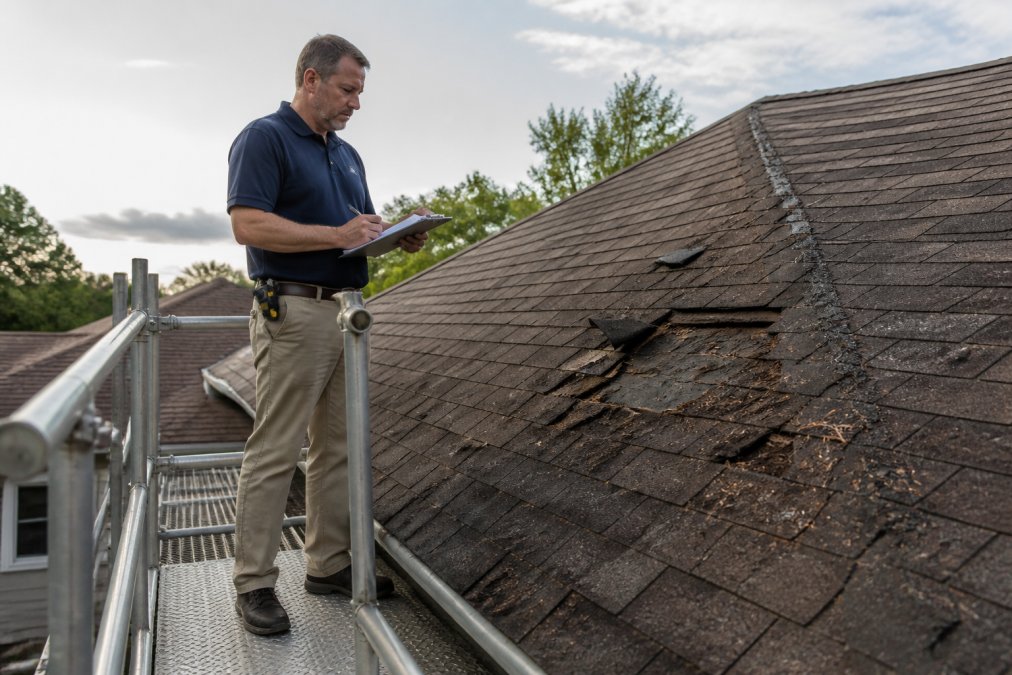
The adjuster’s estimate becomes the initial scope of work, listing what damage exists and what repairs are needed. This estimate is NOT final. Once you hire a roofing contractor, they’ll conduct their own inspection and may identify additional damage the adjuster missed. Your contractor submits documentation of the additional damage to the insurance company, which sends another adjuster to verify. If approved, the insurance company issues a supplemental check.
Most insurance companies have specific windows for filing claims (often one to three years depending on your state and policy). Delays in hiring a contractor can affect your ability to document damage or negotiate with adjusters.
Red Flags When Hiring a Roofer for Insurance Claims
Not all roofers who offer insurance claim assistance operate ethically or legally.
The biggest red flag is a roofer offering to waive your deductible. This is insurance fraud. When a contractor covers your deductible or absorbs it into pricing, they’re asking you to file a false claim. The insurance company will discover this, deny the claim entirely, and you’ll be liable for the full cost. You could face criminal charges. Legitimate contractors never offer this.
Contingency agreements are another major pitfall. These contracts state that the roofer’s payment is contingent on the insurance company approving a certain amount. The legal language often obligates you to pursue the claim aggressively, dispute denials, or hire a public adjuster, all at your expense. Some contingency contracts allow the roofer to file liens against your property if the insurance company denies or reduces the claim. Avoid contingency agreements entirely.
Door-to-door roofers offering unsolicited inspections after storms are another warning sign. While some are legitimate, others run lead generation schemes. They’ll convince you there’s damage, push you to file a claim immediately, and then disappear. Many don’t carry proper licensing or insurance themselves.
Watch for roofers who pressure you to sign contracts before the insurance adjuster completes their inspection. They’ll claim they need to "lock in pricing" or "guarantee availability," but this commits you before you know what the insurance will actually cover.
Be skeptical of contractors who immediately recommend a public adjuster. Some roofers have referral relationships where they split fees. The public adjuster’s commission typically comes from your insurance payout, reducing what you actually receive for repairs.
Questions to Ask a Roofing Contractor About Insurance
Asking the right questions reveals whether a contractor understands the process and operates with integrity.
Ask: "Will you communicate directly with my insurance adjuster?" A reputable contractor will say yes and explain how they’ll coordinate inspections, provide documentation, and respond to questions.
Ask: "What happens if the insurance company’s estimate is lower than your estimate?" A good contractor will explain that they’ll document the discrepancy, provide additional photos or evidence, and submit a supplemental claim if warranted.
Request: "Can you provide references from homeowners with insurance claims?" Call them and ask specifically about the contractor’s communication, whether they helped with the claim process, and if there were any surprises about costs.
Ask: "What is your licensing status and current insurance coverage?" Verify their answers independently through your state’s contractor licensing board and confirm their insurance is active.
Inquire: "Will you provide a detailed scope of work document?" This should itemize every repair or replacement, materials, labor, and pricing.
Ask: "What warranty do you provide on your work?" Most reputable roofers offer a workmanship warranty (typically 5-10 years) separate from manufacturer warranties. Get this in writing.
Finally, ask: "Have you worked with my insurance company before?" Contractors with experience submitting claims to your specific insurer understand their requirements and reduce delays.
How to Deal With Insurance Adjusters for Roof Damage
Your relationship with the insurance adjuster will shape how smoothly your claim progresses. The adjuster works for the insurance company, not you, so their goal is to settle the claim fairly from the insurance company’s perspective.
When the adjuster schedules an inspection, be present and document everything they do: photos, measurements, areas inspected, and areas skipped. If they miss obvious damage, point it out calmly. Take your own photos and video so you have independent documentation.
Provide the adjuster with all relevant information upfront. Share photos taken immediately after the storm, explain when the damage occurred and what caused it, and mention damage to other parts of your home caused by the same event.
If the adjuster’s estimate seems low or incomplete, don’t accept it immediately. Ask for a detailed explanation and request a copy of their inspection report. Then hire your roofing contractor to provide their own estimate. If there’s a significant discrepancy, your contractor can prepare documentation to support a supplemental claim.
Understand the supplement process. If your contractor finds additional damage during repair work that wasn’t visible initially, they’ll document it and submit it to the insurance company. The adjuster will reinspect and determine if the additional damage is covered. This is normal and legitimate as long as the damage is real and caused by the insured event.
If the adjuster denies your claim or significantly underpays, you can request a re-inspection, submit additional documentation, or file a formal appeal.
Public Adjuster vs. Roofing Contractor: Which Do You Need?
A public adjuster is a licensed professional who represents you in insurance claim disputes. They investigate the damage, prepare detailed documentation, negotiate with the insurance company’s adjuster, and advocate for a higher payout. They’re paid on contingency, typically taking 10-15% of the insurance settlement they secure above the initial estimate. Public adjusters are useful when there’s a significant dispute about damage extent, when the insurance company denies your claim, or when the initial estimate is substantially lower than the actual repair cost.
A roofing contractor assesses damage, provides estimates, coordinates with the insurance adjuster, and performs the work. Some contractors have experience navigating insurance claims and will assist with documentation and supplemental claims.
The key distinction: a public adjuster fights for a higher insurance payout, while a contractor executes the repairs. You might need both if there’s a genuine dispute about coverage or damage extent. But if the insurance company’s estimate aligns with your contractor’s estimate and the claim is straightforward, a public adjuster adds unnecessary cost.
Before hiring a public adjuster, get a second estimate from your roofing contractor. If the contractor’s estimate is close to the insurance company’s estimate, a public adjuster probably won’t recover enough additional money to justify their commission. If the contractor’s estimate is significantly higher and the insurance company refuses to adjust, a public adjuster makes sense.
Be cautious about public adjusters recommended by your roofing contractor. If you decide to hire a public adjuster, find one independently through the National Association of Public Insurance Adjusters (NAPIA) or your state’s licensing board.
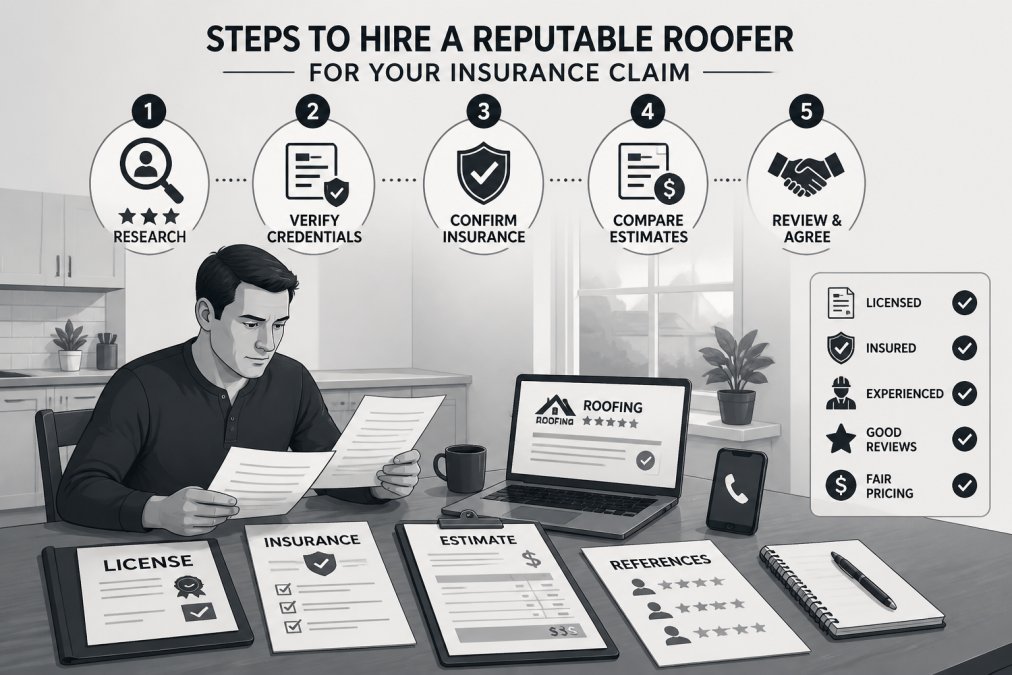
Steps to Hire a Reputable Roofer for Your Insurance Claim
Hiring the right roofer for an insurance claim requires a methodical approach.
Step 1: Document Your Damage Thoroughly
Before you contact any roofer, document the damage yourself. Take photos and video from multiple angles in good lighting. Capture close-ups of damaged shingles, flashing, gutters, and any visible interior damage like water stains or leaks. Include wide shots showing the overall condition of the roof.
Write down when the damage occurred, what caused it (storm, hail, wind, falling tree), and any weather reports that document the event. File your claim promptly so the insurance company assigns an adjuster while evidence is fresh.
Step 2: Get Multiple Estimates and Scope of Work Documents
Contact at least three roofing contractors and request estimates for insurance claim purposes. A proper estimate includes the scope of work (what’s being repaired or replaced), materials, labor costs, and timeline.
Compare the estimates carefully. Significant variations warrant investigation. The scope of work document is critical, this is what you’ll reference when discussing the claim with your insurance adjuster.
Step 3: Verify Contractor License and Insurance
Before signing anything, verify that the contractor is properly licensed and insured. Check your state’s contractor licensing board to confirm the contractor’s license is active and in good standing.
Request proof of current insurance. A reputable contractor carries general liability insurance and workers’ compensation insurance. Ask for certificates of insurance and verify the policy dates are current.
Step 4: Review the Supplement Process
Before you hire anyone, understand how they handle supplemental claims. Ask: "If you find additional damage during the repair work that wasn’t in the initial estimate, how do you handle it?"
A reputable contractor will explain that they’ll document the additional damage with photos and measurements, submit it to the insurance company with an explanation of why it wasn’t visible initially, and request that an adjuster reinspect. They’ll wait for the insurance company’s approval before charging you for the additional work.
Step 5: Avoid Contingency Agreements
Do not sign a contingency agreement. A contingency agreement makes the contractor’s payment dependent on the insurance company approving a certain amount or the claim being settled favorably. The legal language often obligates you to pursue the claim aggressively, file disputes, or hire a public adjuster, all at your expense. Some contingency contracts include lien rights, meaning the contractor can file a lien against your property if the insurance company doesn’t pay as expected.
A legitimate contract specifies what the contractor will do, what it costs, and when payment is due. It doesn’t make payment contingent on the insurance company’s decision. If you’re concerned about affording the work before the insurance company pays, discuss payment terms with the contractor. Many will accept partial payment upfront and final payment after the insurance check arrives.
Protecting Yourself From Claim Disputes and Common Pitfalls
Even with careful planning, claim disputes happen. The most common dispute arises when the insurance company’s estimate is lower than the contractor’s estimate. Your contractor should prepare detailed documentation of the discrepancy, photos showing damage the adjuster missed, measurements, and evidence of structural issues. They’ll submit this to the insurance company with a request for a supplemental claim.
Another common dispute involves the depreciation applied to your payout. If your policy covers actual cash value (ACV) rather than replacement cost value (RCV), the insurance company subtracts depreciation from the replacement cost. Review your policy to understand your coverage type. If the depreciation seems excessive, request an explanation.
Claim denials happen when the insurance company determines the damage wasn’t caused by a covered peril. If your claim is denied, request a detailed explanation and review your policy. If you disagree with the denial, you can request a re-inspection, submit additional evidence, or file a formal appeal.
Keep detailed records throughout the process. Save all correspondence with the insurance company, adjuster reports, contractor estimates, photos, and receipts. Common mistakes to avoid: don’t accept the initial estimate without review, don’t hire a contractor before understanding your insurance coverage, don’t sign contracts with vague terms or contingencies, and don’t delay in filing your claim or hiring a contractor.
Navigating an insurance claim for roof damage is complex, but the process becomes manageable when you understand each step and hire a contractor who takes the claim process seriously. The difference between a smooth claim and a protracted dispute often comes down to documentation, communication, and choosing a contractor with genuine experience handling insurance work. Rescue Roofing helps homeowners in Tulsa and surrounding areas simplify this process by managing communication with adjusters, providing detailed scope of work documents, and ensuring your claim is handled transparently. When you’re ready to move forward, reach out to discuss your specific situation and get a detailed assessment of your roof damage and insurance options.
Frequently Asked Questions
Do roofers handle insurance claims on behalf of homeowners?
Some roofers assist with the insurance claim process, but responsibilities vary. Reputable contractors will help document damage, provide detailed estimates and scope of work, and communicate with your adjuster. However, the homeowner remains the claim filer. A good contractor acts as a partner in the process, they don't replace your role or the adjuster's role. Always confirm upfront what claim support your contractor provides.
What should you not say to an insurance adjuster about your roof?
Avoid admitting fault, exaggerating damage, or making casual statements about the roof's condition. Don't say things like 'I've been meaning to fix this for years' or 'I knew the roof was old.' Never sign anything without reading it carefully. Don't accept the first estimate if you believe it's too low. Stick to facts: what you observed, when the damage occurred, and what weather event caused it. Let your documentation and contractor's estimate speak for themselves.
How do I verify if a roofing contractor is experienced with insurance claims?
Ask directly how many insurance claims they've handled in the past year. Request references from recent insurance claim projects. Verify their license with your state's licensing board and check that they carry liability insurance and workers' compensation coverage. Ask if they're familiar with the supplement process and how they handle claim disputes. Experienced contractors will have clear answers and documentation ready.
What is the 25% rule for roofing insurance claims?
The 25% rule varies by insurer and state, but generally refers to replacement cost value (RCV) thresholds. Some insurers will pay for full replacement if damage exceeds 25% of the roof's value; below that, they may only pay actual cash value (ACV), which accounts for depreciation. This rule is not universal, check your specific policy. Your adjuster will explain how it applies to your claim. A contractor experienced with claims can help interpret what this means for your payout.
This article was written using GrandRanker