


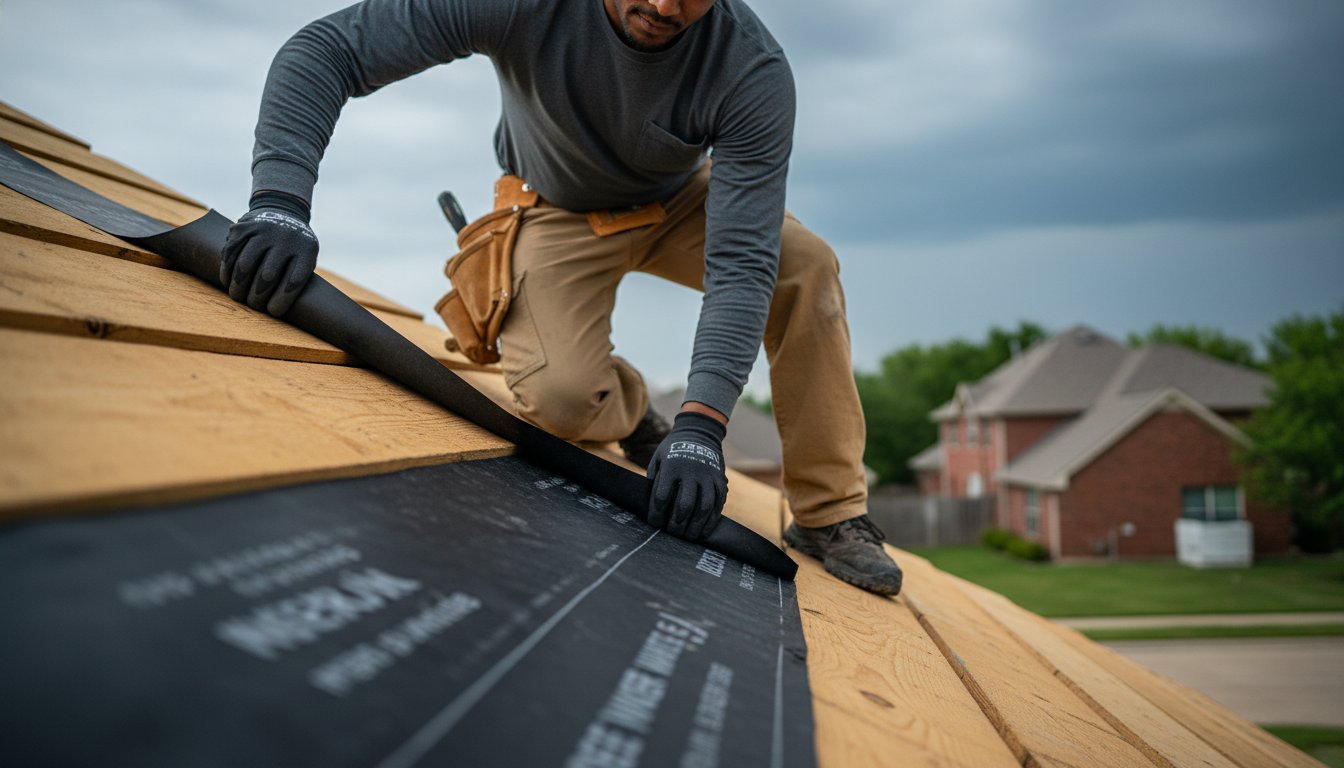

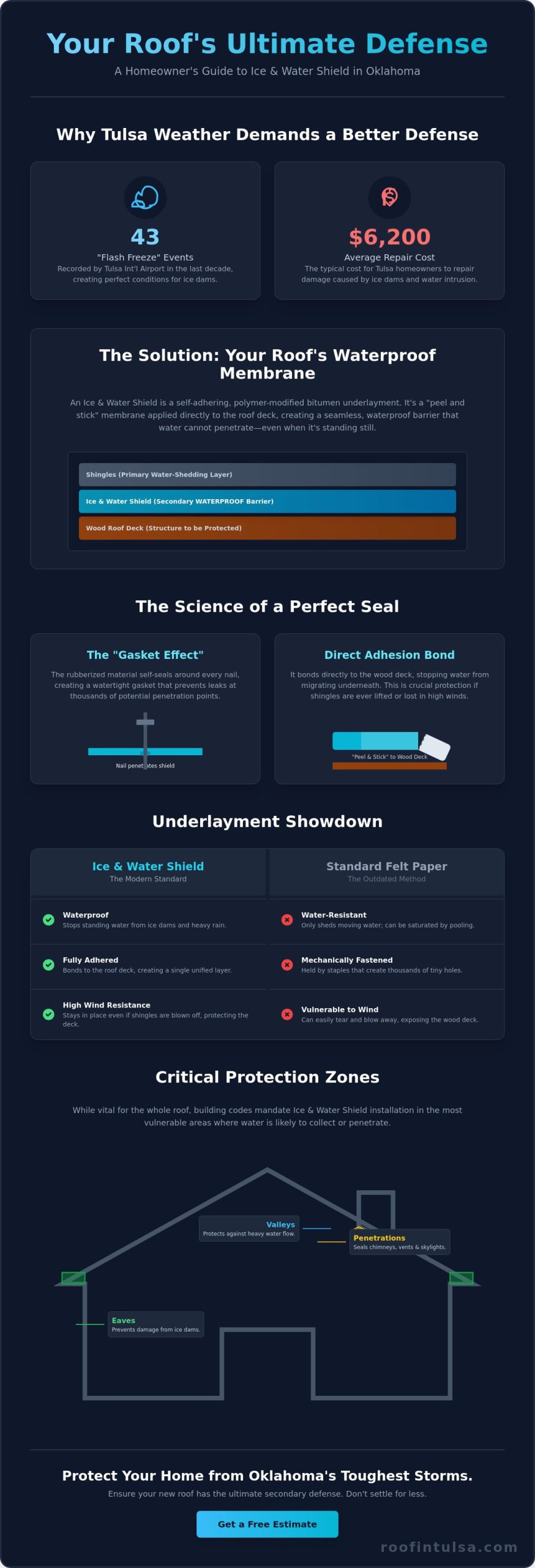
Did you know that Tulsa International Airport recorded 43 “flash freeze” events over the last decade? These sudden drops in temperature are the perfect recipe for ice dams, which have resulted in local repair costs averaging $6,200 per home. When you are reviewing a roofing estimate, you might wonder, what is an ice and water shield for a roof, and is it actually necessary for our Oklahoma climate? While it might look like just another roll of underlayment, this specialized membrane is the only material designed to seal around nails and prevent moisture from bypassing your shingles during extreme weather.
We understand that roofing terminology can feel confusing, especially when you’re trying to protect your home from unpredictable storm seasons. You want to feel confident that your investment is truly “Tulsa-proof” and built to last. This guide explains exactly how this critical component works and where it must be installed to meet current Oklahoma building codes. You’ll discover how a properly placed shield protects your eaves and valleys, giving you peace of mind regardless of what the Oklahoma forecast brings your way.
Key Takeaways
- Learn exactly what is an ice and water shield for a roof and why its self-adhering bond to the deck is your home’s last line of defense.
- Discover how the “self-sealing” properties of this membrane prevent water from migrating under your shingles during severe storms.
- Identify the critical “non-negotiable” areas of your roof, such as valleys and chimneys, where these shields are most effective.
- Understand the specific Oklahoma weather patterns, from straight-line winds to ice dams, that make high-grade underlayment a necessity.
- See why proper installation techniques are the key to ensuring your secondary waterproof barrier remains effective for years to come.
Defining the Ice and Water Shield: Your Roof’s Waterproof Membrane
When you are preparing for a new roof, you might see a specific line item on your estimate and wonder, what is an ice and water shield for a roof? Simply put, it is a specialized, self-adhering underlayment that acts as a secondary defense for your home. While your shingles are the first layer of protection, they are designed to shed water, not to be completely airtight. This specialized membrane is a “peel and stick” material that our team applies directly to the wood roof deck before any shingles go down. By bonding to the wood, it creates a barrier that water cannot crawl under, even during the most intense Oklahoma thunderstorms.
The Science of Polymer-Modified Bitumen
The effectiveness of this shield comes from its unique composition. It is made of polymer-modified bitumen, which is essentially a high-grade asphalt that has been “rubberized” with special polymers. This gives the material incredible elasticity. One of the most impressive features of this membrane is the “gasket effect” it creates around roofing nails. When a nail is driven through the shield, the rubberized material stretches and then tightly hugs the shaft of the nail. This creates a waterproof seal at every single penetration point. In a city like Tulsa, where we experience extreme temperature swings, this flexibility is vital. The material won’t become brittle in the winter or melt away in the summer; it stays pliable and continues to protect your roof deck year after year.
Ice and Water Shield vs. Standard Underlayment
It is important to understand that not all underlayments are created equal. Standard felt paper or synthetic underlayments are water-resistant, meaning they are designed to help water flow down toward your gutters. However, they are not waterproof. If water manages to back up due to ice dams or heavy debris in your valleys, standard underlayment will eventually allow moisture to seep through to the wood below. Here is a quick look at why the shield is a necessary upgrade:
- Waterproofing vs. Resistance: The shield stops standing water from entering, while felt only sheds moving water.
- Adhesion: The shield bonds to the deck; standard underlayment is held by staples or nails that create thousands of tiny holes.
- Wind Protection: Because it is glued to the deck, the shield won’t tear or blow off if shingles are lost during a high-wind event.
While this is a premium material, the long-term protection it provides for your Tulsa home far outweighs the initial cost. It prevents the type of rot and structural damage that often goes unnoticed until it becomes an expensive emergency. Understanding what is an ice and water shield for a roof helps you see why we recommend it as a standard for every quality installation in the Tulsa area.
How Ice and Water Shields Protect Your Home from Leaks
Understanding what is an ice and water shield for a roof is easiest when you see it in action during a heavy Oklahoma storm. While shingles are your first line of defense, they aren’t a perfect seal. High winds can lift shingle tabs, and heavy rain can splash upward in ways that standard roofing materials aren’t designed to handle. This membrane acts as the ultimate safety net. It ensures that even if water gets past your shingles, it never reaches the wood sheathing of your home. By keeping the roof deck dry, you prevent the structural rot and mold growth that often lead to expensive interior repairs.
The Gasket Effect: Sealing Around Fasteners
One of the most impressive features of this material is its ability to self-seal. Standard felt paper is a thin barrier that tears easily. When a roofer drives a nail through felt, it leaves a permanent hole that water can eventually exploit. An ice and water shield works differently. Because it is made of rubberized bitumen, the material “oozes” slightly when pierced. It tightly hugs the nail shaft, creating a waterproof gasket at every single point of penetration. This is a critical part of comprehensive Roof deck protection. In Tulsa’s high-wind environment, where shingles might shift or vibrate during a storm, this gasket effect keeps the underlying wood perfectly sealed and dry.
Stopping Capillary Action and Backflow
Nature doesn’t always follow the rules of gravity. During “slow-soaker” rain events or periods of high wind, water can actually be “sucked” upward between shingles through a process called capillary action. Standard underlayments cannot stop this lateral water migration because they don’t bond to the roof deck. The ice and water shield’s “peel and stick” nature creates a continuous, waterproof bond that stops backflow in its tracks. It is especially vital during the winter months when ice can build up in your gutters and force water to back up under your shingles. If you’re concerned about how your current system is holding up, a professional roof inspection can help identify if your home is properly protected against these hidden threats.
Ultimately, this membrane provides a level of security that shingles alone cannot offer. It transforms your roof from a collection of individual pieces into a unified, waterproof system. By preventing moisture from reaching the wood deck, you’re not just stopping a leak; you’re protecting the very bones of your Tulsa home.
Critical Areas Where Ice and Water Protectors are Non-Negotiable
While you now understand what is an ice and water shield for a roof, it’s important to recognize that we don’t apply it to the entire roof surface. Instead, we focus on the high-stress zones where water is most likely to bypass your shingles. These are the areas where gravity, wind, and temperature changes work together to challenge your home’s defenses. By reinforcing these specific points, we ensure your roof remains “Tulsa-proof” even during our most severe storm seasons.
Why Valleys Need Double Protection
Roof valleys are the internal angles where two roof planes meet. They act like high-capacity drainage channels, funneling massive volumes of water toward your gutters. Because of this concentrated flow, valleys are common roof leak repair locations in older homes. Oklahoma building codes actually mandate a 36-inch wide ice barrier in all valleys. Whether we are installing a “closed valley” with shingles or an “open valley” with metal lining, we always lay down a full width of self-adhering shield first. This creates a waterproof trough that protects the wood deck even if water manages to back up during a torrential downpour.
Sealing the ‘Holes’ in Your Roof: Penetrations
Every chimney, skylight, and plumbing vent is essentially a hole cut into your home’s protection. While metal flashing is the standard defense for these areas, it can expand and contract at different rates than your shingles, eventually creating tiny gaps. We use a “sandwich” method to solve this problem. We apply the ice and water shield around the base of the penetration, install the metal flashing, and then cover the flashing flange with another layer of membrane or shingles. This multi-layered approach ensures that if the flashing ever shifts, the secondary waterproof seal remains intact. It’s a level of detail that standard felt paper simply can’t provide.
The eaves and rakes of your home also require special attention. According to International Residential Code (IRC) requirements, the shield must extend from the lowest eave edge to a point at least 24 inches inside the exterior wall line. This specific measurement is designed to stop leaks from ice dams, which occur when snow or ice melts and then refreezes at the colder roof edge. By sealing this entire zone, we prevent water from being pushed upward and under your shingles. We also pay close attention to low-slope transitions, such as where a steep roof meets a flatter porch. Water slows down in these areas, increasing the risk of “ponding.” A full application of the shield in these transitions provides the extra security needed to keep the wood deck dry during long, steady rains.
Why Oklahoma Weather Makes Underlayment Upgrades Essential
Oklahoma weather is famously unpredictable. While many homeowners ask what is an ice and water shield for a roof in the context of snowy northern climates, here in Tulsa, it’s just as much about our intense spring and summer storms. We don’t just deal with cold; we deal with high-speed straight-line winds and multi-day rain events that can overwhelm a standard roofing system. In our region, this membrane isn’t just an “add-on” for winter. It’s a critical upgrade that protects your home from the unique environmental pressures of Green Country.
Wind-Driven Rain: The ‘Invisible’ Leak Creator
During a typical Tulsa thunderstorm, winds often exceed 60 mph. These gusts don’t just blow over trees; they push rain horizontally. Shingles are designed to be water-shedding, meaning they work with gravity to move water down toward your gutters. However, they aren’t completely waterproof against wind-driven rain that gets forced sideways or even upward under the shingle tabs. Following the highest Tulsa roofing standards means preparing for these horizontal forces. Without a secondary barrier like an ice and water shield, that pressurized water reaches your wood deck and eventually your ceiling. This is why we prioritize sealing the most vulnerable areas where wind is likely to exploit gaps.
Surviving the Oklahoma Ice Storm
We might not see snow every week, but when an Oklahoma ice storm hits, it’s often devastating for property owners. Tulsa International Airport has recorded 43 “flash freeze” events since 2014. These events cause water to freeze quickly at the eaves while the rest of the roof stays slightly warmer from attic heat. This creates a ridge of ice that traps melting water behind it, forming what we call an ice dam. This trapped water has nowhere to go but up and under your shingles. Because the ice and water shield is the only barrier that actually bonds to the wood deck, it’s the only material capable of stopping that backed-up water from entering your attic.
The freeze-thaw cycle in Oklahoma is particularly hard on building materials. Water gets into small crevices, freezes, expands, and then melts again. This constant movement can loosen standard felt paper over time. An ice and water shield stays pliable and maintains its bond regardless of the temperature. It protects your home’s interior even during those long, three-day rain soakers that seem to find every hidden weakness in a roof. If you’re worried about how your home will handle the next unpredictable storm season, you should request a professional roof inspection to ensure your home’s defenses are truly ready for anything.
Expert Installation: The Rescue Roofing Tulsa Difference
Even the highest quality materials will fail if they aren’t handled by experienced hands. You now know what is an ice and water shield for a roof, but its effectiveness depends entirely on the bond it forms with your home. At Rescue Roofing, we treat the installation of this secondary barrier with the same precision as the shingles themselves. A wrinkled or poorly aligned membrane creates “fish-mouths,” which are small gaps where the material doesn’t lay flat against the deck. These tiny openings allow moisture to bypass the seal, defeating the entire purpose of the upgrade. We use only high-grade, code-compliant membranes that meet the ASTM D1970 standard to ensure your home remains dry during the most intense Oklahoma storms.
The Importance of a Clean Deck
A successful installation begins with a bare, solid surface. During a roof replacement tulsa project, our team strips the old materials all the way down to the wood sheathing. This is a vital step because Oklahoma building codes prohibit installing a new layer of asphalt shingles over an existing one. Trying to stick a new shield over old felt paper or a dirty deck prevents the adhesive from bonding correctly. By starting with clean, inspected wood, we ensure the membrane becomes a permanent, waterproof part of your roof’s structure. This thorough approach also allows us to identify and repair any hidden rot before the new system is installed.
Maximizing Your Insurance Claim
Navigating the financial side of storm restoration can be as stressful as the weather itself. Many homeowners don’t realize that if local building codes require an ice barrier, your insurance policy may cover the cost under “law and ordinance” or “code upgrade” provisions. Since 2023, municipalities like Jenks have increasingly verified these installations during inspections. We specialize in insurance claim assistance, providing the detailed photo documentation and technical proof adjusters need to approve these essential components. Our team advocates for the use of the best materials because we believe every Tulsa neighbor deserves a roof that meets the highest safety standards.
Using premium materials also safeguards your long-term investment. Most major manufacturers require specific underlayment installation methods to keep their comprehensive product warranties valid. By choosing a local expert who understands these technical nuances, you ensure your home stays protected for decades. If you’re ready to see the difference that quality materials and expert installation make for your home, Contact Rescue Roofing Tulsa for a Professional Inspection today. We are here to guide you through every step of the process with honesty and professional care.
Secure Your Tulsa Home Against the Next Storm
Your roof is more than just a collection of shingles; it is a complex system designed to keep your family safe and dry. Understanding what is an ice and water shield for a roof is the first step toward ensuring your property can withstand the next Oklahoma flash freeze or severe thunderstorm. By reinforcing high-stress areas like valleys and eaves with this self-sealing membrane, you create a secondary barrier that stops leaks before they can damage your home’s interior. This simple component provides the peace of mind that your investment is truly protected against our unpredictable weather.
As a Tulsa-owned and operated business, we understand the specific environmental challenges our local neighbors face every year. We are specialists in Oklahoma storm damage and insurance claims, and we offer 24/7 emergency repair availability when you need us most. Our team is committed to providing the reliable, professional support you deserve to keep your roof in peak condition. Protect your home with a storm-ready roof—Get your free Tulsa roof inspection today! We look forward to serving as your trusted local roofing guide and keeping your home safe for years to come.
Frequently Asked Questions
Is an ice and water shield required by code in Tulsa, Oklahoma?
Yes, Oklahoma building codes mandate the use of an ice barrier in specific areas of your roof. According to the 2018 International Residential Code with 2021 Oklahoma amendments, this barrier must extend from the eaves to at least 24 inches inside the exterior wall line of the building. It is also required to be 36 inches wide in all roof valleys and at any change in roof slope to ensure proper protection.
Can I install an ice and water shield over my existing shingles?
No, you cannot install this membrane over existing shingles. Oklahoma’s residential code is strict and prohibits the installation of new asphalt shingles over an old layer. A complete tear-off of the old roofing material is required. This process allows our team to inspect the roof deck for damage and ensures the new shield can bond directly to the clean wood for a waterproof seal.
How much does an ice and water shield add to the cost of a roof replacement?
Adding this specialized membrane is a premium upgrade that involves higher material costs and more intensive labor than standard felt paper. While the total investment varies based on the size and complexity of your home, it is a relatively small portion of a full replacement. Many homeowners find that insurance policies cover these costs under code-upgrade provisions if the shield is required by local municipalities.
Does an ice and water shield prevent all roof leaks?
It is a highly effective secondary defense, but it does not replace the need for a well-maintained shingle system. The shield is specifically designed to stop water that has already bypassed the shingles from reaching the wood deck. It is the most reliable way to prevent damage from ice dams and wind-driven rain, which are the primary reasons homeowners ask what is an ice and water shield for a roof.
What is the difference between an ice and water shield and synthetic underlayment?
The main difference is that synthetic underlayment is water-resistant, while an ice and water shield is truly waterproof. Synthetic materials are designed to help water flow down the roof toward your gutters. However, the shield is a rubberized bitumen membrane that actually bonds to the deck and seals around every nail. While synthetic underlayment covers the whole roof, the shield is used for the most vulnerable spots.
Should I cover my entire roof deck with an ice and water shield?
For most standard residential roofs in Tulsa, covering the entire deck is unnecessary and can actually trap moisture in your attic by preventing proper ventilation. We focus the application on high-risk areas like valleys, eaves, and around chimneys. The only exception is for very low-slope roofs where water drains slowly; in those specific cases, a full-roof application may be the best way to ensure total protection.
How long does an ice and water shield last?
When it is properly installed and protected from the sun by your shingles, the membrane is designed to last as long as your roofing system itself. Since the material is not exposed to UV rays, the rubberized bitumen stays pliable and maintains its “gasket effect” around nails for 20 to 50 years. It provides consistent protection throughout the entire lifespan of your shingles without needing replacement or maintenance.
Can an ice and water shield be installed in cold weather?
Yes, it can be installed during the winter, though the adhesive backing requires extra care in cold temperatures. When the thermometer dips below 40 degrees, the “peel and stick” bond takes longer to activate. Our crew uses specialized installation techniques to ensure the material achieves a permanent bond to the roof deck, providing you with reliable protection regardless of when your project begins.