



What if the biggest threat to your home’s value during a roof upgrade isn’t the shingles, but the garden you’ve spent years perfecting? In Oklahoma, state building codes require a complete tear-off of old materials, making protecting landscaping during roof replacement a top priority for any homeowner. It’s natural to feel anxious about heavy equipment crushing your flowerbeds or hidden nails lurking in the grass after the crew leaves. We understand that your landscaping is a significant investment in your Tulsa home’s curb appeal and your family’s comfort.
You deserve a project that respects your property as much as you do. This guide will show you how safeguarding your lawn is a standard part of a professional installation. We’ll outline the specific steps you can take to prepare your yard and the specialized shielding systems an expert contractor should use to keep your outdoor spaces pristine. You can have confidence in your home’s protection from the first shingle removal to the final magnetic nail sweep.
Key Takeaways
- Identify the “drip line” danger zone where falling debris is most likely to impact your gardens and flowerbeds.
- See how professional equipment like breathable mesh protects your plants without suffocating them during the Oklahoma heat.
- Master the homeowner’s checklist for protecting landscaping during roof replacement, from moving patio decor to preparing your lawn for easier cleanup.
- Learn about the “Triple-Pass” magnetic sweep method that ensures your yard is safe for pets and children the moment the job is done.
The Hidden Risks of Roof Replacement to Your Tulsa Landscape
Replacing a roof is a heavy duty industrial project happening right above your prized flowerbeds. In Oklahoma, building codes require a complete tear-off of old asphalt shingles, which means every single piece of your old roof must come down before the new one goes up. This process generates thousands of pounds of sharp, heavy debris. For a standard home, you’re looking at several tons of material that needs to be moved from the roof to a container safely. Without a specific plan for protecting landscaping during roof replacement, your yard faces significant physical and chemical stress.
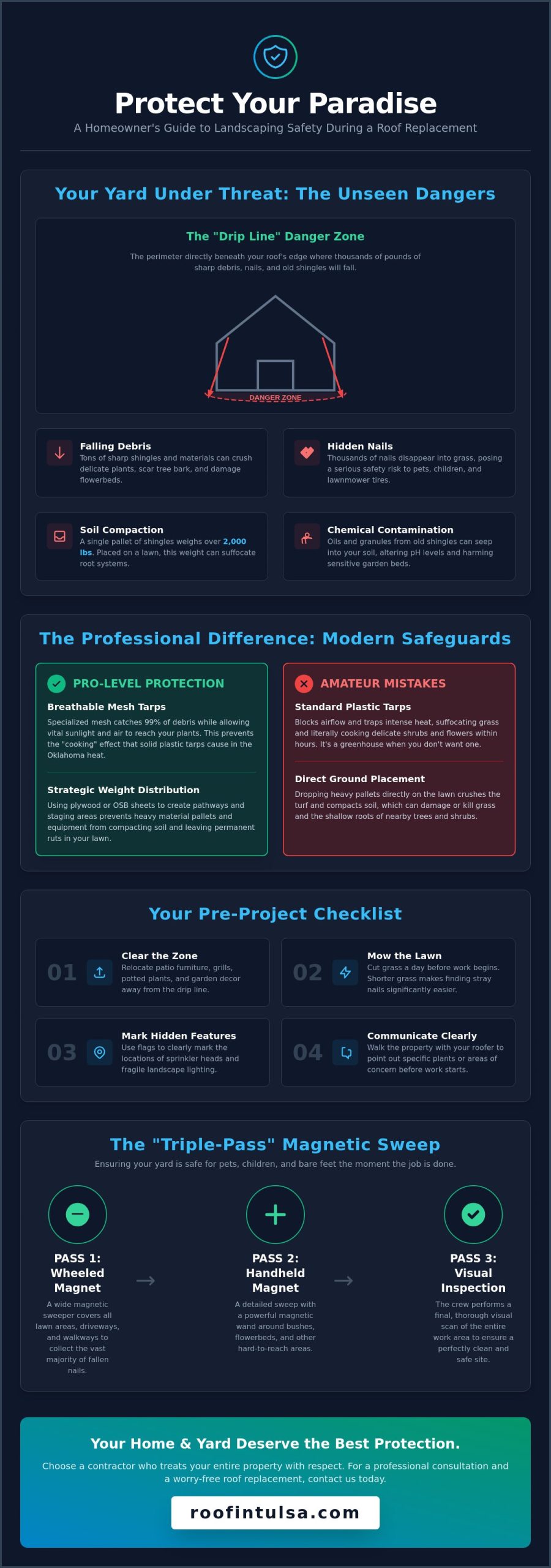
The most vulnerable area is the “drip line,” the perimeter directly beneath your roof’s edge. This is the primary landing zone for falling shingles, old felt paper, and thousands of roofing nails. Beyond the physical impact, old asphalt shingles carry oils and granules that can shed into your soil. These materials can subtly shift soil pH levels or introduce petroleum-based residues into your garden beds, complicating your long-term landscape maintenance efforts. Understanding these risks is the first step in ensuring your yard remains a sanctuary after the crew leaves.
Impact of Falling Debris and Old Shingles
Gravity is a powerful force on a job site. When a worker removes a shingle from a second-story peak, it can quickly become a projectile. Even a single shingle has enough weight and sharp edges to snap the stems of delicate perennials or scar the bark of ornamental shrubs. Tear-off day is the most critical window for safety because the volume of debris is at its peak. In the dense turf grass common in Tulsa, such as Bermuda or Zoysia, roofing nails are notorious for disappearing. They slip between the blades of grass and become nearly invisible, posing a risk to mower tires, pets, and bare feet if the contractor doesn’t use proper containment methods.
Soil Compaction and Heavy Equipment Hazards
The weight of the materials themselves is another hidden danger. A single pallet of architectural shingles can weigh over 2,000 pounds. If a contractor stages these bundles directly on your lawn or near the root zones of mature shade trees, the soil becomes compacted. This compression squeezes the air out of the soil, effectively suffocating the delicate root systems that keep your Tulsa oaks and maples healthy. Heavy equipment, like shingle elevators or large dump trailers, can also leave deep ruts in soft Oklahoma soil. This is especially true after our frequent spring rains. A standard part of protecting landscaping during roof replacement involves managing where this equipment travels to avoid permanent damage. These ruts aren’t just an eyesore; they damage the structural integrity of your lawn’s surface.
Professional Safeguards: How Expert Tulsa Roofers Protect Your Property
Professional roofers view your yard as a workspace that must be preserved. While the risks of debris and weight are real, modern roofing technology offers sophisticated ways of protecting landscaping during roof replacement. An expert crew doesn’t just show up and start tearing off shingles. They begin by assessing your home’s perimeter to identify the most vulnerable features. This proactive planning is what separates a high-quality local contractor from a cut-rate operation. It gives you the peace of mind that your home’s curb appeal is in good hands.
Advanced Tarping and Breathable Mesh
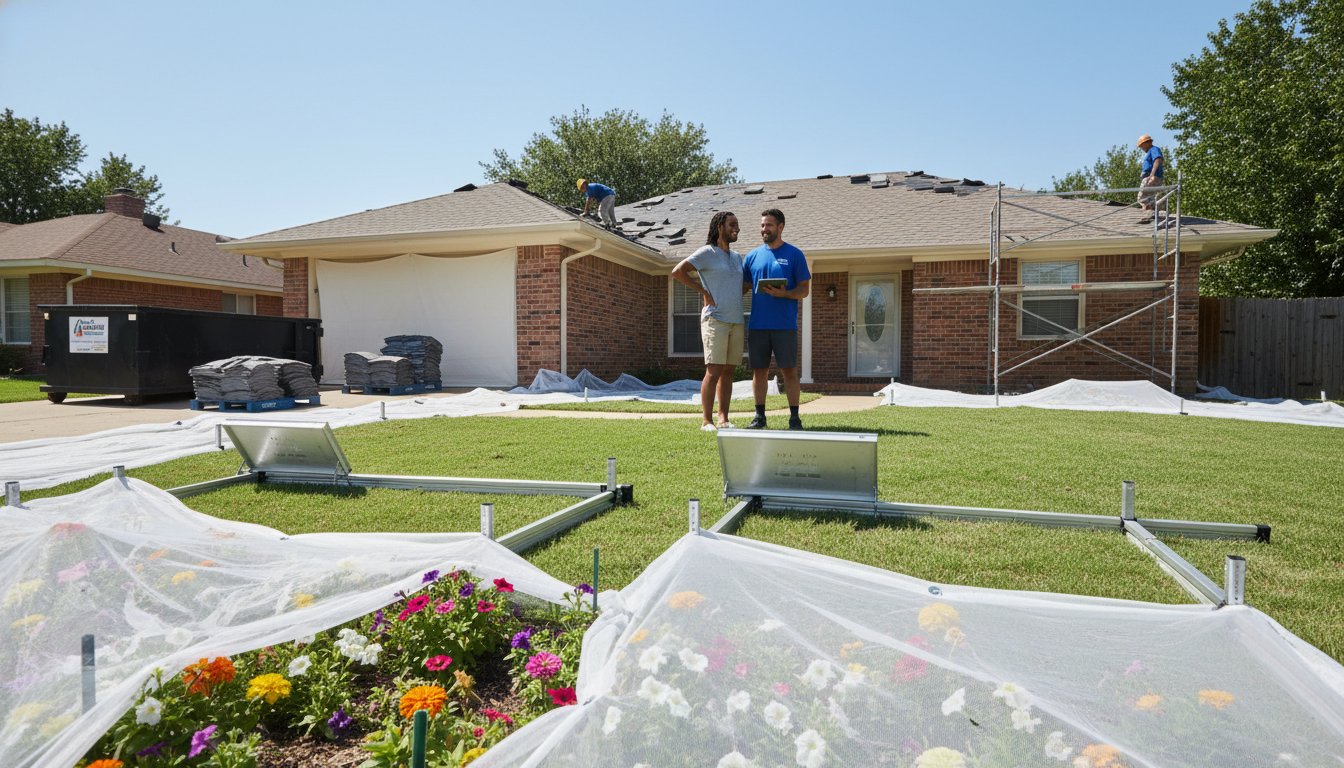
Many homeowners assume a few blue tarps are enough to keep a yard clean. However, traditional plastic tarps can be detrimental to your garden in the Tulsa sun. These materials trap heat and block airflow, which can “cook” your shrubs or grass in just a few hours of Oklahoma summer heat. Professional crews prefer specialized mesh systems instead. These breathable coverings allow light and air to reach your plants while catching 99% of the falling debris. These systems are also heavily weighted and secured to ensure they don’t blow away during sudden Oklahoma wind gusts. Implementing these tools is a key part of Protecting Landscape Plants while the work is underway.
Strategic Equipment Paths and Material Staging
Heavy loads require careful management to prevent soil compaction. Expert teams designate “No-Go Zones” for crew members and heavy machinery to keep foot traffic away from delicate root systems. By using OSB or plywood sheets, we can distribute the weight of shingle bundles across your driveway or specific lawn areas. This simple step prevents the deep ruts that often plague less-prepared job sites. It keeps your soil healthy and your grass intact.
To protect your home’s hardware, we build plywood “lean-tos” over expensive HVAC units and large windows. These shields deflect any stray debris that might bounce off the primary mesh. We also use specialized ladder stand-offs. These tools keep the weight of the ladder off your gutters, preventing scratches or bends. If you are concerned about your home’s exterior, a professional roof inspection can help identify these vulnerable areas before the project begins. Finally, a dedicated ground crew remains on-site throughout the tear-off phase. Their only job is to manage the debris as it falls. They constantly adjust the mesh and sweep up stray materials, ensuring that the “splash zone” stays contained from start to finish.
A Homeowner’s Checklist: Preparing Your Yard Before the Crew Arrives
While professional crews bring specialized equipment to the job site, your preparation is the first line of defense for your property. Think of this process as a partnership between you and your contractor. Your local roofing team understands the technical side of the installation, but you know your property’s unique quirks and features best. Taking a few proactive steps before the crew arrives ensures that the workflow remains efficient and your yard stays protected.
The most important part of this preparation is the pre-job walkthrough. Before the first shingle is removed, spend ten minutes with the project manager to point out your “Prize Plants.” Whether it is an expensive Japanese Maple or rose bushes passed down through your family, clearly identifying these priorities ensures the crew knows exactly where to exercise extra caution. This simple communication framework bridges the gap between homeowner expectations and crew actions, making protecting landscaping during roof replacement a shared goal from the start.
Clearing the Periphery and Fragile Decor
The “Splash Zone” is the 20-foot area surrounding your home’s perimeter where debris is most likely to land. Anything in this zone is at risk for accidental damage. Move birdbaths, solar lights, and lawn ornaments to a designated safe zone, such as a garage or a far corner of the yard. For heavy items like stone statues or large planters that cannot be moved, cover them with thick plastic or a plywood frame. Don’t forget to clear your driveway entirely. Removing vehicles and equipment allows the crew to place dump trailers in the most efficient spots. This minimizes the distance debris has to travel and reduces the chance of materials spilling onto your lawn.
Managing Irrigation and Lawn Length
Your lawn’s condition directly impacts the final cleanup. Mow your grass to a height of about 2 inches a day or two before the project starts. This height is the “sweet spot” for magnetic sweeping. It’s short enough to prevent roofing nails from hiding deep in the turf but long enough to protect the soil surface. A shorter lawn makes the post-project nail search significantly more effective, giving you confidence that the yard is safe for pets and children.
Water management is also vital. Turn off your automatic sprinkler system at least 24 hours before the work begins. Dry soil is firmer and much less prone to compaction from foot traffic or heavy material bundles. Finally, use bright surveyor’s tape to flag hidden hazards. Mark irrigation heads, underground pet fence transmitters, and low-voltage lighting wires. These small markers act as silent reminders for the crew as they navigate your property. These steps ensure that protecting landscaping during roof replacement is a seamless part of the daily operation rather than an afterthought.
Specialized Protection for Vulnerable Garden Features
General safeguards provide a solid foundation, but many Tulsa properties feature unique elements that require a more tailored approach. Whether you have a collection of delicate perennials or a custom-stamped concrete patio, protecting landscaping during roof replacement involves addressing these specific vulnerabilities. We understand that your outdoor living space is an extension of your home. Our goal is to ensure that every fountain, stone path, and ornamental shrub remains exactly as you left it.
Protecting Flowerbeds and Ornamental Shrubs
Delicate plants like hydrangeas or hostas can’t handle the weight of even a single shingle. For these high-value features, we recommend building temporary “cages” using simple lumber and mesh. This creates a physical barrier that deflects debris while allowing the plant to breathe. Another effective technique is the “Tent Method.” By propping up breathable mesh with stakes, we create a sloped canopy. This allows shingles to slide safely to the ground rather than crushing the foliage beneath. We also look up. Overhanging tree limbs from Tulsa’s mature oaks can interfere with the roof line. We work with you to identify which branches need trimming to provide the crew with safe access without harming the tree’s health.
Safeguarding AC Units and Hardscaping
Your external AC condenser is one of the most expensive components of your home’s exterior. During a tear-off, it’s susceptible to “roof dust,” which is a fine mixture of asphalt granules and old shingle fibers. If this dust chokes the cooling fins, it can lead to mechanical failure. We protect these units by creating a plywood “A-frame” shield. This structure is sturdy enough to stop falling debris but remains open at the sides to ensure proper ventilation. You never want to wrap an AC unit tightly in plastic while it’s running. This can cause the motor to overheat quickly in the Oklahoma sun.
Hardscaping also needs a gentle touch. Stamped concrete, pavers, and natural stone paths can easily be scratched by heavy material bundles or the metal edges of equipment. We use thick OSB sheets to create “staging pads” wherever heavy loads must sit. This layer of protection absorbs the pressure and prevents surface marring. Finally, we consider your water features. For homeowners with pools or koi ponds, we deploy fine-mesh covers to manage “granule fall.” This keeps micro-debris out of your filtration systems and maintains your water chemistry. If you’re ready to work with a team that treats your property with this level of care, contact us for your residential roof replacement today.
Post-Project Recovery: Ensuring a Clean and Healthy Yard
The final shingle is in place, but our commitment to your property continues until the last piece of debris is gone. The recovery phase of protecting landscaping during roof replacement is just as vital as the initial setup. We focus on returning your outdoor space to its original state, ensuring no hidden hazards remain for your family or pets. It’s about more than just a clean driveway. It’s about ensuring your lawn and gardens are ready to thrive again.
Magnetic Sweeps and Debris Removal
We use a Triple-Pass Magnetic Sweep as our standard for safety. A single pass often misses nails that have settled deep into the Oklahoma turf. By covering the same area three times from different angles, we catch metal debris that might have been shielded by grass blades or soil unevenness. This methodical approach is the only way to be certain the yard is truly clear. Our team also manually inspects “nooks and crannies,” such as flowerbed corners and the areas around gutter downspouts. We don’t just look for nails. We also clear away smaller “hidden” debris like plastic starter strips and felt scraps that can clutter your garden beds if left behind. This thoroughness is what gives our neighbors peace of mind.
Assessing Plant Health and Post-Roofing Care
Once the tarps and mesh are removed, your plants need immediate attention. Even with the best protection, a fine layer of asphalt dust or shingle granules can settle on leaves. We use leaf blowers to clear off your siding, decks, and walkways, but a gentle water rinse for your plants is often the final touch needed. Washing down your foliage ensures your plants can photosynthesize effectively without a coating of “roof dust.” This simple step prevents long-term stress on your ornamental shrubs and perennials.
A deep watering session is essential immediately after the project. The heat and lack of direct light under protective coverings, even breathable ones, can stress your garden. Providing a thorough soak helps your greenery recover its vigor quickly. During the final walkthrough, you and the project manager will inspect the landscape together. We look for any signs of plant stress or accidental limb breakage that might need immediate pruning. This collaborative check ensures you are completely satisfied with the state of your yard. Long-term, following a professional roof maintenance plan ensures your home and its surroundings stay in peak condition throughout the changing Oklahoma seasons. We are here to be your trusted advisor from the first shingle to the final garden inspection.
Enjoy a Beautiful Yard and a Secure New Roof
A successful project leaves your home stronger and your property just as beautiful as the day the work began. By using breathable mesh systems and strategic staging, you prevent the heat stress and soil compaction that often follow major construction. Preparation is truly a partnership. When you clear the splash zone and identify your prize plants, you provide our team with the roadmap they need to work safely around your garden.
Choosing a local expert who prioritizes protecting landscaping during roof replacement means you can focus on the long-term value of your new roof instead of worrying about hidden debris. Our dedicated local Tulsa crew is here to guide you through every step. We offer expert insurance claim assistance and 24/7 emergency support to keep your mind at ease. We believe your lawn and gardens deserve the same level of care as your home’s structure.
Ready to upgrade your home without the stress? Schedule your landscape-safe roof replacement estimate with Rescue Roofing Tulsa today! We look forward to helping you protect your investment and your curb appeal.
Frequently Asked Questions
Will my homeowners insurance cover landscaping damage during a roof replacement?
Standard homeowners insurance policies typically do not cover damage to plants or lawns caused by a contractor’s work. Instead, you should rely on the contractor’s liability insurance. In Oklahoma, roofing contractors must carry at least $500,000 in liability insurance for residential projects. If a shingle bundle or heavy equipment damages your property, the contractor’s policy is designed to handle those repair or replacement costs.
How long can my plants stay covered by tarps during the roofing process?
Plants should only be covered during active work hours to prevent heat stress. In the intense Oklahoma sun, non-breathable plastic tarps can damage foliage in just a few hours. If your contractor uses breathable mesh systems, plants can stay covered throughout the workday. However, you must ensure all coverings are removed each evening so your garden can breathe and receive moisture from the overnight dew.
What is the best way to find roofing nails in my grass after the job is done?
The most effective method is using a high-powered industrial magnetic sweeper. For the best results in protecting landscaping during roof replacement, our team performs a triple-pass sweep from different angles. This ensures that nails hidden deep in the turf are captured. You can also do a final check with a strong flashlight at night; the beam will reflect off any metal missed during the initial cleanup.
Should I mow my lawn before or after my roof is replaced?
You should mow your lawn to a height of about 2 inches a day or two before the project begins. Shorter grass makes it much harder for roofing nails and small asphalt scraps to hide. This preparation allows the magnetic sweeper to get closer to the soil surface for a more thorough cleanup. You can resume your normal mowing height once the final debris inspection is complete.
Can the weight of a roofing dumpster crack my driveway or damage my lawn?
A heavy dumpster can certainly crack concrete or leave ruts in soft soil if it is not staged correctly. Professional crews prevent this by placing thick plywood or OSB sheets under the dumpster’s contact points. This simple step distributes the thousands of pounds of weight more evenly across the surface. It protects your hardscaping from structural damage and keeps your lawn’s surface level and intact.
How do I protect my air conditioning unit from roofing debris and dust?
The best protection is a temporary plywood A-frame built over the external condenser unit. This structure deflects falling shingles and heavy debris while allowing the unit to pull in the air it needs to function. Never wrap your AC unit tightly in plastic or tarps while it is running. Doing so can cause the system to overheat and fail, leading to expensive repairs during the hot Tulsa summer.
What should I do if a heavy branch or shingle breaks one of my plants?
Take photos of the damage immediately and notify the project manager on-site. Most professional contractors include protecting landscaping during roof replacement as part of their service agreement and will take responsibility for accidents. You should discuss the repair or replacement during your final walkthrough. Addressing these issues promptly ensures that your yard’s recovery is handled professionally and fairly.
How do I communicate my landscaping concerns to a roofing contractor?
Schedule a formal pre-job walkthrough to point out your most delicate or high-value plants. Physically walk the perimeter of your home with the project manager to identify “no-go zones” for foot traffic and equipment. Clear, face-to-face communication before the tear-off starts ensures the crew understands your expectations. This proactive approach prevents misunderstandings and helps the team plan a safer workspace around your garden features.