



Did you know that under Oklahoma law, you have up to 24 months to file an insurance claim for hidden hail damage that isn’t visible without a professional eye? Many Tulsa homeowners assume that if they don’t see a leak immediately after a storm, they’ve missed their chance. Navigating the roof replacement insurance process often feels like a daunting task filled with confusing jargon and the fear of a sudden claim denial. It’s completely normal to feel a sense of dread when thinking about adjusters or worrying about out of pocket costs, especially when you just want a safe home for your family.
We’re here to show you that managing your claim doesn’t have to be a battle. You can secure a high-quality, durable roof replacement with minimal stress by following a clear, documented path. This guide will break down the essential steps to managing your claim, from understanding the latest 2026 legislative changes to ensuring you receive the full value of your policy. By the end, you’ll feel empowered to handle your claim with confidence and protect your home’s value for years to come.
Key Takeaways
- Learn how to simplify your experience by navigating the roof replacement insurance process with expert documentation and a clear timeline.
- Understand the vital differences between ACV and RCV policies to avoid unexpected out-of-pocket expenses during your claim.
- Discover why a professional roof inspection and a detailed evidence portfolio are essential for securing a fair approval from your insurer.
- Gain peace of mind by learning why having your contractor present during the adjuster’s meeting ensures all damage is accurately recorded.
- Find out how to handle hidden damage and utilize Oklahoma’s matching requirements to achieve a seamless, high-quality roof replacement.
Understanding the Roof Replacement Insurance Process in Tulsa
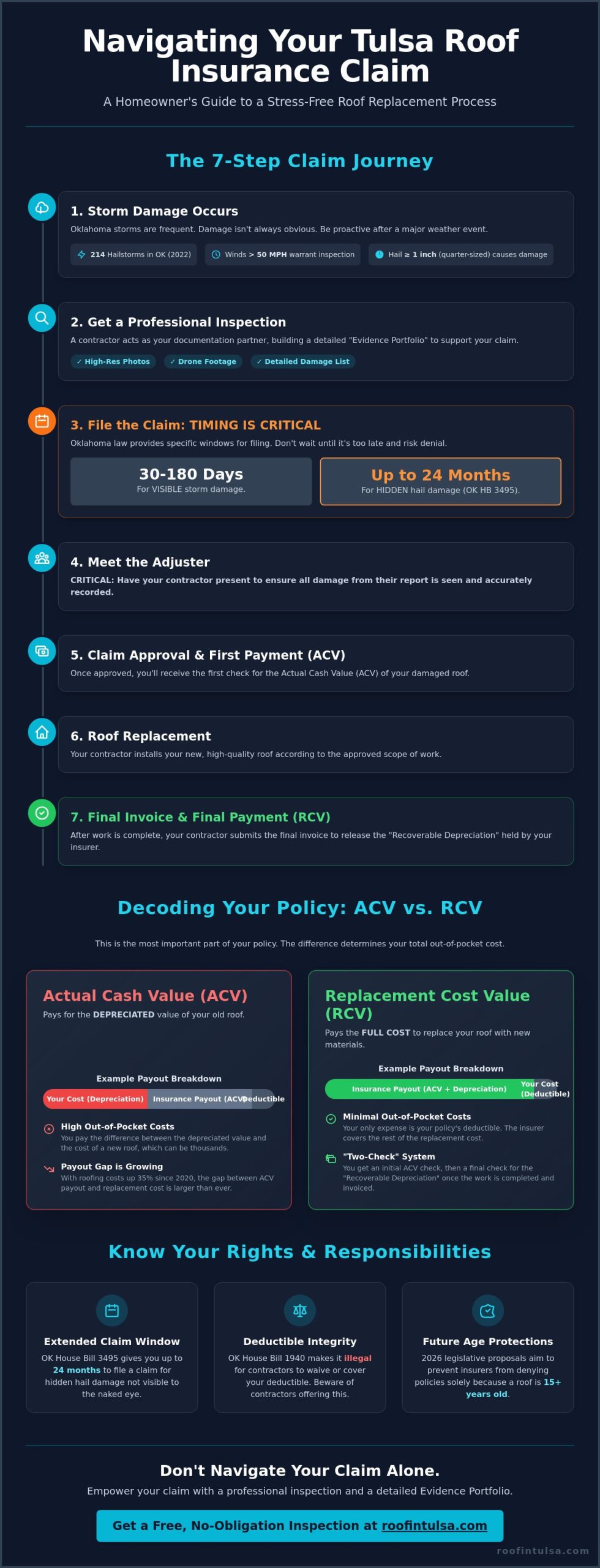
Navigating the roof replacement insurance process begins with understanding exactly what a claim represents. At its core, a roof insurance claim is a formal request to your provider for coverage on damage protected by your homeowners insurance policy. In Tulsa, our roofs face a unique set of challenges. Between 214 hailstorms recorded in Oklahoma in 2022 and our frequent high wind events, storm damage is common. These sudden perils are covered by most policies, whereas standard wear and tear from age is typically an owner’s responsibility. Distinguishing between the two requires a trained eye. A tulsa roofing expert can spot subtle bruising or granular loss that looks like normal aging to an untrained homeowner but actually indicates significant storm impact.
When Should You File a Claim?
You should consider filing a claim if you notice visible signs of storm damage, such as missing shingles, cracked tiles, or “bruised” asphalt where granules have been knocked away. A good rule of thumb is that hail the size of a quarter (one inch) or winds exceeding 50 mph often cause enough damage to warrant an inspection. Timing is critical for your approval. Most Oklahoma policies require you to report visible damage within 30 to 180 days of the event. However, thanks to Oklahoma House Bill 3495, you have up to 24 months to file for hidden hail damage that isn’t immediately visible. Waiting too long can lead to a denial, as insurers may argue the damage was caused by neglect rather than a specific storm.
The Role of Your Roofing Contractor
Modern roofing is about more than just hammers and nails; it’s about being a reliable documentation partner. By partnering with an expert, navigating the roof replacement insurance process becomes a manageable series of steps. A professional residential roofing contractor provides the “Evidence Portfolio” that adjusters require. This includes high-resolution photos, drone footage, and a detailed list of damaged components. It’s also vital to work with a contractor who respects local laws. For instance, Oklahoma House Bill 1940 makes it illegal for contractors to waive or cover your deductible. A trustworthy local expert will never offer to “eat the deductible” because they prioritize ethical business practices and legal compliance. Their role is to ensure your home is protected with quality materials while helping you meet the strict reporting deadlines required by your insurer.
Decoding Your Policy: ACV vs. RCV and Out-of-Pocket Costs
Understanding the fine print of your insurance policy is the most critical step when navigating the roof replacement insurance process. Most homeowners in Tulsa have one of two types of coverage: Actual Cash Value (ACV) or Replacement Cost Value (RCV). The difference between these two determines how much money you’ll need to pay out of your own pocket. While an RCV policy is designed to cover the full cost of a new roof at current market prices, an ACV policy only pays what your old roof was worth at the time of the storm. This distinction is vital because it changes your financial responsibility from a small fixed amount to a potentially large variable cost.
How ACV Policies Impact Your Budget
If you have an ACV policy, your insurer will subtract depreciation from your payout based on the age and condition of your shingles. Since roofing material costs have increased by 35% since 2020, this “payout gap” can be substantial for many families. For example, if your roof is 15 years old, the insurance company may only provide a fraction of the funds needed for a modern replacement. It’s often worth discussing an upgrade to RCV coverage with your agent before the next storm season arrives. This is especially relevant now, as 2026 legislative proposals in Oklahoma aim to prevent insurers from refusing to issue policies solely because a roof has reached that 15-year milestone.
Recoverable Depreciation Explained
If you have an RCV policy, you’ll likely participate in what’s known as a “two-check” system. The first check you receive is the ACV amount, which represents the current value of the damaged roof. The remaining funds, known as recoverable depreciation, are held back by the insurance company until the work is finished. To release these funds, your contractor must provide a final invoice and a certificate of completion to the insurer. An RCV policy ensures that your only out-of-pocket expense for a total replacement is your deductible.
Your deductible is the only part of the bill you are legally required to pay yourself. Under Oklahoma House Bill 1940, which went into effect in November 2023, it is strictly illegal for any roofing contractor to waive, absorb, or otherwise cover a homeowner’s deductible. If a “storm chaser” offers to handle your deductible for you, they’re asking you to participate in insurance fraud. These offers are a major red flag and usually signal that the contractor is cutting corners on materials or labor. A reputable company will always be transparent about this legal requirement. If you’re feeling overwhelmed by these terms, a quick consultation with a Tulsa roofing professional can help you understand exactly what your specific policy covers.
The Critical First Steps: Documentation and Professional Inspection
After a severe Tulsa storm, your first instinct might be to grab a ladder and see the damage for yourself. Please don’t do this. Roofs are often slippery and structurally unstable after high winds or heavy hail. Falling is a significant risk that isn’t worth taking. Let a professional handle the heights while you stay safely on the ground. Your role in navigating the roof replacement insurance process starts with observation from your lawn, not the ridge. You can safely document damage to your property by looking for “collateral damage” on items at eye level.
Walk around your home and look for dents in your gutters or downspouts. Check your wooden fences for fresh chips in the stain or “spatter” marks where hail stripped away the finish. Even your AC unit can show signs of impact on the metal fins. These details are vital. They help build what we call an “Evidence Portfolio.” This is a collection of date-stamped photos and notes that your contractor will use to prove the storm’s intensity to your insurance adjuster. When you eventually call your agent to initiate the claim, stick to the facts. State the date of the storm and mention that a professional inspection has already identified storm-related damage.
The Professional Inspection Advantage
A professional roof repair tulsa inspection goes much deeper than a simple visual check. Experts use high-resolution cameras to document shingle granule loss and bruising that isn’t visible from the ground. They also look for hidden issues like compromised underlayment or water-damaged decking. While a basic repair assessment focuses on fixing a specific leak, a full replacement inspection evaluates the structural integrity of the entire system. This level of detail provides the objective evidence adjusters require to approve a full replacement rather than a small, temporary patch.
Temporary Repairs and Mitigation
Most insurance policies include a “duty to mitigate.” This means you’re responsible for preventing further damage to your home once a problem is discovered. If water is entering your attic, you’re expected to have the area tarped or temporarily sealed to protect your ceilings and belongings. Always hire a pro for these emergency fixes. DIY tarping is dangerous and can cause more damage if the tarp isn’t secured correctly. Be sure to save every receipt for these temporary measures. Most insurers will reimburse you for these mitigation costs as part of your overall claim, as long as you have the documentation to back them up.
Navigating the Adjuster Meeting and Avoiding Common Pitfalls
The adjuster’s visit is often the most stressful part of the claim. You might worry about being lowballed or having damage overlooked, especially if you aren’t familiar with roofing terminology. This is why having your roofing contractor present is the best way to ensure an honest outcome. They act as your advocate and speak the same technical language as the insurance representative. By navigating the roof replacement insurance process with an expert by your side, you ensure that every dent and bruised shingle is documented on the spot.
After the inspection, you’ll receive a “Scope of Work” document. This is a detailed list of every item the insurer agrees to pay for, from the shingles themselves to the disposal of old materials. Review this carefully. A common pitfall is the “partial approval,” where an adjuster only offers to repair a single slope of the roof. In Tulsa, this can be problematic if your shingles are older and no longer manufactured. Oklahoma has specific regulations regarding material matching, and if a match isn’t possible, you may be entitled to a full replacement to maintain your home’s integrity and value.
Tulsa homeowners also need to be wary of “storm chasers” who flood the area after a major weather event. These out of state companies often use high pressure sales tactics and lack a local reputation. Stick with a business that has deep roots in the community and a physical office you can visit. If you have an adjuster meeting scheduled, contact us for insurance claim assistance to ensure your property is represented by a professional who knows the local landscape.
Bridging the Gap: Contractor vs. Adjuster
Most insurance adjusters use specialized software like Xactimate to calculate repair costs. Your contractor should use the same tool to ensure both parties are looking at the same line items and current local material prices. A contractor’s presence ensures a fair and accurate assessment of damage. They can also point out specific Tulsa building code requirements, such as necessary drip edges or ventilation standards, that an adjuster from another region might accidentally overlook. This alignment prevents payment gaps later in the project.
What to Do if Your Claim is Denied
A claim denial isn’t the end of the road. You have the legal right to request a second inspection with a different adjuster if you feel the first assessment was incomplete. Sometimes, involving a Public Adjuster or an independent roofing consultant can provide the third party perspective needed to move a claim forward. If you still face an unresolved dispute with your provider, you can contact the Oklahoma Insurance Department to file a formal complaint. They serve as a regulatory body to ensure insurers act in good faith with policyholders.
From Approval to Installation: Finalizing Your Tulsa Roof Replacement
Once your claim is approved, you might think the administrative work is over. However, the most technical part of navigating the roof replacement insurance process often happens during the actual construction phase. It’s common for initial insurance estimates to focus only on visible surface damage. Once the old shingles are removed, we often find issues that were impossible to see during the first inspection. This is where the “supplement” process becomes essential to ensuring your new roof meets all modern safety standards.
Oklahoma law also provides specific protections regarding material matching. If your existing shingles are no longer manufactured and a reasonable match cannot be found for a partial repair, the insurer may be required to cover a full replacement. This ensures your home maintains its aesthetic value and structural consistency. Rescue Roofing Tulsa takes the lead on these discussions. We handle the heavy lifting of documentation and communication so you can focus on your daily life while we rebuild your home’s primary defense.
Supplementing the Claim
During the tear-off process, we frequently identify items missed in the initial scope, such as damaged drip edges or the lack of proper ice and water shields. These components are vital for long term protection against Tulsa’s driving rains and ice storms. When these issues arise, we submit digital evidence and photos directly to your adjuster for approval. This proactive approach ensures the job is done right without leaving you with unexpected bills. Once your new system is installed, establishing a consistent roof maintenance plan is the best way to protect your new investment and uphold your warranty requirements.
The Final Payout and Warranty
After the installation is finished, we provide a Certificate of Completion and a final invoice to your insurance company. This step is what triggers the release of your recoverable depreciation, which is the second check mentioned earlier in this guide. Remember that for RCV policies, Oklahoma requires repairs to be completed within six months of the date of loss to receive these withheld funds. We’ll help you stay on track with this timeline to ensure you aren’t left paying more than your deductible.
You should also understand the two types of protection you now have. A manufacturer warranty covers defects in the shingles themselves, while our workmanship warranty covers the actual installation. Keeping all of this documentation in a safe place is vital for your home’s future resale value. A new, fully documented roof is a major selling point for any Tulsa property. By partnering with a local expert who manages the paperwork from start to finish, you can enjoy a stress-free experience and a roof that will protect your family for decades.
Secure Your Home’s Future with Confidence
Protecting your home after a major storm shouldn’t be a source of constant stress. By understanding your policy’s fine print and partnering with a local expert, you can ensure your property remains a safe haven for your family. We’ve covered the vital role of the evidence portfolio, the legal requirements for deductibles in Oklahoma, and how professional advocacy during adjuster meetings secures a fair outcome. Navigating the roof replacement insurance process is far more manageable when you have a dependable neighbor by your side to guide you through the technical paperwork.
As A+ rated local Tulsa experts, we provide 24/7 emergency repair support and dedicated insurance claim assistance to handle the administrative heavy lifting for you. Get Your Professional Storm Damage Inspection from Rescue Roofing Tulsa today to begin the process of restoring your home’s integrity and value. You’ve worked hard to build a home for your family, and we’re here to help you protect it with quality craftsmanship and honest, professional service. We’re ready to help whenever you need us.
Frequently Asked Questions
Will filing a roof insurance claim make my premiums go up?
Filing a single claim for storm damage typically won’t cause an individual premium hike because weather events are considered “Acts of God.” However, insurance companies often adjust rates for an entire geographic area based on the total number of claims in that zip code. Since you’re likely already paying for the increased regional risk in Tulsa, it’s best to utilize the coverage you’re entitled to when damage occurs.
How long do I have to file a roof damage claim in Oklahoma?
For visible storm damage, most Oklahoma policies require you to report the loss within 30 to 180 days. However, Oklahoma House Bill 3495 allows up to 24 months to file a claim for hidden hail damage that isn’t immediately visible to the untrained eye. Navigating the roof replacement insurance process is much easier when you act quickly to document the specific date of the storm.
Can I choose my own roofing contractor, or does the insurance company pick one?
You have the absolute right to choose any roofing contractor you trust to work on your home. While some insurers might suggest “preferred providers,” you aren’t obligated to use them. Selecting a local expert who understands Tulsa’s specific building codes and weather patterns ensures your property receives the highest quality care and professional advocacy during the adjuster’s inspection.
What happens if the insurance check has my mortgage company’s name on it?
It’s standard practice for insurance checks to include your mortgage company as a payee. Since the lender has a financial interest in your home, they must endorse the check to ensure the funds are used for actual repairs. We can help you understand the specific paperwork your lender requires to release these funds so your project stays on schedule.
Does insurance cover roof replacement for an old roof with some wear and tear?
Insurance only covers damage caused by sudden perils like wind or hail, not gradual wear and tear from aging. If an older roof sustains storm damage, the insurer may still cover the replacement cost. However, if you have an ACV policy, the age of your roof will significantly reduce your final payout because the company will subtract depreciation from the total.
What is a “supplement” in a roofing insurance claim?
A supplement is a formal request for additional funds to cover necessary items missed in the original insurance estimate. These often include local building code requirements or hidden damage discovered after the old shingles are removed. We handle the digital evidence and communication for these supplements to ensure your insurer pays for a complete, safe, and legal installation.
Can I use the insurance money for something else if I decide not to fix the roof?
While you can technically keep the money if you own the home outright, it’s a risky decision. If you have a mortgage, your lender requires the repairs to protect their collateral. Additionally, you’ll forfeit any recoverable depreciation and your insurer may refuse to cover future roof damage until the current issues are professionally resolved and documented.
How do I know if a roofing contractor is a “storm chaser”?
Storm chasers are typically out-of-state companies that follow severe weather events to find quick work. Look for red flags like high-pressure sales tactics, door-knocking, or out-of-state license plates. A major warning sign is any contractor offering to “waive” or “absorb” your deductible. This practice is illegal in Oklahoma under House Bill 1940 and is a sign of a scam.