



A leak in a brand-new roof isn’t just a maintenance headache; it’s a failure of the installation process itself. You’ve likely spent weeks choosing the right materials and invested your hard-earned savings into protecting your home. Seeing a water stain appear on your ceiling is naturally devastating. Knowing exactly what to do if your new roof is leaking is the only way to protect your investment and your peace of mind.
A third-party inspection can be a powerful tool in this process. If your original contractor insists the shingles are “defective” while the manufacturer blames the “install,” an independent expert like UEC Roofing can provide a neutral report. This documentation validates your claim and provides the leverage needed to get the responsible party back on-site to honor their agreement.
It’s completely normal to feel a mix of financial anxiety and frustration when a contractor is slow to respond. You are likely wondering who is responsible for this failure and how you can actually get them to fix it. This action plan will show you how to take control of the situation, determine if the fault lies with the materials or the workmanship, and get your home leak-free again. We’ll walk through the immediate steps to mitigate damage, explain how 2026 warranty standards apply to your case, and provide a clear documentation-first roadmap for handling contractor disputes with confidence.
Key Takeaways
- Learn how to contain water flow and document evidence immediately to prevent further structural damage to your home.
- Identify common red flags like improper flashing or inadequate underlayment that are often the hidden causes of leaks in new roofs.
- Understand the critical difference between workmanship and manufacturer warranties so you know exactly what to do if your new roof is leaking without paying for the same repair twice.
- Follow a clear roadmap for communicating with your original contractor to ensure you receive a detailed inspection and a written repair plan.
- Discover how a professional roof inspection serves as the essential first step in validating your warranty coverage and restoring your home’s integrity.
Immediate Response: What to Do in the First 24 Hours of a Leak
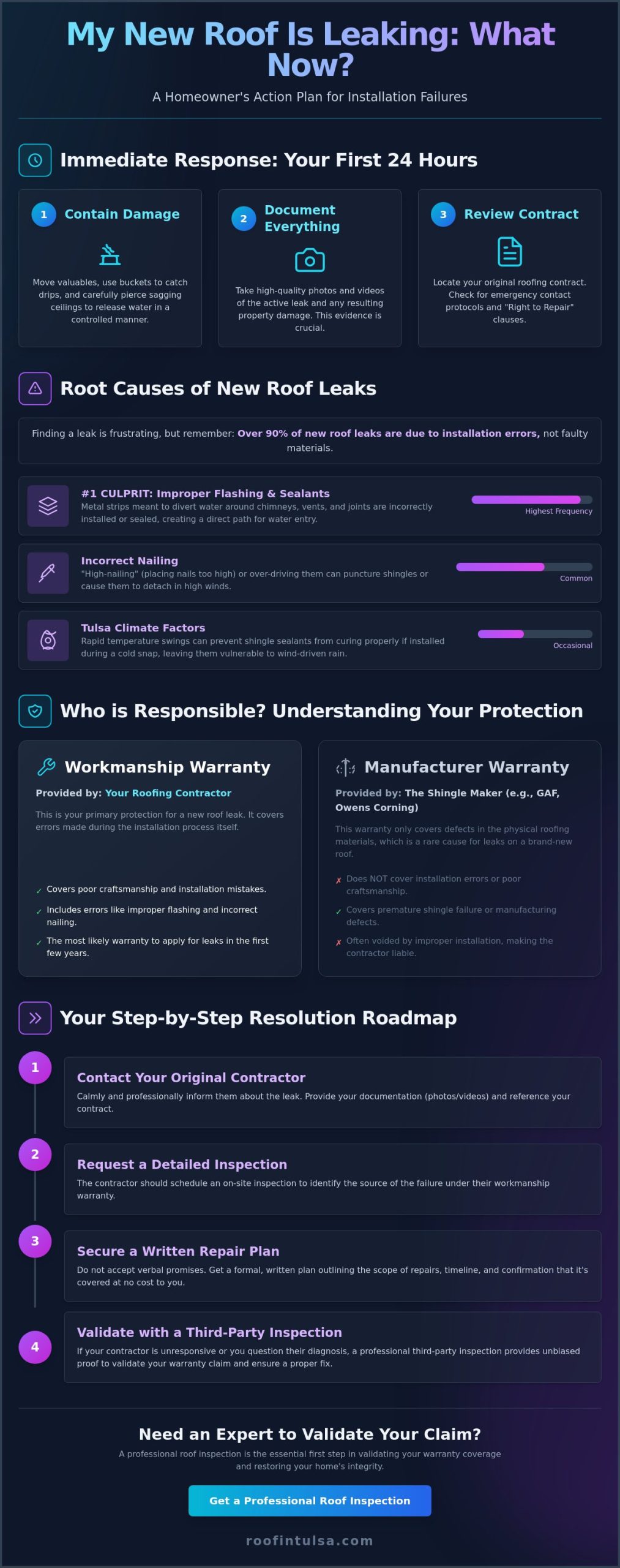
Discovering a leak in a roof you just paid for is a shock. Your first instinct might be to call the contractor and express your frustration immediately. While that call is necessary, your priority during the first 24 hours must be damage control. Water doesn’t wait for a return phone call. It moves quickly through your home’s structure, potentially damaging insulation, electrical systems, and drywall. Knowing exactly what to do if your new roof is leaking in those first few hours can save you thousands in secondary repairs and strengthen your eventual warranty claim.
Containing the Water Damage
The moment you spot a drip, clear the area. Move furniture, electronics, and valuables to another room. If an item is too heavy to move, cover it with plastic sheeting. Water often travels along rafters or through layers of roofing materials and construction before it ever hits your ceiling, so the entry point on your roof may not be directly above the puddle on your floor.
Use buckets to catch active drips and lay down towels to soak up splashes. If you notice your ceiling drywall is sagging or bubbling, it’s likely holding a significant amount of water. You can prevent a sudden, messy collapse by “venting” the leak. Use a small screwdriver or a drill bit to carefully poke a pilot hole in the center of the sag. This releases the pooled water into a bucket in a controlled way, reducing the weight on the ceiling structure and preventing a much larger hole from forming.
Capturing Professional-Grade Documentation
Before you clean up every drop, you must document the evidence. High-quality photos and videos are the most powerful tools you have when discussing what to do if your new roof is leaking with your contractor or insurance company. Evidence gathered while the leak is active is much harder to dispute than photos of a dry water stain taken days later.
- Photograph the Source: Capture close-ups of the water entering the room and wide-angle shots that show the leak’s location relative to the rest of the house.
- Record Video: Take a 30-second video of the active drip. This demonstrates the volume of water and the severity of the failure.
- Document Property Damage: If the leak ruined a rug, computer, or piece of furniture, photograph those items in place before moving them.
Once the area is stable, find your original roofing contract. Most professional agreements include specific emergency contact protocols or “Right to Repair” clauses. These documents often outline how quickly a contractor is required to respond to an active leak. Clearing the area of wet materials like soaked rugs or cardboard boxes is also vital. This prevents secondary issues like mold growth, which can begin in as little as 24 to 48 hours in the humid Oklahoma climate. Stay calm and stay organized; your documentation is the first step toward a permanent fix.
Why a Brand-New Roof Leaks: Root Causes and Red Flags
Finding water in your home so soon after a replacement is incredibly frustrating. You probably feel like the job wasn’t finished or that you were sold sub-par materials. While material defects happen, they are rarely the culprit in the first year of a roof’s life. Most often, a leak is the result of a specific installation error. When you are determining what to do if your new roof is leaking, identifying these root causes is the first step toward a permanent solution.
Installation failures often stem from small details that were overlooked during the rush of a project. Why a brand-new roof might leak usually comes down to three main areas: flashing, nailing, and the environment. Flashing is the metal used to redirect water away from joints and penetrations. If it’s not tucked and sealed perfectly around your chimney or vents, water will find its way in. Nail placement is equally critical. If a roofer uses “high-nailing” techniques, the nails don’t catch the shingle below, leading to slippage. Over-driven nails can even puncture the shingle, creating a direct path for moisture.
Tulsa homeowners face unique challenges due to our local climate. In 2026, we’ve seen more rapid temperature swings that can affect how sealants and adhesives cure during installation. If shingles were laid during a cold snap and didn’t have enough sun to seal properly before a heavy rain, the wind can easily lift them. Understanding these red flags clarifies what to do if your new roof is leaking and helps you hold the right party accountable.
The Role of Flashing and Sealants
Flashing is the number one culprit in new roof failures. It requires precise hand-tooling and layering to be effective. Check the “boots” around your plumbing vents. If they weren’t replaced or were sealed with cheap caulk instead of high-grade roofing sealant, they’ll fail quickly. Wall-line leaks are also common when step-flashing isn’t integrated correctly into the siding or masonry. These areas require an expert eye to diagnose, which is why a professional roof inspection is often necessary to find the true source of the trouble.
Workmanship vs. Material Defects
It’s important to distinguish between a bad shingle and a bad install. Manufacturing defects like premature granule loss or thermal cracking are covered by material warranties, but they are rare in 2026. Most leaks are workmanship issues, such as missing drip edges or improper valley installation. In Oklahoma, installing shingles in sub-optimal weather can also lead to “shingle blow-off” if the thermal strip doesn’t bond. If you see shingles sliding down your roof or gaps in the valleys, you are likely looking at a workmanship failure rather than a product defect.
Understanding Your Protection: Workmanship vs. Manufacturer Warranties
Understanding the legal and financial layers of your roof’s protection is vital. When you’re deciding what to do if your new roof is leaking, the first thing to check is your paperwork. Most homeowners assume a “lifetime warranty” covers every possible issue. In reality, your protection is split into two distinct categories: the manufacturer’s material warranty and the contractor’s workmanship guarantee. Knowing which one applies to your situation determines who pays for the fix.
Manufacturer warranties in 2026 typically last between 20 and 50 years. These cover defects in the shingles themselves, such as premature aging or manufacturing flaws. However, industry data confirms that the vast majority of leaks in new roofs stem from installation errors, not the product. If a roofer installs a high-quality shingle incorrectly, the manufacturer will almost certainly deny your claim. This distinction is the core of what to do if your new roof is leaking without being forced to pay for the same repair twice.
A third-party inspection can be a powerful tool in this process. If your original contractor insists the shingles are “defective” while the manufacturer blames the “install,” an independent expert can provide a neutral report. This documentation validates your claim and provides the leverage needed to get the responsible party back on-site to honor their agreement.
The Manufacturer’s Warranty Explained
Modern shingle makers have shifted toward “system-based” warranties in 2026. These cover the shingles, underlayment, and ventilation as a single unit. To keep this coverage valid, the entire system must be installed according to strict factory specifications. If your contractor cut corners by using a different brand’s underlayment or failed to install mandatory ice and water shields, your material warranty might be void. Always ensure your project was registered correctly and keep a copy of the confirmation for your records.
The Contractor’s Workmanship Guarantee
A workmanship warranty covers the actual labor and installation process. In 2026, these usually range from 5 to 15 years. This is your primary line of defense against the flashing failures and nailing errors discussed earlier. At Rescue Roofing Tulsa, we emphasize local accountability because we live in the same community we serve. A guarantee is only as good as the company’s willingness to stand behind it. Look for non-prorated coverage in your contract; this ensures you receive full protection for the entire term rather than coverage that diminishes as the roof ages.
The Step-by-Step Resolution Process for Tulsa Homeowners
Dealing with a leak in a fresh installation is exhausting, but following a structured process ensures you aren’t ignored. You’ve already documented the damage and reviewed your warranty. Now, it’s time to move toward a permanent fix. Knowing exactly what to do if your new roof is leaking involves more than just a phone call; it requires a paper trail that holds the right people accountable. Start by organizing your documentation and preparing to engage with your contractor in a professional, firm manner.
The first step is to request a formal inspection from the original company. Don’t settle for a verbal promise to “send someone out.” Ask for a written report that identifies the specific cause of the failure and a detailed repair plan. If the contractor claims the leak is a minor issue, having a written record allows you to compare their findings with a second opinion later if the leak persists. This methodical approach removes the guesswork and ensures that the repair is more than just a temporary patch.
Communicating with Your Roofer
Always keep your communication in writing. While a quick phone call is tempting, emails or certified letters provide a legal record of your request. Phrase your message professionally. State the date the leak was discovered, reference your original contract number, and request a response within a specific timeframe, such as 24 to 48 hours. If the original company has vanished or gone out of business, don’t panic. You may need to contact the shingle manufacturer directly or hire a local expert to perform a diagnostic inspection to protect your home’s structure from further damage.
Navigating Insurance and Storm Damage
In Oklahoma, we must always consider the weather. Sometimes a leak in a new roof isn’t due to poor installation but rather a severe weather event that occurred shortly after the project ended. High winds or large hail can damage even the best-installed systems. Our roof repair Tulsa specialists can help you distinguish between a workmanship error and genuine storm damage. If nature is the culprit, our team provides comprehensive insurance claim assistance to help you navigate the paperwork and get your repairs covered without unnecessary stress.
If you find yourself stuck between a non-responsive contractor and a leaking ceiling, you don’t have to handle it alone. We can provide a neutral, professional assessment to help you determine the best path forward and ensure your home remains safe. If you need a second opinion to validate your warranty claim, contact us for a professional roof inspection today.
How Rescue Roofing Tulsa Resolves Installation Failures
When you’ve already been let down by a previous installation, finding a path forward can feel overwhelming. At Rescue Roofing Tulsa, we understand that you aren’t just looking for a patch; you’re looking for the security you were promised when you first bought your roof. If you are struggling with what to do if your new roof is leaking, we provide the technical expertise and local accountability needed to make things right. Our team focuses on finding the root cause of the failure so you never have to deal with the same leak twice.
We treat every repair as a mission to restore your home’s integrity. Whether the issue was caused by high-nailing, poor flashing, or environmental factors unique to the 2026 Oklahoma weather season, we don’t guess. We verify. By choosing a locally owned partner, you gain a neighbor who is invested in the long-term health of our community’s housing. Our goal is to move you from the stress of an active leak to the confidence of a fully protected home.
The Rescue Roofing Diagnostic Approach
Finding a leak’s true origin requires more than just a ladder and a flashlight. We utilize advanced tools like thermal imaging and moisture meters to track water trails that are invisible to the naked eye. This is why a professional roof inspection is the first step we recommend. We provide a comprehensive report detailing every finding, which is essential if you need to hold an original contractor or manufacturer accountable. Beyond immediate repairs, we also provide guidance on proper roof maintenance to ensure your system reaches its full life expectancy.
Restoring Your Home and Your Trust
Correcting a failed installation often involves undoing the mistakes of others. We specialize in rebuilding critical areas like valleys and chimney flashing to meet the highest industry standards. Our crews are trained to identify exactly what to do if your new roof is leaking due to complex workmanship errors that others might overlook. This dedication to precision has made us a preferred roofing contractor for homeowners who need a reliable second opinion. We don’t just fix the shingle; we fix the system. Contact us today for a detailed repair estimate and let us help you put your roofing worries behind you for good.
Secure Your Home and Restore Your Peace of Mind
A leaking new roof is a significant stressor, but it doesn’t have to be a permanent setback. By focusing on immediate documentation and understanding the critical difference between workmanship and material warranties, you’ve already taken the most important steps toward a resolution. Most leaks in brand-new systems are installation failures that can be corrected quickly with the right professional approach. Knowing exactly what to do if your new roof is leaking gives you the leverage needed to handle contractor disputes or insurance claims with confidence.
You deserve a home that stays dry regardless of the Oklahoma weather. Our team at Rescue Roofing Tulsa brings A+ rated local Tulsa expertise to every project. We are specialists in insurance claim assistance and provide 24/7 emergency repair services to ensure your property remains safe during a crisis. Don’t let a minor installation error turn into major structural damage. Schedule a Professional Leak Inspection with Rescue Roofing Tulsa today to get a clear, honest assessment of your roof’s condition. We are ready to help you protect your investment and keep your family safe.
Frequently Asked Questions
Is a roofer responsible for a leak in a new roof?
Yes, the roofing contractor is typically responsible for leaks resulting from improper installation. Most professional contracts in 2026 include a workmanship warranty that covers labor errors for 5 to 15 years. If the leak is caused by a failure in the installation process, the original roofer should address the repair at no additional cost to you. Trustworthy local companies stand behind their work and will prioritize fixing these issues to protect their reputation.
How long after a new roof is installed should I expect it to be leak-free?
You should expect your new roof to remain leak-free for the duration of its manufacturer-rated lifespan, which is often 20 to 50 years for modern asphalt shingles. While small settling issues can occur, a properly installed roofing system is designed to be watertight from day one. If you discover moisture shortly after installation, it usually indicates a specific technical failure. Addressing these red flags early prevents minor installation errors from becoming long-term structural problems.
Can a new roof leak during a heavy rainstorm even if it’s installed correctly?
No, a correctly installed roof shouldn’t leak during standard heavy rainstorms. While extreme weather events like hurricane-force winds or large hail can cause damage to any structure, typical Oklahoma rain shouldn’t penetrate a new system. If you’re wondering what to do if your new roof is leaking during a normal storm, it’s likely that a flashing component or seal wasn’t finished correctly. A professional diagnostic can quickly identify these specific installation gaps.
What should I do if my roofer won’t return my calls about a leak?
You should document all communication attempts and send a formal request via certified mail to create a legal record. If the original contractor remains non-responsive, contact a reputable local expert for a third-party inspection. This provides the necessary documentation to pursue a warranty claim with the manufacturer or seek assistance through your insurance company. Taking these steps helps ensure your home stays protected even when the initial provider fails to fulfill their obligations.
Does homeowner’s insurance cover a leaking new roof?
Homeowner’s insurance typically covers leaks caused by sudden and accidental events like wind or hail damage. It generally doesn’t cover leaks resulting from poor workmanship or installation errors. If a recent storm caused the issue, our team can provide insurance claim assistance to help you navigate the process. However, if the leak is due to a contractor’s mistake, the roofer’s own liability insurance or their workmanship warranty should be the primary source for coverage.
Will a leak in my new roof lead to mold immediately?
Mold doesn’t grow instantly, but it can begin to develop within 24 to 48 hours of water exposure in a warm environment. While a single drip might not cause a crisis, trapped moisture in your attic or insulation creates the perfect conditions for spores to spread. This is why addressing the leak within the first day is vital. Quick action protects your home’s air quality and prevents the need for expensive mold remediation services later.
How do I know if the leak is from the roof or something else like the HVAC?
You can often distinguish the source by observing when the leak occurs. Roof leaks typically happen during or shortly after rainfall, while HVAC leaks are often constant or tied to when your air conditioner is running. Check your attic for damp rafters or water trails. If the moisture is centered around your furnace or AC unit, the issue is likely a clogged condensate line or a plumbing failure rather than a roofing problem.
Can I hire a different company to fix my new roof without voiding the warranty?
You must check your original contract carefully, as hiring a different company to perform repairs can sometimes void your workmanship warranty. However, if you’re deciding what to do if your new roof is leaking and the original roofer is incompetent or absent, a third-party repair may be necessary. Always get a written inspection report before allowing another contractor to touch the roof. This documentation is essential for maintaining your manufacturer’s material warranty coverage.