



The sound of a drip you can’t place. A new, dark stain spreading across your ceiling. That sinking feeling is unmistakable-you have a roof leak. Suddenly, a dozen questions race through your mind. How bad is the damage? Where is the water coming from? What do I do right now? The panic is real, but you don’t have to face it alone. Taking calm, decisive action is the first step toward protecting your home and your peace of mind.
As your trusted, local Tulsa roofing experts, we created this first-response guide to empower you. We’re here to help you move from stress to solution. In this guide, you will discover the subtle signs of a hidden leak, learn the crucial first steps to control water damage inside your home, and understand exactly when it’s time to call a professional for an honest assessment. Our goal is simple: to give you the clear, straightforward information you need to get your home back to being safe and dry.
First Signs of a Roof Leak: What to Look For Inside and Out
When Tulsa homeowners think of a roof leak, they often picture a steady drip from the ceiling into a bucket on the floor. While that certainly happens, the reality is that most leaks start much more subtly. The earliest warning signs can appear long before you see a single drop of water, and knowing what to look for is the key to catching minor issues before they become major, costly repairs. Protecting your home starts with being proactive.
By regularly checking for these clues, both inside your home and on the roof itself, you can gain valuable peace of mind. Here’s a straightforward guide from your trusted local roofing experts on what to spot.
Interior Warning Signs You Can’t Ignore
The first evidence of a problem often appears inside your home, far from the actual source of the leak. Keep an eye out for these tell-tale signs, especially after a heavy rainstorm:
- Water Stains or Discoloration: Look for brownish or yellowish rings on ceilings or running down walls. These are a classic sign that water has found its way in.
- Peeling or Bubbling Paint: Moisture trapped behind drywall or plaster will cause paint and wallpaper to bubble, crack, or peel. This is common in corners where walls meet the ceiling.
- A Persistent Musty Odor: If you notice a damp, earthy smell in your attic or upper-level rooms that you can’t trace, it could be caused by hidden moisture from a slow leak.
- Dripping Sounds: Sometimes you can hear a leak before you can see it. Don’t ignore faint dripping or tapping sounds coming from above.
Exterior Clues (Visible from the Ground)
You don’t need to climb a ladder to spot potential trouble. A quick walk around your property can reveal obvious signs that your roof’s integrity is compromised. Here is what to look for from the safety of the ground:
- Damaged Shingles: Scan your roof for shingles that are missing, cracked, curling at the edges, or buckling.
- Clogged or Overflowing Gutters: Gutters filled with leaves and debris can cause water to back up under the roofline. In winter, this can lead to harmful ice dam buildup and force water into your home.
- Visible Damage Around Vents: Check the flashing (the metal seals) around chimneys, vents, and skylights. Gaps, rust, or damage here are common sources of leaks.
- Shingle Granules in Downspouts: Finding a large amount of coarse, black “sand” in your gutters or at the base of your downspouts means your shingles are aging and losing their protective layer.
What to Do Immediately When You Discover a Roof Leak (Before Calling for Help)
The moment you see a dark spot on your ceiling or hear that unmistakable drip, it’s easy to feel a surge of panic. But taking a few calm, immediate steps can make a massive difference, potentially saving you thousands of dollars in interior repairs. Your first priority is to control the situation and minimize damage to your home and belongings.
These first-response actions are designed to protect your property while you wait for a professional to arrive. Acting quickly helps contain the problem and provides crucial information for the repair and insurance process.
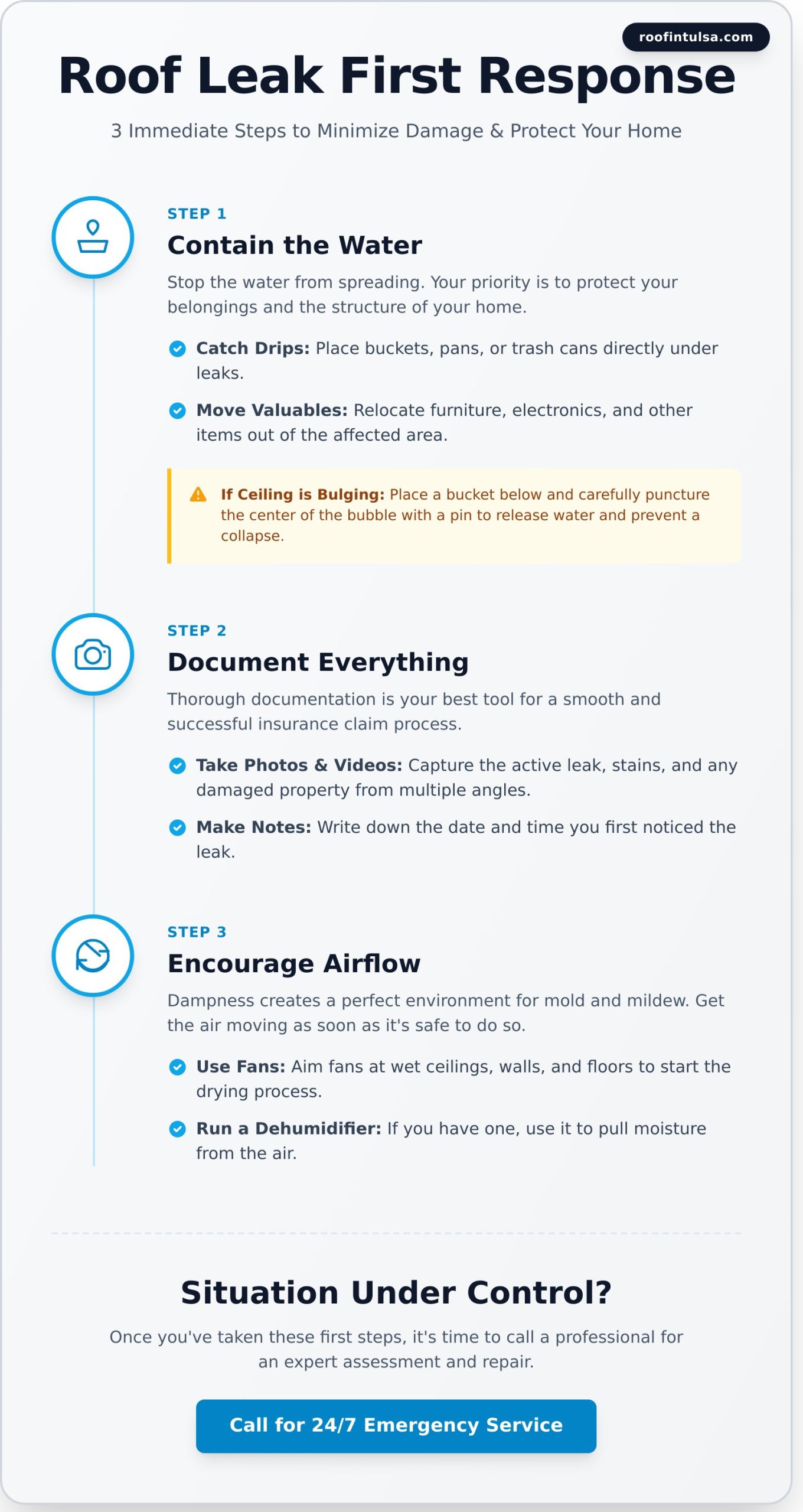
Step 1: Contain the Water Damage
Your immediate goal is to stop the water from spreading. First, place buckets, pans, or even trash cans directly under the drips to catch the water. If the drip is splashing, you can place an old towel or t-shirt in the bottom of the bucket to absorb the impact and prevent noise. Next, move any furniture, electronics, rugs, and other valuables out of the affected area.
- Relieve Ceiling Pressure: If you notice a bubble or bulge forming in your ceiling drywall, water is pooling there. Place a bucket underneath and carefully puncture the center of the bubble with a small nail or pin. This will allow the water to drain in a controlled way, preventing a larger section of the ceiling from collapsing under the weight.
Step 2: Document Everything
Once the water is contained, grab your smartphone. Thorough documentation is essential for any future insurance claims. Take clear photos and videos of the active leak, the water in the buckets, the ceiling stains, and any personal property that has been damaged. Be sure to capture the issue from multiple angles and distances. Also, make a quick note of the date and time you first discovered the roof leak. This evidence is your best tool for a smooth, hassle-free claims process.
Step 3: Encourage Airflow
Even after you’ve stopped the drips, the area will be damp, creating a perfect environment for mold and mildew to grow. To combat this, get the air moving as soon as it’s safe to do so. Place fans aimed at the wet ceiling, walls, and floor to begin the drying process. If you own a dehumidifier, now is the perfect time to use it. Improving air circulation is a critical step in preventing long-term moisture problems.
After you have taken these critical first steps to protect your home, it’s time to bring in an expert. Once the situation is stable, call us for 24/7 emergency service. We’re here to help Tulsa homeowners restore their peace of mind.
The 7 Most Common Causes of Roof Leaks in Tulsa Homes
Discovering a water stain on your ceiling is a stressful moment for any homeowner. To find a lasting solution and prevent future issues, it’s important to understand the source of the problem. In Tulsa, your roof faces everything from intense UV rays to severe storms, but most issues start in a few common areas. Knowing the culprits behind a roof leak helps you protect your home and your peace of mind.
Here are the seven most frequent causes we see in the Tulsa community:
1. Storm Damage and Missing Shingles
Oklahoma’s weather is a primary cause of sudden roof damage. High winds can lift and tear away shingles, leaving your roof’s underlayment exposed. Hail is another major threat, as it can crack or puncture shingles, creating weak spots that water will eventually find. Debris from fallen tree limbs during a storm can also cause immediate and serious punctures.
2. Failed or Damaged Flashing
Flashing is the thin metal that seals joints around chimneys, vents, and valleys where different roof planes meet. Over time, the sealant can dry out and crack, or the metal itself can rust or pull away. Improper installation is a leading cause of flashing failure, making these vulnerable areas a frequent source of persistent leaks.
3. Clogged Gutters and Ice Dams
Your gutters are designed to channel water safely away from your home. When they become clogged with leaves, water backs up and pools along the roof’s edge. This standing water can easily seep under your shingles. In the winter, this can freeze into heavy ice dams that pry shingles up and force water into your attic.
4. Cracked Pipe Boots and Vents
If you look at your roof, you’ll see small pipes for your plumbing’s ventilation system. These are sealed with a flexible rubber boot. Under the intense Tulsa sun, this rubber can become brittle and crack over time. A cracked pipe boot is one of the most common sources of a roof leak, but thankfully, it’s often a straightforward repair for a professional.
5. Age and Material Breakdown
Even the most durable roof has a finite lifespan. Years of exposure to sun, heat, and storms cause roofing materials, especially asphalt shingles, to degrade. They can become brittle, lose their protective granules, and curl at the edges, making them far less effective at keeping water out.
6. Improper Installation
A roof is only as good as its installation. Shingles that are improperly nailed, flashing that isn’t correctly layered, or inadequate underlayment can all lead to premature failure. This is why choosing a certified, trusted local roofer is critical for the long-term protection of your home.
7. Poor Attic Ventilation
A healthy roof needs to breathe. If your attic is poorly ventilated, heat and moisture become trapped. This moisture can condense on the underside of your roof deck, leading to rot and mold. Poor ventilation also contributes to ice dams in the winter, undermining the entire roofing system from within.
Finding the Source: Why a Drip Doesn’t Mark the Spot
One of the most common frustrations for a Tulsa homeowner is seeing a water stain on the ceiling and assuming the hole in the roof is directly above it. Unfortunately, it’s rarely that simple. Water is a deceptive traveler, and pinpointing its entry point requires a professional understanding of how a complete roofing system works.
Chasing the drip often leads to incorrect and ineffective patches, while the real problem continues to cause hidden damage. The true source of a roof leak could be ten or even fifteen feet away from where you see the evidence inside your home.
How Water Travels Through Your Roof System
Once water gets beneath your shingles, it follows the path of least resistance, which is always downhill. This journey is rarely a straight line. Before it ever appears on your ceiling, water can:
- Run along the top of a rafter or roof truss.
- Travel sideways across the underside of the roof decking.
- Soak into attic insulation, spreading out like a sponge and hiding the leak’s origin.
- Finally find an exit point through a light fixture, ceiling seam, or vent.
The Challenge of Low-Slope or Flat Roofs
On roofs with a very low pitch, or on completely flat commercial roofs, tracing a leak is notoriously difficult. Water can pool for extended periods, a phenomenon known as “ponding,” giving it ample time to find a minuscule flaw in a seam or flashing. Finding the entry point requires a meticulous, inch-by-inch inspection of the entire surface by a trained expert.
Simply patching the drywall stain won’t solve the underlying problem. For true protection and lasting peace of mind, a comprehensive inspection is essential to identify and repair the leak at its source. As Tulsa’s trusted local roofing experts, we have the experience to trace the path of water and provide a durable, honest repair. If you’re ready to find the real problem, schedule a hassle-free inspection with our team today.
DIY vs. Professional Roof Leak Repair: When to Call a Tulsa Expert
When you spot a water stain spreading across your ceiling, the temptation to grab a ladder and some sealant is strong. We understand the urgency to stop the damage. However, a quick DIY fix for a roof leak often creates bigger, more expensive problems down the road. Before you attempt a repair, it’s crucial to understand the risks involved and why a professional approach is almost always the safer, more effective choice.
Climbing onto a wet, potentially unstable roof is a significant safety hazard. More than that, an amateur repair can easily make the underlying issue worse, trapping moisture and leading to serious structural damage.
The Dangers of a Quick DIY Patch
A temporary patch might seem like a smart, money-saving move, but it can be a costly mistake. For Tulsa homeowners, these quick fixes rarely stand up to our severe weather and can hide the real problem until it becomes a crisis. Here’s why a DIY patch is so risky:
- It can cause more damage. Using the wrong materials, like a generic hardware store caulk instead of professional-grade roofing sealant, can react poorly with your shingles and worsen the leak over time.
- It may void your warranty. Many roofing manufacturers’ and workmanship warranties are voided by unauthorized repairs. That quick patch could end up costing you your entire warranty coverage.
- It only fixes a symptom. The drip in your attic might be caused by damaged flashing ten feet away. By only patching the visible symptom, you leave the true entry point for water open and active.
Why a Professional Inspection is Your Best Bet
The safest and most reliable way to handle any roof leak is to call a trusted, local professional. Our team is equipped not just to find the leak, but to diagnose the health of your entire roofing system. We have the proper safety equipment and extensive experience to inspect your roof without risk to ourselves or your property.
A professional inspection identifies the root cause and any related issues you might have missed, like compromised underlayment or wind-lifted shingles nearby. We provide you with a detailed report and a clear, honest repair plan-no guesswork, just a durable, long-term solution. This is about more than just a repair; it’s about ensuring your home is protected for years to come.
Protect your home and your peace of mind. Schedule a professional inspection today.
Protect Your Home and Peace of Mind
Discovering a leak in your home is stressful, but knowing what to do next puts you back in control. As we’ve covered, your quick actions to contain water and identify the initial signs are crucial first steps. However, understanding that the true source of the problem is often hidden and requires an expert eye is the key to preventing further damage and ensuring a proper repair.
A persistent roof leak isn’t just a nuisance; it’s a threat to your home’s safety and value. As your trusted, local Tulsa roofing contractor, we’re here to provide an honest assessment and a lasting solution. We offer expert insurance claim assistance to make the process hassle-free and have a 24/7 emergency repair service ready for when you need us most.
Don’t Let a Small Leak Become a Major Crisis. Get Your Free, Honest Roof Inspection Today.
You’ve taken the first step by getting informed. Now let us help you protect the home you love.
Frequently Asked Questions About Roof Leaks
How much does it cost to fix a common roof leak in Tulsa?
The cost to fix a roof leak can vary, but most common repairs in the Tulsa area range from $450 to $1,200. The final price depends on factors like the leak’s location, the type of roofing material, and the extent of any underlying water damage. For an honest and accurate quote, we provide a comprehensive, free inspection. This allows our team to assess the exact cause and give you a clear, upfront price for a lasting solution.
Is a small, occasional roof leak a serious problem?
Absolutely. Even a small, intermittent leak is a serious warning sign. Water can travel, causing hidden damage to your attic insulation, ceiling joists, and drywall long before you see a large stain. This moisture can lead to dangerous mold growth and wood rot, compromising your home’s structural integrity. Addressing a small leak quickly is the best way to prevent a much larger, more expensive problem and protect your family’s home.
Will my homeowner’s insurance cover the cost of a roof leak repair?
In many cases, yes. Homeowner’s insurance typically covers roof leaks caused by sudden, accidental events like hail or wind damage from a Tulsa storm. However, leaks due to lack of maintenance or an old, worn-out roof are often not covered. We specialize in navigating the insurance claims process. Our team can help document the damage and work with your adjuster to ensure a smooth, hassle-free experience and help you get the coverage you deserve.
How long can I wait to fix a leaking roof?
We strongly advise against waiting. A roof leak does not fix itself; it only gets worse. With every rainfall, more water enters your home, increasing the risk of structural damage, electrical hazards, and toxic mold growth. The sooner you act, the more likely it is that a simple repair will solve the problem. Acting fast saves you money in the long run and restores your peace of mind, protecting your most valuable asset.
Can you fix my roof leak even if it’s currently raining?
For safety and quality reasons, a permanent repair cannot be completed while it is actively raining, as sealants won’t bond correctly on a wet surface. However, we understand the urgency. We can provide emergency tarping services to immediately stop water from entering your home and prevent further damage. Once the weather clears, our team will return promptly to perform a durable, professional repair that you can trust to last.
What’s the difference between a roof repair and a roof replacement?
A roof repair targets a specific, isolated problem, such as replacing a few missing shingles or sealing a leaking vent. It’s ideal for a newer roof with localized damage. A roof replacement, on the other hand, involves removing the entire existing roof system and installing a new one. This is necessary when the roof is near the end of its lifespan or has widespread damage. As your trusted local roofer, we’ll provide an honest assessment and only recommend what your home truly needs.