

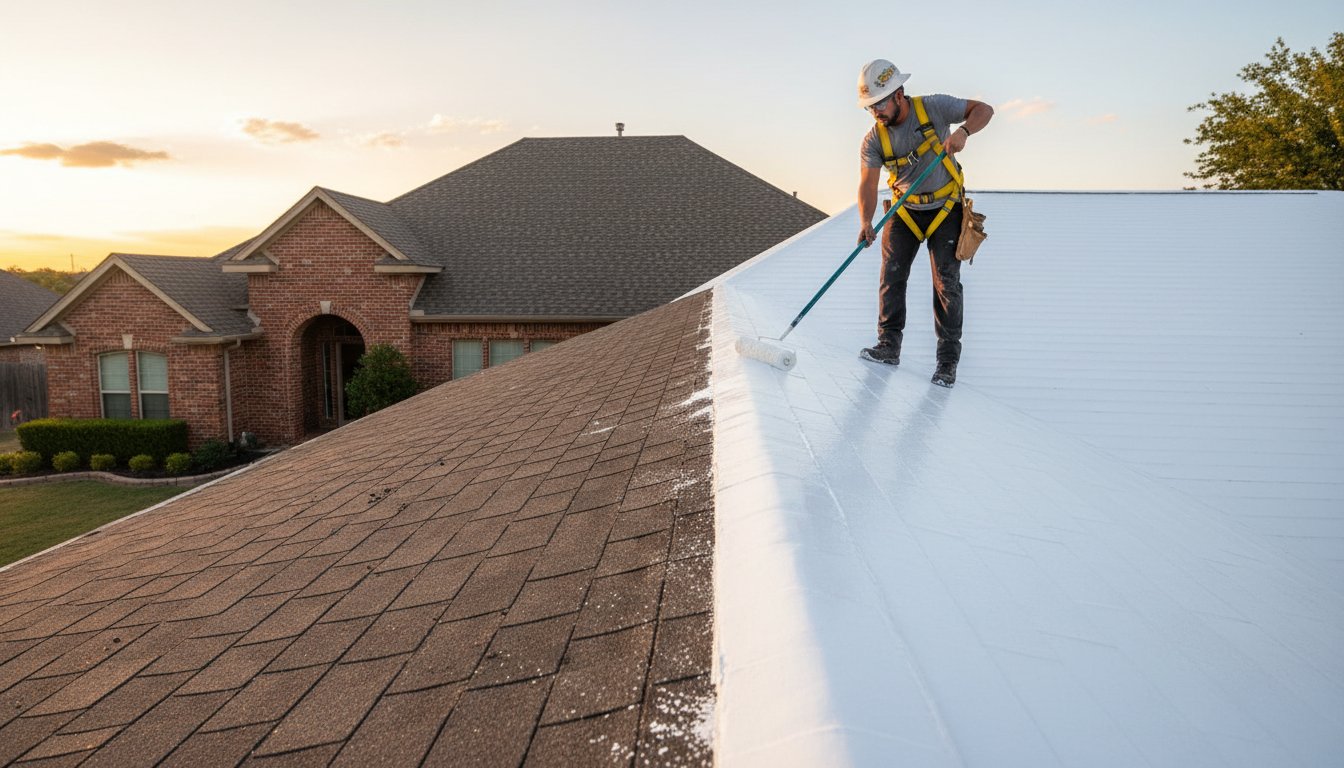

Here in Tulsa, our roofs take a beating from the weather. When you see signs of wear and tear-like faded shingles or minor leaks-it’s easy to think your only option is a costly, full replacement. But what if there was a smarter way to protect your home without draining your savings? For many local homeowners, that solution is roof restoration. It’s a comprehensive process designed to breathe new life into an aging roof, extending its lifespan and boosting its performance for years to come. It’s more than a simple repair, but far less disruptive and expensive than a total replacement.
As your trusted, local roofing experts, we believe in providing honest answers. In this guide, we’ll walk you through everything you need to know. You’ll discover what the process actually entails, how to know if your roof is a good candidate, and a clear cost-benefit analysis against a full replacement. Our goal is to give you the confidence to make the best, most informed decision for your home and your budget.
Defining Roof Restoration: More Than a Patch, Less Than a Replacement
When your roof shows signs of age, terms like ‘repair,’ ‘restoration,’ and ‘replacement’ can be confusing. As your trusted local roofing experts, we want to bring clarity to the conversation. Simply put, roof restoration is a comprehensive process of cleaning, repairing, and re-coating your entire roof surface to return it to a serviceable, waterproof condition-all without a costly and disruptive full tear-off.
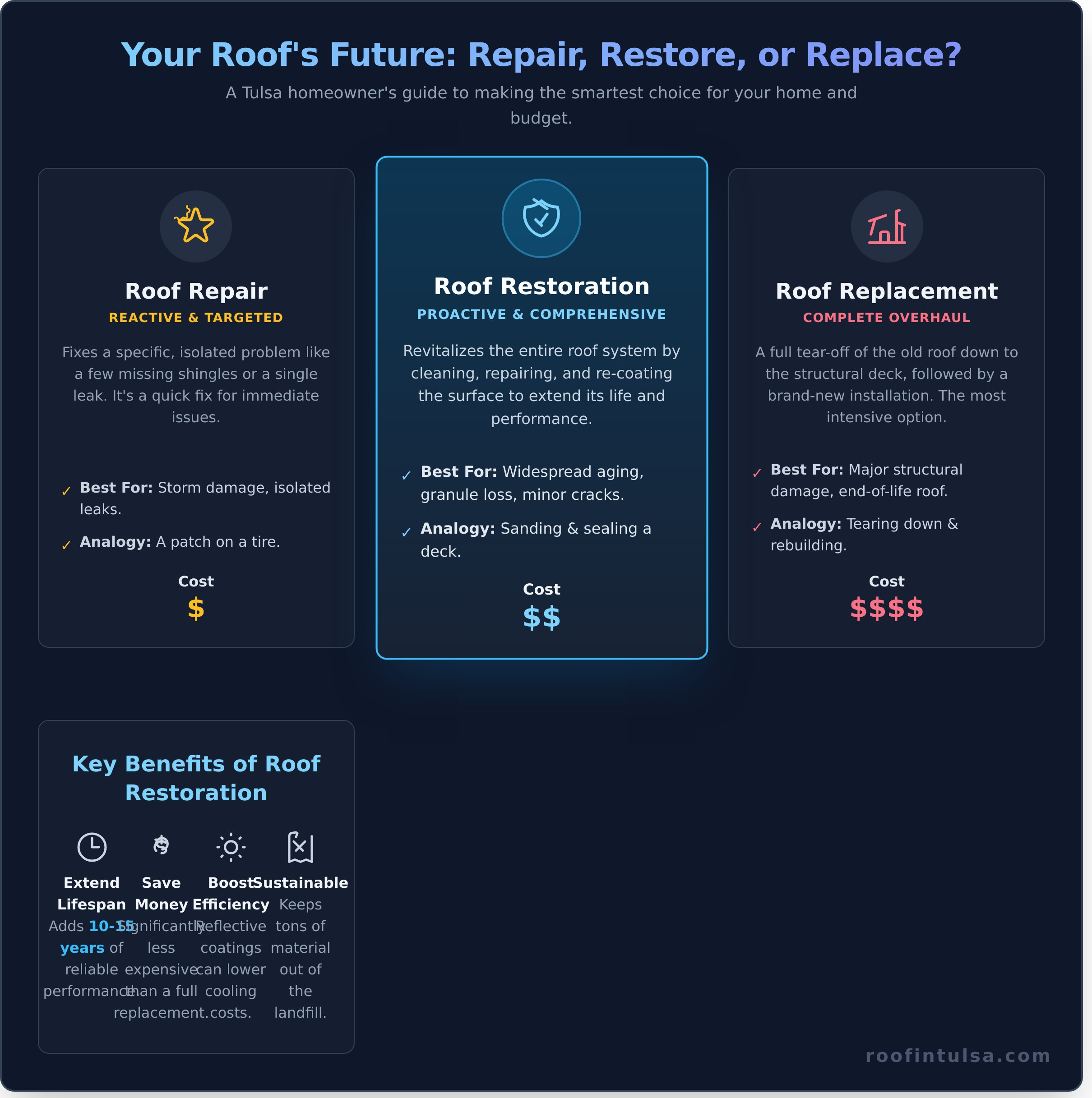
Think of it this way: if you have one broken board on your deck, you repair it. But if the whole deck is faded, splintered, and weathered, you don’t necessarily tear it down. You sand it, treat it, and seal it to give it new life. That’s restoration. The goal isn’t just to patch a leak but to revitalize the entire system for lasting protection and peace of mind.
A professional restoration process aims to achieve several key benefits for your Tulsa home:
- Extend Your Roof’s Lifespan: You can often add 10 to 15 more years of reliable performance to your existing roof.
- Fix Widespread Issues: It addresses systemic problems like granule loss on shingles, cracking, or aging membranes across the entire surface.
- Boost Energy Efficiency: Many restoration systems use reflective coatings that lower roof temperatures, which can help reduce your cooling bills during our hot Oklahoma summers. If you’re curious about the technology, Wikipedia offers a solid overview of what roof coatings are and how they work.
Roof Restoration vs. Roof Repair: What’s the Difference?
Roof repair is reactive. It targets a specific, isolated problem, like replacing a few shingles blown off in a storm or sealing a single leaking flashing. In contrast, a complete roof restoration is proactive. It addresses the health of the entire roof system, treating widespread wear and tear to prevent countless future repairs and potential leaks from developing.
Roof Restoration vs. Roof Replacement: The Core Distinction
A roof replacement is a total overhaul-a complete tear-off of your old roof down to the structural deck, followed by a brand-new installation. It’s the most intensive and expensive option. Restoration, however, works with your existing roof structure. It’s a smart, sustainable solution that revitalizes what you already have, saving you significant money and keeping tons of material out of the landfill.
Common Roof Restoration Systems Explained
A successful roof restoration isn’t a one-size-fits-all solution. The right approach depends entirely on your existing roofing material and its specific condition. As Tulsa’s trusted roofing experts, we believe in providing honest, clear information so you can make the best decision for your home or business. Below, we break down the most common systems we use to protect and extend the life of different roof types.
For Asphalt Shingle Roofs
Asphalt shingles, the most common residential roofing material in Tulsa, require a detailed approach to restore their integrity and appearance. The process involves several critical steps:
- Intensive Cleaning: We start by safely removing harmful algae, moss, and lichen that can trap moisture and degrade shingles over time.
- Targeted Repairs: Any cracked, curling, or missing shingles are carefully replaced to ensure a complete protective barrier against the elements.
- Component Sealing: We inspect and seal all potential weak points, including flashings, vents, and pipe boots, to prevent leaks before they start.
- Rejuvenation Treatment: As a final step, we can apply a specialized treatment that rehydrates the asphalt, restoring shingle flexibility and granule adhesion to extend its service life.
For Flat or Low-Slope Roofs
For commercial and residential flat roofs, the goal is to create a seamless, waterproof barrier using advanced liquid-applied coatings. This process essentially gives you a brand-new, monolithic membrane without the cost of a full tear-off. The two most common and effective options are:
- Silicone Coatings: This premium option creates a completely seamless and waterproof surface that is highly resistant to ponding water. It also reflects the sun’s harsh UV rays, which, according to the Roof Coatings Manufacturers Association, is one of the key benefits of roof coatings for lowering cooling costs.
- Acrylic Coatings: A cost-effective and durable choice, acrylic coatings provide excellent reflectivity and are a fantastic solution for routine maintenance and extending the life of a structurally sound roof.
For Metal Roofs
A metal roof can last for decades, but it’s not immune to the elements. Our metal roof restoration service focuses on stopping deterioration in its tracks and reinforcing the entire system. The process involves meticulous preparation, including removing any rust and treating the affected areas to prevent its return. We then tighten or replace every fastener and seal all seams and joints to eliminate potential entry points for water. Finally, we apply a specialized elastomeric coating designed to expand and contract with the metal, providing durable, long-lasting protection against leaks and corrosion.
Is Your Tulsa Roof a Good Candidate for Restoration?
Determining whether your roof is a better fit for restoration or a full replacement can feel overwhelming. While only a thorough, on-site inspection by a trusted professional can give you a definitive answer, you can look for several key indicators. Understanding these signs will help you know what to expect when you call for an expert opinion.
Signs Your Roof Can Be Successfully Restored
If your roof’s core structure is still in good shape, you might be an ideal candidate for restoration. We see positive outcomes when a roof has these “green light” characteristics:
- The roof is structurally sound. There are no soft, spongy spots when walked on, which indicates the underlying decking is solid.
- Issues are mostly on the surface. Problems like widespread granule loss, minor surface cracks, or aging are visible, but the shingles themselves are not yet brittle or failing.
- It’s relatively young. Most asphalt shingle roofs under 15 years old are better candidates for a roof restoration than older systems nearing the end of their expected lifespan.
- Leaks are isolated. A leak around a vent, chimney flashing, or a failed seam can often be repaired and sealed as part of a restoration project without needing to tear off the entire roof.
Warning Signs: When Replacement is the Only Safe Option
Sometimes, the damage is too significant for a coating or repair to be a reliable, long-term solution. These “red flags” almost always point toward a necessary replacement:
- Brittle or severely curled shingles. If shingles are so fragile that they crack or break when lifted, they cannot be worked on and must be replaced.
- Widespread water damage. If moisture has penetrated the shingles and caused the underlying roof deck to rot, a simple restoration won’t fix this critical structural issue.
- Multiple existing layers. Building codes and best practices from organizations like the National Roofing Contractors Association advise against having more than two layers of shingles. If you already have two, a complete tear-off and replacement is required.
- Significant storm damage. Widespread and severe hail or wind damage often compromises the entire roofing system, making replacement the only safe path forward.
The Tulsa Storm Damage Factor
Here in Tulsa, we know that hail is a major concern. What looks like minor cosmetic damage from the ground can actually be a serious problem. Hail impacts can fracture the fiberglass mat inside your shingles, compromising their integrity and ability to shed water. Because this damage affects the core of the shingle, restoration coatings cannot fix it. The good news is that significant hail damage is often covered by homeowner’s insurance for a full replacement, providing you with a much more durable and long-lasting solution. The first step is getting an honest assessment. Get a Free Storm Damage Inspection to know for sure.
Cost vs. Value: Comparing Restoration and Full Replacement
When it comes to your roof, the bottom line always matters. As your trusted local T-Town roofers, we know the biggest question on your mind is whether restoration or replacement offers better value. The answer depends on balancing immediate savings with long-term security. Let’s break down the key financial differences to help you make an informed, confident decision for your home.
Upfront Investment
The most immediate advantage of a roof restoration is the lower initial cost. Generally, restoration costs about 50-70% less than a full replacement. For a typical Tulsa home, this could mean paying $3-$6 per square foot for restoration versus $7-$12+ per square foot for a complete tear-off and replacement. The higher cost of replacement accounts for extensive labor, disposal fees, and the price of all-new materials.
Lifespan Extension & Warranty
Think of restoration as a strategic life-extending measure. A professionally applied restoration can add another 10 to 15 years of solid performance to your roof. A full replacement, on the other hand, completely resets the clock, providing a brand-new system designed to last 25 to 50 years. The warranties reflect this difference: a restoration warranty covers the coating and its application, while a new roof from a GAF Master Elite contractor like us comes with comprehensive, long-term protection for both materials and workmanship.
Return on Investment (ROI) and Property Value
While both options protect your home, they impact its value differently. A new roof is a powerful selling point that significantly increases curb appeal and home value, often providing a high return on investment. Restoration is a smart maintenance decision that preserves your home’s integrity and prevents costly damage, but it doesn’t add the same resale value as a brand-new roof. For ultimate long-term ROI and peace of mind, a replacement is the superior investment.
Ultimately, the best path forward depends on your roof’s current condition, your budget, and your future plans. The choice is clear:
- Restoration is a budget-friendly strategy to maximize the life of a roof that is still in good structural condition.
- Replacement is a long-term investment in your home’s safety, value, and your family’s protection for decades to come.
The only way to know for certain which option is right for you is through an honest, hands-on inspection. If you’re unsure, let our team provide a hassle-free evaluation to give you the clear, straightforward advice you deserve.
The Path to a Restored Roof: What to Expect from the Process
A successful roof restoration isn’t just about applying a new coating; it’s a meticulous, multi-step process designed to add years of life and protection to your home. Understanding these steps helps you know what to expect and ensures you’re working with a trusted professional who values quality and integrity. Here’s how we handle the process with the care your Tulsa home deserves.
Step 1: The Critical Roof Assessment
This is the most important step. Before any work begins, we conduct a thorough, hands-on inspection that goes far beyond a quick glance from the ground. We assess the integrity of the roof deck, check for hidden moisture, and evaluate the condition of every shingle, tile, or metal panel. This honest evaluation determines if your roof is a viable candidate for restoration or if a replacement is the safer, more cost-effective option in the long run.
Step 2: Preparation and Cleaning
A clean surface is non-negotiable for a lasting result. We carefully pressure wash the entire roof to remove years of accumulated dirt, algae, moss, and other biological growth. This step not only dramatically improves your roof’s appearance but is also crucial for ensuring that any repairs, sealants, or protective coatings will adhere properly for maximum durability.
Step 3: Repairs and Reinforcement
This is where the core restoration work happens. Our team addresses every identified issue with precision, which includes:
- Replacing any cracked, broken, or missing shingles or tiles.
- Securing loose metal panels and fasteners.
- Sealing all penetrations, such as vents, pipes, and skylights.
- Reinforcing weak seams and flashings to prevent future water intrusion.
Step 4: Coating or Treatment Application
With the roof fully prepped and repaired, we apply the final protective layer. Depending on your roof type, this may be a high-performance acrylic or silicone coating, applied with professional-grade equipment for a seamless, monolithic membrane. This coating is what provides renewed waterproofing and UV protection. We conclude with a final inspection to guarantee complete, uniform coverage, giving you peace of mind in your investment.
If you’re wondering if your roof is a good candidate for this process, the first step is an honest, professional assessment. Contact Tulsa’s most trusted roofer today for a hassle-free inspection.
Making the Right Choice for Your Tulsa Roof
Navigating your roofing options doesn’t have to be complicated. As we’ve explored, the key takeaway is that for many Tulsa homes, there is a smart, effective middle ground between minor repairs and a costly full replacement. A professional roof restoration can add significant life to your roof at a fraction of the cost, as long as the underlying structure is in good condition. It’s about finding the most value-driven solution to protect your home and family from Oklahoma’s unpredictable weather.
The only way to know for certain which path is right for you is with a professional, hands-on assessment from a team you can trust. As your local Tulsa roofing experts and specialists in storm damage assessment, we provide the clarity you need to make a confident, informed decision. We believe in honest answers and quality solutions, not high-pressure sales tactics. Unsure which path is right for your roof? Schedule a free, honest inspection with our Tulsa experts.
Let us help you gain the peace of mind that comes with a durable, protected roof over your head. Your home is your most important investment, and we’re here to help you protect it.
Frequently Asked Questions About Roof Restoration
How long does a roof restoration last?
A professional roof restoration can extend the life of your roof by 10 to 15 years. The longevity depends on the roof’s initial condition and the quality of the materials used. Here in Tulsa, we use durable, high-performance coatings specifically designed to stand up to our intense sun and severe weather. This process is a trusted way to add years of reliable protection to your home and gain valuable peace of mind without the expense of a full replacement.
Will my homeowners insurance pay for a roof restoration?
This depends entirely on your policy and the nature of the damage. Insurance is designed to cover sudden, accidental events like hail or wind damage. If a restoration is part of a storm damage repair plan, it may be covered. However, most policies will not cover work needed due to old age or a lack of maintenance. We can provide an honest inspection and help you understand your options, including navigating the claims process if the damage is covered.
Can you restore a very old roof, or is there a cutoff age?
The viability of a restoration is based more on the roof’s condition than its specific age. If the underlying structure is sound and the shingles are not completely deteriorated, even an older roof can be a great candidate. However, if there is widespread rot, soft decking, or severe material failure, a replacement is the only responsible and safe solution. A thorough, honest inspection is the only way to know for sure which path is right for your home.
Is a roof coating the same thing as a roof restoration?
While a roof coating is a critical part of the process, it is not the same as a full roof restoration. A true restoration is a multi-step system that includes a deep cleaning, repairing or replacing damaged shingles and flashing, sealing all penetrations, and then applying the final protective coating. Simply applying a coating over a damaged roof is a temporary fix that fails to address the core issues, which is why we perform a complete restoration for lasting results.
How do I know for sure if my roof needs restoration or replacement?
The only way to know for sure is to get a professional, honest assessment. Generally, if your roof has widespread granule loss or minor leaks but the shingles are still structurally stable, restoration is an excellent option. If you have extensive cracked or curling shingles, major leaks, or soft spots on the roof deck, a replacement is almost always the necessary solution for protecting your home. We’re here to provide a clear recommendation you can trust.
Does a restored roof look as good as a new one?
Yes, a restored roof can significantly boost your home’s curb appeal. The process begins with a deep cleaning that removes years of dirt, algae streaks, and stains. The final coating creates a uniform, clean, and vibrant finish that looks fresh and new from the street. While it won’t replicate the dimensional look of brand-new architectural shingles, the result is a beautiful, protected roof that makes your entire home look well-maintained and cared for.