


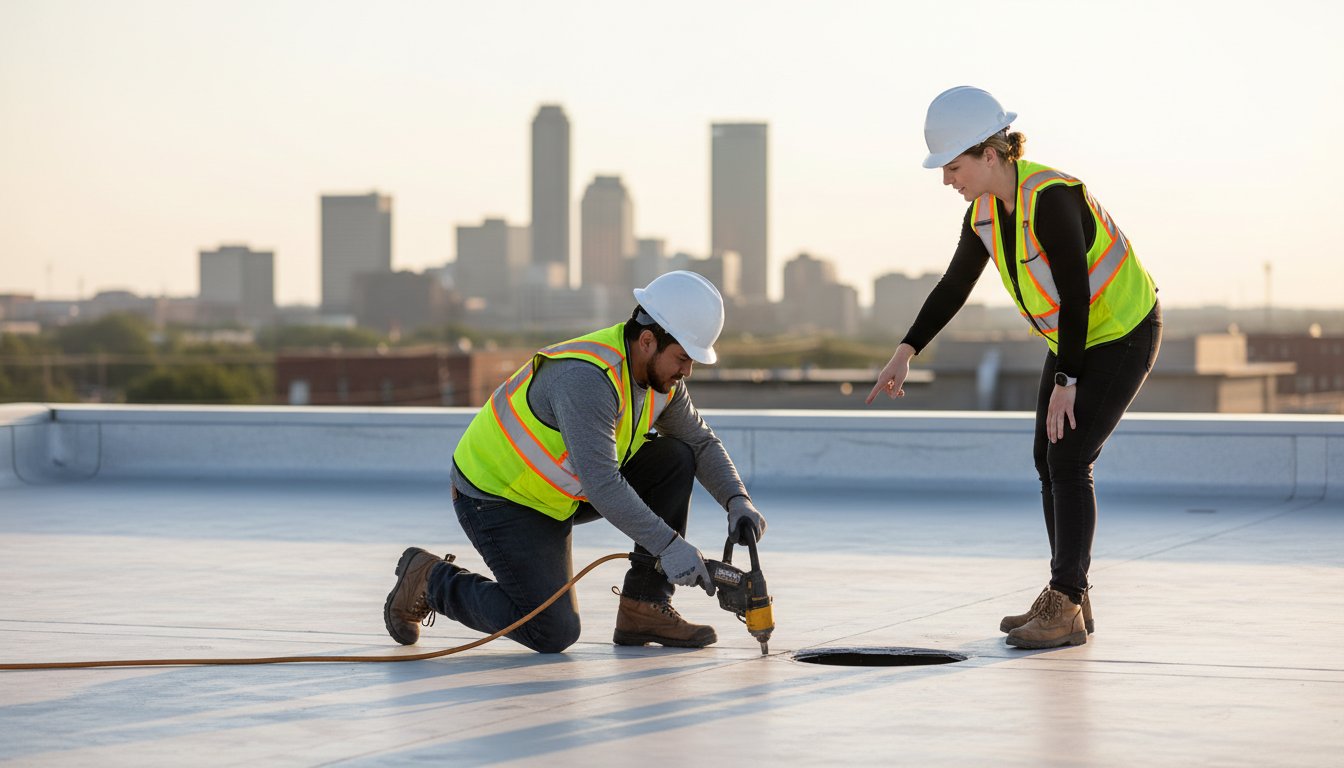

As a Tulsa business owner, the roof over your head isn’t just a structure; it’s a critical shield protecting your inventory, equipment, and daily operations. A small leak or ponding water can quickly escalate into a costly disruption. The anxiety of choosing the right professional is real-especially when you know a specialized commercial roof requires more than a generalist’s touch. Hiring the wrong team can lead to years of problems, but finding qualified, local flat roofing contractors you can trust shouldn’t be a source of stress.
We’re here to help you navigate this important decision with confidence. This guide was created to give you peace of mind by providing a clear, step-by-step process for vetting and selecting the best commercial roofing partner for your property. You will learn how to evaluate different materials, ask the right questions, and identify an honest contractor who will deliver a durable, leak-free roof. Let’s ensure your investment provides lasting protection and value for your business for years to come.
Why Flat Roofs Demand a Specialist, Not a Generalist
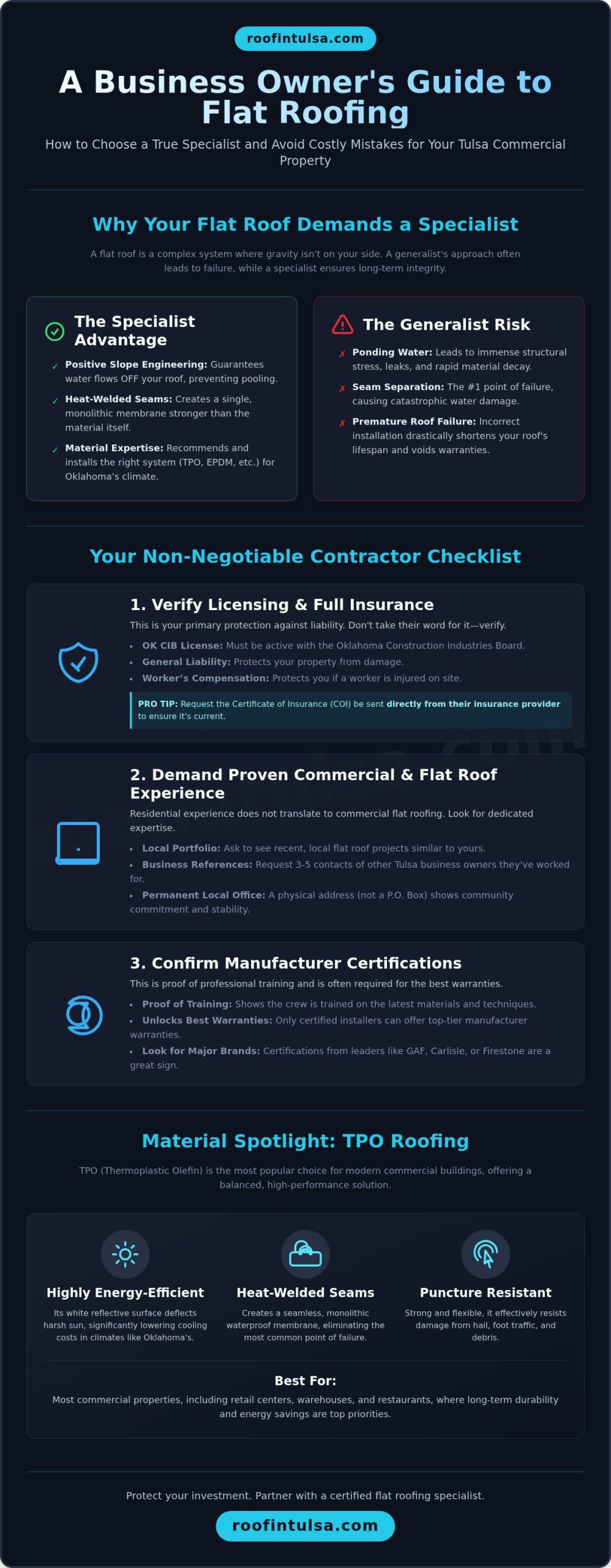
Many property owners assume a flat roof is simpler than a sloped one. In reality, the opposite is true. A flat roof isn’t just a flat surface; it’s a highly engineered system designed to protect your building from the elements, and it operates under a completely different set of principles than a traditional pitched roof. The fundamentals of roof construction and materials change dramatically when gravity isn’t on your side. While a general contractor might handle a shingle roof adequately, flat roofing requires a deep, specialized knowledge of unique materials, drainage systems, and installation techniques to ensure long-term protection and peace of mind.
The most common failure points-ponding water, seam separation, and flashing issues-are almost always the result of work done by someone who lacks this specific expertise. Especially in Oklahoma, where intense sun, heavy downpours, and sudden temperature shifts put immense stress on roofing surfaces, you need a professional who understands these local challenges. Choosing the right flat roofing contractors isn’t just a preference; it’s a critical investment in your property’s integrity.
The Critical Role of Drainage
On a flat roof, water has nowhere to go unless it’s given a clear path. A specialist ensures your roof has a “positive slope”-a slight, often imperceptible grade-that directs every drop of water toward internal drains or scuppers along the edge. Without proper drainage engineering, you risk serious consequences:
- Ponding Water: Standing water adds immense weight, stressing your building’s structure and accelerating material decay.
- Persistent Leaks: Water finds the smallest imperfection, and poor drainage guarantees it will have plenty of time to seep in.
- Material Degradation: Constant exposure to moisture and UV rays in standing water drastically shortens your roof’s lifespan.
Seam Integrity: The #1 Point of Failure
A flat roof is only as strong as its weakest link, and that is almost always the seams where rolls of material are joined. Unlike shingles that overlap, flat roofing membranes must be fused together to create a single, impenetrable surface. A specialist uses advanced techniques like heat-welding for TPO and PVC roofs, which creates a bond that is often stronger than the material itself. Improperly sealed or glued seams will inevitably separate, curl, and open your building up to catastrophic water damage.
Material Expertise is Non-Negotiable
The materials used for flat roofs-like TPO, EPDM, and Modified Bitumen-each have vastly different application methods, chemical compositions, and performance characteristics. Experienced flat roofing contractors possess the hands-on knowledge to recommend the right system for your building’s use, budget, and existing structure. They understand how to ensure the new membrane is compatible with the underlying insulation and substrate, preventing costly system failures down the road. This expertise is your best defense against premature roof failure.
The Essential Checklist: 5 Must-Haves for Any Flat Roofing Contractor
When you’re vetting commercial flat roofing contractors, it’s easy to get lost in sales pitches. This checklist is your non-negotiable guide to cutting through the noise and making a confident decision. These five points are what separate true professionals from amateurs, giving you the peace of mind that your commercial property is in capable hands. Don’t just take a contractor’s word for it-always ask for proof and take the time to verify their claims.
Proper Licensing and Full Insurance Coverage
This is the most critical step for protecting your business from liability. Before signing any contract, verify that the contractor holds an active license with the Oklahoma Construction Industries Board (CIB). More importantly, ask for their Certificate of Insurance (COI) to be sent to you directly from their insurance provider. This ensures the policy is current. Confirm they have both:
- General Liability Insurance: Protects your property from damage caused by the contractor.
- Worker’s Compensation: Protects you from liability if one of their employees is injured on your property.
Proven Commercial & Flat Roof Experience
Not all roofing experience is equal. A contractor who primarily works on sloped residential roofs may not have the specialized skills needed for commercial flat roofing systems. Ask for a portfolio of recent, local flat roof projects similar to yours and request at least 3-5 references from other Tulsa business owners. Furthermore, confirm they have a permanent local office, not just a P.O. box. A physical presence is a strong indicator of stability and commitment to the community.
Manufacturer Certifications
The best flat roofing contractors are certified by the manufacturers whose products they install, such as GAF, Carlisle, or Firestone. This isn’t just a fancy title; it’s proof that their team has been professionally trained on the latest materials and installation techniques. This certification is what allows them to offer the manufacturer’s best warranties-the kind that provide long-term protection and value for your investment. Rescue Roofing Tulsa is a GAF-certified contractor, ensuring quality.
Decoding Flat Roof Materials: TPO, EPDM, PVC & More
Choosing the right material for your commercial roof can feel overwhelming, but it doesn’t have to be. Understanding the basics of each option is the first step toward making a confident, long-term investment in your property. A quality contractor will guide you, but knowing the landscape helps you ask the right questions and evaluate their recommendations. Here’s a clear, straightforward guide to the most common flat roofing systems, focusing on durability, energy efficiency, and overall value.
TPO (Thermoplastic Olefin)
As the most popular choice for commercial buildings today, TPO offers a modern, balanced solution. Its white, reflective surface is a major advantage in sunny climates, helping to lower cooling costs significantly.
- Pros: Highly energy-efficient, puncture-resistant, and features durable, heat-welded seams that create a seamless, waterproof membrane.
- Best For: Most commercial properties, from retail centers to warehouses, where energy savings and a long-lasting, reliable roof are top priorities.
EPDM (Ethylene Propylene Diene Monomer)
Often called a “rubber roof,” EPDM is a classic in the industry, known for its exceptional durability and long lifespan. This synthetic rubber membrane has a proven track record of withstanding harsh weather for decades.
- Pros: Extremely long lifespan (often 30+ years), superior resistance to hail and thermal shock, and generally a very cost-effective option.
- Best For: Large, sprawling roofs in climates with significant temperature fluctuations, where proven durability is the main goal.
PVC (Polyvinyl Chloride)
When your roof needs maximum strength and resistance, PVC is the premium choice. This sturdy, single-ply membrane is engineered to stand up to challenging conditions that other materials might not handle as well.
- Pros: Excellent resistance to chemicals, oils, grease, and fire. It’s also highly resistant to punctures and ideal for roofs with heavy foot traffic.
- Best For: Restaurants with grease vents, manufacturing plants, airports, or any facility where chemical exposure or high traffic is a concern.
Modified Bitumen
This is an evolution of traditional asphalt roofing. Modified Bitumen (Mod-Bit) systems are made of multiple layers, providing a thick, robust, and highly tear-resistant surface that offers excellent waterproofing.
- Pros: Exceptional durability and a proven history of performance. Its multi-layer design makes it great for roofs that experience regular foot traffic for maintenance.
- Cons: Application, especially torch-down methods, requires a high degree of skill and safety precautions.
The best material always depends on your building’s specific use, your budget, and your long-term goals. This is why partnering with experienced flat roofing contractors is so crucial for success. The most trusted flat roofing contractors will walk you through these options, providing an honest assessment to ensure you get the right protection and peace of mind for your investment.
The Vetting Process: Key Questions to Ask Before You Sign
Once you have a few proposals in hand, the real work begins. The lowest price isn’t always the best value, especially with a major investment like a flat roof. Asking the right questions helps you look beyond the numbers to understand the quality, process, and integrity of the flat roofing contractors you’re considering. A true professional will welcome an informed client and provide clear, honest answers. Their responses will give you the peace of mind you need to sign a contract with confidence.
Questions About the Project & Team
Understanding who is working on your property and how they operate is crucial for a smooth, hassle-free project. A single point of contact ensures accountability, and a dedicated crew often means more consistent quality control. The best flat roofing contractors prioritize safety and protection above all else.
- Who will be my main point of contact during the project?
- Do you use subcontractors or your own dedicated crews?
- What is your safety protocol for your team and my property?
- How will you protect my building and landscaping during installation?
Questions About Warranty and Follow-Up
A warranty is only as good as the company that stands behind it. It’s vital to understand the difference: a material warranty covers defects in the roofing products, while a workmanship warranty covers the quality of the installation itself. A clear process for handling claims shows that a contractor is committed to long-term protection for your investment.
- What does your workmanship warranty cover and for how long?
- Can you explain the manufacturer’s material warranty in detail?
- What is your process for handling a warranty claim?
- Do you offer ongoing maintenance plans after installation?
Questions About the Proposal and Timeline
Financial surprises and unexpected delays are major sources of stress. These questions clarify the financial terms and set clear expectations for how your project will be managed from start to finish. A plan for handling unforeseen issues, like rotten decking found after tear-off, is the sign of an experienced and honest contractor.
- Is this a fixed price or an estimate? What could cause the price to change?
- What is the estimated start and completion date?
- What is the payment schedule for the project?
- How do you handle unforeseen issues and change orders?
Why Choose Rescue Roofing for Your Tulsa Flat Roof
Choosing the right partner to protect your commercial property is a significant decision. When you’re evaluating flat roofing contractors in the Tulsa area, you need more than just a roofer-you need a specialist who understands the unique demands of commercial buildings. At Rescue Roofing, we are not just another roofing company; we are Tulsa’s trusted commercial roofing specialists, dedicated to protecting your investment with integrity and unparalleled expertise.
Our entire approach is built on providing you with complete peace of mind. We combine deep local experience with industry-leading materials and certifications to deliver a durable, long-lasting roofing system. We understand that your roof is a critical asset, and our goal is to ensure it performs flawlessly for years to come, safeguarding your property, tenants, and operations.
Local Expertise, Professional Results
We live and work right here in Tulsa, so we have firsthand knowledge of how the Oklahoma climate-from intense summer sun to severe storms-impacts flat and low-slope roofs. Our dedicated commercial crews are not generalists; they are highly trained experts in materials like TPO, EPDM, and modified bitumen. This specialized focus ensures every installation, repair, and maintenance plan is executed to the highest standard, backed by a portfolio of successful projects across the community.
A Hassle-Free, Transparent Process
We believe in making the commercial roofing process as clear and straightforward as possible. Our commitment to professional execution means you’ll never be left in the dark. When you partner with Rescue Roofing, you receive:
- Detailed Proposals: We provide comprehensive, easy-to-understand estimates with a full scope of work and no hidden fees.
- A Dedicated Project Manager: You will have a single point of contact to answer your questions and provide regular updates from start to finish.
- Code Compliance and Permitting: We handle all necessary paperwork and ensure your new roof meets or exceeds all local building codes.
Your property deserves the best protection from trusted, local flat roofing contractors. Let us show you the Rescue Roofing difference. Schedule your free commercial roof inspection today.
Making the Right Choice for Your Tulsa Commercial Roof
Your commercial roof is a significant asset, and choosing the right partner to protect it is a crucial business decision. As we’ve covered, the key to success lies in selecting a specialist who understands the unique demands of flat roofing systems and conducting a thorough vetting process. When you evaluate flat roofing contractors in the area, these qualifications are what separate a reliable partner from the rest, ensuring your investment is secure for years to come.
At Rescue Roofing, we aim to make that choice simple and clear for Tulsa business owners. As a locally owned and operated company, we are deeply invested in our community’s success. Our distinction as a GAF Master Elite® Certified Contractor is your assurance of the highest industry standards, and we stand behind our work with comprehensive workmanship and material warranties. We provide not just a service, but lasting peace of mind.
Protect your property with a team you can trust. Take the confident next step for your business. Request a Free, No-Obligation Inspection for Your Commercial Property today and let our team provide the expert, honest guidance you deserve.
Frequently Asked Questions About Commercial Flat Roofing
What is the average lifespan of a commercial flat roof?
The lifespan of a commercial flat roof depends heavily on the material used and the quality of the installation. Generally, you can expect a TPO or PVC roof to last 15-30 years, while an EPDM (rubber) roof can last 20-35 years. Proper maintenance and regular inspections are crucial for reaching the maximum lifespan, especially with Tulsa’s challenging weather. A well-maintained roof provides durable, long-term protection for your business and peace of mind for you.
How much does a new commercial flat roof cost in the Tulsa area?
The cost of a new commercial flat roof in Tulsa varies based on several key factors. These include the total square footage, the type of roofing material selected, the complexity of the roof (e.g., number of vents and HVAC units), and the condition of the underlying roof deck. For an accurate and honest estimate tailored to your property, it’s best to schedule a free, no-obligation inspection. We can then provide a detailed quote with a clear breakdown of costs.
Can my existing flat roof be repaired or does it need to be replaced?
This decision depends on the age and overall condition of your roof. Localized issues like minor leaks, seam separation, or small punctures can often be effectively repaired to extend the roof’s life. However, if your roof has widespread damage, significant water saturation in the insulation, or is nearing the end of its service life, a replacement is the more reliable long-term solution. An honest inspection from experienced flat roofing contractors will help you make the most cost-effective choice.
What are the most common signs of flat roof failure?
Be on the lookout for a few key warning signs. The most obvious is ponding water that remains for more than 48 hours after it rains. Other common indicators include visible cracks, blisters, or tears in the roof membrane, especially around seams and flashing. Inside your building, water stains on the ceiling or walls are a clear sign of a leak. Catching these issues early can often prevent more extensive and costly damage down the road.
How does a flat roof coating extend the life of my roof?
A roof coating is a cost-effective way to add years of life to your existing flat roof. This seamless, liquid-applied membrane seals minor leaks, cracks, and weathered surfaces, renewing your roof’s waterproofing capabilities. Reflective white coatings also offer significant energy savings by deflecting the sun’s UV rays, which reduces the strain on your HVAC system and protects the roof membrane from premature aging. It’s a smart investment in your building’s protection.
Is ponding water on my flat roof a serious problem?
Yes, ponding water is a serious issue that should be addressed promptly. Even a small amount of standing water adds immense weight, which can stress your building’s structure over time. This constant moisture also accelerates the deterioration of roofing materials, leading to leaks and premature roof failure. If you notice water standing on your roof for more than 48 hours after a storm, it indicates a drainage problem that needs professional attention.